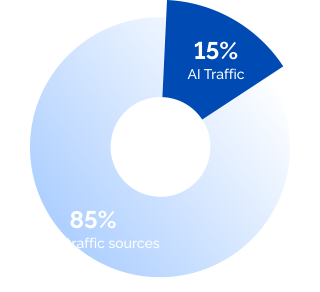



Digital PR for SEO connects brand reputation with search performance by earning authoritative coverage, mentions, and backlinks that signal trust and relevance to search engines.


Digital PR for SEO is a strategic approach that combines traditional PR with content marketing to build authority and secure high-quality placements on trusted websites. Instead of relying on outdated link building tactics, it focuses on creating data-driven stories, expert insights, and campaigns that attract real media attention.
With the evolution of Google’s algorithms, rankings increasingly rely on credibility, brand presence, and consistent visibility across channels. Digital PR supports this by strengthening reputation signals, increasing referral traffic, and expanding your brand’s footprint across the customer journey.
- Digital PR for SEO isn’t just about links. It’s an alternative to pure link building;
- SEO and PR are closely connected because Google uses AI to evaluate reputation like a human would;
- Links and mentions are part of a bigger picture: the brand’s online reputation;
- Online PR focuses on the brand, products/services, customer touchpoints, and spreading information across platforms;
- Data-driven campaigns that follow media trends can earn coverage and strengthen reputation.
| Right expectations about Digital PR for SEO | Wrong expectation about Digital PR for SEO |
| Builds a strong online reputation | Thinking it’s only about links |
| Uses campaigns to get credible media coverage | Expecting instant sales or traffic |
| Improves brand visibility and trust over time | Believing mentions alone guarantee SEO success |
| Aligns PR with SEO strategy and guidelines | Treating it as a one-time tactic |
| Creates meaningful points along the customer journey | Assuming any publicity is equally valuable |
What Is Online PR and Why Does It Matter for SEO Today?
Modern SEO isn’t just about fixing on-page issues or technical tweaks. Today, brands compete to be noticed, trusted, and recommended by reputable sources. That’s why digital PR for SEO works as a strategic growth channel, not just a supporting tactic.
In simple terms, internet PR and SEO combine reputation building with search performance. Unlike traditional PR, which often raises brand awareness and perception, digital publicity is built to generate online coverage, mentions, and link-worthy visibility that can also support SEO. The goal goes beyond publicity: it is about building a consistent reputation across relevant target publications, industry platforms, and trusted sources.
Modern link building outreach strategies are integrated into broader communication efforts that prioritize relevance, credibility, and long-term impact.
How Is Digital PR Different from Link Building?
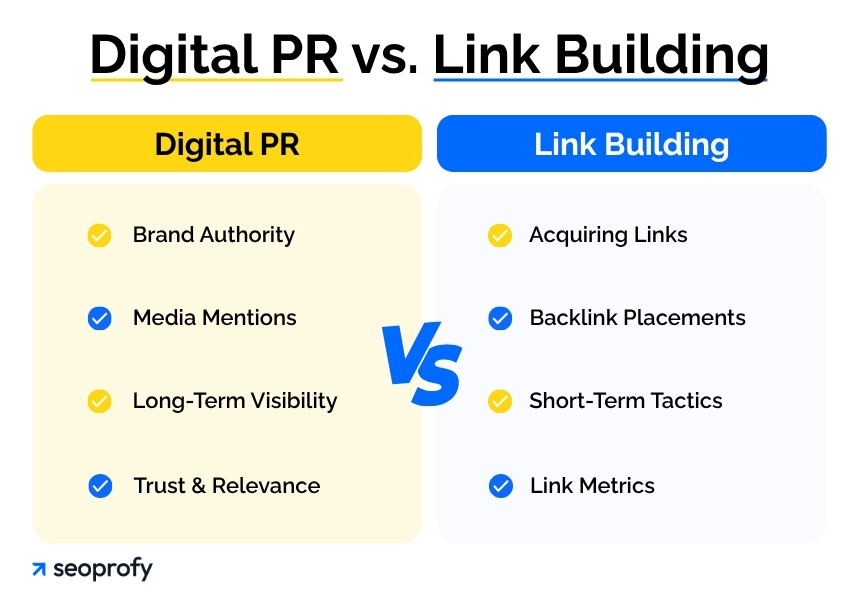
Link building services focus on a clear goal: getting backlinks that help your pages rank higher. Most of the work is structured and SEO-driven — outreach, placements, anchor text control, and steady link acquisition over time.
SEO and digital PR take a wider approach. Instead of focusing only on links, it’s about getting your brand featured in credible media, building trust, and creating stories that attract attention. Backlinks often come from this naturally, but they’re not the only goal.
So while link building is more about consistent SEO growth, PR is about visibility, authority, and reputation across search and beyond.
The strongest strategy combines both: link building gives you stability in rankings, and online PR for SEO adds the kind of authority and recognition that’s hard to replicate with links alone.
What Problems Does Internet PR Solve for SEO?
When authority is low, even well-optimized pages may struggle to perform. This is where digital PR and SEO become powerful allies, helping brands build trust signals that search engines increasingly value through E-E-A-T principles and stronger online recognition.
Common pain points:
- Strong content but limited visibility in trusted publications;
- Few high-quality backlinks from relevant sources;
- Weak brand searches or low recognition in the niche;
- Limited expert mentions or citations;
- Difficulty demonstrating experience and credibility.
Smart digital PR strategies address these gaps by generating media coverage, expert quotes, and branded searches. A well-executed campaign may also earn LLM citation, improving discoverability in AI-driven search environments while reinforcing reputation across multiple owned channels.
| Symptom | Possible impact on SEO |
| Low brand mentions | Weaker trust signals |
| Limited backlinks | Slower ranking growth |
| Minimal media coverage | Reduced authority |
What Are the Best Practices in 2026?
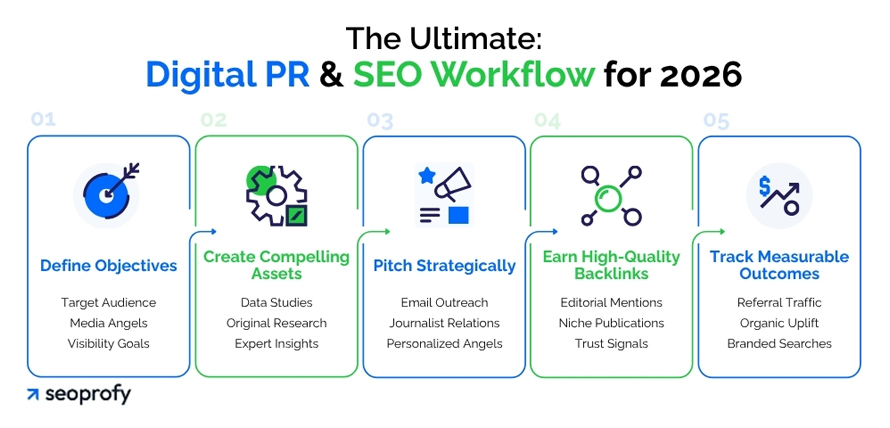
Successful campaigns of digital PR for SEO start with a clear workflow. The digital PR workflow usually moves through five connected stages:
- Setting campaign objectives
- Creating compelling assets
- Pitching them to relevant media
- Earning authoritative mentions and backlinks
- Tracking measurable SEO outcomes such as referral traffic, organic uplift, and branded search growth.
The magic lies in making campaigns genuinely newsworthy — through original research, strong hooks, reactive commentary, expert insights, product updates with a fresh angle, or creative storytelling that resonates with journalists and audiences.
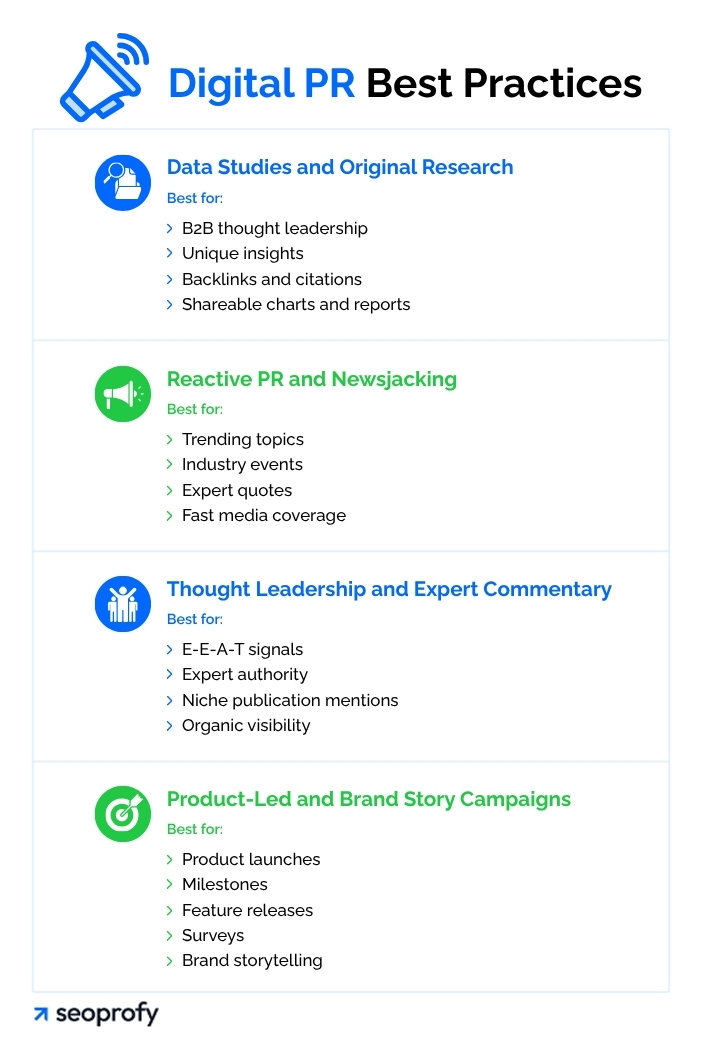
Different tactics suit different brands: data-driven research supports B2B thought leadership, newsjacking fits fast-moving industries, and creative storytelling works best for lifestyle or consumer brands. Press releases remain effective when tied to real insights or announcements, especially when distributed through relevant media outlets. In some cases, amplification through paid media helps extend reach and increase the chances of coverage.
Integrating these efforts into cohesive PR strategies ensures every campaign contributes to visibility, authority, and high-quality backlinks. When aligned with broader SEO services, PR becomes a scalable growth channel rather than a one-off tactic.
Pairing public relations campaigns with an AI SEO strategy also helps identify trending topics, improve content placement, and increase the likelihood of being cited across search and AI-driven platforms.
Data Studies and Original Research
Original data beats generic opinion every time. Why? Because it gives journalists, bloggers, and industry pros something real to reference, not just your thoughts. Smart campaigns use proprietary research to earn quality backlinks and media coverage.
Why proprietary data works:
- Unique key insights that people can’t find anywhere else;
- Trusted by journalists and industry publications;
- Easily turned into shareable charts, infographics, or posts;
- Naturally earns backlinks and citations.
Example from SeoProfy (AI general marketing 2026 stats):
- 38% of businesses fully integrated AI into marketing campaigns;
- 78% of digital marketing teams use AI for SEO, A/B testing, and optimization;
- Most-used digital tools: ChatGPT 55%, Copy.ai 42%, Jasper.ai 36%, Peppertype.ai 29%, Midjourney & DALL-E 25%;
- Top uses: image generation 69%, text 58%, email copy 44%, social content 42%.
Well-crafted digital PR strategies turn this data into newsworthy stories, interactive visuals, and expert commentary.
Reactive PR and Newsjacking
Speed and relevance are everything in digital PR for SEO. Reactive PR — also called “newsjacking” — lets brands jump on trending topics, industry events, or breaking news to capture attention and earn media coverage. A well-timed response, paired with expert insights, can make your brand stand out and even rank in AI Overviews or aggregator features.
The trick is balance. Digital publicity works best when commentary adds value or offers a unique perspective. Forced or generic reactions feel self-serving and can harm credibility.
When it works:
- Industry news that aligns with your expertise;
- Viral media trends with a clear connection to your products and services;
- Opportunities to provide expert quotes or key insights.
When it feels forced:
- Jumping on unrelated news for exposure;
- Overusing memes or sensationalism;
- Responding too late to gain traction.
Strategically, PR focuses on relevance and timing, ensuring every reactive move strengthens brand trust and SEO impact.
Thought Leadership and Expert Commentary
Featuring experts and thought leaders is a powerful tactic. When your PR team shares insights, opinions, or data-driven commentary, it can earn trust signals across niche publications.
A strong digital PR campaign starts with identifying the right experts, showcasing their credentials, and crafting compelling quotes that resonate with journalists and audiences. Optimizing author bios, linking to expert pages, and highlighting achievements ensures that both readers and search engines recognize authority, supporting E-E-A-T principles.
This approach not only strengthens backlinks, but also drives organic visibility and websites traffic by associating your brand with credible voices.
Pro tips for optimization:
- Include detailed bios with credentials;
- Maintain dedicated expert pages on your site;
- Encourage authors to contribute regularly;
- Use author/entity markup for SEO recognition.
By leveraging expert commentary, digital publicity builds trust and discoverability — creating content that is both newsworthy and SEO-friendly.
Product-Led and Brand Story Campaigns
Product launches, milestones, feature releases, and surveys offer prime opportunities. When executed thoughtfully, these moments can generate media coverage and buzz on social media platforms.
A strong PR campaign focuses on compelling stories that are genuinely newsworthy. It’s not just about announcing a new feature. It’s about framing it with a compelling angle, sharing internal data insights, or highlighting real impact. Brand storytelling helps target audiences connect emotionally, while journalists see value in covering your news.
Another popular practice is to integrate narrative with research, and that’s exactly how companies use AI to solve problems, innovate, or enhance user experience. Combining product updates with engaging storytelling ensures high-quality content resonates with both industry publications and readers.
SeoProfy’s approach combines digital PR campaigns with data-driven insights to grow online visibility. Businesses see real results: more organic traffic, higher-quality leads, stronger trust, and backlinks from reputable sources.
Thoughtful PR will help you:
- Boost traffic;
- Gain credible mentions;
- Strengthen brand authority.

How Do You Measure Success?
Bringing strategy back to performance means knowing what to track at each stage of a PR campaign. Key focus areas include:
- Placements: the media mentions and coverage you secure.
- Backlinks: links that boost authority and SEO.
- Referral traffic: visitors coming from coverage, showing immediate interest.
As the campaign grows, watch:
- Organic uplift: improvements in overall search visibility.
- Branded search growth: more people actively looking for your brand.
- Assisted conversions: how PR supports sales and leads.
Digital PR for SEO can show fast wins in coverage and referral spikes. But true organic impact depends on strong digital PR work and solid search engine optimization fundamentals. Realistically, it may take months to see the full effects. Digital tools like AI chatbot stat reports make it easy to track engagement, link performance, and early signals of campaign success. Setting expectations clearly keeps results measurable and the digital PR strategy driven.
Why Do Some Campaigns Fail?
Often, it’s not about effort but approach. Common pitfalls include:
- Treating public relations as pure link building;
- Chasing irrelevant industry publications;
- Weak campaign hooks or story angles;
- Poor measurement and generic outreach;
- Disconnected SEO and PR teams;
- Overly promotional pitches.
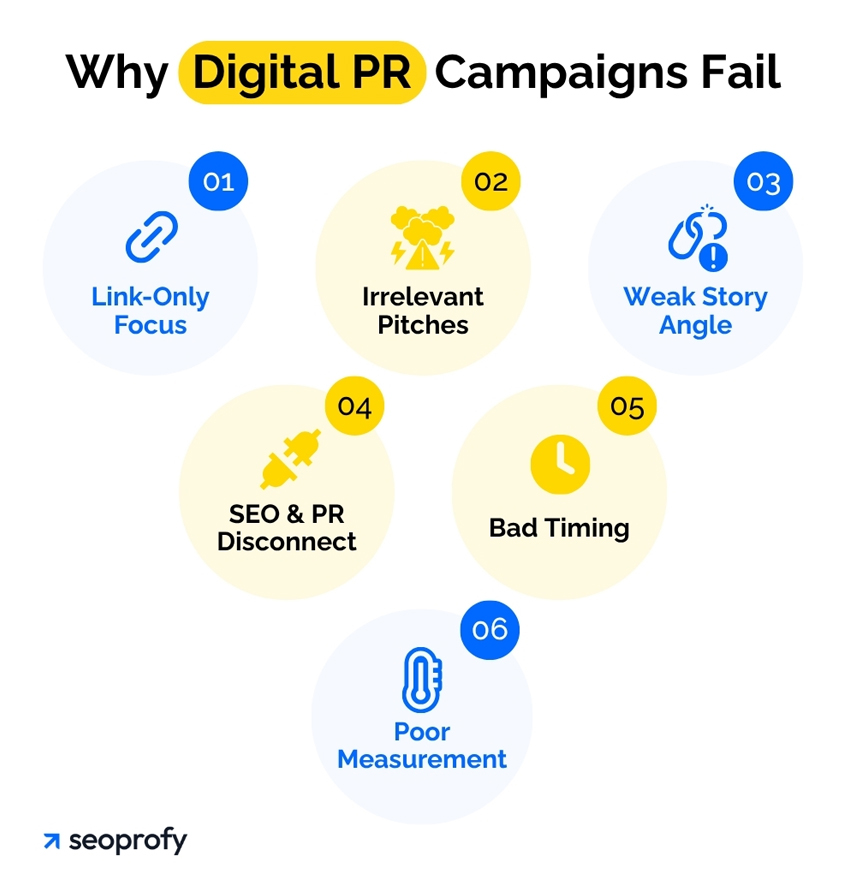
Failure usually comes from missing the link between campaign goals and SEO goals, a lack of data, or poor timing. For example, a PR professional pitched a generic product story to tech blogs, generating coverage but no traffic or links because the angle didn’t match search demand or user intent.
Working with experienced digital PR agencies helps avoid these traps and craft campaigns aligned with real opportunities.
AI-driven search shows how intent shapes exposure. AI Overviews appear for:
- 91.3% of informational queries in early 2025, later dropping to 57.1 percent;
- 18.57% commercial;
- 13.94% transactional;
- 10.33% navigational searches.
This shift is exactly where Answer Engine Optimization (AEO) comes into play. As AI systems prioritize direct answers over traditional rankings, visibility depends on how well your content can be extracted, summarized, and cited. A deeper understanding of these patterns helps shape stories that align with user intent, making your content more likely to be featured in AI-generated responses, earn authoritative coverage, and drive qualified traffic and links.
How Can Digital PR Support GEO and AI Search Visibility?
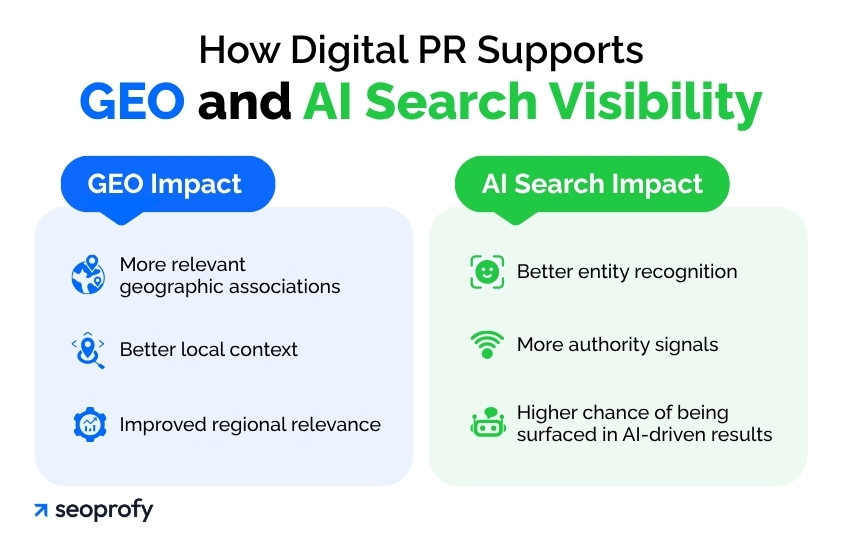
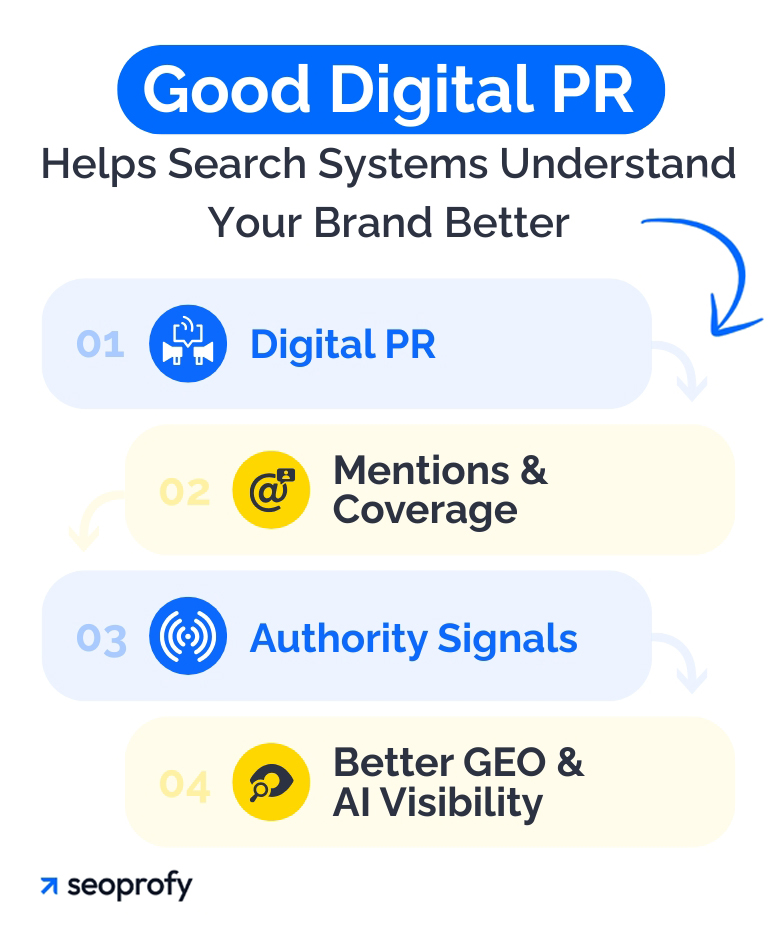
Digital PR strategies can significantly boost GEO and AI search visibility by enhancing online reputation, citations, and third-party mentions. A strong digital PR campaign strengthens expertise signals, helping search engines recognize your brand as a trusted entity.
As AI becomes central to content discovery, reputation signals matter even more: 61% of marketers already see AI as a key part of their strategy, while 51% use AI to optimize content and 47% rely on it for research.
By securing mentions on reputable sites and linking content to relevant geographic contexts, you improve both local and AI-driven search results. Search Engine Land emphasizes the connection between modern search and online reputation, showing that PR isn’t just about links. It’s about perceived authority.
Consistent coverage and thoughtful outreach improve entity recognition and context across the web. You can discover how to optimize your efforts with AI insights in our AI SEO statistics article.
When Is Digital PR Not the Right First Move?
Even the best digital PR strategies can stumble if your site has severe technical SEO issues, weak core pages, or unclear positioning. Launching a digital PR campaign too early may generate coverage but little real impact on search engine rankings.
This matters even more in AI-driven search: 30% of professionals say AI-generated content is not always accurate, and research shows ChatGPT 4.0 can hallucinate 28.6% of citations — meaning weak site foundations may amplify misinformation signals instead of authority.
Here’s a “before you launch” checklist:
- Fix major technical search engine optimization issues;
- Strengthen core pages with strong content;
- Clarify your brand positioning;
- Ensure internal linking is solid;
- Align public relations goals with SEO goals.
Once your foundation is solid, digital PR for SEO becomes far more effective, boosting trust and long-term search success without wasted effort!
Launch Smart PR
Launching smart digital PR strategies starts with building a strong foundation. Ensure your website is technically sound, core pages are optimized, and brand positioning is clear.
Focus on newsworthy stories, deep knowledge, data-driven insights, expert commentary, and reactive opportunities to make coverage both timely and credible. Track key metrics like placements, backlinks, referral traffic, organic uplift, and branded search growth to evaluate impact.
Smart PR is not just about links. It’s about trust, reputation, and long-term influence. By integrating PR with SEO goals, you turn campaigns into a strategic engine that drives traffic and strengthens brand recognition.

Julia Lubianytska is a Copywriting Team Lead at SeoProfy with over 7 years of experience in copywriting and editing. She works closely with copywriting teams, helping writers craft clear and thoughtful content for SaaS products, IT services, and businesses in the legal and medical fields. Julia enjoys turning complex topics into easy-to-understand, trustworthy content, focusing on structure, clarity, and consistency to ensure the content is genuinely helpful for real people, not just search engines.