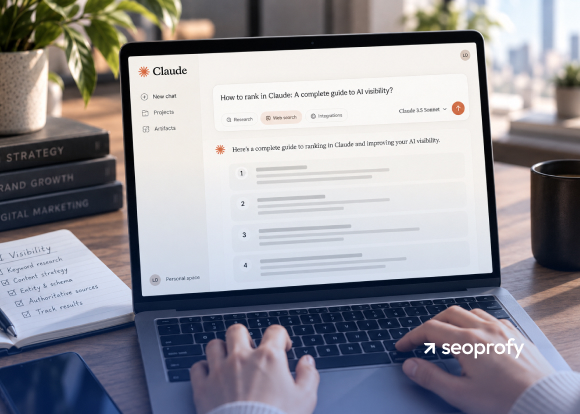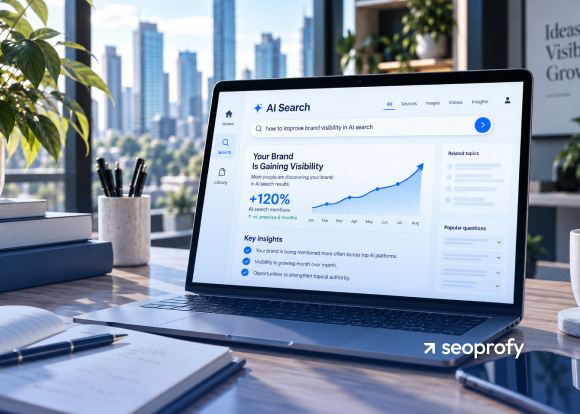


For many buyers, Claude has already become the first (and occasionally the only) round of search when seeking services and providers. Not showing up in AI answers often means missing out on qualified traffic.


That’s why business owners are increasingly asking how to rank in Claude-generated responses. The answer is both simple and not so straightforward — traditional optimization methods work, but some areas need more attention. Much of the complexity lies in the details, namely how you present your brand and the signals it sends.
That’s precisely what this guide focuses on. By the end of it, you will learn which factors matter the most for Claude citations and how to ensure your business meets those requirements.
- Ranking in Claude means appearing as a relevant brand mention, recommendation, or cited source in AI answers.
- Anthropic documents web search, citations, and crawler access, but it does not publish Claude ranking factors.
- Clear entity information, credible evidence, and accessible pages give AI systems better information to use.
- Traditional SEO still matters because crawlability, useful content, site structure, and topical authority also support visibility on both AI engines and traditional rankings.
- Measure Claude visibility across repeatable prompt sets rather than judging it by one successful response.
What “Ranking in Claude” Actually Means
Ranking in Claude is the likelihood of your brand or page appearing in the generated answer when a relevant user asks for a recommendation, comparison, or explanation. This can look like a direct mention/recommendation or a supporting source.
There is no stable “position one.” Depending on the context, Claude can reformulate the same topic across prompts and search sessions, meaning your brand can occupy different spots or none at all.
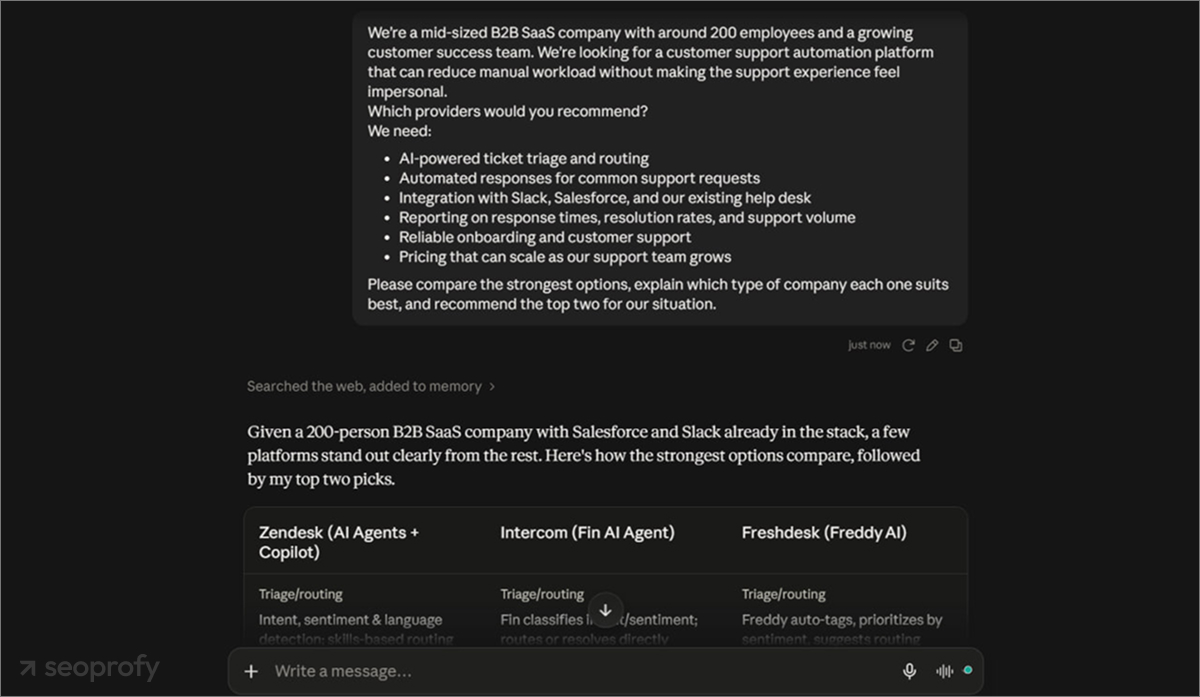
For B2B companies, the best AI-visibility test is simply to ask Claude for a recommendation related to your offerings. Some examples of prompts buyers might use include “What are the best tools for X?”, “What are alternatives to Y?”, and “Which platform is better for Z?”
Then, record whether your brand appears, how it’s described, and which sources are used to support the answer.
How Claude Decides What to Cite and Recommend
Anthropic has not published a list of ranking factors or specific recommendations for how to rank in Claude. However, its public materials show that Claude searches for relevant information, filters the results it receives, and cites the sources used in its response.
Anthropic also notes that the quality of Claude’s answers depends on the underlying sources and recommends using authoritative sources when accuracy matters. This makes source quality more meaningful than simply having the same information repeated across many pages.
Claude’s web search also seems to rely on Brave Search. Anthropic has not formally described or announced it, but Brave Search appears in its subprocessor documentation, and independent testing has found substantial overlap between Brave results and sources cited by Claude.
For generative engine optimization (GEO), the practical implication is that a focused, authoritative page can provide stronger source material than shallow content aggregated from multiple existing articles. Original evidence, clear authorship, current information, and claims supported by reputable sources all make a page easier to evaluate and cite.
This is not a confirmed Claude ranking formula, but it gives brands a more defensible goal: publish accurate, well-supported content that adds something useful instead of reproducing information already available elsewhere.
The Core Factors That Influence Your Visibility in Claude
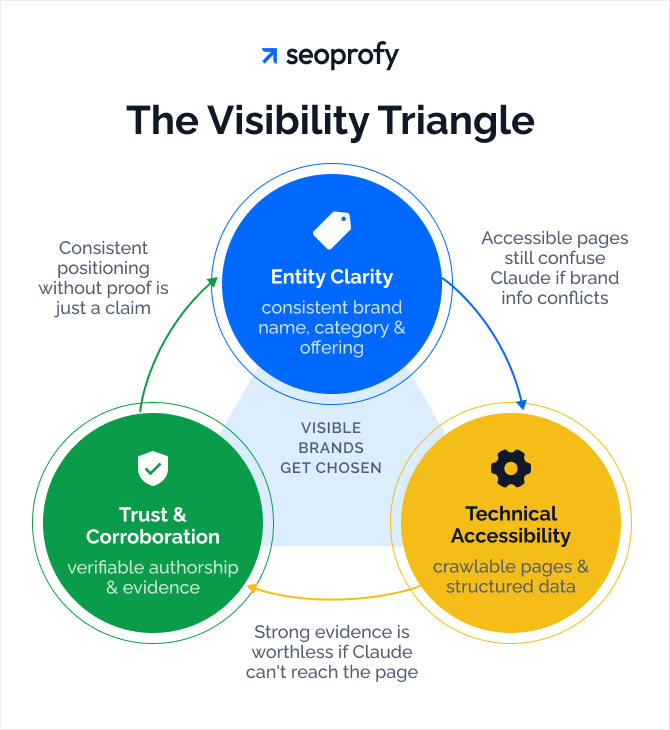
Claude visibility depends on three connected areas: entity clarity, trust and corroboration, and technical accessibility.
Clear brand information helps Claude understand who your company is and what it offers. Trust signals and topical authority make the information associated with your brand easier to evaluate, while technical accessibility determines whether Claude can retrieve that content in the first place.
These factors work together. Strong content has limited value if it is inaccessible, while accessible pages are less useful when brand information is inconsistent or poorly supported.
Entity Clarity and Consistent Brand Positioning
A clear entity profile helps a company, product, or other named entity remain identifiable across the web. For a business, this means presenting core information consistently across its website and relevant third-party sources. This information includes its official name, category, services, target market, and product offering.
Small wording differences are normal, but problems could appear when sources describe the brand in conflicting ways. A company presented as enterprise compliance software on its website but listed as accounting software elsewhere creates a less coherent entity profile.
Consistent positioning also helps establish relevance. When Claude answers a query about a specific product category, it needs enough context to distinguish companies that genuinely fit that category from broader providers or those from an adjacent niche. Persistent information about core topics and focused coverage give AI a clearer picture of what the brand does and where it belongs.
Trust Signals, E-E-A-T, and Independent Corroboration
Trust signals help establish whether the information on a page can be checked and relied on. These signals can include identifiable authors, reputable sources, current publication dates, original research, and evidence-backed claims.
E-E-A-T comes from Google, not Anthropic, so it should not be treated as a confirmed Claude ranking factor. Still, the framework is useful because it focuses on the qualities that make information easier to assess, including its authorship and evidence strength. Focus on sharing genuinely valuable information with real data and, where possible, first-hand research.
Independent corroboration adds information that does not come directly from the brand. It can include customer reviews, editorial coverage, partner references, expert commentary, and other mentions that confirm details about a company or its product.
The quality of third-party mentions matters more for brand trust than sheer volume — the principle that spans both AI visibility and traditional search. A detailed review or relevant industry article from a trustworthy source can send much stronger authority signals than dozens of generic self-promoting listings repeating the same company description.
Structured Data, Schema, and AI-Crawler Accessibility
Structured data is machine-readable markup that labels what a page contains and how its entities relate. Instead of forcing a crawler to infer the information it needs about the page, schema can state it explicitly in a standardized format.
Google documents schema markup as a way to help its systems understand page content and disambiguate entities. However, Anthropic has not said that schema directly improves Claude citations, so treat it as contextual support rather than a confirmed ranking recommendation.
This also makes visibility in Brave Search worth checking alongside access for Anthropic’s own crawlers. Being absent from Brave’s index could limit the sources available to Claude during web search.
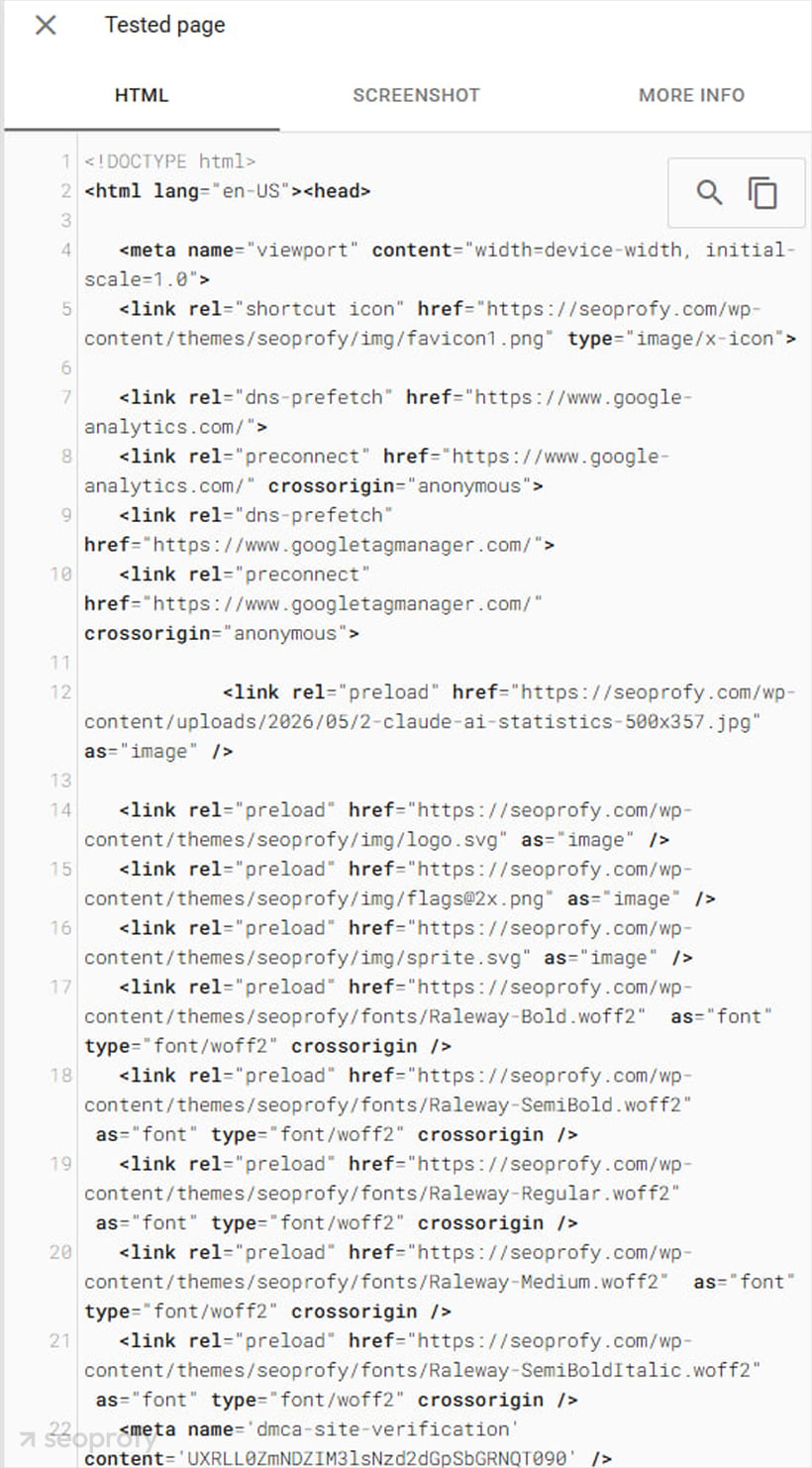
What matters for Claude visibility is crawler accessibility. Anthropic uses Claude-SearchBot for search-related indexing and Claude-User to retrieve content for a user request, with both following robots.txt directives. If either crawler is blocked, relevant pages may be unavailable in the corresponding retrieval process. This means technical accessibility can determine whether Claude can reach a page at all, regardless of its content quality or external authority.
How to Rank in Claude: A Step-by-Step Approach
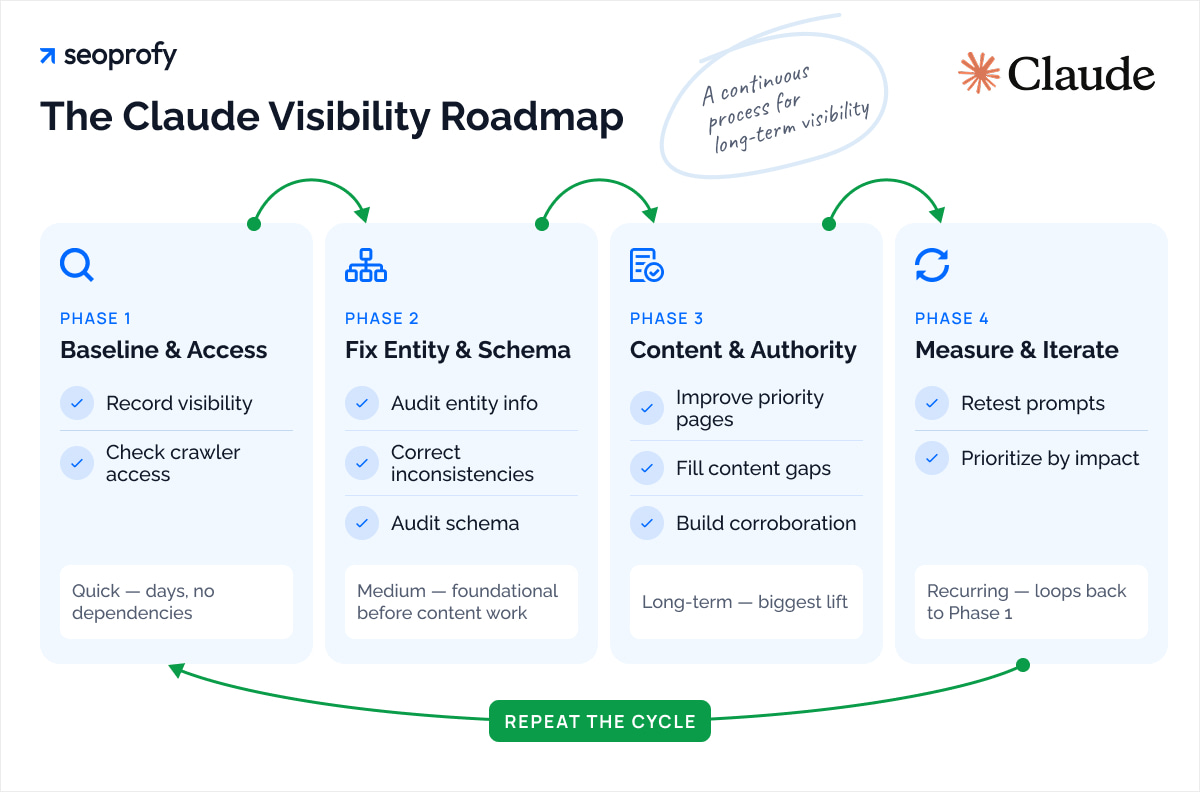
Use this sequence as an implementation checklist, starting with quick technical checks and moving toward broader content and authority work.
- Record your current Claude visibility: Track commercially relevant prompts, brand mentions, recommendations, citations, cited URLs, and competitors.
- Check Anthropic crawler access: Review robots.txt for Claude-SearchBot and Claude-User, then check important pages for blocking, login barriers, noindex directives, or access errors.
- Audit your entity information: Compare your website, LinkedIn profile, review platforms, and major directories for conflicting company names, categories, services, locations, or product descriptions.
- Correct inconsistencies: Update inaccurate profiles and align core company information across controlled properties.
- Audit schema markup: Review Organization, Article, Breadcrumb, and other relevant markup. Make sure it matches visible page content and passes validation.
- Improve priority pages: Update pages relevant to target Claude prompts with more explicit answers, clearer heading structure, current facts, stronger sourcing, author details, dates, and useful examples.
- Fill content gaps: Prioritize expert content written around commercially relevant questions your current pages don’t cover, and connect them through internal links and your broader SEO content strategy.
- Strengthen third-party corroboration: Build credible reviews, expert mentions, partner references, and industry coverage.
- Retest the same prompts: Compare mentions, citations, competitors, cited pages, and answer context against your baseline.
- Prioritize by impact: Keep what improves visibility and investigate changes that produce no measurable movement.
For better results, integrate this checklist into your existing SEO and AI search visibility roadmap. This helps improve your presence across search results, Claude, and other LLMs consistently.
See where your brand appears in Claude, which competitors earn more citations, and where visibility gaps remain. Get a free AI visibility audit to identify the next priorities for growth.
Common Mistakes That Keep Brands Out of Claude
Several common SEO issues can make Claude optimization less effective. The main ones include:
- Thin content: Pages that only repeat basic information, summarize what is available elsewhere, or consist exclusively of AI content give Claude little distinctive evidence to rely on and cite.
- Conflicting brand information: Inconsistent descriptions, categories, services, or product details across your website and third-party profiles can make the brand harder to interpret accurately.
- Excessive self-promotion: Pages focused mainly on praising the brand, product, or service offer less genuinely useful information for Claude to draw on. Genuinely helpful content should answer the user’s question clearly and support claims with specific evidence.
- Keyword stuffing: Repeating target phrases unnaturally does not improve source quality and can make content less useful, less readable, and harder to trust. Opt for low-competition, long-tail keywords and use them organically on pages.
Before blaming Claude optimization specifically, check why your SEO isn’t working in general. Issues with it can prevent priority pages from being crawled, understood, and trusted by LLMs too.
How to Measure and Track Your Claude Visibility
Claude visibility needs repeatable tracking because generated answers can vary. Start with a fixed set of commercially relevant prompts based on real buyer questions.
For each prompt, record whether your brand appears, whether Claude cites your domain, which URL receives the citation, and which competitors are included. Add the date to track comparisons over time.
Use this data to track presence rate (how often your brand appears across tested prompts), citation rate (how often Claude cites your website), and share of voice, which shows how often your brand appears compared with competitors.
Review these metrics by prompt type rather than combining everything into one score. Different query types may produce different visibility patterns.
AI presence monitoring platforms can automate prompt testing, citation tracking, and competitor comparisons. However, manual testing is still useful when evaluating the context of each mention.
Compare these findings with your regular SEO performance data. This helps connect AI search visibility with commercial SEO statistics such as qualified traffic, leads, and revenue.
Frequently Asked Questions
How is this different from traditional SEO?
Traditional SEO focuses on Google rankings, organic traffic, and conversions. Ranking in Claude means appearing inside generated answers through brand mentions, recommendations, or citations.
The fundamentals behind what is SEO still apply here: crawlability, focused and semantically rich content, authority, and clear site structure matter for both.
What factors influence whether Claude cites/recommends a brand?
There is no confirmed formula for how to rank in Claude, but the first areas to optimize and test are entity consistency, credible sourcing, structured content, and third-party corroboration.
These are important because, to answer a prompt, Claude searches the web, cites sources, and accesses websites through dedicated bots.
How long does it take to see results?
There is no universal answer to the question “How long does SEO take?” and the same applies to Claude optimization. Results can depend on crawler access, prompt competition, content updates, and which sources Claude retrieves.
Instead of expecting results within a specific timeframe, establish a baseline, make measurable changes, and retest regularly.
Does this replace traditional SEO?
No, GEO only adds AI-generated answers to a broader search strategy instead of replacing it entirely. Companies still need accessible pages, useful content, authority, clear structure, and conversion-focused websites.
For most businesses, the question is SEO worth it now also includes whether organic visibility extends into AI-generated answers, not only traditional search results.
How do you measure/track visibility in Claude?
Use a consistent set of relevant prompts and track brand presence, citations, cited URLs, competitors, and share of voice over time.
Tracking your Claude results is different from how to measure SEO performance. Although you can still use automated platforms, much of the work still falls on manual checks that confirm the accuracy and commercial relevance of each mention.
What It Takes to Rank in Claude
If you want to know how to rank in Claude, start with what Anthropic actually documents. The company provides web search, source citations, user-directed retrieval, and search indexing, meaning that accessibility is a clear technical requirement for Claude rankings.
The rest needs disciplined testing. Keep your company information consistent, publish material that answers specific questions with evidence, and make important claims easier to verify through reliable sources. Then measure whether those changes improve the prompt responses that matter to the business.
This approach also keeps Claude optimization connected to broader SEO. Good work should leave you with stronger sources, valuable content that feels human, and better information about your brand across the web.

Julia Lubianytska is a Copywriting Team Lead at SeoProfy with over 7 years of experience in copywriting and editing. She works closely with copywriting teams, helping writers craft clear and thoughtful content for SaaS products, IT services, and businesses in the legal and medical fields. Julia enjoys turning complex topics into easy-to-understand, trustworthy content, focusing on structure, clarity, and consistency to ensure the content is genuinely helpful for real people, not just search engines.