

 Add SeoProfy as a preferred source on Google

Your next B2B buyer may never reach your homepage. They might ask ChatGPT who handles a specific use case, compare vendors in Perplexity, and then bring a shortlist to the team before anyone clicks a result.


That gives your content a second job. Ranking still matters, but the page also has to hold up when an AI system pulls out one section and uses it somewhere else. If the product is described vaguely or the proof sits three scrolls away, the model may fill in the gaps or cite another company instead.
This guide shows how to build a B2B AEO strategy for 2026. We’ll cover the questions worth targeting, the page structure AI systems can use, the trust signals that support your claims, and the metrics that show whether your brand is actually appearing.
- AI search now sits much earlier in the B2B buying journey: 51% of software buyers start research with an AI chatbot more often than Google, and 71% use one somewhere in the process.
- AEO builds on SEO by making page content easier for AI systems to retrieve.
- The best AEO topics are questions that affect real buying decisions. A low-volume query can be more valuable than a broad keyword if it repeatedly comes up during sales conversations.
- Proprietary research gives AI something it cannot reproduce from generic web content. That makes first-hand evidence much more useful for earning citations.
Our AEO Experience: From Early Tests to Client Results
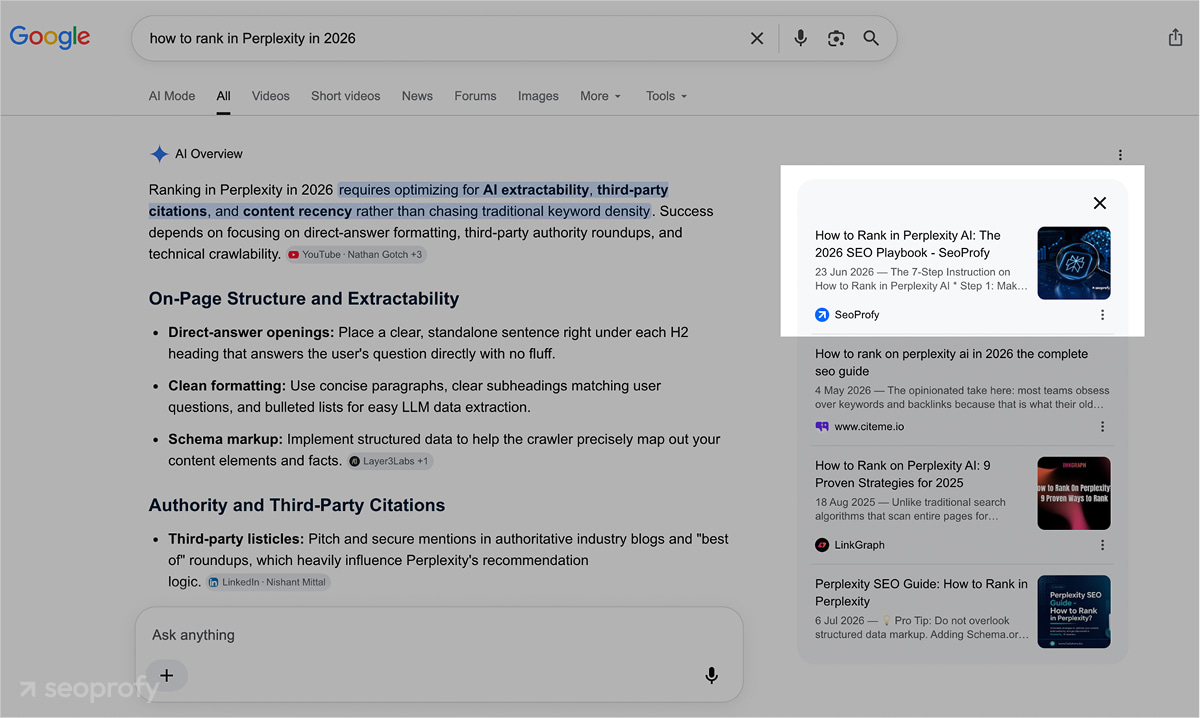
SeoProfy started testing Answer Engine Optimization (AEO) in 2022, soon after ChatGPT launched. Most companies still treated AI search as a side experiment, but we saw enough signs to take it seriously.
We experimented with different approaches until we found ones that helped AI associate SeoProfy with our target topics. Over time, AI started recommending us relevant answers and citing pages from the site. Still, none of that would have worked without a strong SEO base underneath it.
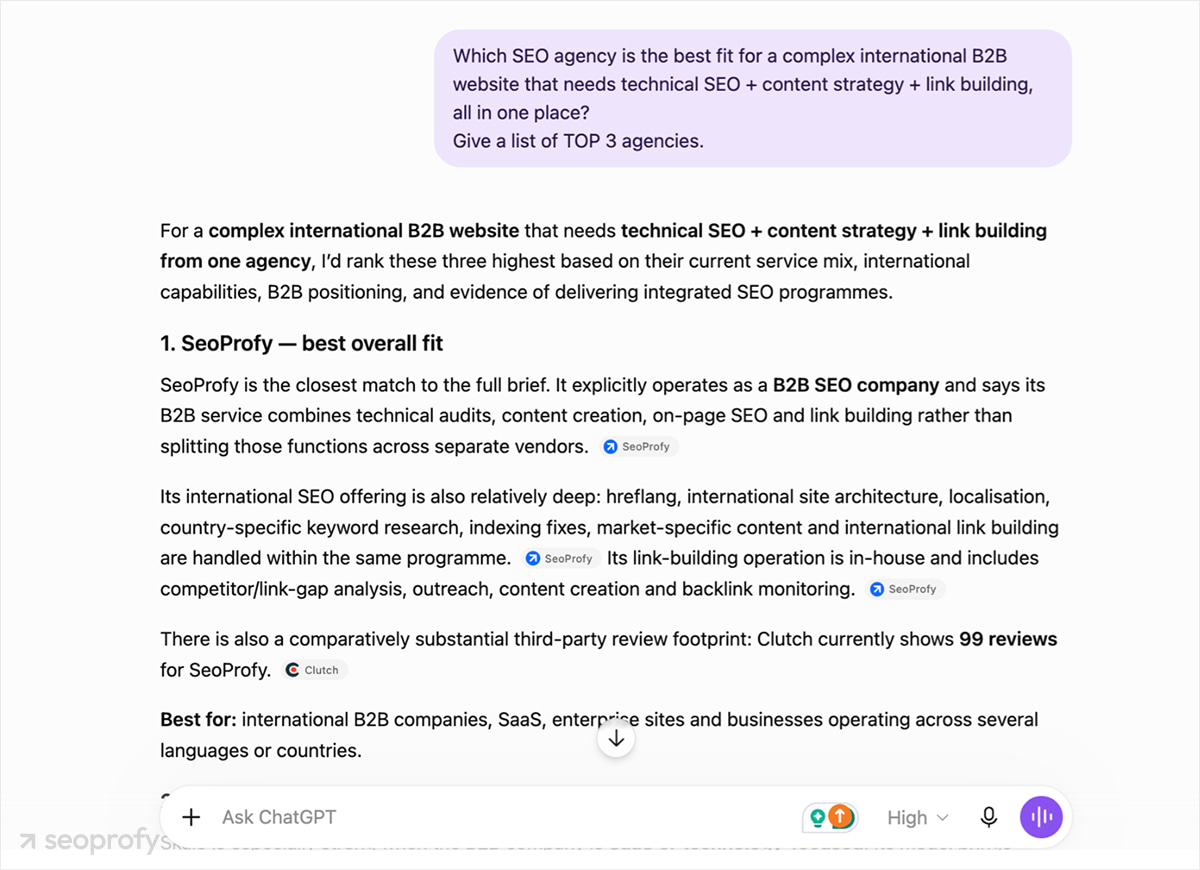
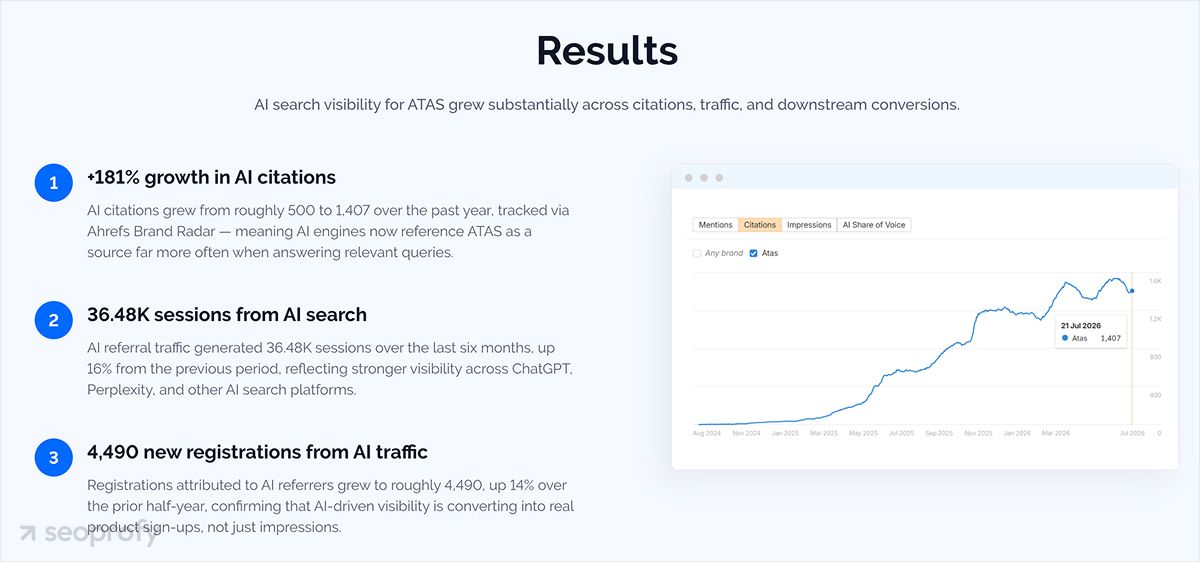
Once those techniques started holding up, our team brought them into client projects. The ATAS case is a good example. For this B2B trading analytics platform, our work increased AI citations by 181%. AI referral traffic generated 4,490 registrations in six months, and the B2B trading analytics platform moved into the top three for AI Share of Voice among its competitors.
That is what this AEO strategy guide comes from. Several years of testing helped us build strategies that paid off on our site and then worked again for clients.
What Is AEO for B2B?
AEO for B2B is the work of making your website easy for AI systems to understand. When a buyer asks a relevant question, they can pull information from your pages and cite the source. They can also mention your company and send qualified traffic back to the site.
So how do AEO and SEO differ, and where does GEO fit?
Over the past few years, Google and LinkedIn have filled up with new search acronyms: AEO, GEO, and SEO. People started mixing them, and the lines quickly blurred. Let’s unblur it:
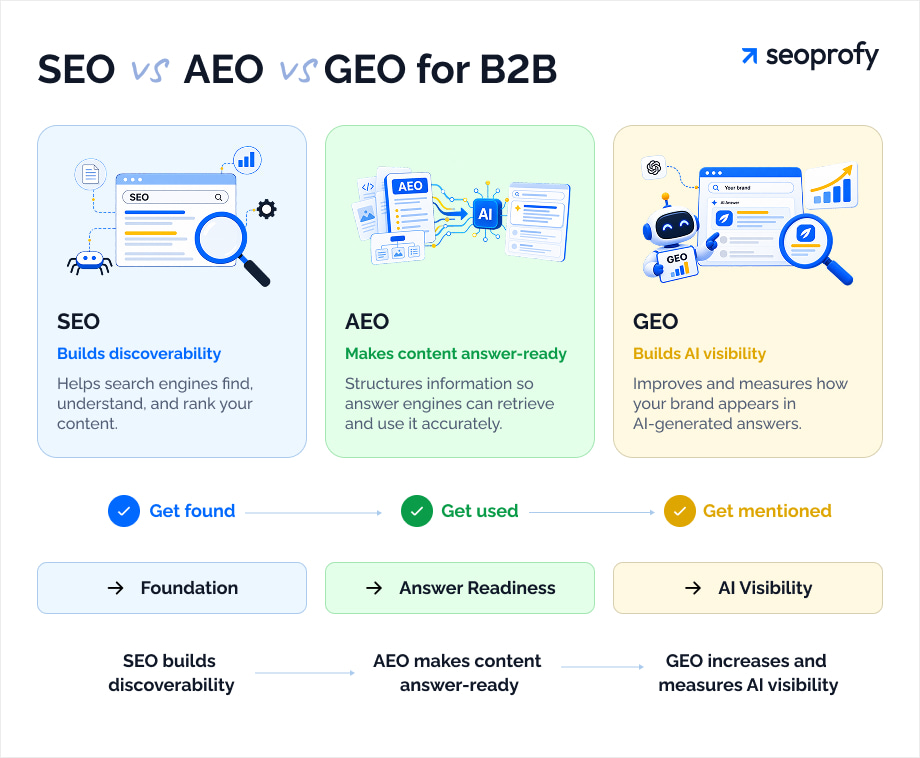
SEO (search engine optimization) creates the foundation. It helps search engines find the page, understand its topic, and decide whether it deserves visibility for a query. In B2B SEO, that work runs through search intent and site structure. Authority matters too, because even a useful page can struggle if the domain has little credibility behind it.
AEO (answer engine optimization) takes the information on that page and makes it retrievable as an answer. A product claim needs context. To do that, the amount of interpretation an AI system has to do before it can use your content needs to be minimized. And how do you actually achieve that? We’ll get into the details in this article.
GEO (generative engine optimization) looks at what happens after that. It tracks whether AI systems mention your company and which sources they rely on when they do. It also shows where competitors appear instead.
Quite literally, these are layers built on top of one another. SEO earns the page a place on search engine results pages. Answer engine optimization gives modern systems something precise to use. GEO shows whether your brand is winning visibility across AI-generated answers. Together, they connect traditional rankings and AI visibility within the same search strategy.
Why B2B Companies Need an AEO Strategy Now
AEO matters now because AI has moved upstream in B2B research. Buyers no longer wait until late-stage comparison to use it. Many start there.
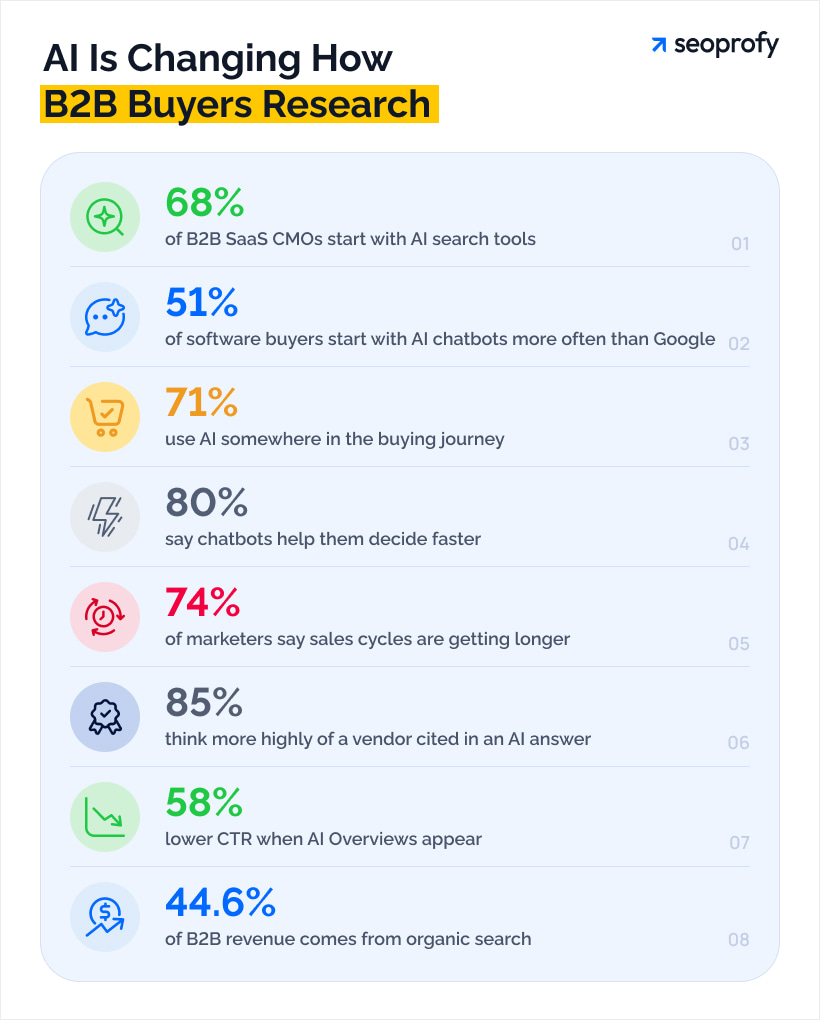
Wynter’s 2026 research found that 68% of B2B SaaS CMOs start their searches with AI search tools before turning to traditional search engines. And G2 found that 51% of software buyers now start research with an AI chatbot more often than Google. Another 71% use one somewhere in the buying journey. Four in five said chatbots helped them reach a purchasing decision faster.
This does not mean B2B sales cycles suddenly became short. Our B2B marketing roundup reports that 74% of marketers see them getting longer. AI compresses the research inside that cycle.
Buyers can compare vendors and build a shortlist before anyone speaks to sales. And since lead generation remains the top priority for 91% of B2B marketers, brand visibility during that early research stage is difficult to ignore.
The first impression may now happen in AI search results before the click. G2 found that 85% of buyers think more highly of a vendor cited in an AI answer. At the same time, Ahrefs measured a 58% lower click-through rate for the top result when an AI overview appeared. So, your page may get fewer visits, but its content can still influence the decision through the answer.
B2B SEO remains the foundation. SeoProfy’s data attributes 44.6% of B2B revenue to organic search. However, AEO builds on that authority and gives AI systems clearer material to cite reliably. This gives you AI visibility and traffic and eventually leads from a new channel. So next, we’ll show you how to build an AEO strategy for B2B businesses.
How to Build a B2B AEO Strategy: 6 Steps
For marketing teams, an AEO strategy can look more complicated than it is because every new tactic gets presented as a separate discipline. In practice, a solid B2B strategy consists of six steps. None of them works in isolation, but you also do not need to rebuild your entire site at once. Here is the framework:
- Map your ICP and buying-committee questions.
- Structure content so AI can retrieve clear answers.
- Publish original data and expert-led content.
- Add schema markup and define your brand entities.
- Earn third-party mentions and trust signals.
- Refresh and update high-performing pages.
We’ll go through each step separately and show how to apply it to a B2B site.
1. Map Questions Across the Buying Committee
One ICP rarely means the same questions for everyone. The user wants to see how the product fits the workflow. Security cares about data handling. Finance needs a case for the spend. AI sees those questions separately, so your content should too.
Here is where to pull them from:
- CRM. In HubSpot, open Sales Workspace > Deals, then switch between Closed Won and Closed Lost. Read the loss reason. Open the notes and copy the buyer’s exact question.
- Sales calls. Open transcripts from your call recorder. Search discovery calls by stems like “how do you.” Repeat the search in demos. Save the speaker’s role with each question.
- Google Search Console. Go to Performance > Search results > Queries. Add filters for terms buyers use during evaluation. Pricing is one. Integration is another.
- Put everything into one sheet: ICP, stakeholder, exact question, source, existing URL, and missing proof.
Run the process separately for each ICP segment. Enterprise buyers need more security evidence than a 30-person SaaS company. The pattern tells you what deserves a dedicated page and what belongs in an answer block. You will also see which role has no useful page.
2. Structure Content for Retrieval
Models process text as tokens, which are pieces of words and punctuation. But a model’s context window is not the same as the passage a retrieval system pulls from your page. Gemini can handle 1 million or more tokens in context, and Claude supports up to 1 million.
AI-powered search engines still tend to split content into smaller chunks and retrieve the pieces closest to the query. OpenAI File Search defaults to 800-token chunks with 400 tokens of overlap. Google’s RAG guidance recommends 1,024-token chunks with 256-token overlap.
That changes how the page should be structured. If the product name sits in one chunk and the answer lands in another, the passage may lose context and be skipped or cited badly.
Keep each answer together:
- Use the buyer’s question as the heading.
- Give direct answers in the first two or three sentences.
- Keep the company or product name beside claims.
- Put evidence directly under the claim.
- Use tables for comparisons and lists for steps.
The explanation can continue afterward. The part AI needs should not depend on the next section.
3. Publish Original Data and Expert-Led Content
AI systems already have thousands of pages explaining the same B2B topics. Original data gives them a reason to cite yours.
Use material the company already owns:
- Choose one dataset from product analytics, CRM records, support tickets, or customer surveys: Fix the period before you start the analysis.
- Publish the findings on a dedicated page: Put each statistic in a separate sentence and state how many users, deals, or responses the result covers.
- Add the methodology directly beside the findings: Explain where the data came from and how you calculated the result. In our work, we mention pages more often when AI systems can see the method behind the number without searching for it elsewhere.
- Put the subject-matter expert on the page: Use their full name and role. Ask them to explain the result, then attribute it directly.
- Build case studies from first-hand project data: Give the starting metric first. Then document the work. Add the measurement period and final result.
AI cannot generate this kind of data on its own, so it must pull it from your website and cite the source. Generic explanations work differently: Claude or GPT can often produce them from what they already know, without opening your page at all. So, more original data gives AI more material worth citing, which can lift AI visibility and bring qualified traffic back to your pages.
4. Add Schema Markup and Define Brand Entities
Schema gives AI crawlers and search engines explicit labels for the things already on the page. Article markup can identify the author and publisher. It also records the publication date and the latest update. FAQPage connects each visible question to its answer. Organization markup tells Google which company the site belongs to.
Google says this helps it understand page meaning, but there is no special structured data markup that guarantees inclusion in Google AI Overviews or AI Mode. The same applies to other answer engines.
The setup needs to stay consistent:
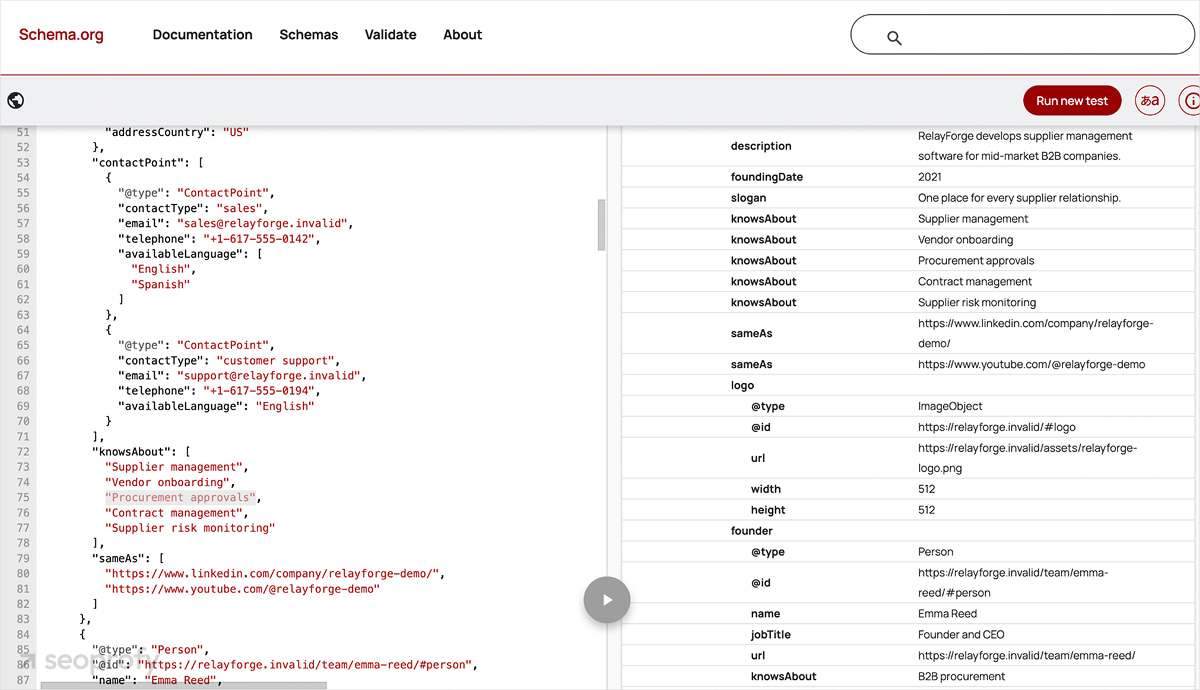
- Give the company one permanent @id, such as https://example.com/#organization, and reuse it across the site.
- Connect every article to that entity through the publisher.
- Create separate Person entities for real experts and connect them through author.
- Use sameAs for official profiles that clearly belong to the same company.
- Mark up only information people can actually see on the page.
Run the finished page through Google’s Rich Results Test. It shows which Google-supported markup is valid.
Then check the same URL in Schema.org’s validator, which catches problems in schema types Google does not use for rich results. After publishing, monitor the page in Google Search Console because template changes can break valid markup later.
5. Earn Third-Party Mentions and Trust Signals
Brand mentions are references to your company on external websites (with or without links). They are trust signals for AI and search systems, helping confirm that your brand is real and relevant. But these mentions rarely appear on their own. You earn them in a way similar to how you earn backlinks.
The most useful sources are usually:
- G2 reviews: They show how real customers describe the product and which use cases they connect with it.
- Partner pages: A public partner listing confirms that another company works with you.
- Guest content: A useful article under your expert’s name builds an association between that person, the company, and the topic.
- LinkedIn: Consistent posts from founders and subject-matter experts create more places where the brand appears in a clear professional context.
A strong B2B SEO services team can handle both backlinks and mentions because the process barely changes. The same outreach system can build both types of links across the sources that AI systems pull from.
6. Refresh and Update High-Performing Pages
Ahrefs’ July 28, 2025 study of 17 million citations found that URLs cited by AI assistants were 25.7% fresher than pages ranking in Google. That does not mean changing the date will suddenly win citations. It means old numbers, outdated product details, and dead sources make a page easier to skip.
We’d refresh pages on this schedule:
- Product and pricing pages: monthly, or the moment plans and features change.
- Comparison pages: every quarter. Competitor pricing and positioning rarely stay still for long.
- Statistics pages: every three to six months.
- Evergreen guides: every six to twelve months, unless traffic or rankings start dropping sooner.
When you revisit one of these pages, look for what has actually become outdated. Maybe the pricing table no longer matches the product, the cited study has a newer edition, or the screenshots show an interface that no longer exists. Fix those parts first. Keep the same URL unless the topic itself has changed, so the page keeps the links and rankings it has already earned.
How to Identify the Right Questions to Target
For B2B AEO, start with questions that can move a company onto or off the shortlist. Search volume is often tiny, and that is fine. A question that comes up on six sales calls may be worth more than a broad keyword with 2,000 monthly searches because it sits much closer to an actual buying decision. The source matters too. It tells you why the question came up and what kind of page should answer it:
| Source | What to pull from it |
| Sales-call transcripts | Questions that delay the next step or appear across several deals. Note who asked and where the deal stalled. |
| Webinar Q&As | Follow-up questions the presentation did not answer. These often belong in product pages or technical FAQs. |
| LinkedIn groups | Posts asking for vendor recommendations. Pay close attention to the reasons people reject the obvious options. |
| Bing Webmaster AI Performance | Queries where your pages already appear in AI-driven search results. Check which URLs earn citations and where coverage is still thin. |
| Keyword tools | Run the exact questions from sales calls through Ahrefs Keywords Explorer or the Semrush Keyword Magic Tool. Use the Questions filter to find close variants, then compare the ranking pages to see which phrasings belong to the same topic and which need separate answers. Search volume shows whether the issue appears beyond your own pipeline. |
First, group the questions by target audience. Then sort them by buying stages. Product-fit questions belong close to product pages. Vendor comparisons need dedicated pages. Questions tied to proof usually need case data or input from a subject-matter expert.
We’ll strengthen the parts of your site that affect both search rankings and AI visibility.
- Technical SEO
- Content structure
- Entity clarity
- Authority building
How to Measure B2B AEO Performance
Do not judge AEO strategy success by referral traffic alone. A buyer can see your company in an AI answer and never click. You still influenced the shortlist. So track four things:
- Traffic from AI referrals: In GA4, open Reports → Acquisition → Traffic acquisition. Change the dimension to Session source / medium, then search for chatgpt.com, perplexity.ai, gemini.google.com, and copilot.microsoft.com. Add Landing page + query string to see which URLs receive visits. Compare engaged sessions and key-event rate. HubSpot users can open Reporting → Reports → Traffic Analytics → Sources → AI Referrals and click the session count to break it down by platform.
- Conversions and revenue: Connect your digital marketing data with demo requests or trial starts by marking them as key events in GA4. Then open Advertising → Attribution → Attribution paths and check whether AI referrals appear before conversion. For B2B revenue, we’d recommend using HubSpot’s Closed Revenue by Source report and filtering the original traffic source to AI referrals. Track qualified opportunities and closed-won revenue beside form fills.
- Visibility and share of voice: In Ahrefs Brand Radar, create a report with your brand and competitors. Open Overview, then switch between ChatGPT, Perplexity, and Gemini. Record mentions, citations, and AI share of voice for each platform. In AI responses, use Only brand, With others, and Others only to find prompts where competitors appear but you do not appear.
- Brand sentiment: AI tools may mention your company without presenting it positively. Stay in AI responses and filter for answers containing your brand. Read the wording. Tag each answer as recommended, neutral, negative, or inaccurate. Note the claim behind the label and the source AI cited. The cited pages show you where the problem can be fixed.
Frequently Asked Questions
What is AEO for B2B?
AEO for B2B means structuring website content so AI models can find a specific answer, understand it correctly, and cite the page.
A page should explain the product capability, the conditions around it, and any limitations in one clear section. When that information is scattered across several pages, the model has to piece the answer together. It may miss an important detail or choose another source that explains the same point more directly.
Should B2B companies replace SEO with AEO?
No. AEO strategy depends on SEO.
SEO helps search engines crawl the site and understand its pages. It also builds the authority that content needs to compete. AEO then makes the information on those pages easier for large language models to retrieve and use.
A page can rank well in Google and still get ignored by AI-powered answer engines. This often happens when the answer is buried under a long introduction. It can also happen when different parts of the answer sit in separate sections or lack enough context to make sense on their own.
How do new B2B brands get cited by AI answer engines?
New brands can earn citations by publishing information that AI systems cannot find anywhere else.
- Product benchmarks that provide clear comparisons Artificial intelligence models can reference.
- Original surveys with transparent methodology and documented results.
- Real client work results with measurable outcomes and defined impact.
- Unique proprietary data or numbers that exist only on your site.
A focused dataset can earn citations even when the brand has limited authority in the wider category.
How do you identify the right questions for B2B AEO content?
For a successful AEO strategy, start with the questions that affect real buying decisions. Sales-call transcripts show what prospects still need explained after visiting your site. Lost-deal notes reveal where the proof was weak. RFPs show what buyers ask once they begin comparing vendors.
Then check those questions against Search Console data and AI prompt tracking. Search volume can help with prioritization, but it should not make the final decision.
A low-volume question may still influence several enterprise deals or repeatedly slow buyers down. Prioritize the questions your sales team hears most often, and your current pages still fail to answer clearly.
Conclusion
AEO is traditional SEO adjusted for a different kind of result. You still need pages that rank and a site with enough authority behind it. Then you make the useful parts easy to use in AI-generated responses without losing the company name or the point you were making.
State the answer clearly. Keep the entity attached to it. Put the proof close enough that the claim still makes sense when an AI system pulls that passage on its own.
You do not need to rebuild the whole site at once. Start with the pages that already bring qualified traffic and fix the sections buyers rely on most.
Our AEO services can help you handle the audit and roll the changes out across the site.

As a Content writer at SeoProfy, Hanna Zhytnik creates SEO content grounded in research, data, and ongoing hypothesis testing. With more than 5 years of experience across B2B, SaaS, and ecommerce, she brings both breadth of knowledge and a sharp focus on modern search. Her strength lies in turning complex experiments into clear explanations, bridging the gap between deep SEO practice and accessible content.