

SEO never stays in one place. Search algorithms change, new AI advancements emerge, and some tactics that worked in the past might no longer be effective. All these changes show that specialists need to stay on top of SEO statistics 2026 to create strategies that actually deliver results.


To save you time, we reviewed the latest reports from HubSpot, SparkToro, and others to provide the most up-to-date information on how people search in 2025-2026. Additionally, our insight will help you discover the most efficient strategies to focus on this year.
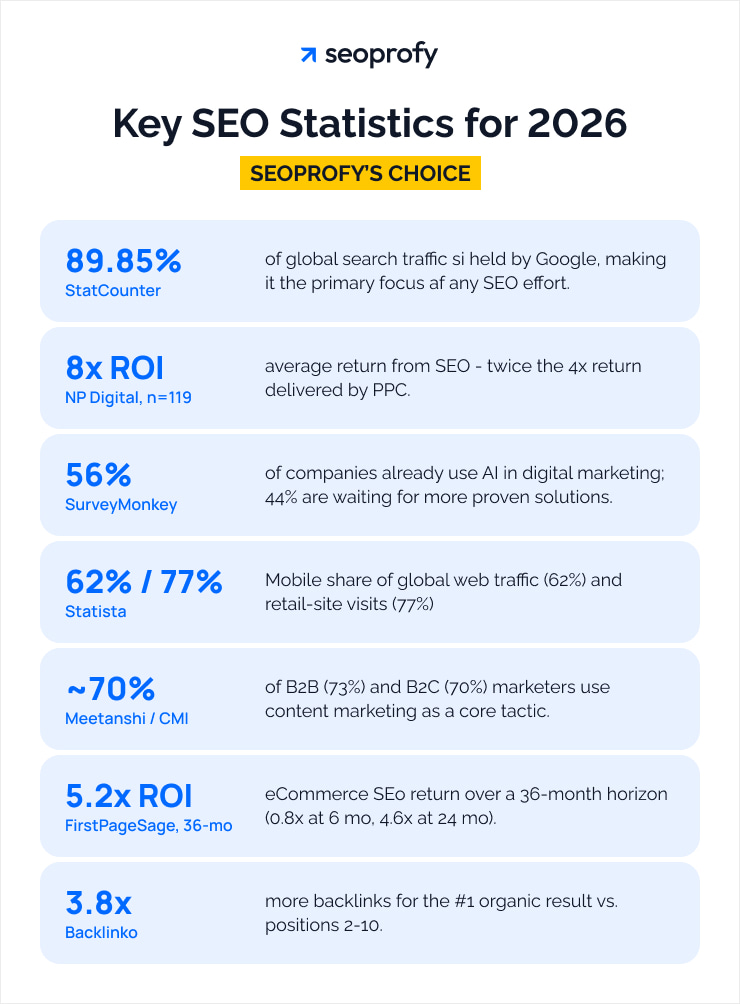
- Google holds about 89.85% of global search traffic, making it the primary focus of any SEO effort.
- SEO delivers an 8x ROI, which is twice that of PPC.
- 56% of companies already use AI in digital marketing, while 44% are still waiting for more stable and proven solutions to appear.
- Mobile accounts for over 62% of global web traffic and 77% of retail visits.
- Around 70% of B2B and B2C marketers use content marketing as a key tactic in their strategies.
- Ecommerce SEO can generate 5.2x ROI in over a 36-month period.
- Top pages on Google Search usually have 3.8 times more backlinks than lower-ranked ones.
Top Trends and Takeaways for 2026
As the data shows, the operating conditions of SEO are shifting, especially with the expansion of AI search traffic. Below are the main trends we observe for 2026:
- AI Overviews redistribute clicks inside the top results: Ranking remains necessary, but traffic now depends on whether a page is selected as a cited source inside AI answers. AI Overviews expanded to 200+ countries and 40+ languages, so selection for citations becomes the main moat for many queries. Build pages that read like extractable evidence: tight definitions, specific claims with supporting context, and clean sectioning that an answer system can quote.
- Conversational follow-ups shift content demand: Google now lets users jump from AI Overviews into AI Mode conversations, rewarding sites that cover the obvious question plus second- and third-order questions (edge cases, constraints, “what changes if…”).
- Link authority alone no longer guarantees competitive rankings: Search engines correlate brand mentions, author profiles, citations in databases, conference appearances, and referenced expertise. In several verticals, pages with fewer backlinks may outrank stronger link profiles if external validation exists.
- Scaled content risks site-wide visibility loss: Google’s updated spam policies define mass-produced low-value pages as “scaled content abuse,” regardless of whether AI or humans created them. Large inventories of templated or lightly rewritten pages correlate with indexing suppression and ranking instability. Upgrading existing pages often produces stronger results than expanding volume.
- Traffic drops do not equal demand drops: Search demand remains massive: Google processes more than 5 trillion searches annually. The changes are search behavior and distribution: queries involving alternatives, comparisons, reliability, and pricing retain external clicks because users still need validation before decisions. SEO value concentrates on research-stage searches rather than basic informational ones.
Search Engine Statistics
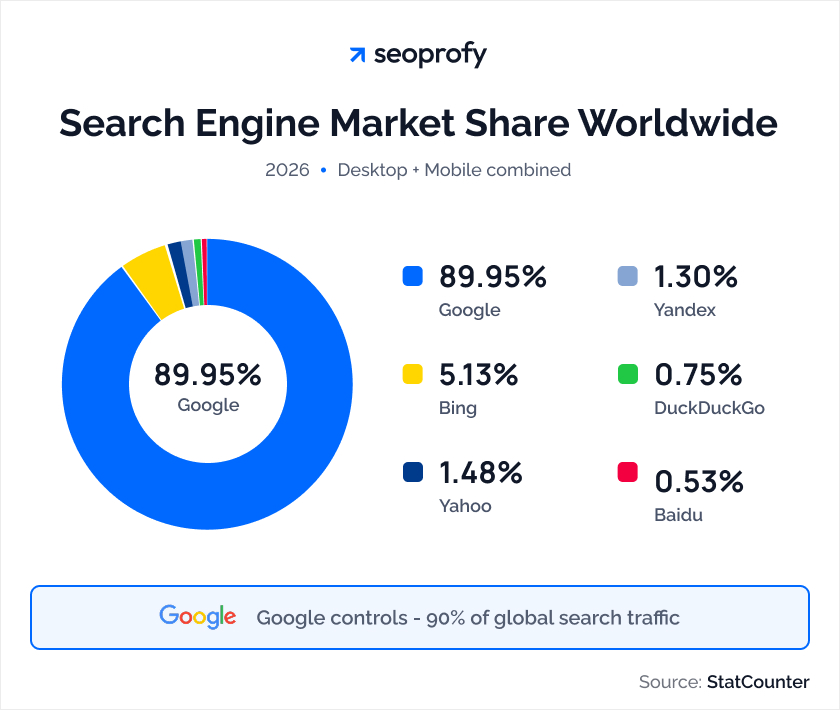
- Google holds 89.85% of the global search engine market; Bing 5,13%, Yandex 1.3%, Yahoo 1.48%, DuckDuckGo 0.75%, Baidu 0.53% (StatCounter)
- 80.3% of internet users used a search engine in the past month (DataReportal Digital)
- Google processes more than 5 trillion searches per year (~14 billion per day) (SearchEngineLand)
- Average visit on google.com: 10 min 14 sec, 8.71 pages per visit, 28.2% bounce rate (Similarweb)
- On mobile devices, 93.58% online experiences begin with Google. (StatCounter)
- Average visit on bing.com: 7 min 55 sec, 6.32 pages per visit, 32.06% bounce rate (Similarweb)
- Among U.S. desktop users: 20.24% perform 100+ searches/month, 9.16% perform 250+ searches/month, top 1% perform 1,000+ searches/month (MarketingCharts)
Google Search Statistics
Google is the absolute leader in search traffic. Here are the stats that show the importance of optimizing for it.
- 65% of people who search on Google click on an organic search result. (Backlinko)
- 21.1% of Google’s web traffic comes from the US. (Statista)
- 59% of Google users click on just one page during their search session. (Backlinko)
- Brands account for around 45.7% of Google searches. (Ahrefs)
- Only 9% of users scroll all the way to the bottom of the first page of Google. (Backlinko)
- The average Google user makes about 4.2 searches per day, while the median is closer to 1.8. (Exploding Topics)
- Over 1.5 billion people use Google Lens every month, and by 2025, Google had already recorded more than 100 billion visual searches. (Think with Google)
AI SEO Statistics
ChatGPT and other generative AI platforms have significantly contributed to the popularity of AI SEO services. Is it worth investing in them in 2026? Our search engine optimization statistics reveal whether robots truly can improve your business promotion.
For a better understanding of how AI is influencing SEO, refer to these AI SEO Statistics.
- 56% of marketers say their company is already using AI, while 44% prefer to wait until solutions on the market become more stable and proven. (SurveyMonkey)
- The most common ways marketers use AI are for basic content creation (76%), inspiring their creative thinking (71%), and analyzing market data (63%). (Salesforce)
- Just 19% of executives in the C-suite say their company’s revenue has grown beyond the 5% mark with AI tools adoption. (McKinsey)
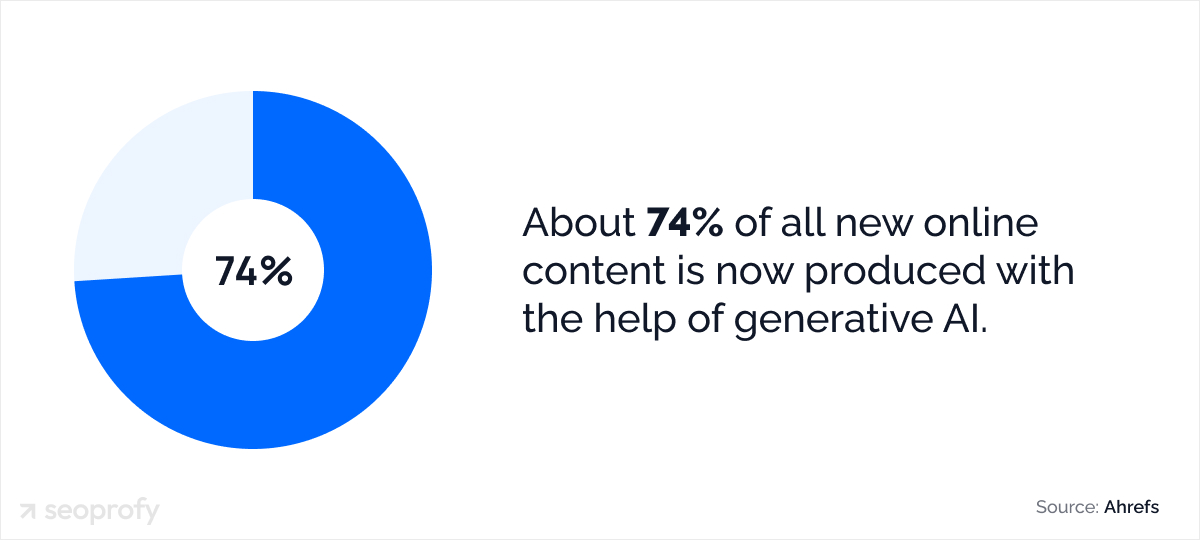
- About 74% of all new online content is now produced with the help of generative AI. (Ahrefs)
- 82.1% of respondents say they can recognize AI-generated content at least occasionally. (SearchEngineLand)
- 35% of US adults use AI tools weekly. 51% of them are Gen Z representatives. (YouGov)
- Despite the rising number of daily prompts, ChatGPT’s search market share is still <1%. (SparkToro)
- ChatGPT remains the leading tool for content creation, used by 44% of those surveyed. (Ahrefs)
- Perplexity processes nearly 600 million monthly search queries. (Backlinko)
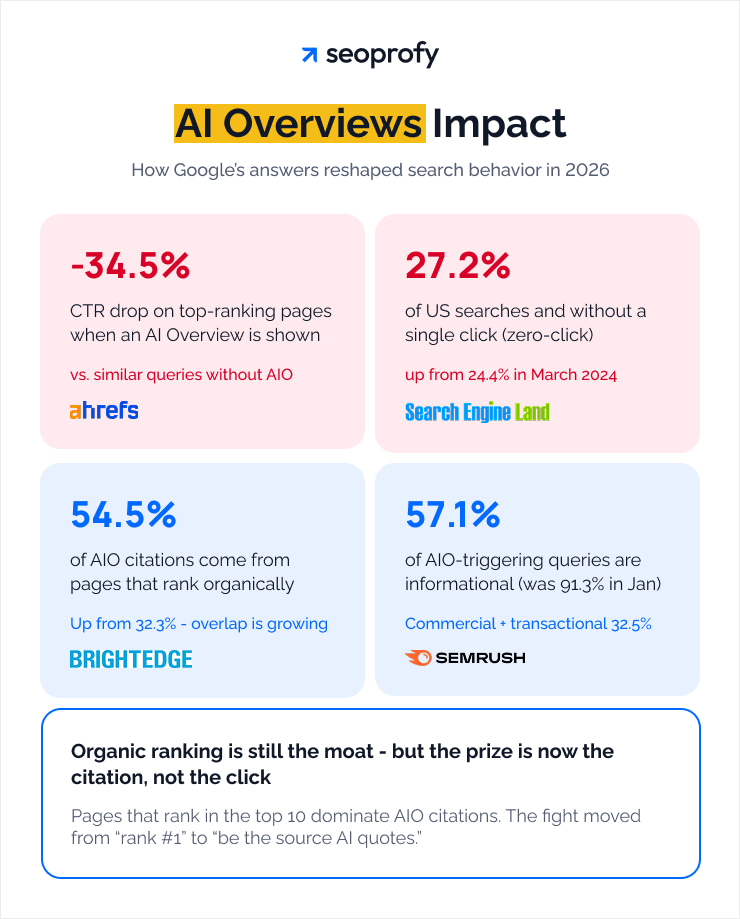
- 54.5% of AI Overview citations come from pages that rank organically. (BrightEdge)
- The presence of AI Overviews correlates with a 34.5% decline in click-through rates. (Ahrefs)
- Only 16.7% of AI Overview citations come from the top 10 results, meaning that Google’s algorithms see diversity within ranked content. (BrightEdge)
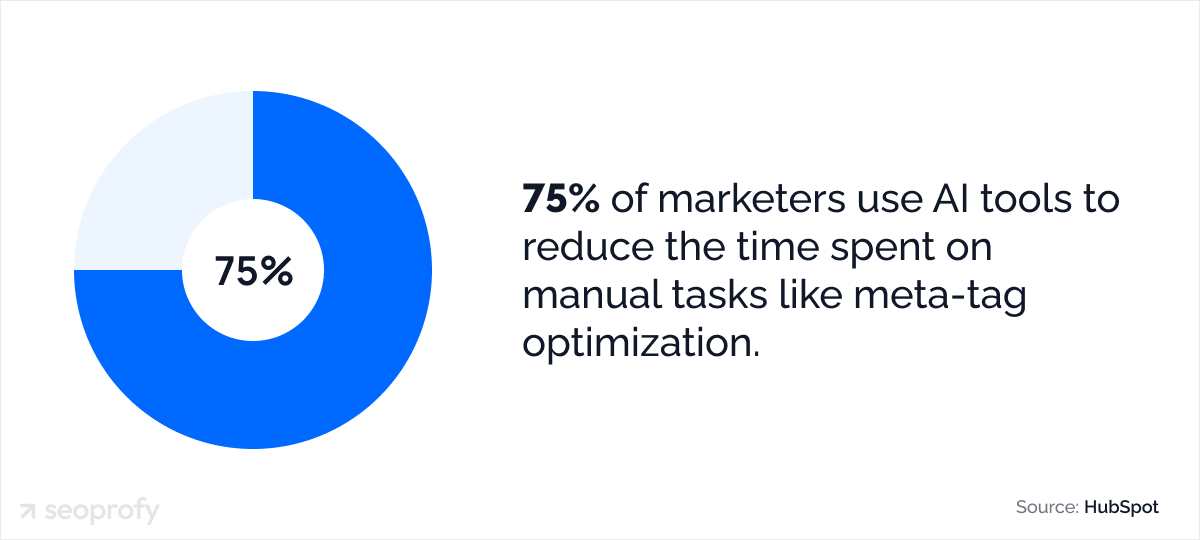
- 75% of marketers use AI tools to reduce the time spent on manual tasks, such as optimizing meta descriptions. (HubSpot)
- 66% of consumers say traditional search has five years before AI takes the lead. (SearchEngineLand)
- Companies that use AI in their content process publish about 42% more each month. On average, they post 17 new articles per month, compared to 12 for those who still create content manually. (Ahrefs)
- In January 2025, 91.3% of AIO-triggering queries were informational. By October, that share fell to 57.1%, as commercial and transactional visibility expanded. Navigational queries rose sharply from 0.74% to 10.33% over the same period. (Semrush)
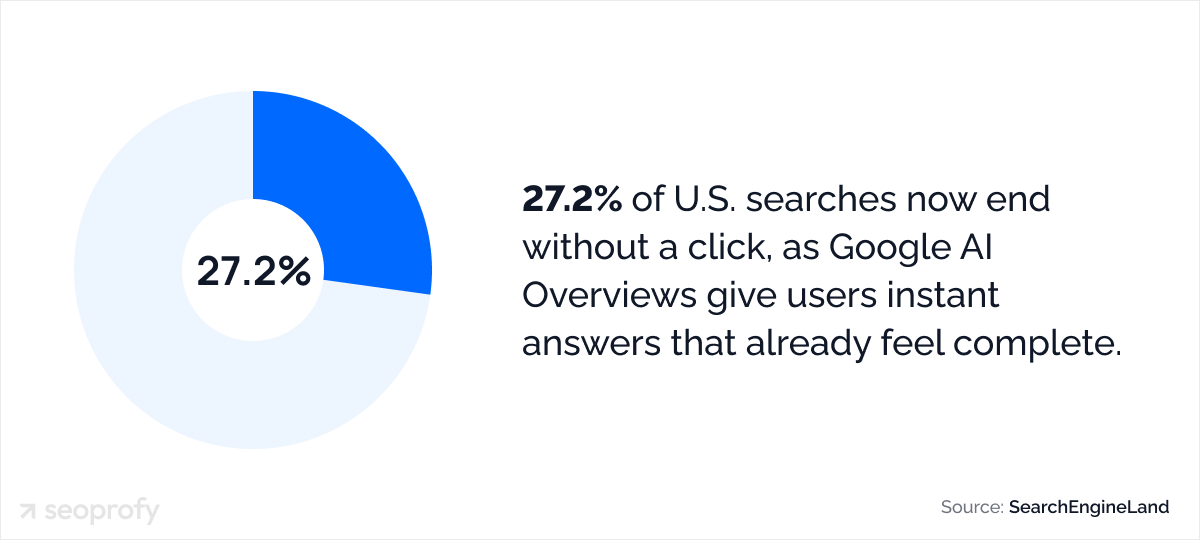
- 27.2% of U.S. searches now end without a click, as Google AI Overviews give users instant answers that already feel complete. (SearchEngineLand)
- In October 2025, 57.16% of keywords triggering AI Overviews were informational, 18.57% were commercial, 13.94% were transactional, and 10.33% were navigational. (Semrush)
Ranking Statistics
SEO search ranking determines how high your website will appear when a user looks for specific information. This is one of the most important metrics to monitor, as it directly influences organic traffic from search engine results pages (SERPs). We’ve prepared the following SERP statistics to provide you with useful insights to consider when planning your SEO strategy.
- 94% of the pages on the internet get zero traffic from Google. (SE Ranking)
- Moving up a single position in Google search results can increase the click-through rate (CTR) by 32.3%. (Backlinko)
- About 73% of the pages that rank in Google’s top 10 are more than 3 years old. (Ahrefs)
- A site’s overall link authority, known as Domain Rating, has a strong connection to higher rankings. (Backlinko)
- When ranking pages, Google prioritizes content that is helpful, trustworthy, and created for people rather than just for search engines. (GoogleSearchCentral)
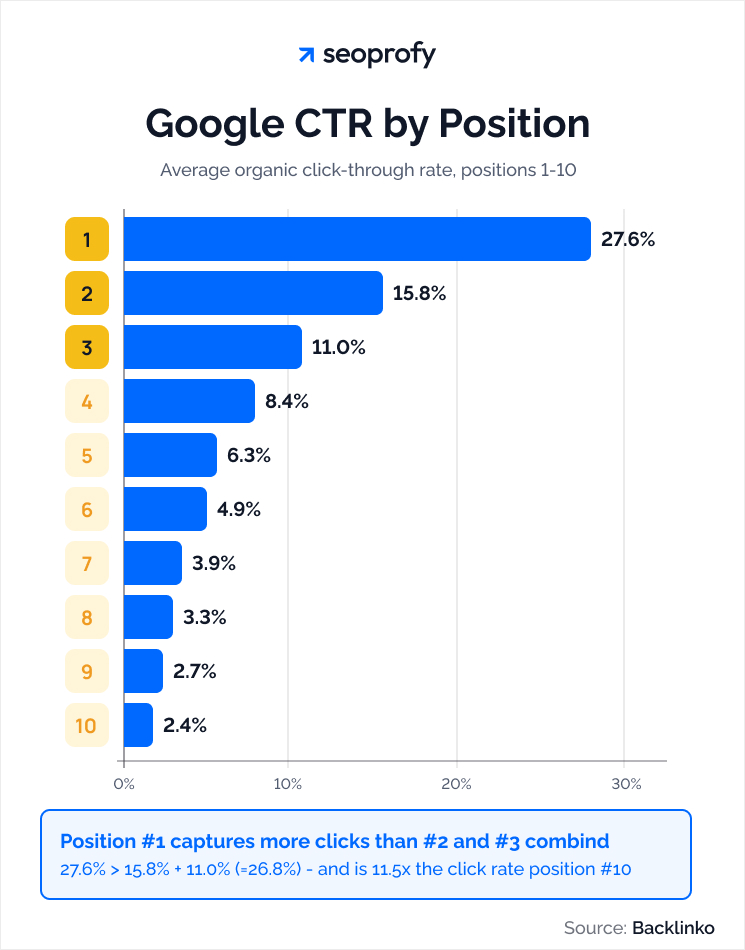
- The first result on Google takes 27.6% of all clicks, followed by 15.8%, 11%, 8.4%, 6.3%, 4.9%, 3.9%, 3.3%, 2.7%, and 2.4% for positions 2 to 10. (Backlinko)
Local SEO Statistics
These SEO performance metrics are essential for local business owners aiming to dominate the market. Following the most efficient trends revealed by detailed local SEO stats will undoubtedly boost your online presence.
- 93% of consumers have made a purchase after reading online reviews. (Brightlocal)
- GMB listings with 50+ reviews and a 4.5+ rating are 57% more likely to rank in the top local results. (SQ Magazine)
- Businesses that appear in the top 3 positions on Google Business Profile typically have over 250 Google images included in their listing. (Localo)
- Clients are 2.7 times more likely to consider a company reputable if it has a complete business profile on Google Maps and Search. (Google)
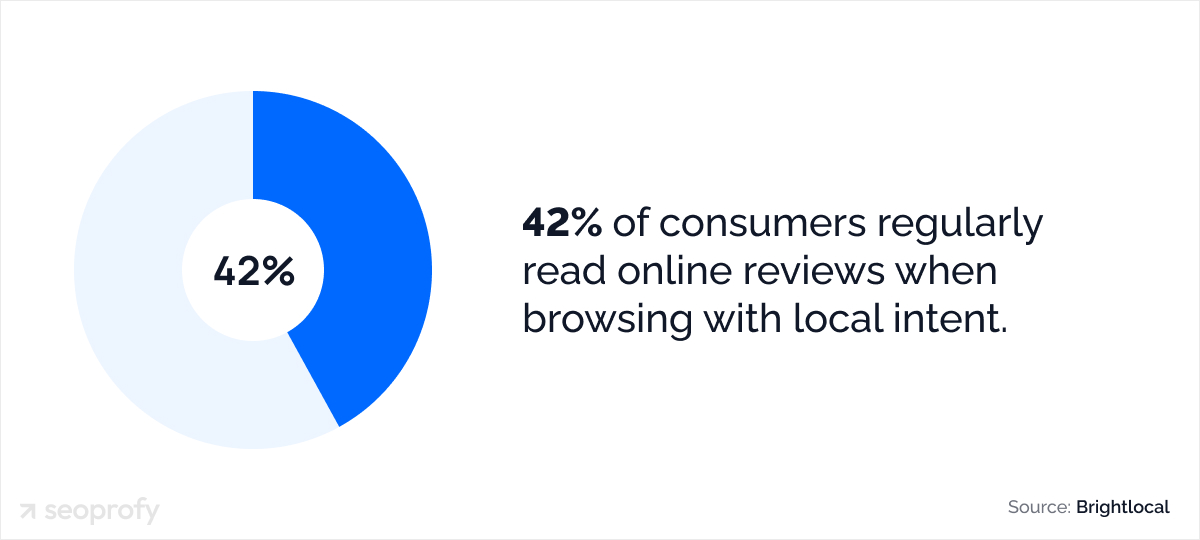
- 42% of consumers regularly read online reviews when browsing with local intent. (Brightlocal)
- The main factors that affect visibility in Google’s local pack are the chosen primary business category, the use of local search queries in the Google Business Profile title, and how close the company is to the user’s location. (Backlinko)
- On average, a GBP listing gets 81 monthly actions: 38% direction requests, 35% website visits, and 27% calls. (SQ Magazine)
- 29% of U.S. adults rely on local news outlets for reviews of businesses in their area. (BrightLocal)
- People are 70% more likely to visit local businesses with complete business profiles. (Google)
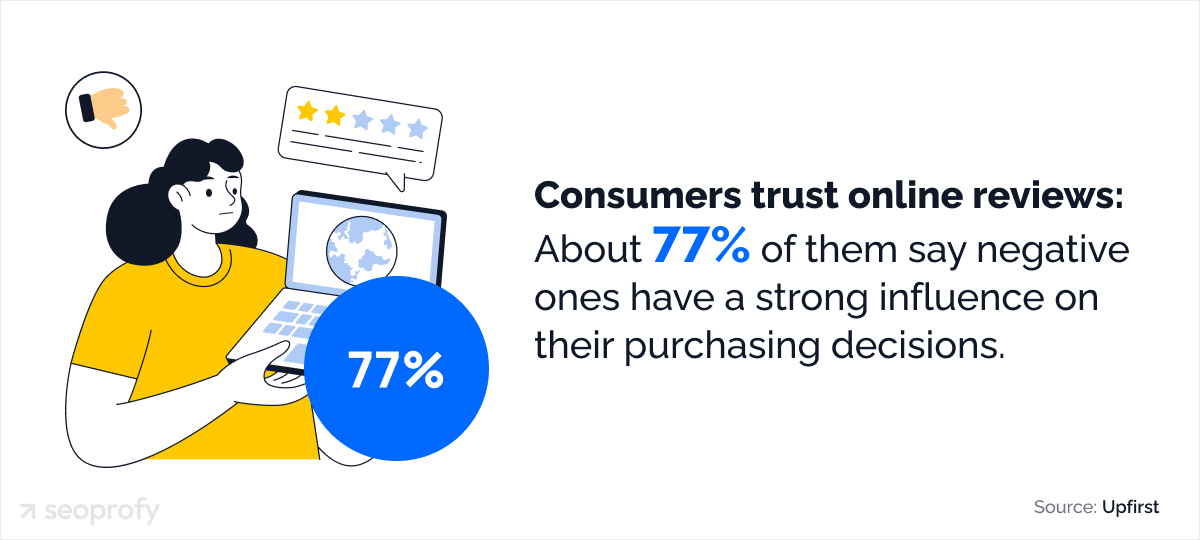
- Consumers trust online reviews: About 77% of them say negative ones have a strong influence on their purchasing decisions. (Upfirst)
- Local SEO services typically cost around $1,600 per month for small businesses, $5,000–8,000 for growing brands, and about $9,500 for companies in highly competitive local markets. (SeoProfy)
Keywords Statistics
Keywords play a critical role in the development of relevant, top-quality content. Get acquainted with the most interesting SEO stats related to this irreplaceable element of any successful search engine optimization campaign.
- Longer keywords tend to attract more clicks: search terms that are 10-15 words long receive 1.76 times more clicks than single-word queries. (Backlinko)
- As of 2026, “ChatGPT” is the most searched keyword on Google globally, with a monthly search volume of over 768 million. (Ahrefs)
The table below shows other popular search queries in 2026:
|
Keyword |
Search Volume (million) |
| Whatsapp web | 533+ |
| YouTube | 390+ |
| Chat GPT | 277+ |
| Translate | 254+ |
- Google Keyword Planner was shown to drastically overestimate search volumes in over 50% of cases. (Exploding Topics)
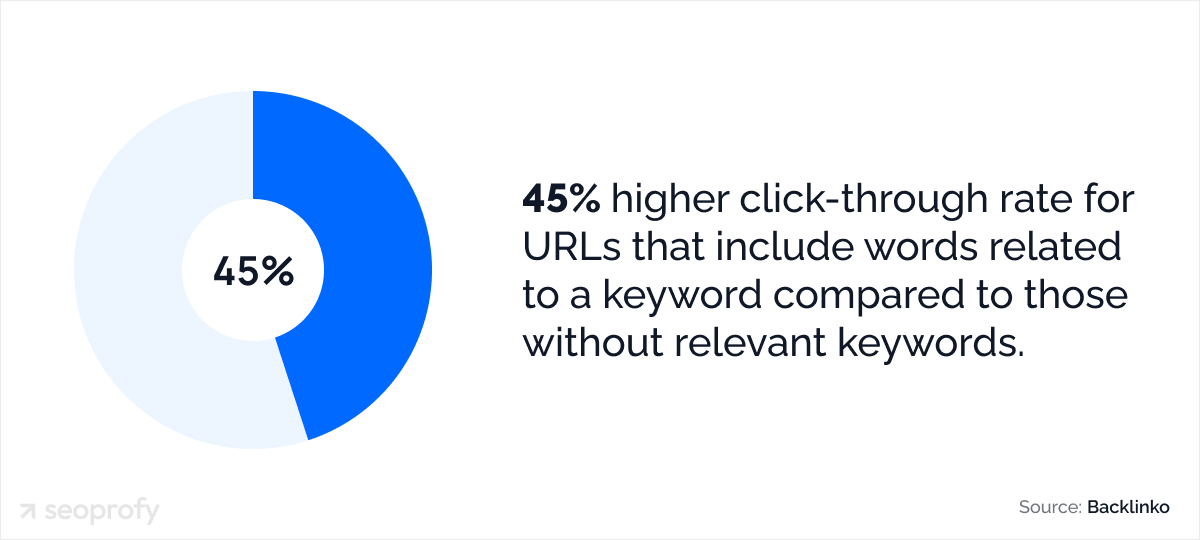
- URLs that include words related to a keyword have a 45% higher click-through rate than those without relevant keywords. (Backlinko)
- 46.08% of clicks in Google Search Console (GSC) go to hidden terms. (Ahrefs)
- 94.74% of keywords have monthly search volumes of 10 or less. (AIOSEO)
- Ranking for a certain number of keywords isn’t always a valuable SEO metric since most pages rank for terms with low search volume. (Backlinko)
Backlinks Statistics
Backlinks are among Google’s most important ranking factors. Check out these SEO stats to see why they matter in 2026.
- The #1 result in Google has approximately 3.8 times more backlinks than lower-ranked ones. (Backlinko)
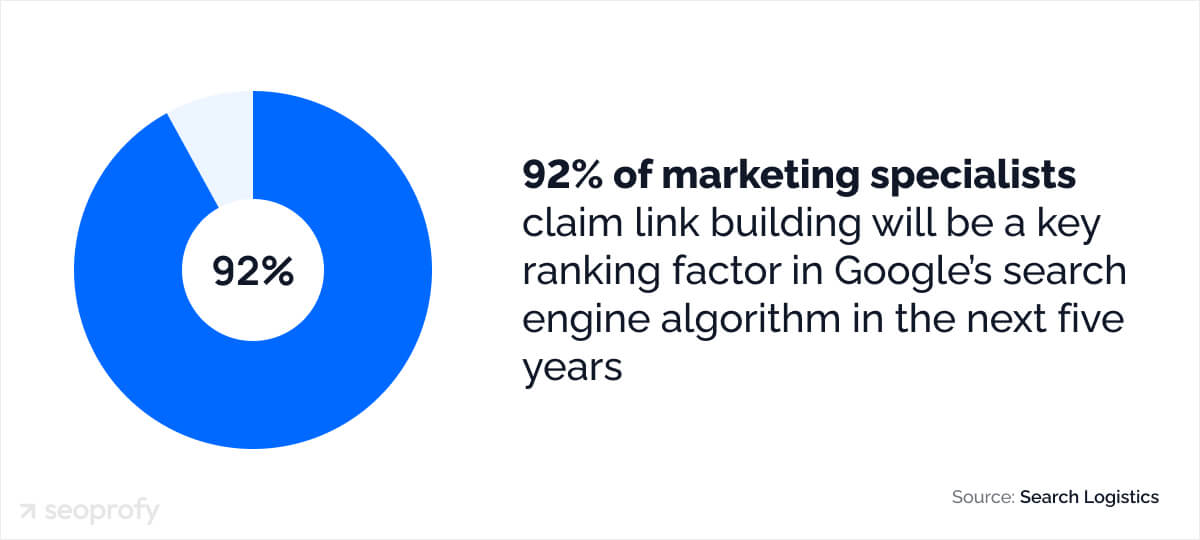
- 92% of marketing specialists claim link building will be a key ranking factor in Google’s search engine algorithm in the next five years. (SearchLogistics)
- Content with over 3,000 words generates 77.2% more backlinks than short articles (under 1,000 words). (IncRev)
- Around 92% of surveyed SEO specialists believe that competitors buy links. (Editorial Link)
- 66.5% of backlinks to websites added in the last 13 years are dead. (Ahrefs)
- Almost 95% of pages have no backlinks at all. (Backlinko)
- Titles including 14–17 words generate 76.7% more social media shares than shorter headlines. (IncRev)
- 44.02% of surveyed companies choose to keep link building in-house. (Editorial Link)
- Nearly 2.2% of all online content generates more than one unique backlink. (SearchLogistics)
- Pages with at least one exact match anchor have five times more traffic than pages without. (Zyppy SEO)
Content Marketing SEO Statistics
Content marketing remains important this year, as businesses rely on it to build brand awareness, attract leads, and keep their audience engaged. The search engine marketing statistics below show what goals marketers achieved with content last year and the strategies they plan to use in 2026.
- 73% of B2B marketers and 70% of B2C marketers include content marketing in their overall strategy. (Meetanshi)
- The average word count of a blog post in 2025 was nearly 1,333 words. (OrbitMediaStudios)
- One in four (25%) marketers plan to create content that reflects their brand’s values. (HubSpot)
- 50% of marketers say they actively invest in content marketing. (Meetanshi)
- Only 39% of marketers publish articles that are 2,000+ words and report strong results. (OrbitMediaStudios)
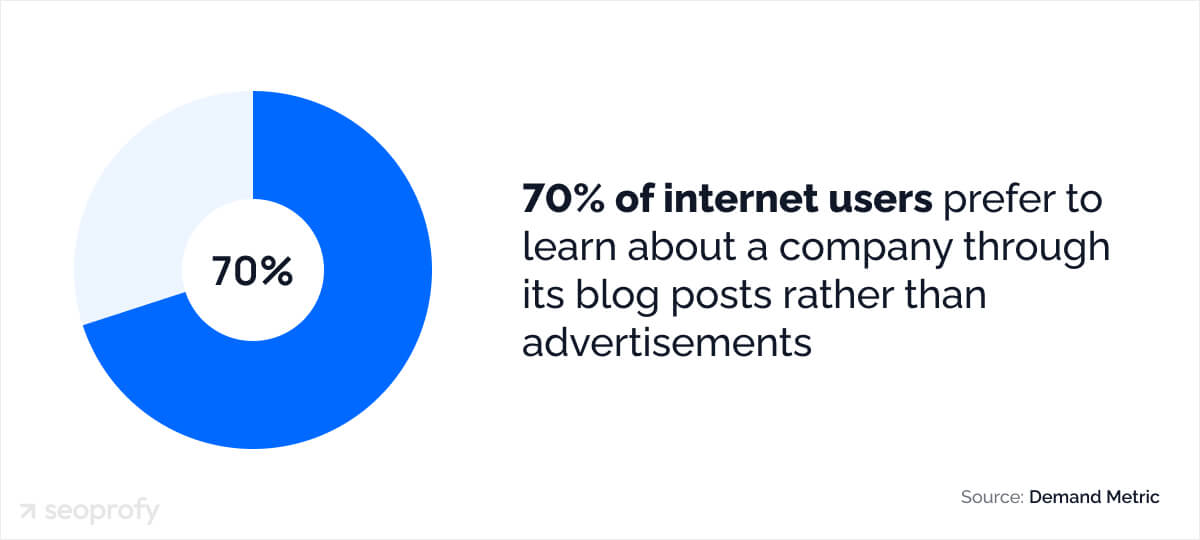
- 70% of internet users prefer to learn about a company through its blog posts rather than advertisements. (Hostinger)
Technical SEO Statistics
Marketers mostly focus on keywords, content, and backlinks. But how fast your site loads, how well it works on mobile, and how easy it is to navigate also shape the customer experience. These factors impact bounce rates, time spent on your site, and whether visitors become buyers. Below are the technical statistics that show common problems and the potential of technical SEO.
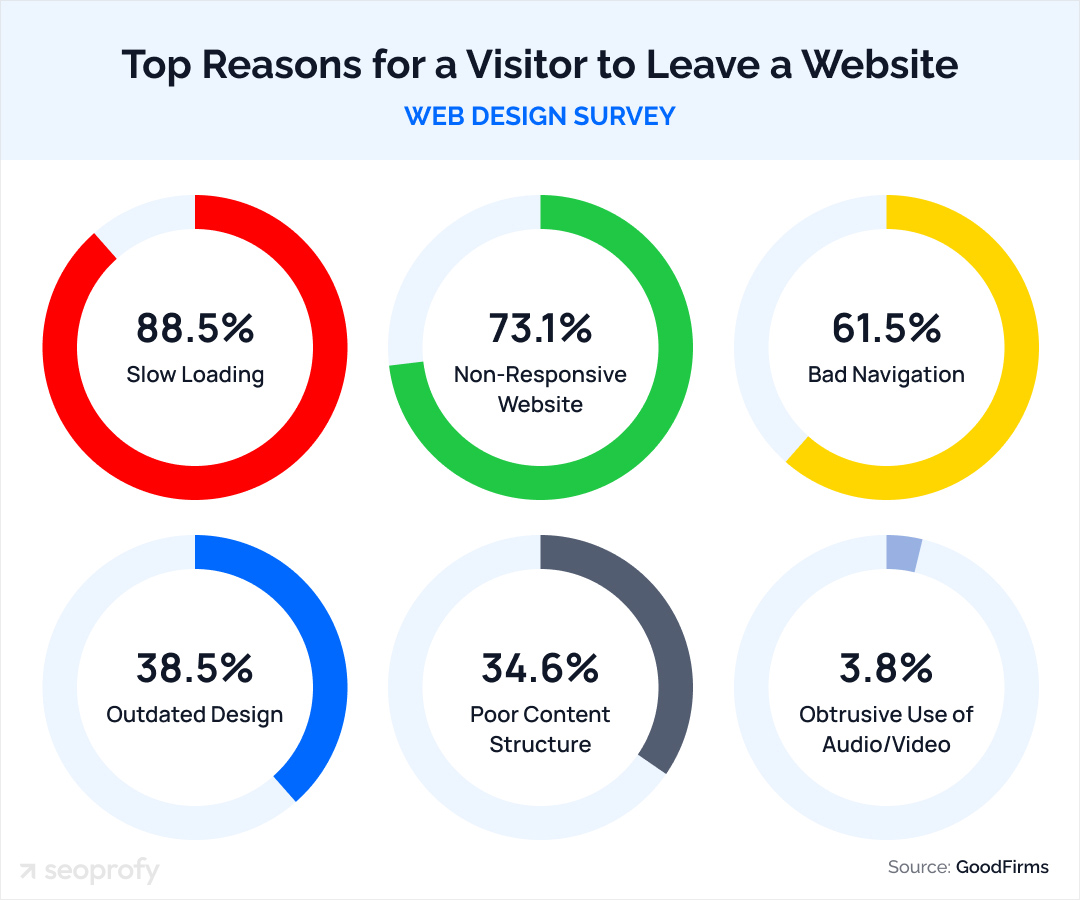
- 88.5% of survey respondents said slow loading time is the top reason visitors leave a website, while 73.1% pointed to poor mobile responsiveness as a major issue. (GoodFirms)
- Redirect errors are among the most common SEO issues found during SEO audits: an analysis of 11 million URLs found that 50% of redirect chains ended in errors, including 0.06% exceeding 10 hops. (ACM Digital Library)
- People spend about 1.5 times longer on pages that use structured data, and AMP pages with search features generate 3.6 times more engagement than those without. (Google for developers)
- About 51.8% of source websites meet the recommended Core Web Vitals performance standards. (Chrome for developers)
- Pages enriched with structured data earn roughly 25% more clicks than pages that lack this optimization. (Google for developers)
SEO Industry Statistics
The following statistics on search engine marketing will help business owners and marketers understand SEO costs and hiring trends. You can see from these SEO stats what companies pay for services and how much experts charge.
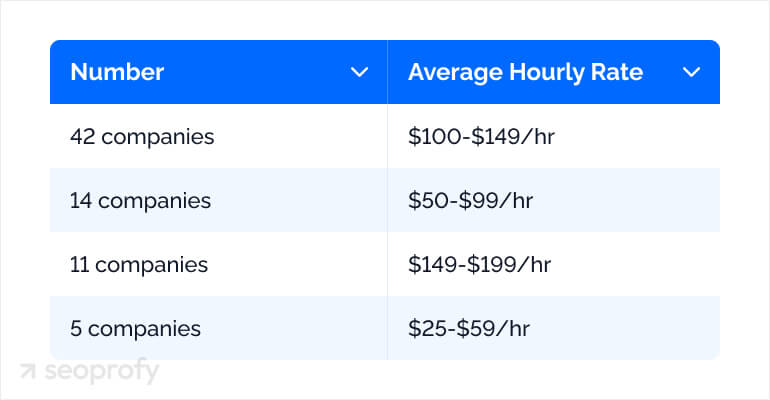
- The average cost of SEO services ranges from $25 to $199 per hour, with $150 being the most common rate. (SeoProfy)
- The average annual salary for SEO specialists is $86K. (Glassdoor)
- SEO professionals with 5 to 10 years of experience charge $500 to $1,000 per month. For those with 10+ years, the price can go up to $3,000. (SeoProfy)
- In 2026, salaries increased across the SEO market, ranging from nearly $161,500 for senior roles to $80,000 for non-senior roles. (Semrush)
- In the U.S., SEO professionals earn roughly 60% more than their counterparts in the EU. (SE Ranking)
SEO ROI Stats
Business owners invest in search engine optimization not just to improve their online presence but to grow their revenue. These SEO ROI statistics show why professional optimization is worth it.
- Emails (24%), paid social ads (20%), organic search (20%), and social media are the top marketing channels with the strongest ROI in 2026. (Clutch)
- Leads from search engines close at a rate of 14.6%, while outbound leads have a much lower close rate of just 1.7%. (Intergrowth)
- SEO campaigns achieve a positive return on investment (ROI) within 6 to 12 months. (SeoProfy)
- SEO delivers an 8x ROI, double the 4x return of PPC, based on SEO data from 119 companies. (NP Digital)
- 45% of marketers are planning to invest in SEO and content marketing. (Clutch)
- On average, companies that implement SEO strategies save up to 400% on ad spend without affecting the attraction of their target audience. (Lyfe Marketing)
Mobile SEO Statistics
More people have started using mobile phones to search for information online. Refer to the following SEO facts that show this trend.
- Google holds over 95.2% of the global mobile search market. (StatCounter)
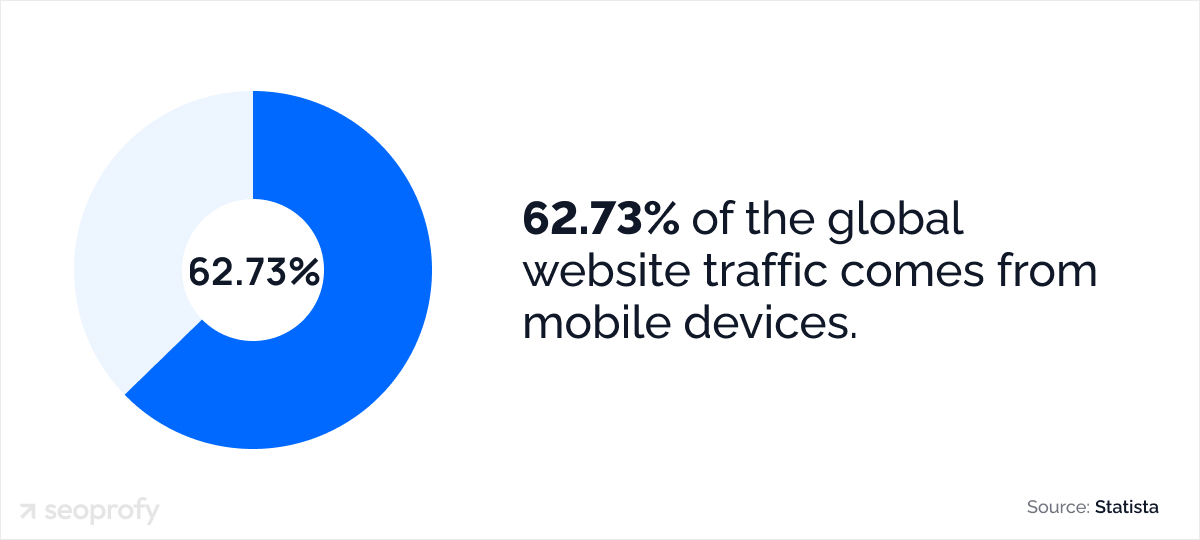
- 62.73% of the global website traffic comes from smartphone users. (Statista)
- Local mobile searches grow 50% faster than overall searches. (SeoProfy)
- Smartphones accounted for 77% of retail site visits in Q3 2025. (Statista)
- Almost 60% of Google mobile searches now end without a click. (SearchEngineLand)
Video SEO Statistics
Video content is very popular with users nowadays. People like learning about products and services through videos, and it’s one of the best formats for ROI. Moreover, the facts provided below also reveal the usefulness of video marketing:
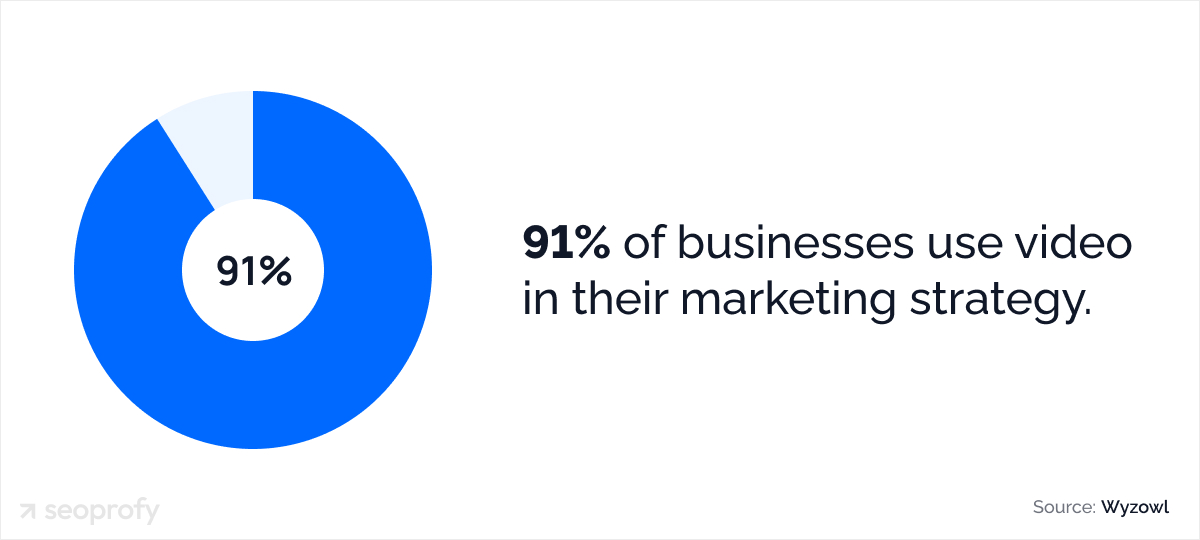
- 91% of businesses use video in their marketing strategy. (Wyzowl)
- Videos perform best on course, contact, and media pages: play rates reach 35%, 32%, and 33% respectively, with engagement around 50%, 51%, and 45%. (Wistia)
- Short-form videos deliver the highest ROI for businesses. (HubSpot)
- Form placement affects video conversions: the end of 60+ minute videos converts at 65%, the third quarter of 1–3 minute videos at 58%, and positions within the first to fourth quarter of 60+ minute videos at 40–45%. (Wistia)
- 82% of marketers noticed that video has helped them increase website traffic. (Wyzowl)
- Video captions are now used far more often, up 572% since 2021. Many marketers also pick higher-contrast player colors so videos are easier to read and follow. (Wistia)
- Roughly 88% of consumers say they are more inclined to purchase a product after watching a video about it. (Zebracat)
YouTube Video Stats
YouTube is the most popular platform for sharing videos. We’ve compiled a list of search engine optimization stats to help you better understand this platform’s trends.
- YouTube is the second most-visited website in the world by organic traffic (2.3B as of March 2026). (Ahrefs)
- It’s estimated that there are more than 5.1 billion YouTube videos. (SEO.AI)
- Most YouTube users are between the ages of 25 and 34. (Statista)
- The average YouTube visitor looks at over 9 pages per visit, and the bounce rate is 30.28%. (Semrush)
- People trust YouTube creators’ recommendations 98% more than traditional ads. (Think with Google)
Voice Search SEO Statistics
Siri, do you have any interesting voice search statistics to share? Let’s see!
- The number of voice assistant users in the U.S. is expected to grow from 142 million in 2022 to 157 million in 2026. (Statista)
- 73.7% of marketers plan to maintain or even increase investments in voice search optimization in 2026. (HubSpot)
- Around 100 million people in the United States, or about 35% of those aged 12 and older, own a smart speaker and use voice search answers. (ScoopMarket)
- Roughly 32% of consumers say they use voice search daily instead of typing their search queries. (DigitalSilk)
- In 2025, the number of users in the United States reached about 92.4 million for Google Assistant, 87.0 million for Apple Siri, and 77.6 million for Amazon Alexa. (Emarketer)
- Voice search results tend to load 52% faster than average search results. (DemandSage)
B2B SEO Stats
In 2026, a well-thought-out content marketing plan will still be a big piece of a successful B2B strategy. But where else are businesses putting their time and money? These B2B SEO statistics show the trends and tactics companies are betting on:
- About 73% of B2B buyers say they prefer making purchases online. (Sana)
- 92% of B2B marketers are using short articles and blog posts in their content strategy. (Content Marketing Institute)
- B2B companies that published nine or more blog posts per month saw a 20.1% increase in yearly Google traffic, compared to 16.2% for those posting 5–8 times a month. (StrataBeat)
- Among the most successful B2B teams, audience insight stands out as the main driver of results: 82% say knowing their audience well is key to content marketing success. Other commonly cited contributors include producing high-quality content (77%), strong industry expertise (70%), and capable team members (69%). (Content Marketing Institute)
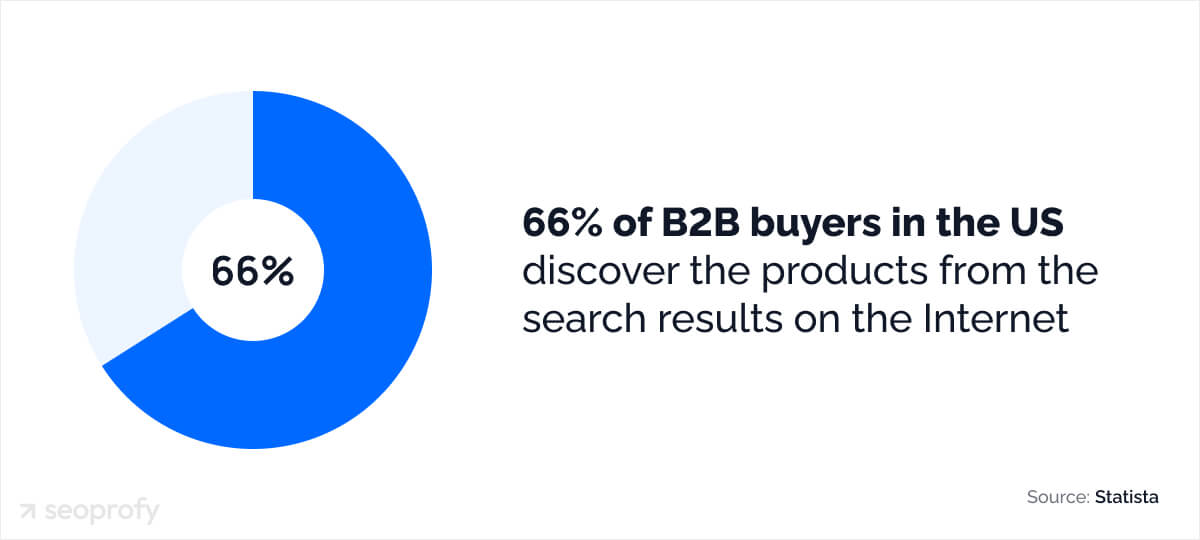
- 66% of B2B buyers in the US discover products through search results on the internet. (Backlinko)
- Around 79% of B2B marketers consider blog posts an effective way to share SEO content, reach customers, and strengthen brand awareness. (DigitalSilk)
- B2B businesses in the SaaS space that publish original research see an 20.9% improvement in Google top 10 rankings. (StrataBeat)
- The top objective for B2B marketers in 2025 was to build more brand awareness. (SageFrog)
eCommerce SEO Statistics
Running a successful retail company requires a complete understanding of SEO trends and how they may change in the near future. Use our ecommerce search engine optimization stats to make sure your online business heads in the right direction.
- The average eCommerce SEO ROI in a 6-month frame is 0.8x. (FirstPageSage)
However, if you continue investing in your SEO efforts, the results will be even more impressive:
|
Time Frame |
Average ROI |
| 12 Months | 2.6x |
| 18 Months | 3.8x |
| 24 Months | 4.6x |
| Over 36 Months | 5.2x |
- In 2025, the average ecommerce brand ranked for 1,783 organic keywords, generating about 9,625 monthly visits from organic search. (Reboot)
- Aliexpress.com is the most visited ecommerce site in the world in 2026 (536,762,173 visits). (Semrush)
- Global ecommerce sales are forecast to hit $6.4 trillion worldwide in 2026 (Shopify)
- Ecommerce email marketing is the only channel with an average ROI of 4.5x, which is higher than SEO (3.2x). (FirstPageSage)
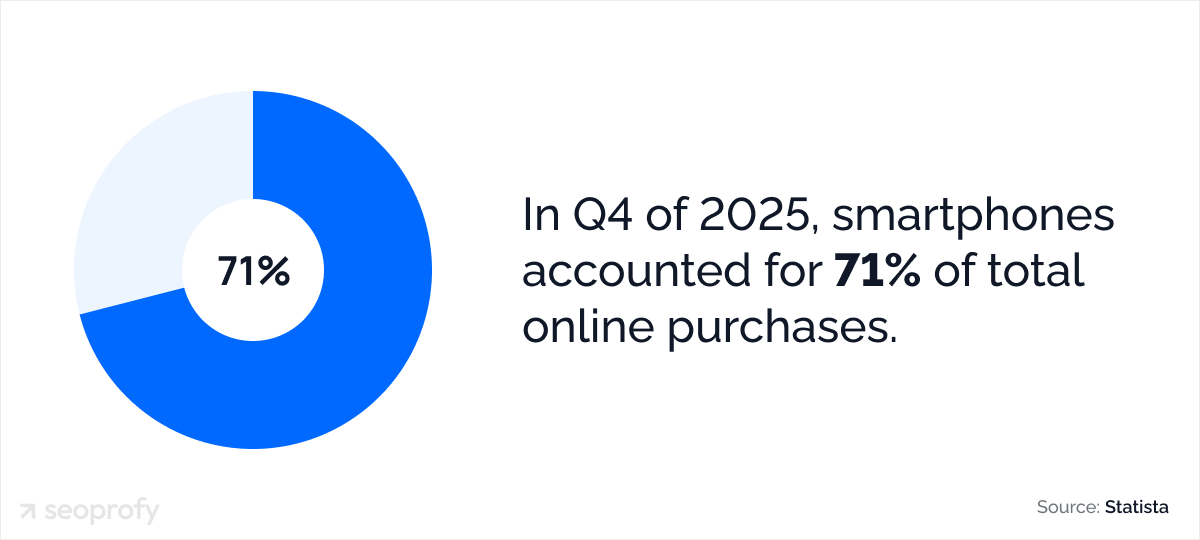
- In Q4 of 2025, smartphones accounted for 71% of total online purchases. (Statista)
- Almost 60% of shoppers in the United States now use tools like ChatGPT or Gemini to assist them while shopping. (Shopify)
Summing Up
We hope the top SEO statistics 2026 we shared with you today will be useful and give you plenty of ideas for strategies to invest in this year. With the help of these stats, you’ll be equipped to create data-driven strategies for your business and get more customers, traffic, and sales.
And if you’d rather not handle it all on your own, our professional SEO services at SeoProfy are here to help you make it happen. So, if you’re looking for a team that truly understands how SEO works in 2026, you’ve just found it.

As a Content writer at SeoProfy, Hanna Zhytnik creates SEO content grounded in research, data, and ongoing hypothesis testing. With more than 5 years of experience across B2B, SaaS, and ecommerce, she brings both breadth of knowledge and a sharp focus on modern search. Her strength lies in turning complex experiments into clear explanations, bridging the gap between deep SEO practice and accessible content.