

Personal injury lawyer marketing is the process of using SEO, local search, paid ads, content, reviews, and conversion tracking to attract injured clients and turn qualified leads into signed cases.


Competitive firms use more than one channel. SEO captures long-term demand, Local Services Ads and PPC bring high-intent calls faster, and content answers the questions injury victims ask before contacting a lawyer. In 2026, this also means adapting content for AI Overviews, local search, paid channels, and fast intake.
Broader legal marketing statistics can show market direction, but the real goal is signed cases, not traffic alone.
- Personal injury lawyer marketing works best when SEO, PPC, local services ads, content, reviews, and conversion tracking support one goal: retained cases.
- Marketing for personal injury law firms should start with audience research, case-value data, and clear KPIs before the budget goes into any channel.
- A fast, mobile-first law firm website and strong local SEO help turn “near me” searches into calls and consultations.
- Injury lawyer advertising can bring faster leads, but only with tight tracking, negative keywords, call monitoring, and quick follow-up.
- Content, FAQs, case studies, and clear entity signals can support trust and visibility across organic search, AI Overviews, and answer engines.
How Do You Build a Winning Personal Injury Marketing Strategy?
In marketing for personal injury law firms, a winning strategy aligns case priorities, target clients, channels, budget, and KPIs before money is spent on SEO, PPC, or local visibility. The goal is not more marketing activity. It is more qualified consultations and retained clients. A successful marketing strategy should connect marketing tactics, budget, and campaign performance across various marketing channels. This keeps marketing efforts focused on cases the firm can actually sign.
Define Your Target Audience
Every personal injury audience differs by case type, urgency, location, and decision stage. Use data instead of assumptions to understand how potential clients search for legal help.
- Review your CRM, case outcomes, and intake forms to identify the profiles that bring the best results.
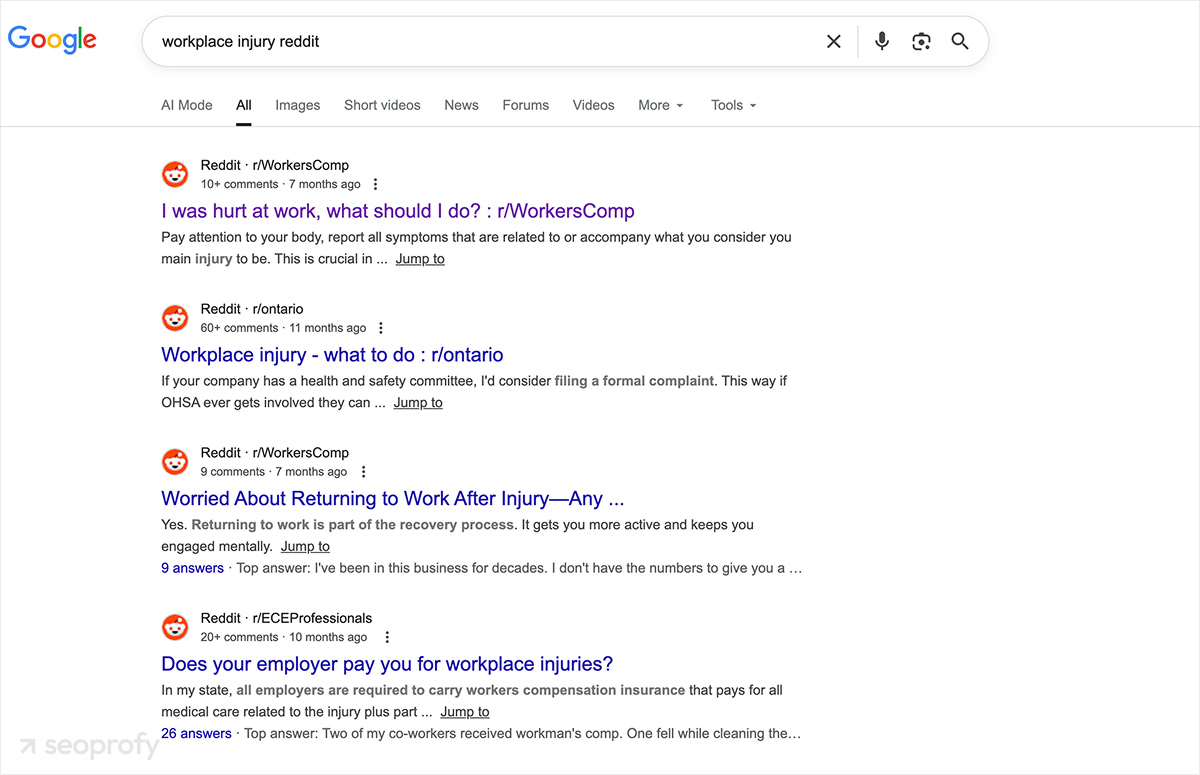
- Use Google Search Console, Semrush/Ahrefs, Also Asked, and Reddit discussions to see how potential clients describe their problems.
- Map segments by case type and urgency, such as car accident victims in Chicago who need a same-day consultation after a rear-end collision.
Set Clear Goals and KPIs
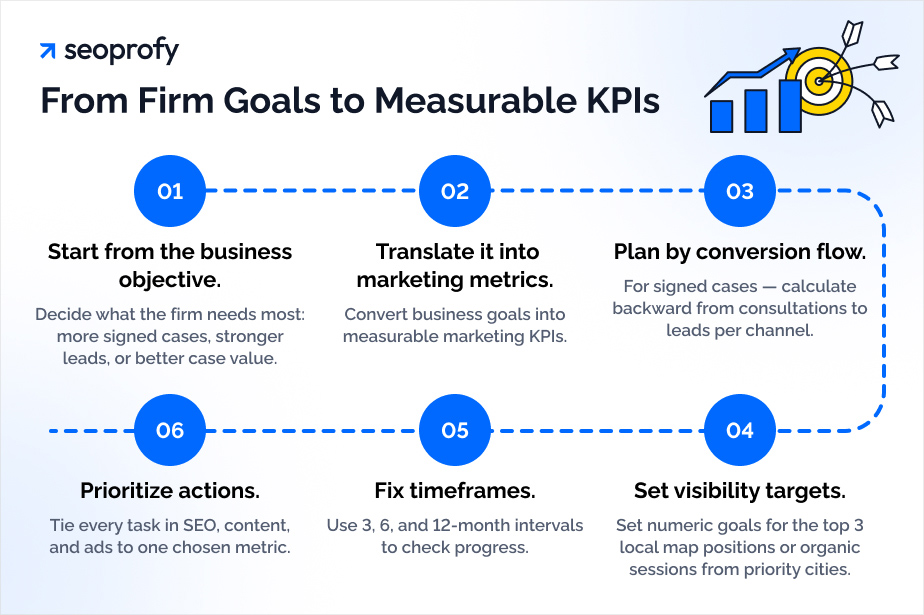
For growing your law firm, personal injury law firm marketing goals should focus on qualified consultations, lead-to-client rate, cost per booked consultation, and cost per retained client. Start with your own CRM and intake data, then calculate backward from retained clients to consultations, leads, and channel spend. Use the channel benchmarks in the budget section as planning ranges, not universal CPL targets.
Use SMART goals for each channel so the team can evaluate progress, compare costs, and adjust the budget before spending scales up.
Plan Your Personal Injury Lawyer Marketing Budget
Plan your marketing budget based on monthly capacity and the expected value per signed case. A practical 2026 range for personal injury firms is 8–12% of monthly revenue, while Clio’s broader law firm benchmark is 2–10%; SeoProfy’s law firm marketing budget guide explains how this shifts by firm size, competition, growth goals, and channel mix.
Before finalizing the budget, review competitor visibility, paid search costs, content output, and review volume in your market.
Use this allocation model as a starting point:
| Goal | SEO | PPC | Content | Reputation & PR |
| Build visibility | 50% | 15% | 25% | 10% |
| Generate fast leads | 25% | 55% | 10% | 10% |
| Strengthen authority | 40% | 20% | 25% | 15% |
Adjust the mix by case cycle: complex cases need stronger organic and content investment, while faster-turnover cases may need a larger paid ads share. Personal injury lawyers benefit most when the budget reflects case value, intake capacity, and proven acquisition channels. This helps firms attract more clients without wasting money on low-performing tactics.
Use this comparison table to choose the right channel mix before increasing spend:
| Channel | Typical CPL planning range | Time to leads | Lead quality | Best use |
| SEO | $50–$150 | Slower start, compounding over time | High when pages match local and case intent | Long-term organic visibility and lower cost per signed case |
| Google Ads search | $250–$600 | Fast | High intent but expensive | Testing competitive case types, cities, and landing pages |
| Local Services Ads | $80–$200 | Fast | Strong for call-first local leads | Verified calls, Google Screened trust, and high-intent local searches |
| Social media | Varies by offer and targeting | Medium | Usually needs nurturing | Brand trust, remarketing, video content, and community visibility |
Create and Optimize Your Law Firm Website for Conversions
In marketing for personal injury law firms, the website is where traffic becomes a consultation request. Visitors often arrive stressed, injured, or unsure whether they have a case, so every page should make the next step clear: call, submit a short case form, or request a free consultation.
A high-converting PI website combines fast loading times, a mobile-friendly UX, clear navigation, dedicated service pages, and strong CTAs. The sections below show how to make each of those elements easier for visitors to use and easier for your team to track.
Design a Fast, Mobile-Friendly Website
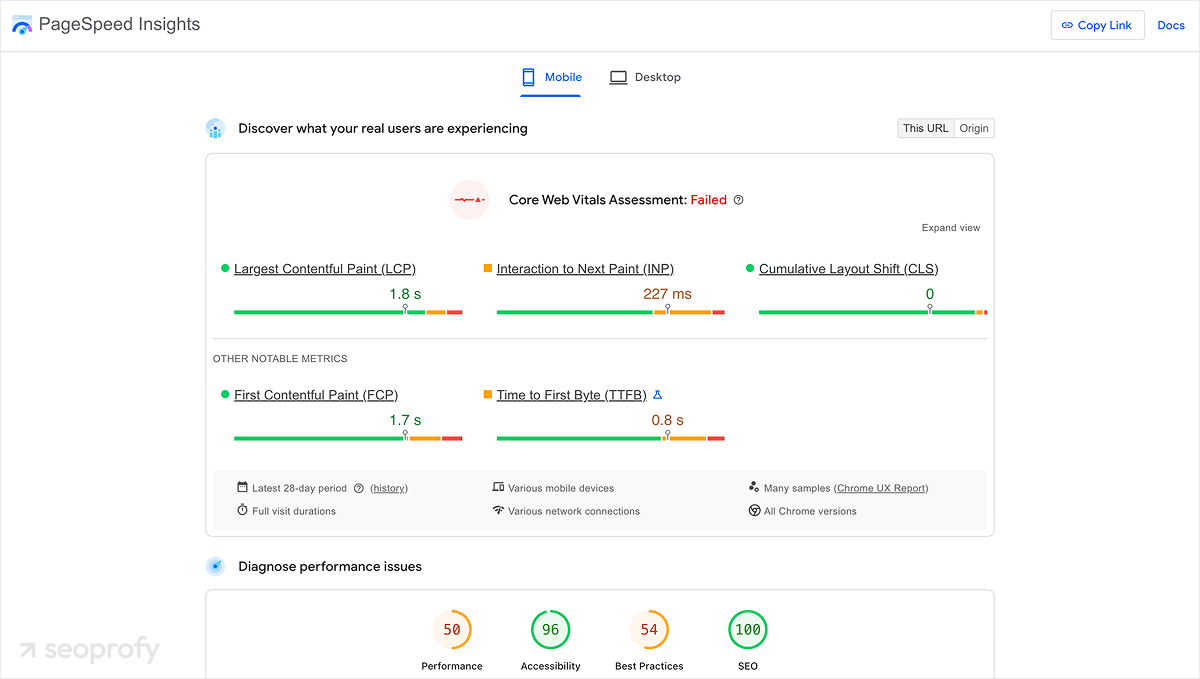
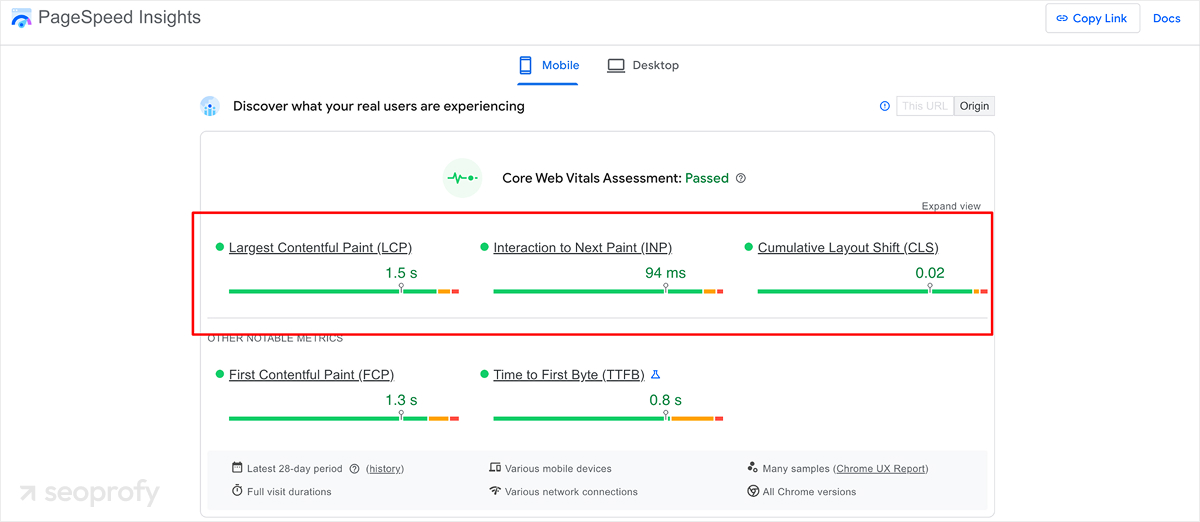
Performance affects both rankings and conversions when visitors need legal help quickly. Use Google Search Central to keep Core Web Vitals in the good range across key templates.
- Test performance in PageSpeed Insights: Keep LCP under 2.5 seconds, INP under 200 milliseconds, and CLS under 0.1.
- Reduce page weight: Use WebP or AVIF, lazy-load images below the fold, defer nonessential scripts, and serve assets via a CDN.
- Make mobile actions easy: Use responsive layouts, readable text, 44px tap targets, short forms, and click-to-call in the header.
Simplify Navigation and User Experience
Simple navigation reduces bounce and helps visitors reach the right action faster.
- Run the 3-click test: visitors should reach any core service page, attorney profile, or contact form in three clicks or fewer.
- Keep the main menu short, with clear labels like “Practice Areas,” “About,” and “Contact.”
- Add contextual internal links and a sticky mobile CTA, such as “Call Now” or “Free Consultation.”
- Check WCAG 2.2 accessibility basics: Review contrast, focus states, labeled forms, keyboard navigation, and clear headings to improve usability and reduce ADA-related accessibility risk.
Develop Dedicated Service Pages for Each Case Type
In personal injury lawyer marketing, each case type needs its own service page to match search intent and convert visitors with case-specific proof.
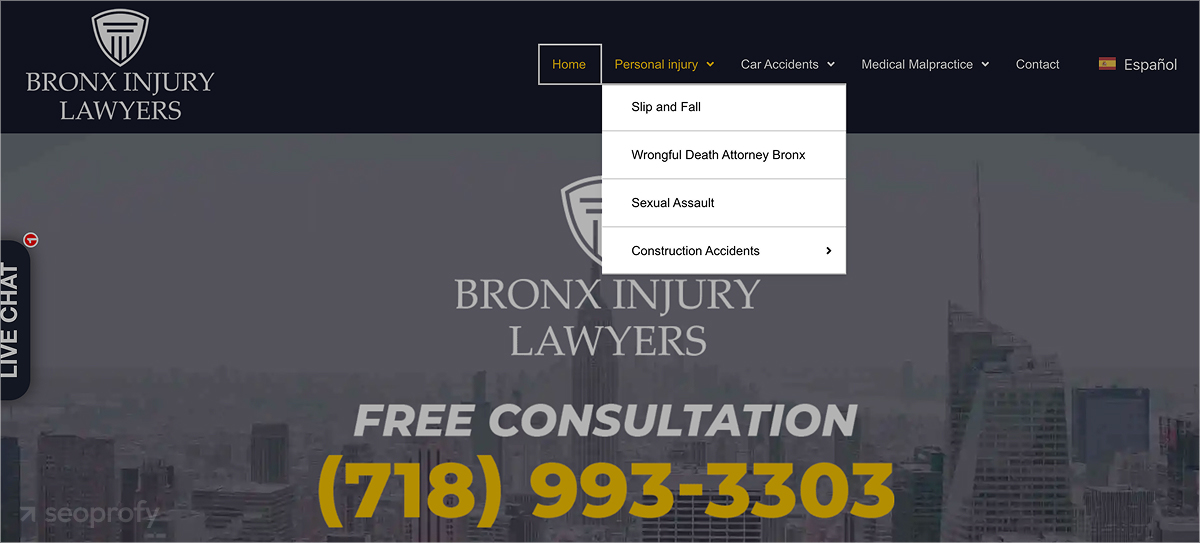
Use the same anatomy for each personal injury service page:
- Hero: case type, location, and consultation offer.
- Verdicts or case results: relevant outcomes with proper disclaimers.
- How we help: process from intake to settlement or trial.
- FAQ: deadlines, compensation, evidence, and fees.
- CTA: one clear next step, such as calling or requesting a free case review.
Add Strong Calls-to-Action and Lead Forms
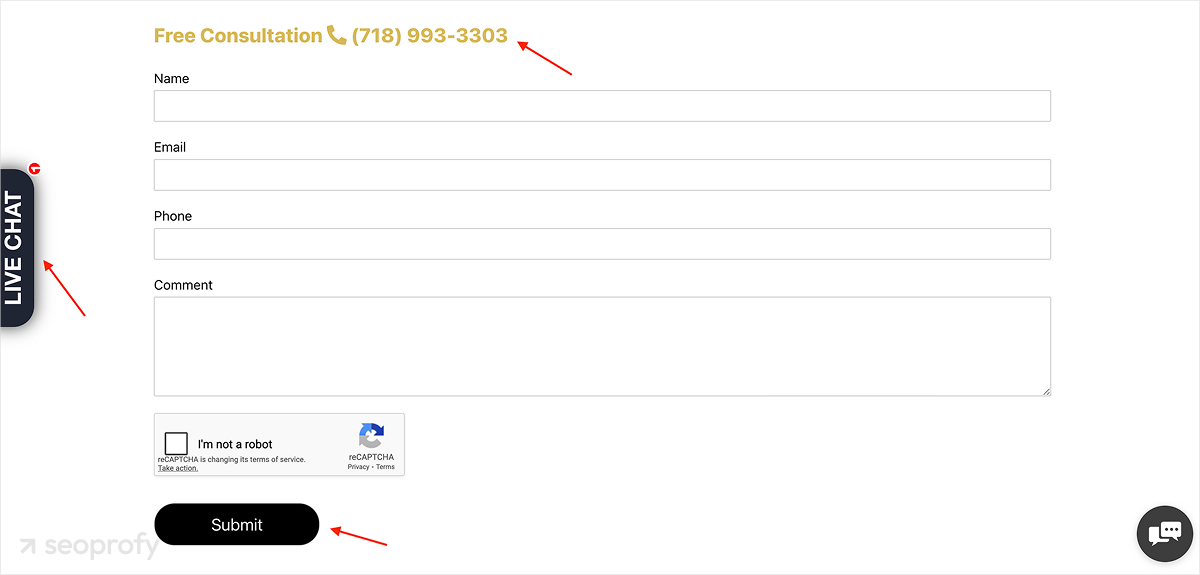
Every key page should guide visitors toward one primary action, such as calling the firm, with secondary options like submitting a case review or booking a free consultation. On mobile, make click-to-call the primary CTA because injured clients often need immediate legal help.
Use a short form with only three fields:
- Name
- Phone number or email
- Case type
Track CTA clicks, form starts, and completed submissions in GA4 and heatmap tools.
Implement SEO to Drive Long-Term Growth
SEO services help personal injury firms turn personal injury lawyer marketing into long-term visibility across organic and local search. When tracked by signed cases, SEO can become one of the lowest-cost channels per signed case, as optimized pages continue to generate leads after the initial work is done. In an SeoProfy personal injury law firm case study, organic traffic grew by 645%, while qualified leads increased by 1300%.
- Technical SEO: site speed, indexing, mobile readiness
- On-page optimization: keywords, headings, internal linking, structured data
- Content: case-specific pages that answer client questions
- Local SEO: Google Business Profile, citations, and reviews
- Backlinks: authority signals from reputable legal and local sites
Together, these elements can reduce dependence on paid and traditional marketing channels while supporting search engine rankings, attracting potential clients, and converting more inquiries into signed cases. This is why SEO for personal injury lawyers works best as a connected strategy that combines technical performance, local visibility, helpful content, authority building, and conversion tracking.
How Do You Research Local and Practice-Specific Keywords?
Start by mapping how potential clients search for legal help by city, case type, urgency, and intent across search engine results and local search results.
- Start with your data: Use Google Search Console to find city and practice queries that get impressions and lead to consultations.
- Expand the set: Use Semrush, Ahrefs, and Google Keyword Planner to add “near me,” “neighborhood,” and “free consultation” variations.

- Read the SERP: Check ranking page types, titles, People Also Ask, related searches, and AlsoAsked questions before choosing the page format.
For 2026, map keywords by query type, AI Overview trigger, and page tactic:
| Query type | AIO trigger | Tactic |
| “What to do after a car accident in Chicago” | Step-by-step informational answer | Add a short checklist, FAQ schema, and an internal link to the car accident service page |
| “Do I need a lawyer after a workplace injury?” | Decision-support answer | Explain when legal help is needed, then add a consultation CTA |
| “Best car accident lawyer in Chicago” | Local comparison intent | Optimize the local service page, GBP signals, reviews, and location-specific proof |
Group long-tail clusters by case type, location, and URL, such as “rear-end accident lawyer in Chicago,” “work injury lawyer for denied claim,” or “medical malpractice attorney for delayed diagnosis.” These phrases usually have lower volume but stronger hiring intent.
Optimize On-Page Elements and Metadata
After keyword mapping, each page needs clear on-page signals for users and search engines.
| Element | How to use | Why it matters |
| Titles and meta descriptions | Include the main keyword once, and add the city/case type. Keep titles under 60 characters and meta descriptions around 150. | Improves relevance and attracts clicks from the right audience. |
| Headings (H1–H3) | Use one H1 per page with a natural keyword variation. Structure H2 and H3 sections around related subtopics. | Guides readers, clarifies topic hierarchy for search engines, and supports topical coverage. |
| Internal linking | Connect related pages using descriptive anchors. Add links from blog posts to service pages and monitor crawl paths in Screaming Frog. | Strengthens authority flow and improves long-tail visibility. |
| Content structure | Introduce the topic in the first 100 words. Use short paragraphs, lists, visuals, and schema markup where relevant. | Enhances readability, supports topic clarity, and can improve engagement. |
Here’s how this can look for a personal injury service page:
| Title example | Why it works or fails |
| Before: “Car Accident Attorney | Smith & Brown Law” | Too generic, no city, no clear offer, and weak local intent. |
| After: “Chicago Car Accident Lawyer | Free Case Review” | Adds location, case type, and a conversion-focused offer while staying concise. |
Use the same logic across practice pages: case type, city, and one clear conversion hook.
Improve Technical SEO and Core Web Vitals
Technical search engine optimization keeps your pages crawlable, fast, secure, and usable on mobile. In SEO for lawyers, this matters most on service pages, location pages, and consultation paths, where slow loading, indexing issues, or broken forms can cost new clients.
- Site speed: Check PageSpeed Insights, Lighthouse, or Google Search Console and keep Core Web Vitals in the good range across service, location, and form templates.
- Indexing: Fix pages marked “Crawled but not indexed,” then review robots.txt, canonicals, and XML sitemaps so Google can reach priority URLs.
- Crawl management: For multi-location firms, reduce duplicate, thin, or outdated city pages to improve crawl budget and help Google spend more time on high-value pages.
- Mobile usability: Since more than 60% of all Google searches happen on mobile, make text readable, buttons easy to tap, and forms simple to complete.
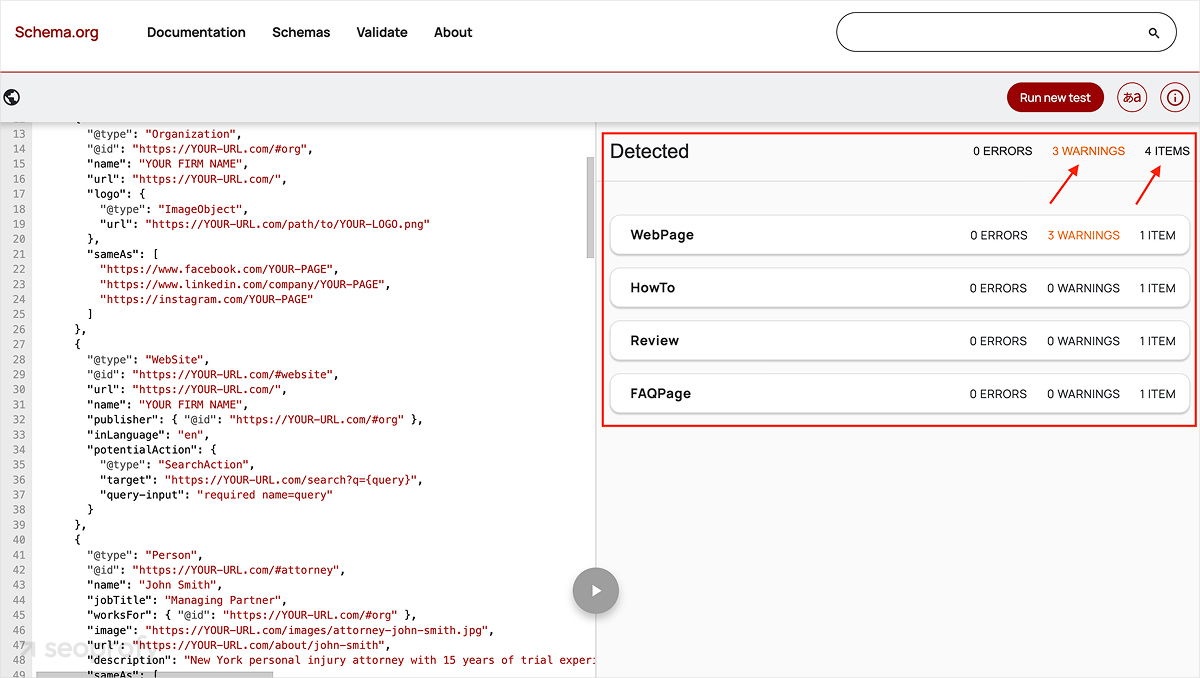
- Security and structured data: Use HTTPS, fix mixed content, and validate Organization, Service, FAQ, and Review schema in the Schema Markup Validator.
Earn High-Quality Backlinks
Backlinks remain one of the top 3 ranking factors, but quality matters more than volume. For personal injury pages, focus on topical relevance, local trust, and referral value rather than shortcuts that increase risk without improving authority.
| What works | What to avoid |
| Guest posts on trusted websites that bring referral traffic | Buying links in bulk or from low-quality networks that reuse the same domains |
| Partnerships, scholarship outreach, and sponsorships with relevant legal, educational, or local organizations | Link exchanges or “we’ll link to you if you link to us” deals at scale |
| Digital PR, HARO-style requests, local data studies, and case studies picked up by media or industry blogs | Press releases on unvetted aggregators without editorial review can harm domain authority. |
| Mentions in directories and bar associations that verify listings manually | Automated submissions to hundreds of directories or blog comments |
| Linkable content, like legal guides, calculators, or data studies | Private Blog Networks, hidden links, or any paid placements disguised as “editorial” |
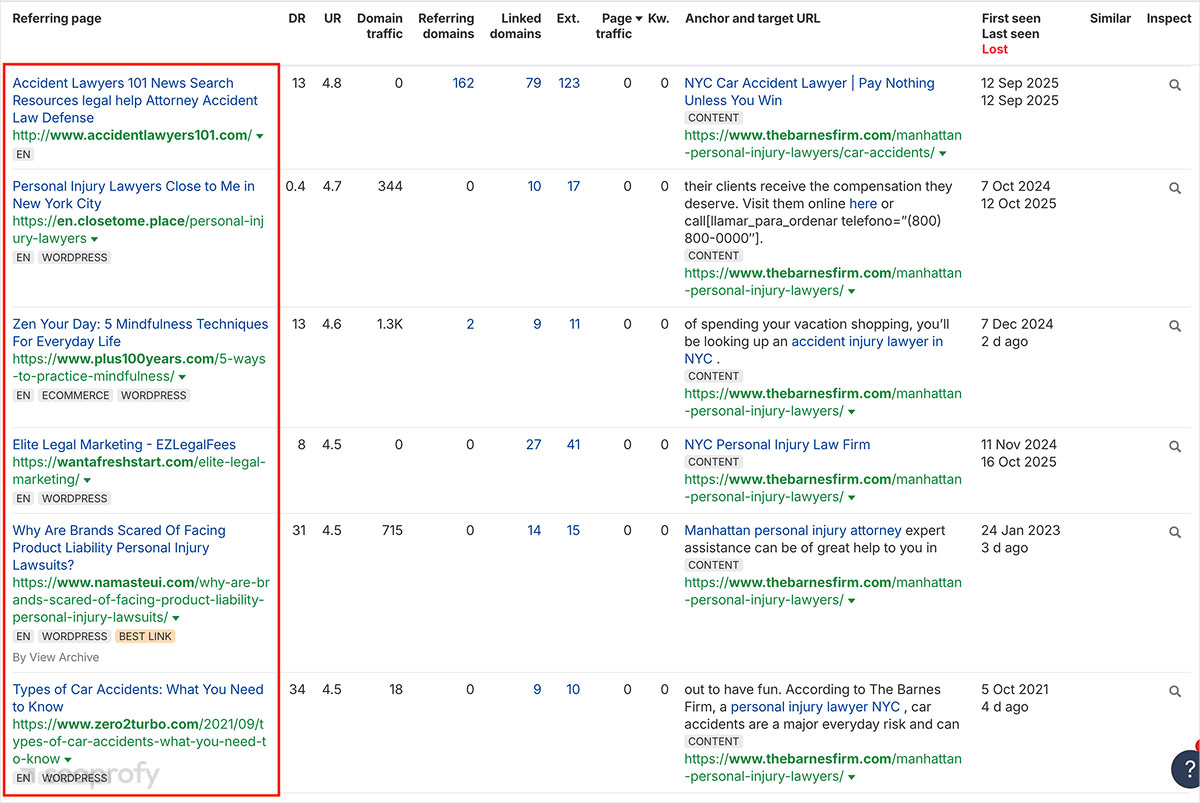
To make the contrast clear, SeoProfy compared backlink data from two personal injury practice sections: one with weak UGC, nofollow, and directory-style links, and another with contextual dofollow placements from relevant legal and local pages. Here’s what stood out:
Company #1 from Virginia Beach had 501 link groups, but only 37 were dofollow, about 7%. Many placements came from UGC, nofollow, off-topic comments, and low-quality pages, so the site had few contextual authority signals.



Company #2 had 75 link groups, including 56 dofollow links, about 75%. Most were placed within relevant industry content, resulting in stronger rankings for competitive personal injury queries.
From SEO to GEO: What Changes for Personal Injury Firms?
Traditional SEO still matters, but the client journey is less linear than it used to be. In 2026, potential clients may compare firms using Google AI Overviews, ChatGPT, Bing Copilot, Perplexity, or other answer engines before clicking a search result.
That changes how personal injury lawyer marketing should work. Your content still needs strong rankings, technical SEO, backlinks, and local authority. But it also needs to be easy for AI systems to understand, summarize, and cite. This is where Generative Engine Optimization and AI SEO services become part of the same growth strategy as organic search.
For personal injury firms, GEO starts with entity clarity. Search engines and LLMs need to understand who your firm is, where you practice, which case types you handle, and why your legal services are trustworthy. Keep your firm name, attorney profiles, practice areas, locations, reviews, verdicts, and credentials consistent across your website, Google Business Profile, legal directories, and local citations.
Structured answers matter too. AI systems often draw on content that provides direct, concise explanations. Add short FAQ blocks to service pages, use schema where relevant, and answer questions like “Do I need a lawyer after a car accident?” or “How long do I have to file a personal injury claim?” before moving into longer explanations. This supports Google AI Overviews and improves the chance that your firm appears when users ask legal questions in conversational search.
Content depth still matters, but it should be organized around real client intent. A car accident page should not only describe your service. It should explain local deadlines, evidence, insurance issues, medical documentation, attorney fees, and what happens after a consultation. That gives both search engines and LLMs more context to connect your firm with specific personal injury topics.
Top three tips for PI firms:
- Build entity consistency across your website, GBP, attorney bios, legal directories, and local listings.
- Add structured FAQs and concise answer blocks to every major service and location page.
- Track AI visibility alongside rankings by checking whether your firm appears in AI-generated answers for priority queries.
To go deeper, review SeoProfy’s guides on how to rank in AI Overviews and SEO for LLMs. Together, these tactics help marketing for personal injury law firms move beyond rankings alone and stay visible across search engines, answer engines, and AI-assisted discovery.
SeoProfy uses deep data to find what truly moves your rankings and conversions. The results we bring are visible, measurable, and repeatable.
- Steady organic traffic increase
- More qualified leads
- Stronger brand trust
Boost Your Local Search Visibility
Local SEO for lawyers is one of the most important acquisition channels for personal injury firms because many high-intent clients compare options in the Map Pack before visiting a website. For marketing for personal injury law firms, local visibility is often the shortest path from search to consultation. Strong GBP signals, consistent citations, reviews, and location pages help Google understand where the firm operates and which local searches it should appear for. Over time, this process improves the firm’s visibility in the markets that matter most.
Claim and Optimize Your Google Business Profile
Google Business Profile (GBP) is the profile many local clients see before they visit your website. It helps potential personal injury clients find you, read reviews, and contact you directly.
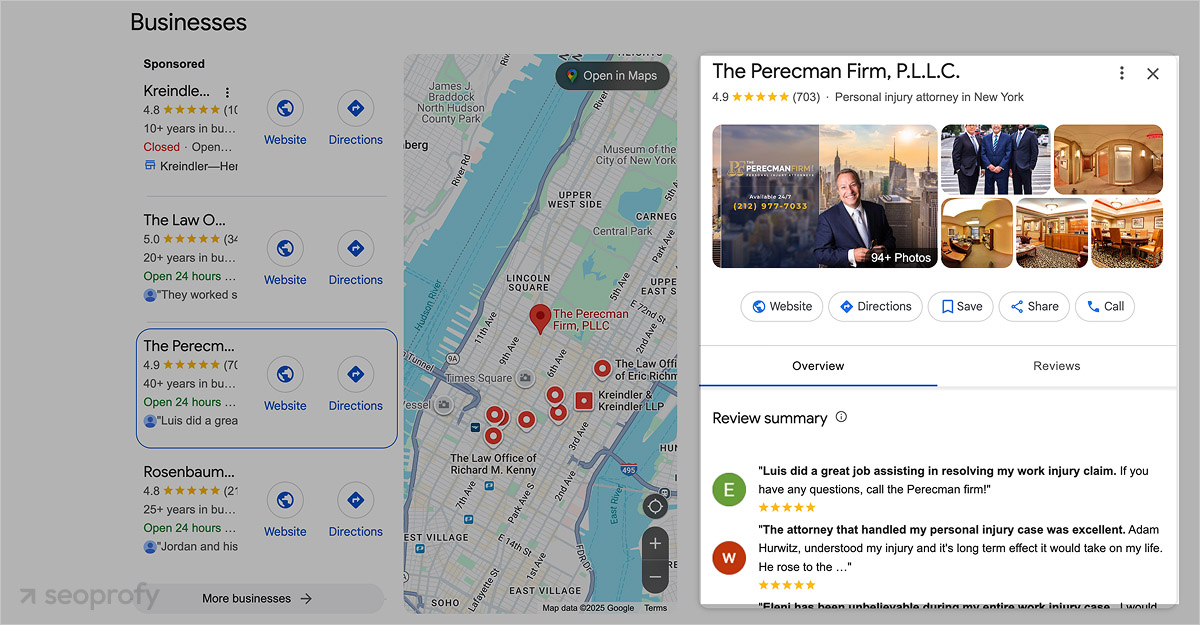
Here’s how to set it up right:
- Google Business Profile claiming: Add or claim your profile, verify ownership, and confirm that the firm name matches your real-world branding.
- NAP checklist: Check that your name, address, and phone number match your website footer, legal directories, and local citations.
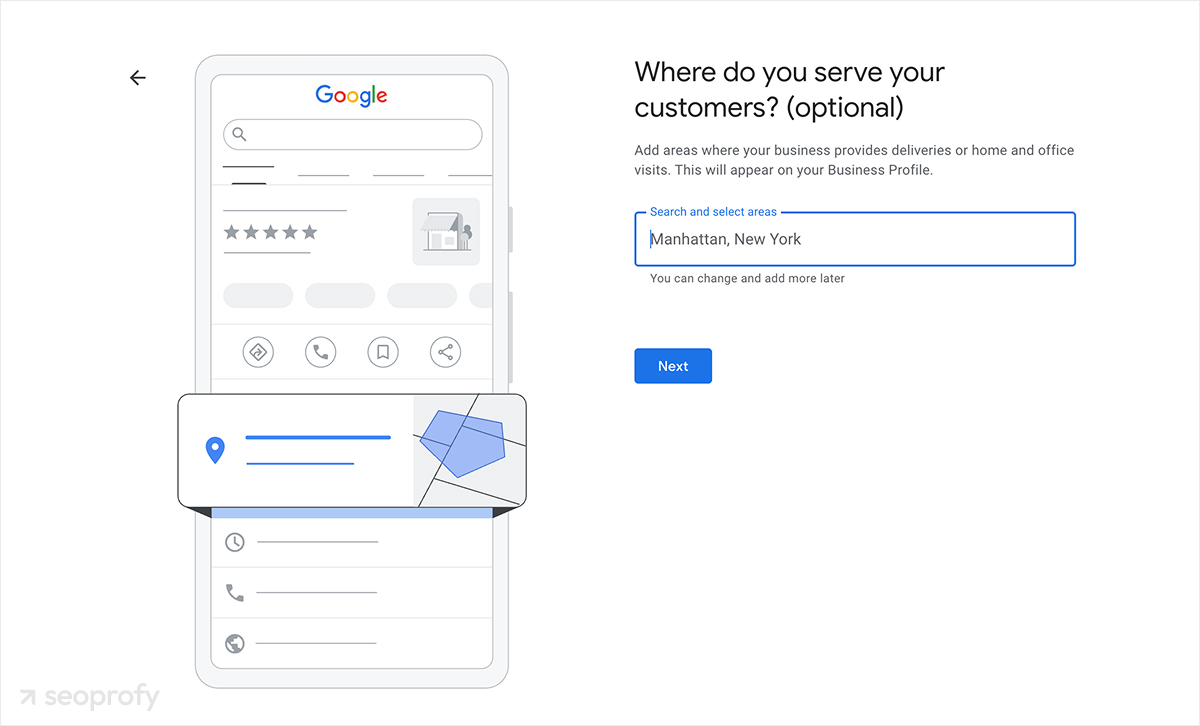
- Services subsections: Add practice areas as services, such as car accidents, workplace injuries, medical malpractice, wrongful death, and premises liability. Use short descriptions and link to matching service pages.
- Weekly posts: Publish updates about FAQs, safety tips, local events, community involvement, case-result disclaimers, or new resources to keep the profile active.
- Photos and hours: Upload office, team, and logo photos, then keep regular, holiday, and appointment hours accurate.
Request, Manage, and Respond to Client Reviews
BrightLocal’s 2026 Local Consumer Review Survey shows that 97% of consumers read reviews for local businesses, and 41% always read them when browsing. For personal injury firms, positive client reviews can influence whether someone calls, keeps researching, or chooses a competitor. Reviews from satisfied clients also strengthen trust before a consultation is booked.
Ask for reviews after successful cases through a short email or SMS with a direct link, but never offer incentives or pressure clients. You can also request feedback at compliance relationship milestones, such as after a positive case update or after the matter closes, as long as the request stays voluntary and privacy-safe. BrightLocal also found that 80% of consumers are more likely to use a business that responds to every review, while generic replies can reduce trust.
Use these simple reply formats:
| Review type | Response template |
| Positive | Thank you for sharing your experience. We’re glad our team could help and appreciate your trust in the firm. |
| Negative | Thank you for your feedback. We take concerns seriously and would like to understand what happened. Please contact our office directly so we can review this with care. |
| Mixed | Thank you for the honest feedback. We’re glad some parts of your experience were helpful, and we’ll review the concerns you mentioned with our team. |
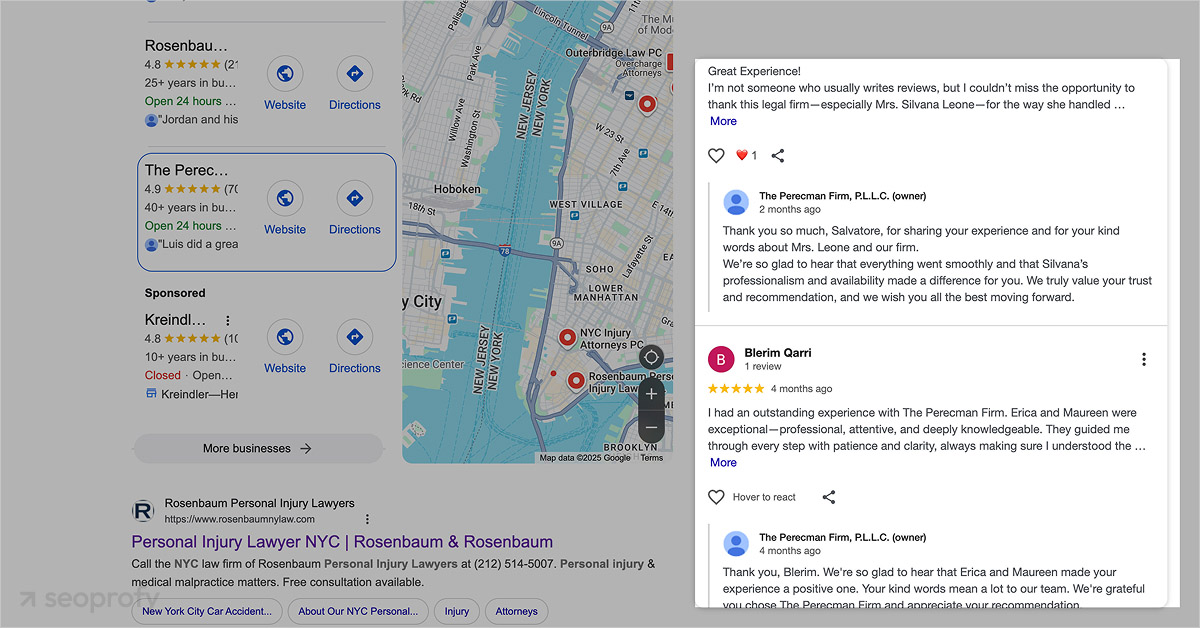
In personal injury lawyer marketing, review replies should sound human, specific, and compliant. Never discuss case details, settlement amounts, medical information, or private client facts in a public response.
Get Listed in Legal Directories and Local Listings
Legal directories still matter for local visibility because they confirm your firm’s name, address, and phone number across the web. Start with directories that already rank for queries like “personal injury attorney + city” or “personal injury attorney near me.”
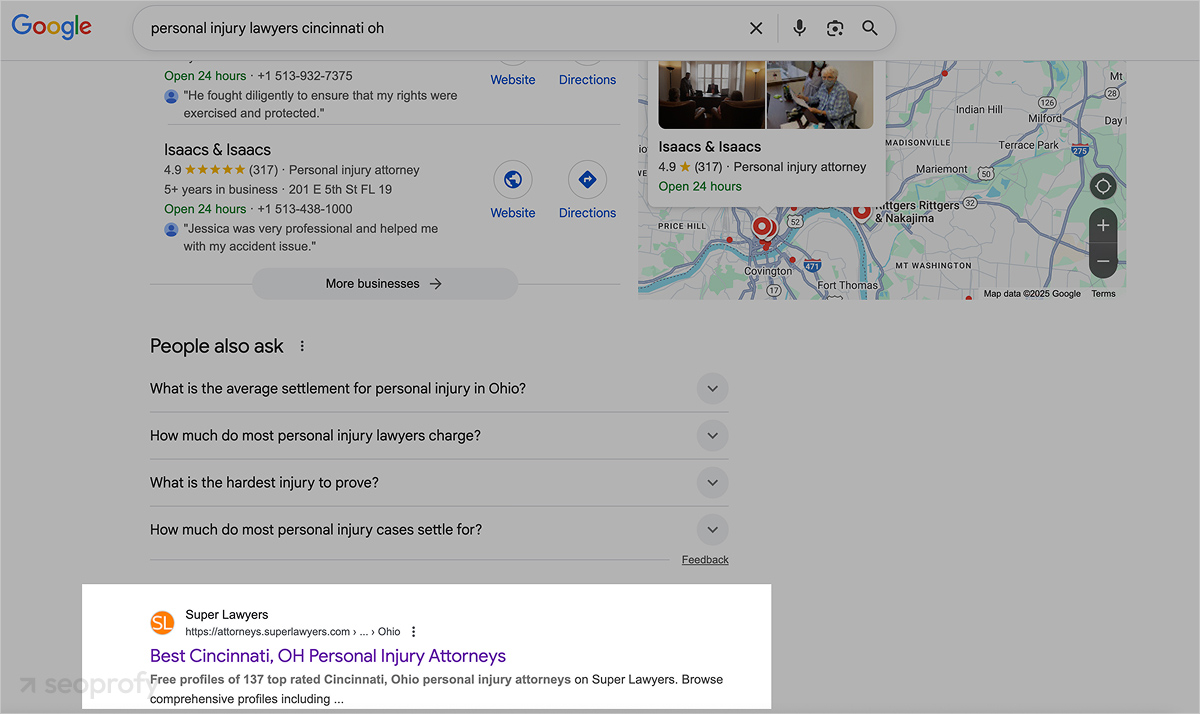
Prioritize tier-1 legal directories first: Avvo, Justia, FindLaw, Martindale, Super Lawyers, and your local or state bar association directory. Then add vetted regional directories, local directories, and media listings that support local intent.
In law firm SEO audits, two quick fixes appear often:
- Copy your NAP directly from the website footer and use the same wording everywhere.
- Add links to key service pages, not just the homepage.
Referral relationships still matter for personal injury firms. Attend local networking events and build trust with medical professionals, chiropractors, rehabilitation centers, and local businesses by providing useful resources, clear communication, and value before asking for referrals.
Create Content That Builds Trust and Authority
Strong legal content should answer the questions injured clients ask before they are ready to contact an attorney. These pre-attorney questions create overlap between SEO and AI Overviews because both search engines and answer engines need clear, helpful explanations that match real client intent.
This is where content marketing and blogging for lawyers become more than publishing articles. Helpful content can significantly enhance trust, clearly explain legal representation, and guide readers from early research to a consultation.
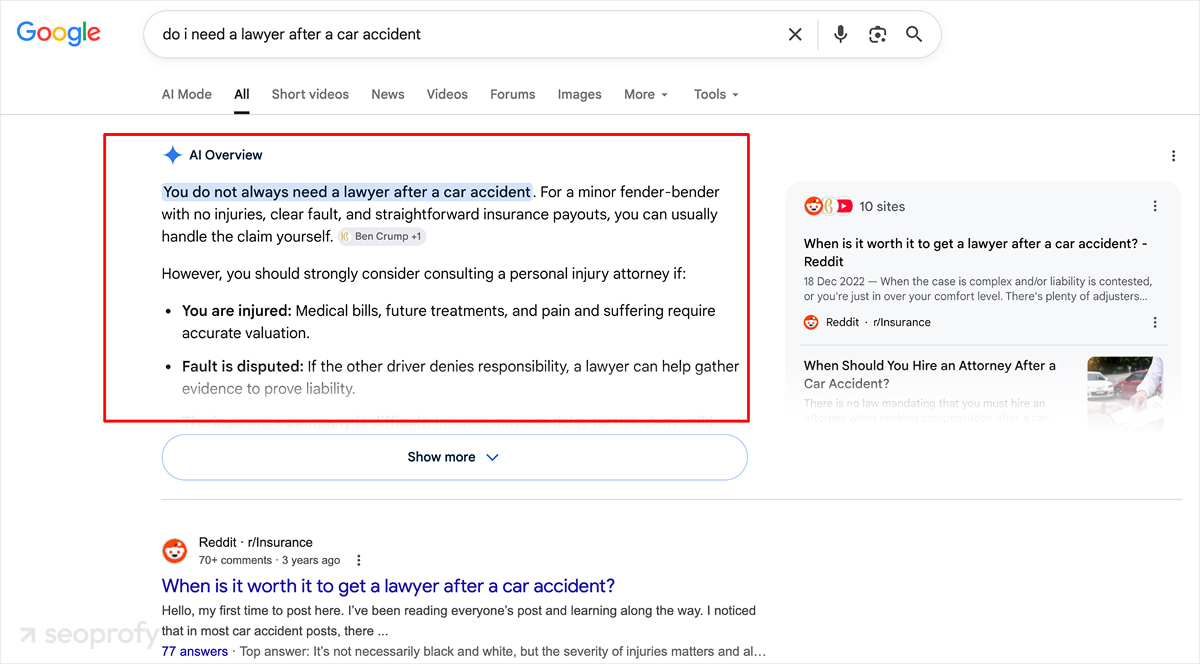
Publish Helpful Blog Posts and FAQs
When people are injured, they often start with questions before they search for a lawyer. In personal injury lawyer marketing, a pillar-to-cluster structure helps each topic support a core service page.
| Pillar page | Cluster posts |
| Car accident lawyer | What to do after a car accident, how fault is proven, how insurance payouts work, when to call an attorney |
| Workplace injury lawyer | What to do after a workplace injury, denied workers’ comp claims, third-party liability, and medical documentation |
| Medical malpractice lawyer | Delayed diagnosis, surgical errors, birth injuries, how to prove negligence |
A strong cluster should answer pre-attorney questions, explain next steps, and help each car accident lawyer or practice page support the main service page.
Use tools like AlsoAsked, People Also Ask, Reddit discussions, and legal content writing research to find the exact questions clients ask before contacting a firm.
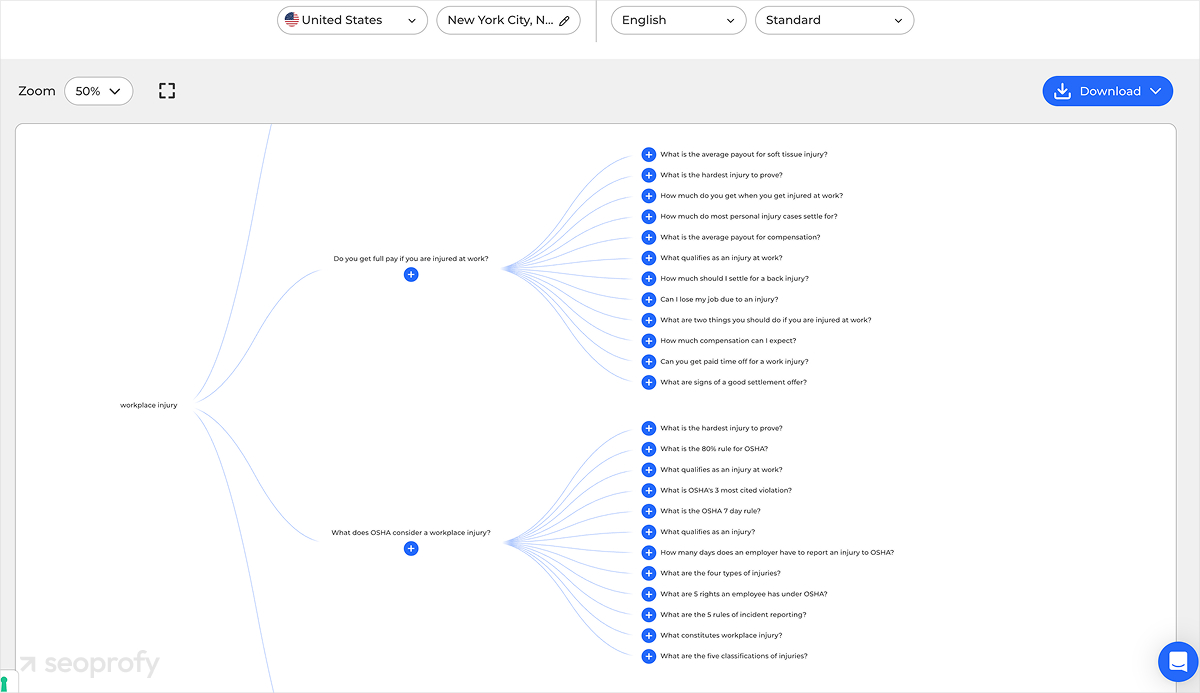
For PI service pages, add short FAQ blocks like:
- Do I need a lawyer after a minor car accident?
- How long do I have to file a personal injury claim?
- What evidence should I collect after an accident?
- How much does a personal injury lawyer cost?
- What happens during a free case review?
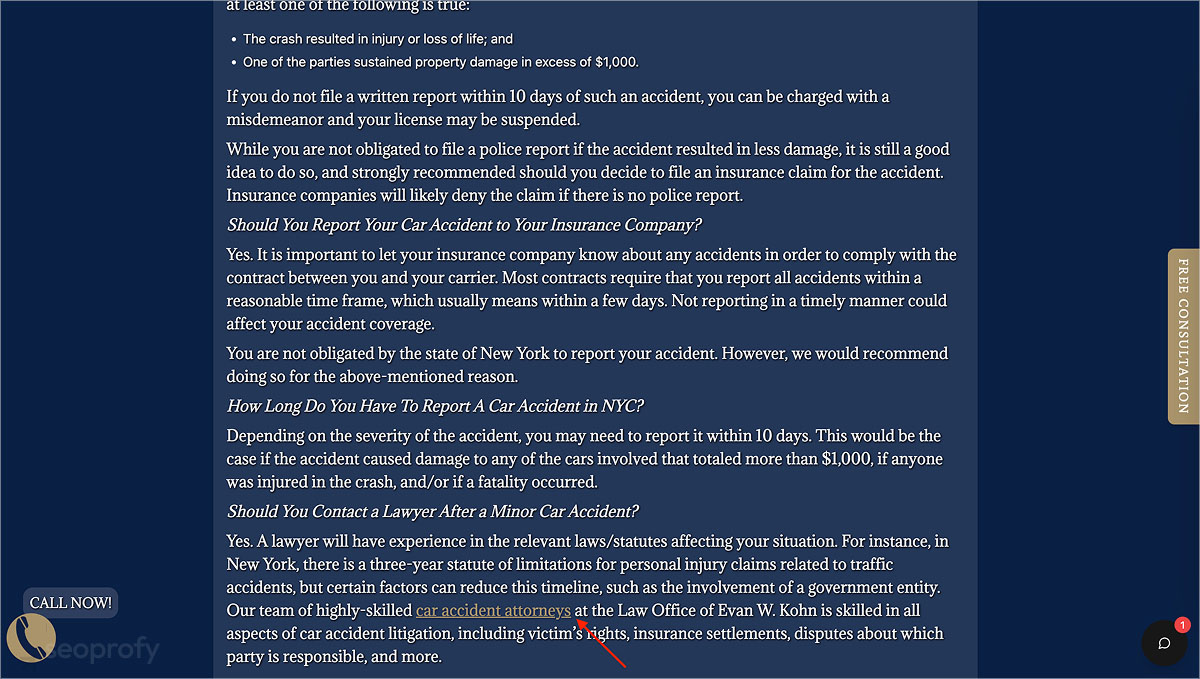
These FAQs support users, organic rankings, and AI Overview visibility with concise answers to real pre-attorney questions. If you outsource this work, compare law firm SEO companies and choose a reliable law firm SEO company that maps each cluster post back to a relevant service page.
Highlight Client Success Stories and Case Studies
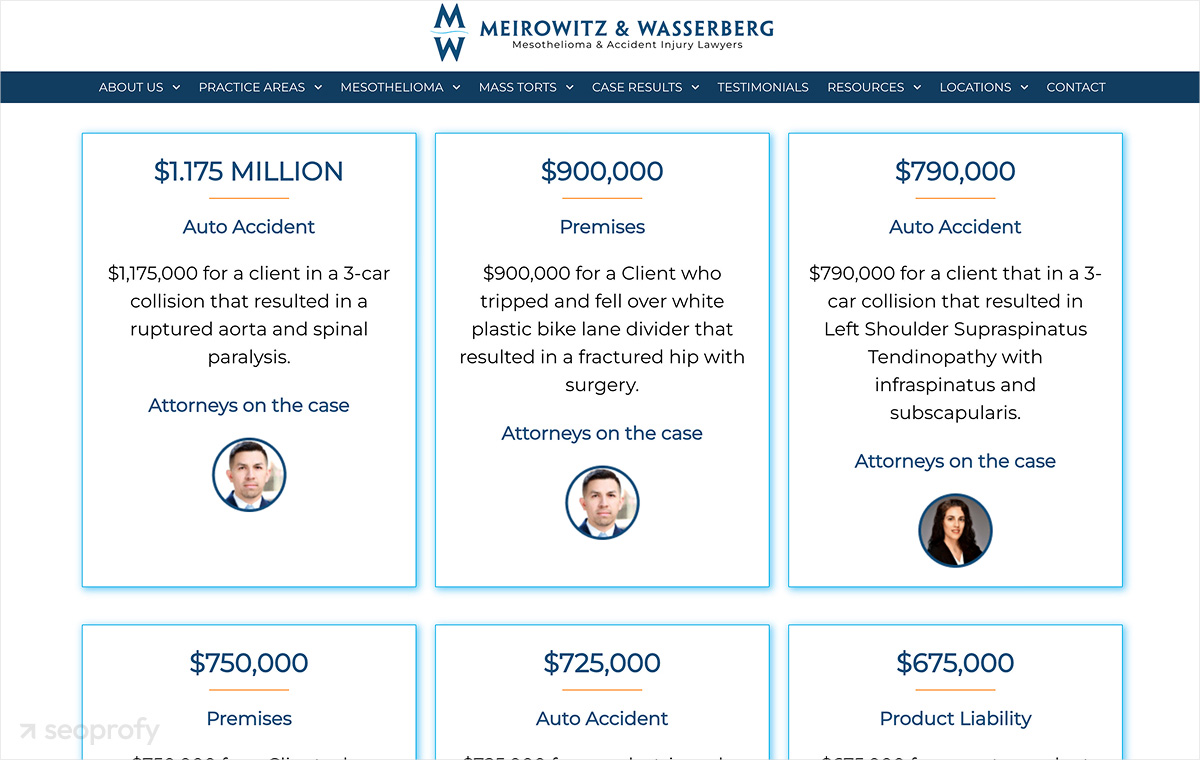
Case studies work best when they follow a simple structure: Problem → Strategy → Outcome.
Start with the client’s situation, such as a disputed car accident or denied insurance payout. Then explain the strategy: gathering evidence, working with experts, negotiating with insurers, or preparing for litigation. Finish with the outcome, including a dollar amount or range only when disclosure is allowed.
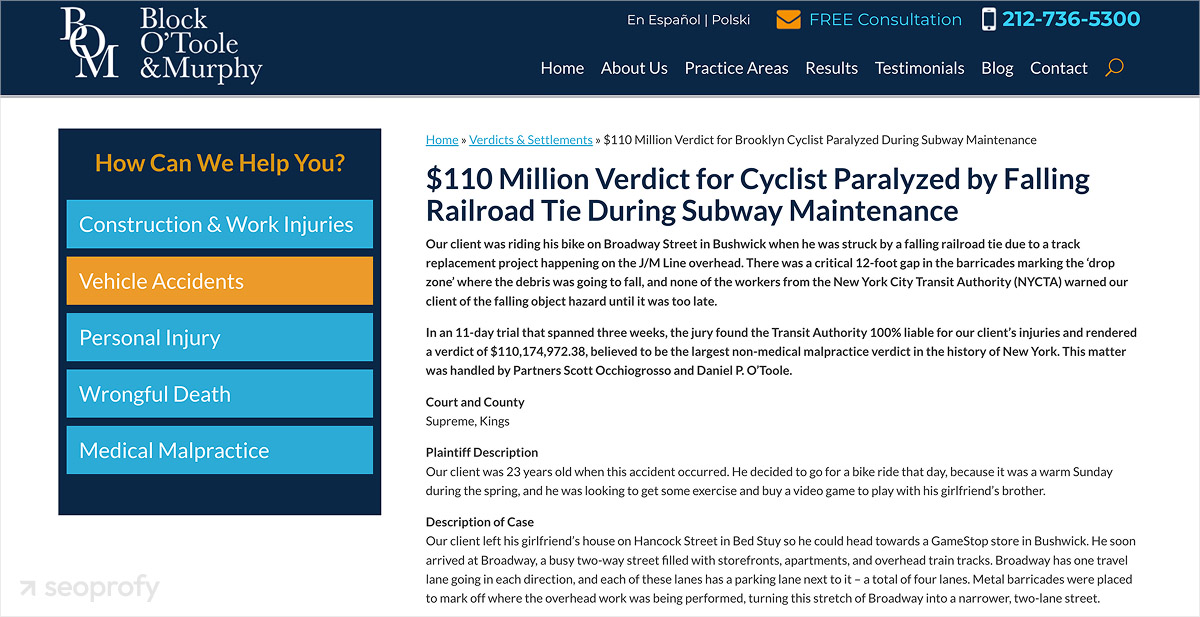
Add an ethics caveat every time: past results do not guarantee future outcomes, and client details should be shared only with proper consent. If you use professional SEO services, make sure each story also supports relevant service pages and long-tail queries.
Use Videos, Visuals, and Infographics to Engage Readers
Video marketing is now a discovery channel for Gen Z and Millennials, not just a branding extra. Use 20–45-second clips to answer one question at a time: what to do after an accident, when to call a lawyer, what evidence to keep, or how a free consultation works.
Video content also helps personal injury firms showcase attorneys’ personalities, explain their expertise, and provide educational information in a format clients can quickly understand.
Visuals also make legal topics easier to understand. Use checklists, timelines, settlement process graphics, and local accident data to support blog posts and service pages.
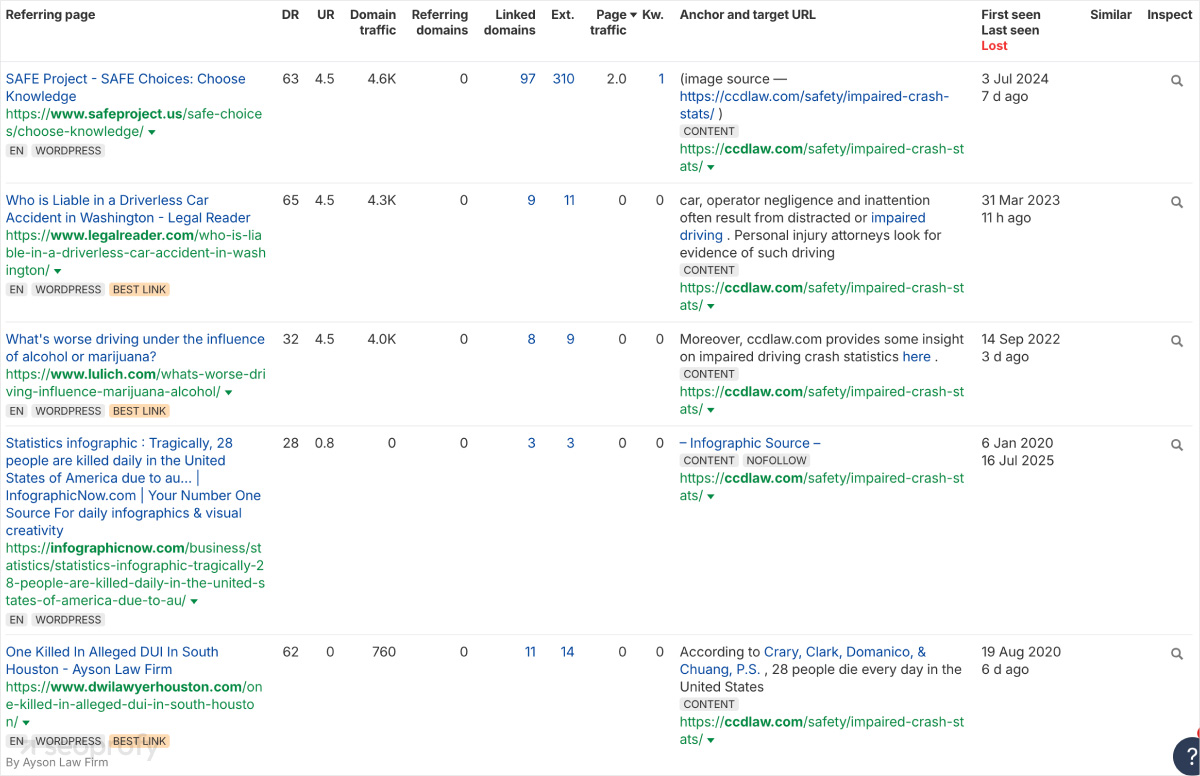
Strong visuals can also earn niche backlinks. For example, the Impaired Driving Car Crash Statistics in the United States infographic earned CCDLaw several contextual backlinks from relevant sites.
How Can Personal Injury Lawyer Advertising Capture High-Intent Leads?
Digital marketing for personal injury lawyers should not depend on paid ads alone, but paid channels are useful for quickly testing high-intent demand.
SEO can support higher conversion rates and stronger ROI over time when rankings, content, and intake are tied to lead-to-client outcomes, while personal injury paid search remains one of the most expensive legal ad categories, with competitive local clicks often reaching $300–$700+ CPC. This is why injury lawyer advertising needs strict tracking before budgets scale. Start LSA-first for verified calls, then use PPC for lawyers to test high-intent keywords, offers, and locations before turning proven demand into long-term law firm SEO.
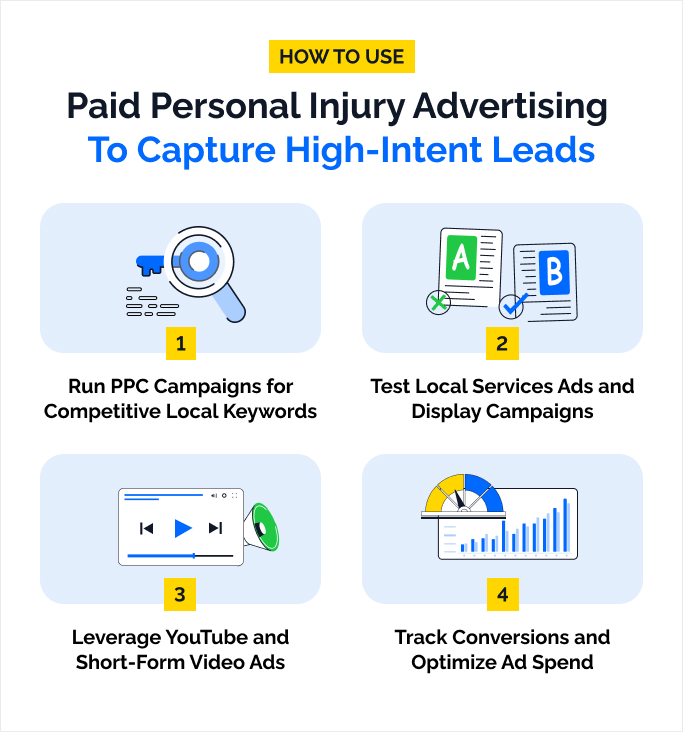
Run PPC Campaigns for Competitive Local Keywords
For personal injury PPC, start with Google Ads search campaigns for the most commercial local keywords, then validate every bid in Keyword Planner and Semrush before launch. Based on competitive-market planning ranges, car accident clicks often fall in the $75–$180 range, truck accident keywords around $90–$220, medical malpractice around $120–$250+, and broad personal injury terms can reach $200–$400+.
Treat personal injury lawyer ads as controlled tests: keep ad groups tight by case type and city, match each ad to a dedicated landing page, and protect the budget with negative keywords. Add call extensions, location assets, and consultation-focused copy only where they support qualified calls.
Example negative keyword list for injury lawyer advertising campaigns:
- free legal advice
- pro bono
- legal aid
- law school
- lawyer jobs
- personal injury law definition
- sample demand letter
- DIY claim
- template
Test Local Services Ads and Display Campaigns
In advertising for personal injury lawyers, test two paid formats separately: Local Services Ads for high-intent calls and display retargeting for visitors who already know your firm.
LSA setup: Create a profile in the Google LSA dashboard, verify your license, choose service areas, add business hours, and complete the screening process. For eligible firms, the Google Screened badge can help build trust before a client clicks or calls.
Track call quality, booked consultations, and cost per signed case, not just lead volume. Use WordStream’s Local Services Ads guide as a directional baseline, then adjust upward for personal injury markets. Broad LSA costs may look lower than legal search ads, but PI firms should still judge performance by qualified calls, booked consultations, and retained clients.
Display retargeting: Use Google Ads to re-engage people who visited service pages but did not contact the firm. Keep targeting local, exclude converted leads, and send users back to the most relevant case-type page or consultation form.
Leverage YouTube and Short-Form Video Ads
Use YouTube Shorts for discovery, retargeting, and quick answers. Use in-stream ads when you need 20–30 seconds to explain what to do after an accident, when to call a lawyer, or how a free consultation works.
For personal injury campaigns, start with a test range around $0.10–$0.30+ CPV for local audiences, but judge performance by qualified visitors, booked consultations, and retained clients. Keep each video focused on one question, add captions, target by city and intent, and send users to the matching service page or consultation form.
Video advertising can also support different marketing objectives, from awareness and retargeting to consultation requests, across YouTube, streaming TV, and other digital platforms.
Track Conversions and Optimize Ad Spend
Connect Google Ads, GA4, and CallRail so calls, forms, and booked consultations are tracked by source, campaign, keyword, device, location, and landing page. CallRail can send call, text, chat, and form submission data into GA4 events, and Google Ads can use imported GA4 key events as conversions for campaign optimization.
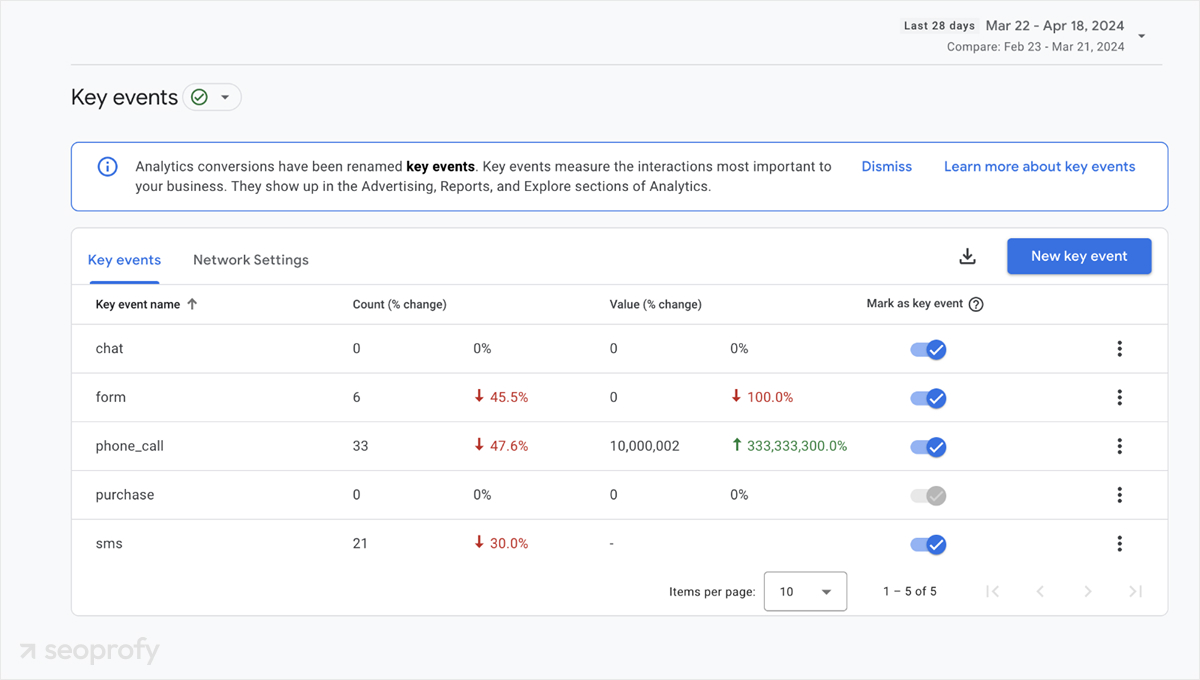
Example GA4 key events setup: calls, forms, chats, and SMS interactions can be tracked as key events before being imported into Google Ads for campaign optimization.
A simple call-tracking setup looks like this:
- Create separate tracking numbers for PPC, LSA, organic, and retargeting traffic.
- Send qualified call events from CallRail to GA4.
- Mark booked consultations or qualified calls as GA4 key events.
- Import those key events into Google Ads as conversions.
- Review CPL (cost per booked consultation) and cost per signed case weekly.
Pause campaigns that don’t generate consultations, then reallocate budget to keywords, locations, and landing pages that bring new clients.
Respond to New Leads in Under 60 Seconds
Speed-to-lead can decide whether a high-intent PI lead books with your firm or keeps calling competitors. In The Short Life of Online Sales Leads, researchers found that firms contacting potential customers within one hour were nearly 7× more likely to qualify the lead than companies that waited even an hour longer. For personal injury firms, set a stricter internal target: respond in under 60 seconds.
Build the setup before campaigns scale:
- Route form fills, calls, chats, and LSA leads into one CRM.
- Send instant SMS and email confirmations after every inquiry.
- Assign intake alerts to a live person during business hours.
- Use missed-call text-back for after-hours leads.
- Track response time by source, campaign, and case type.
Fast follow-up matters most for car accidents, workplace injuries, and other urgent cases where potential clients often contact several firms at once.
Leverage Social Media to Grow Your Brand
Social media marketing now supports discovery, trust, and remarketing for law firms, especially among younger audiences. Sprout Social’s 2025 research found that 41% of Gen Z turn to social platforms first when looking for information, ahead of traditional search engines at 32%, so your firm should make helpful, compliant content visible before younger prospects are ready to call.
Stay Active on Facebook, Instagram, TikTok, and LinkedIn
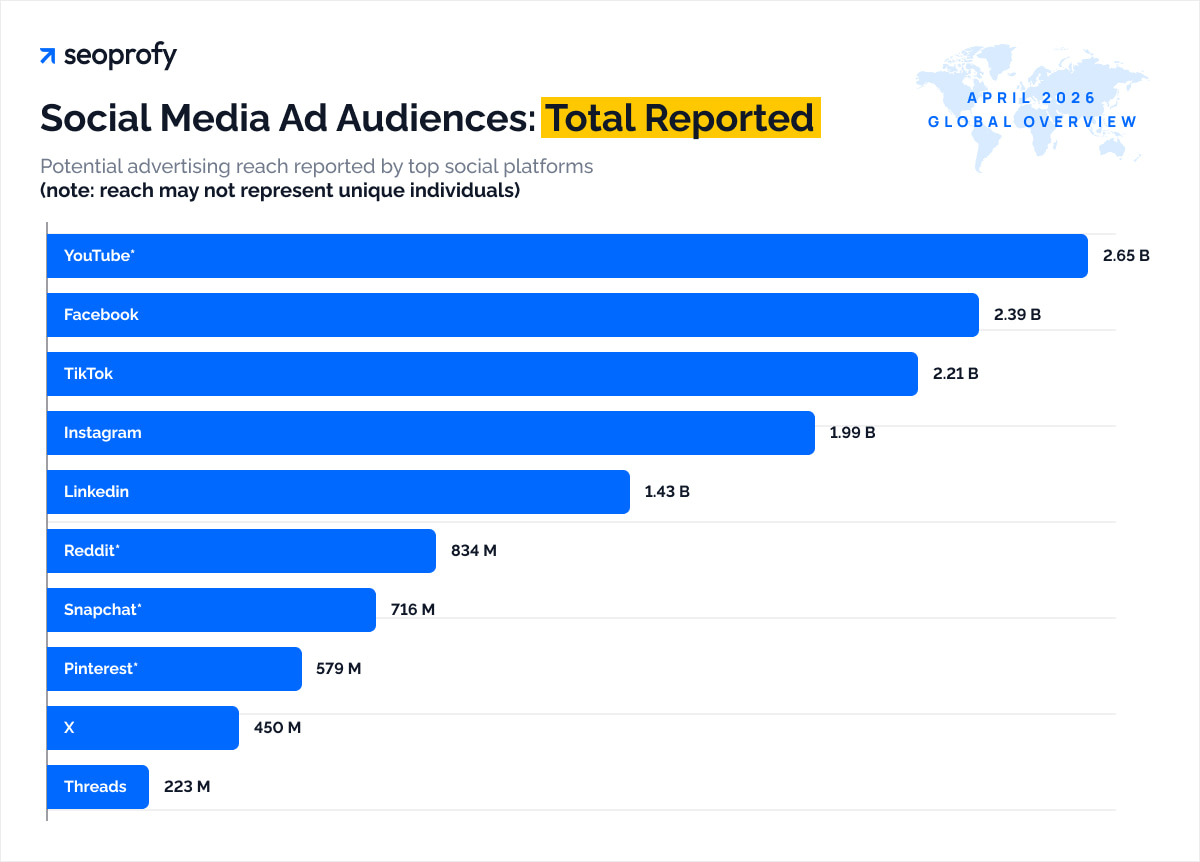
Choose platforms based on audience and content format, not because every competitor posts everywhere. Facebook works well for local visibility, local community updates, and trust-building posts; Instagram and TikTok are well-suited to short educational videos; and LinkedIn is useful for referrals, attorney authority, and professional credibility.
DataReportal’s 2026 ad reach data shows why platform choice should match both reach and content format:
Keep the cadence realistic: 2–4 posts per week is better than a busy month followed by silence. Repurpose one blog post or FAQ into several formats: a short video, carousel, attorney quote, checklist, and LinkedIn post. Track engagement, clicks, and leads through Meta Business Suite, LinkedIn Analytics, or TikTok Insights.
Share Video Testimonials and Firm Updates
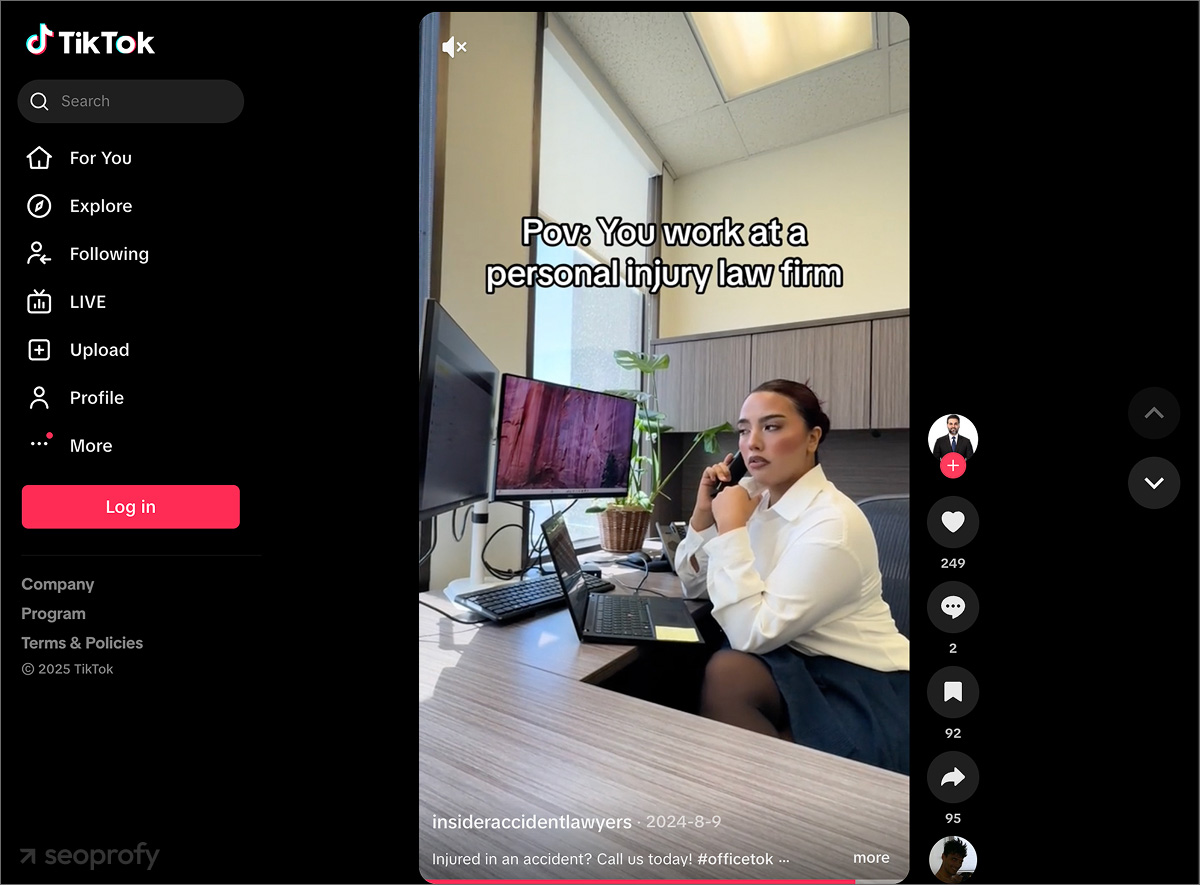
Client testimonials, especially short videos, can help personal injury firms build trust faster than written claims, but they must be compliant. Get written consent, avoid private case details, and add a “past results do not guarantee future outcomes” disclaimer when needed.
Use a simple format: vertical video, under 60 seconds, captions on screen, one client or attorney message, and one clear CTA. Firm updates can also cover community involvement, legal deadlines, safety tips, and answers to common injury questions.
Manage Your Reviews and Online Reputation
Reputation management should cover more than Google Business Profile. Monitor your firm name, attorney names, branded searches, and review mentions across Google, Facebook, Avvo, Justia, Reddit, and local directories.
Use Google Alerts, Mention, or similar tools to catch new mentions quickly. Reply to reviews and comments across all major platforms, not only GBP, and keep responses professional, specific, and privacy-safe.
Track and Measure Your Marketing Performance
In marketing for personal injury law firms, performance should be measured by signed cases and cost per signed case, not traffic alone. Track which channels, keywords, pages, and campaigns turn inquiries into qualified consultations and real clients.
Analyze Traffic, Leads, and Conversions
| Metric | What it shows | How to track |
| Organic traffic | How well your SEO attracts visitors | Google Analytics, Google Search Console |
| Leads | How many prospective clients contact you | CRM, form submissions, and call tracking tools |
| Signed case by source | Which channels, keywords, and pages generate retained clients | CRM, intake notes, call tracking, GA4, source attribution |
| Conversion rate | The percentage of users who become leads | GA4, landing page analytics |
| Bounce rate | Whether visitors find your pages useful | Google Analytics, Hotjar |
| Top channels | Which sources drive qualified consultations and retained clients | GA4, Looker Studio dashboards |
There’s a full article that goes over 38 of the best law firm marketing tools in detail; it’s worth checking out if you plan to use them.
Calculate CPL, CAC, and ROI to Evaluate Results
CPL, CAC, and ROI show whether personal injury advertising creates profitable cases, not just leads. Use benchmarks as planning ranges, then adjust them by city, case type, and average case value.
| Channel | Planning benchmark |
| SEO, organic, and local leads | $50–$150 CPL |
| PPC search campaigns | $250–$600 CPL |
| Local Services Ads | $80–$200 CPL |
| Client acquisition cost | $1,500–$3,500 CAC |
Calculate ROI by comparing total marketing spend with signed case revenue, not form submissions alone. A higher CPL can still be profitable if it brings high-value retained clients, while a cheap lead source can fail if calls are unqualified or never become cases.
Follow Injury Lawyer Advertising Ethics and Compliance
Law firm advertising must be persuasive, but it also has to be accurate, compliant, and privacy-safe. In personal injury lawyer marketing, this applies to ads, landing pages, testimonials, case results, social posts, and intake scripts. Before launching ads, landing pages, testimonials, or social content, check the ABA Model Rules and the rules in each state where the firm practices. If your firm follows guidance from a state bar, trial lawyers group, or practice management association, make sure it aligns with the same advertising rules.
Start with ABA Model Rules 7.1–7.3: avoid false or misleading claims, follow the rules for communications about legal services, and be careful with solicitation or direct contact. This is especially important when a legal marketing firm writes ads, testimonials, or landing page copy for legal services. For personal injury firms, this means no guaranteed outcomes, no misleading “specialist” claims, no private case details, and clear disclaimers for testimonials, verdicts, and past results.
Use this quick compliance checklist:
- Review every ad, landing page, video, and testimonial before publishing.
- Add “past results do not guarantee future outcomes” where results are shown.
- Get written consent before using client stories or video testimonials.
- Avoid discussing medical details, settlement amounts, or case facts without approval.
- Check the state bar’s advertising rules before scaling campaigns across locations.
FAQ: Personal Injury Lawyer Marketing
How much do personal injury lawyers spend on marketing?
Personal injury lawyers often spend 8–12% of monthly revenue on marketing as a planning range. The final budget depends on the city, case value, competition, and growth stage. Firms in competitive markets may spend more on PPC, local services ads, and intake systems to convert paid leads into new clients.
What is the best marketing channel for personal injury lawyers?
Local SEO is often the best long-term channel for personal injury attorney marketing because it builds organic visibility, a Map Pack presence, and a steady lead flow. Local Services Ads and PPC can drive more high-intent calls faster, but the best mix depends on your market, intake speed, and cost per signed case.
How long does SEO take to bring personal injury leads?
SEO usually takes several months to produce consistent personal injury leads, especially in competitive cities. Technical fixes, local pages, Google Business Profile optimization, and content updates may show early movement, but stronger results often emerge once authority, reviews, and backlinks improve.
Are Local Services Ads worth it for personal injury firms?
Yes, Local Services Ads can be worth testing for personal injury firms because they appear above traditional search ads and focus on calls from nearby prospects. They work best when the firm has strong reviews, fast intake, accurate service areas, and tracking for cost per qualified consultation and signed case.
How can a personal injury firm get into Google AI Overviews?
A personal injury firm can improve AI Overview visibility by publishing clear answers to real client questions, strengthening entity signals, adding structured FAQs, and building trustworthy service pages. Focus on concise explanations, attorney credibility, local relevance, reviews, and internal links between FAQs, blog posts, and practice pages.
When planning marketing for personal injury law firms, the best results come from integrating SEO, local visibility, paid tracking, intake speed, and AI search visibility into a single measurable growth system.
Need a clearer path from traffic to signed cases and stronger law firm visibility? Personal injury marketing for lawyers works best when an expert SEO company connects technical SEO, local visibility, content, paid tracking, and intake. A strong site structure also helps refer personal injury clients to the right service page before they contact the firm, while AI answer coverage keeps the strategy ready for search beyond traditional results.

As a Content writer at SeoProfy, Hanna Zhytnik creates SEO content grounded in research, data, and ongoing hypothesis testing. With more than 5 years of experience across B2B, SaaS, and ecommerce, she brings both breadth of knowledge and a sharp focus on modern search. Her strength lies in turning complex experiments into clear explanations, bridging the gap between deep SEO practice and accessible content.