


SEO for insurance brokers focuses on attracting local clients who are actively searching for coverage, comparing providers, or looking for guidance before choosing a policy. Insurance SEO includes local SEO, technical SEO, Google Business Profile optimization, service pages, reviews, practical content, backlinks, E-E-A-T, schema, and lead tracking. Together, these elements help insurance companies and brokers improve search visibility, build trust, and turn relevant searches into qualified policy leads.


Based on our team’s experience, this niche has distinct challenges. Insurance websites need to compete for local intent, explain complex services clearly, and prove credibility before a prospect is ready to contact an agent. Our guide focuses on SEO strategies that help insurance broker websites reach stronger positions in search results and generate traffic, leads, and measurable business value.
- Insurance agency SEO in 2026 starts with local intent: visibility depends on location data, positive reviews, and clear service relevance at the moment of search.
- AI and answer-based search favor well-structured content that explains insurance decisions, coverage scenarios, and real use cases in plain language.
- High-performing sites rely on deep service pages, so each insurance type is mapped to its own demand and queries.
- Reviews, licenses, experts, and case studies work together as ranking and conversion inputs.
- SEO for insurance companies delivers value when it is tracked through leads, cost per lead, revenue contribution, and SEO ROI, then adjusted based on the results acquired.
What Is SEO for Insurance Companies?
SEO for insurance companies helps insurance agencies, companies, agents, and brokers appear when potential clients search for coverage, compare policies, or look for local advice. It covers the website, Google Business Profile, service pages, content, reviews, local listings, backlinks, schema, and trust signals that support both rankings and conversions.
SEO has to reflect how people actually make decisions. Strong SEO makes the business easier to find at each of these moments and helps smaller agencies compete in local search results, even when national providers spend heavily on paid ads.
Why invest in SEO for insurance websites?
- Increase exposure in local and regional search results.
- Reach prospects who are already evaluating insurance options.
- Build trust through reviews, expertise, and clear service information.
- Compete with national providers without matching their ad spend.
- Create a long-term source of inbound leads that can be tracked through calls, forms, and revenue.
Why Insurance Companies Need SEO in 2026
Search optimization is a strong growth channel for insurance companies, agencies, agents, and brokers. It helps insurance businesses generate traffic, quote requests, local visibility, and brand trust without depending only on paid ads. In a market where paid search costs remain high and local search results are crowded, insurance website SEO gives companies more control over how prospects find and evaluate them.
Here are the main reasons SEO matters today:
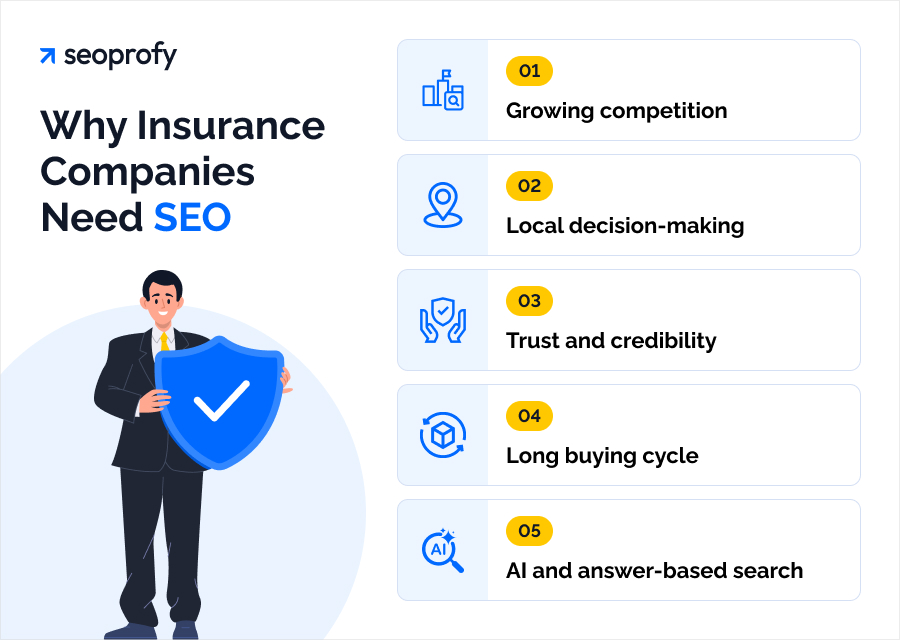
- Growing competition: Strong organic visibility decides who appears when prospects search and who loses attention to competitors.
- Local decision-making: Local SEO helps insurance businesses appear when users search for agents, brokers, or coverage options nearby. This includes Google Business Profile, reviews, local listings, service-area pages, and consistent business data.
- Trust and credibility: Prospects usually check reviews, licenses, service pages, and educational content before they request a quote. In 2026, review signals matter even more.
- Long buying cycle: Many users do not convert on the first visit. SEO keeps the business visible across these research, comparison, and decision stages.
- AI and answer-based search: Clear service pages, structured content, schema, reviews, and trust signals help search systems understand which businesses are relevant enough to show.
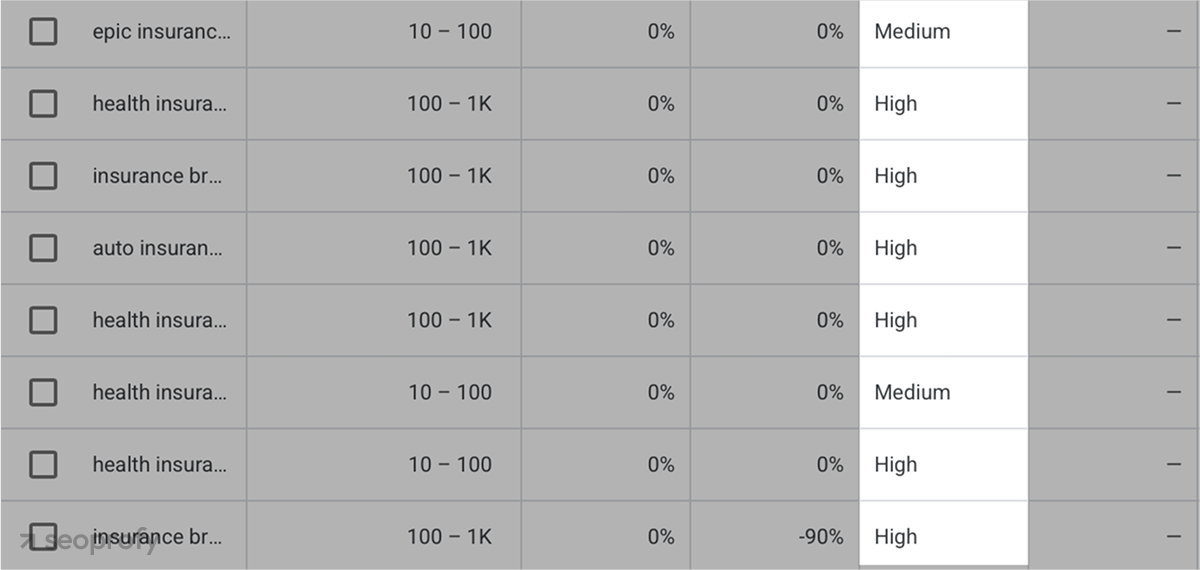
PPC adds another layer of pressure. For example, the top-of-page bid for “health insurance broker New York” can sit around $35 per click. That is a single visit with no guarantee of a form submission, call, or quote request. In 2026, average cost per lead for Finance & Insurance is $74.44.
Insurance SEO takes longer to build, but once it gains traction, it can reduce dependence on paid traffic and support a more predictable lead pipeline.
|
SEO benefit |
Business impact |
Metrics to track |
| Stronger local visibility | More calls, direction requests, and quote inquiries from nearby prospects | GBP calls, local rankings, map impressions |
| Better service-page coverage | More traffic from users comparing specific insurance products | Organic sessions by service page, quote form starts |
| Review and trust optimization | Higher confidence before a prospect contacts the business | Review volume, rating, review freshness, conversion rate |
| Decision-support content | Visibility across the full research and comparison journey | Non-branded traffic, assisted conversions, returning users |
| Lead tracking | Clearer connection between SEO work and revenue | Organic calls, forms, quote requests, cost per lead, closed deals |
How to Build an SEO Strategy for Insurance Companies
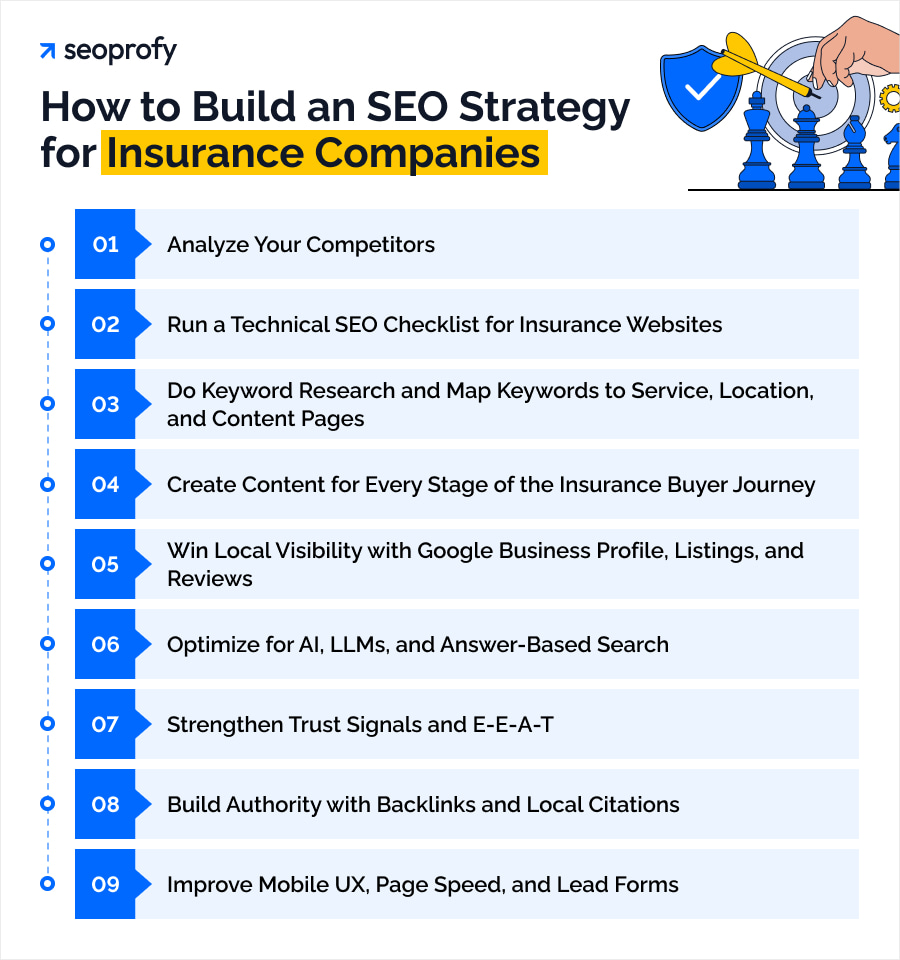
AI-driven search has once again changed how search engines rank content and distribute traffic. As a result, brokers have to rethink their SEO strategies and update how they approach search visibility and lead generation. Below is a forward-looking overview of the SEO tactics that will matter most for insurance brokers in 2026, based on current market trends and what top competitors are already doing right.
1. Analyze Your Competitors
Before updating the website structure, check who already ranks for your target services and locations. Competitor analysis shows which pages, local profiles, and trust signals help insurance businesses win search visibility.
For insurance agents, this step helps decide which service pages to create, which locations need separate pages, and where the site needs stronger proof of expertise. Strong insurance SEO services should review:
- Competitor service pages for auto, home, life, health, commercial, or niche insurance.
- Local pack competitors, including GBP categories, reviews, service areas, and profile completeness.
- Content depth on coverage details, pricing factors, exclusions, and quote steps.
- Backlink profiles from local directories, associations, partners, and industry sites.
- Schema, page speed, mobile UX, forms, and call buttons.
2. Run a Technical SEO Checklist for Insurance Websites
Technical SEO supports both rankings and lead generation. For insurance websites, it also affects how quickly users can find a service, request a quote, or call an agent. This is especially important on mobile. Mobile now accounts for over 62% of global web traffic, and when page load time exceeds one second, bounce rate can increase by up to 123%.
|
Technical check |
What to review |
| Crawlability | Make sure search engines can access key service, location, and quote pages. |
| Indexation | Check that important pages are indexed and thin or outdated pages are excluded when needed. |
| HTTPS | Use a secure connection across the full website, especially forms. |
| Mobile-first design | Test service pages, forms, menus, and call buttons on mobile devices. |
| Page speed | Remove delays that slow down quote requests and service-page browsing. |
| Core Web Vitals | Track loading speed, interactivity, and layout stability. |
| Internal linking | Link service pages, location pages, guides, and contact pages in a clear structure. |
| XML sitemap | Keep the sitemap updated with only useful, indexable URLs. |
| Canonical tags | Prevent duplicate versions of the same service or location page from competing. |
| Broken links | Fix broken internal links that block users or waste crawl budget. |
| Duplicate content | Avoid repeating the same copy across service and city pages. |
| Form tracking | Track quote forms, contact forms, and abandonment points. |
| Call tracking | Measure calls from organic search without breaking local SEO consistency. |
If users cannot load the page quickly, find the right service, or complete a form, traffic will not turn into qualified leads.
Schema Markup for Insurance Companies
Schema markup helps search engines understand what an insurance business does, where it operates, and which services it offers. This is especially useful for insurance companies, agencies, and brokers because local visibility now depends on more than a website and Google Business Profile alone.
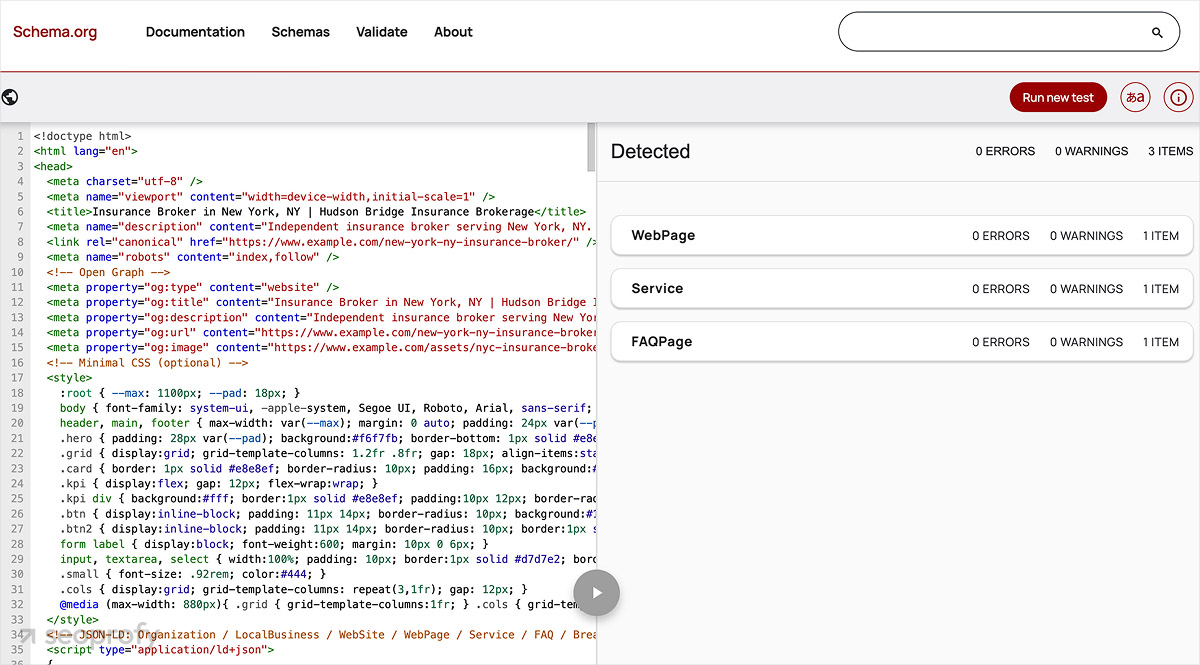
At a minimum, insurance websites should use schema to define:
- Business entity: company name, type, address, phone number, opening hours, and service area.
- Insurance services: auto, home, life, health, commercial, or other coverage types.
- Locations: office pages and service-area pages tied to clear local data.
- Reviews and ratings: where they are eligible and match visible page content.
- FAQs: common questions about coverage, quotes, claims, and policy options.
- Breadcrumbs: page hierarchy for service, location, and content sections.
Schema will not replace strong content or reviews, but it makes the website easier to interpret. It also supports entity clarity, local relevance, and eligibility for richer search results, including AI and answer-based search experiences.
3. Do Keyword Research and Map Keywords to Service, Location, and Content Pages
Keyword research should define the site structure before new pages are built. Insurance providers usually need separate pages for auto, home, life, commercial, liability, and health insurance because each service has different intent, questions, risks, and quote triggers. A generic “Services” page is weak because it cannot answer enough specific queries or match how users compare coverage.
|
Keyword type |
Example |
Best page type |
| Service keyword | business insurance broker | Service page |
| Local keyword | auto insurance agency in Miami | Location page |
| Question keyword | what does liability insurance cover | Blog / FAQ |
| Comparison keyword | term vs whole life insurance | Guide |
| Quote-intent keyword | commercial insurance quote | Landing page |
| “Near me” keyword | home insurance agent near me | Local page / GBP |
| Long-tail coverage question | does health insurance cover urgent care | FAQ / guide |
Each query group needs its own page type. This keeps SEO efforts focused and helps relevant keywords connect to the right user intent.
Every insurance service page should include:
- Who the service is for
- Coverage explained in plain language
- Exclusions and limitations
- Local or state considerations
- Clear quote CTA
- FAQs
- Testimonials or trust signals
- Internal links to related services and guides
- Schema markup
4. Create Content for Every Stage of the Insurance Buyer Journey
Insurance customers rarely choose a policy after one search. They start with basic coverage questions, compare options, check local providers, and only then request a quote. SEO content should follow the same path. This makes the content plan more useful than a set of generic blog posts written only for traffic.
A strong SEO content strategy usually includes three stages:
|
Buyer journey stage |
Content examples |
Best format |
| Awareness | What is liability insurance? / How much life insurance do I need? / What does renters insurance cover? | FAQ, guide, glossary page |
| Consideration | Term vs whole life insurance / Independent agent vs insurance company / Business insurance types explained | Comparison guide, service guide, calculator |
| Decision | Best insurance agency in [city] / Commercial insurance quote in [city] / How to choose an insurance broker | Location page, quote-intent page, service landing page |
This structure helps insurance websites cover real questions without mixing too many intents on one page. Awareness content builds visibility early. Consideration content helps users compare policies, risks, and providers. Decision-stage pages support calls, forms, and quote requests.
Titles, meta descriptions, internal links, CTAs, and page layouts should guide users toward the next step. Comparisons, calculators, FAQs, and quote-intent pages usually bring stronger leads because they answer the questions people ask before contacting an agent.
5. Win Local Visibility with Google Business Profile, Listings, and Reviews
Local visibility now extends beyond the website and Google Maps. Insurance businesses can appear in AI answers, voice results, directories, and local recommendation layers. These systems rely on business data, reviews, categories, service areas, and website signals to understand which agencies are relevant.
Responses matter as well. They extend the entity’s semantic footprint and reinforce relevance signals over time. That’s why it shouldn’t be surprising that review management is one of the important SEO services.
For the insurance industry, this is critical. Prospects often compare reviews, office hours, service details, and local trust signals before they become website visitors or request a quote.
Optimize Google Business Profile
Start with accurate NAP data: name, address, and phone number. Then review the primary category, secondary categories, services, business description, service areas, photos, posts, Q&A, appointment links, and tracking links.
Reviews should also be managed consistently. Review volume, freshness, service mentions, location mentions, and response quality can support trust and local SEO performance.
Build Consistent Local Listings and Citations
NAP consistency matters across every public profile. Insurance companies should check listings on insurance directories, BBB, chamber of commerce websites, Yelp, local business directories, and niche insurance platforms.
Each listing should confirm the same business name, address, phone number, service area, category, and website URL.
Create Location Pages for Each Market
Location pages make sense when an agency serves several cities, counties, or states. They significantly strengthen local search presence. Each page should include unique local details, not the same copy with the city name changed.
Add service information, local testimonials, state or city considerations, common coverage needs, internal links, FAQs, and examples tied to local claims or risks. This helps local SEO strategies connect search intent with the right market.
6. Optimize for AI, LLMs, and Answer-Based Search
AI systems learn what your business is by reading and comparing your content across the web. In today’s competitive insurance landscape, this makes AI SEO and Generative Engine Optimization (GEO) part of the same visibility problem. Insurance websites need clear service explanations, consistent business details, expert content, and trust signals that both search engines and LLMs can understand.
Here’s how to structure content for AI SEO:
- Clear explanations: Pages should answer specific insurance questions in plain language and show expert framing.
- FAQ-style sections: Direct questions and answers help search systems extract useful responses and rank in AI Overviews.
- Strong topical focus: Each page should cover one insurance topic deeply instead of mixing multiple services.
- Consistent terminology: The same terms for products, services, and coverage types help AI systems connect related pages.
- Source-worthy details: Licenses, expert names, service areas, reviews, statistics, and practical examples can support LLM citations.
When content is structured this way, AI systems can associate the business with insurance expertise and surface it in AI answers, voice results, zero-click experiences, and other search features that influence online visibility.
7. Strengthen Trust Signals and E-E-A-T
In SEO for insurance companies and agents, credibility must be clear before a prospect contacts the business. Search engines and users both look for proof that the company is legitimate, qualified, and accountable. These signals can support search rankings, but they also affect whether visitors feel confident enough to request a quote.
What actually strengthens trust:
- Licenses and compliance: Display active licenses, states served, regulatory details, and relevant compliance notes where users can easily find them.
- Author and reviewer bios: Use real names, roles, credentials, and insurance experience on service pages, guides, and educational content.
- Case studies and testimonials: Show how the agency helped clients choose coverage, solve risk issues, or improve policy fit.
- Local memberships: Add chamber of commerce profiles, insurance associations, BBB profiles, and other credible local or industry affiliations.
- Clear contact details: Make phone numbers, addresses, service areas, and office information consistent across the site and local listings.
E-E-A-T should not be treated as a separate content task. It needs to be part of a comprehensive SEO strategy that connects service pages, reviews, expert content, local signals, and conversion-focused pages.
8. Build Authority with Backlinks and Local Citations
Backlinks should come from relevant, trusted sources, not random high-volume placements. For insurance websites, useful links often come from insurance directories, industry associations, local chambers, sponsorships, local PR, expert comments, community events, resource pages, and partner websites.
These links support search rankings by confirming local presence and industry credibility. SEO tools can help find competitor links and citation gaps, but link building should stay part of a comprehensive SEO strategy, not a numbers-driven campaign.
9. Improve Mobile UX, Page Speed, and Lead Forms
Insurance SEO should generate leads, not just traffic. Fast mobile pages, simple navigation, visible phone numbers, click-to-call buttons, short quote forms, sticky CTAs, and trust badges help more visitors become insurance clients.
The contact process should be low-friction. Users need to understand the service, trust the agency, and request a quote without unnecessary steps.
Common Insurance SEO Mistakes to Avoid
SEO for insurance agents often shows early movement within 4–6 months, but compounding results usually come after a year of active work. It’s a long-term channel, but a highly profitable one. Search engine optimization delivers an 8× ROI, which is roughly double the average 4× return of PPC.
The most common mistakes usually come from treating SEO as a traffic task instead of a full marketing strategy. More organic traffic matters only when it brings qualified visitors, quote requests, calls, and policy opportunities.
Avoid these issues:
- One generic service page for all insurance types instead of separate pages for auto, home, life, health, commercial, and liability insurance.
- Duplicate city pages that only change the location name and add no local value.
- Keyword stuffing instead of clear coverage explanations and niche keywords mapped to real intent.
- Weak Google Business Profile with missing services, outdated details, or no review activity.
- No review system for generating, monitoring, and responding to client feedback.
- No call tracking or form tracking, which makes lead quality difficult to measure.
- Slow mobile pages that lose users before they contact the agency.
- No schema markup for services, locations, FAQs, breadcrumbs, and business details.
- Thin AI-generated content that does not explain coverage, risks, exclusions, or local context.
- No internal linking between service pages, location pages, FAQs, and quote pages.
- Focusing only on search engine results pages and traffic instead of leads and revenue.
Insurance SEO Metrics to Track
After working with dozens of projects, the SeoProfy team has seen this clearly: for insurance agents, rankings and traffic are secondary. What really matters is whether organic search brings qualified leads, how much they cost, and how they convert into revenue.
Use Google Analytics 4, Google Search Console, Google Business Profile data, CRM reports, and call-tracking tools to connect SEO work with real performance.
This is how SEO ROI should be evaluated in practice:
- Organic traffic by page type: Service pages, location pages, guides, FAQs, and quote pages.
- Keyword and local pack rankings: Priority services, niche terms, city searches, and “near me” queries.
- GBP actions: Calls, website clicks, direction requests, and profile views.
- Leads: Quote requests, contact form submissions, phone calls, and qualified-call rate.
- Lead quality: Service fit, location fit, sales readiness, and close rate.
- Cost per lead: SEO spend compared with CRM lead volume.
- Revenue from organic: Closed deals and policy value attributed to SEO.
- AI visibility: AI citations, AI Overview presence, and answer-based search mentions.
- Review growth and site performance: Review freshness, rating trends, Core Web Vitals, mobile usability, and indexation issues.
30/60/90-Day SEO Roadmap for Insurance Companies
SEO needs a clear rollout plan. For insurance agencies, the first 90 days should focus on fixing the foundation, building the right page structure, and setting up measurement before expanding authority.
First 30 Days: Audit and Fix Foundations
- Run a technical audit for crawlability, indexation, speed, mobile UX, and broken links.
- Complete keyword research for services, locations, questions, and quote-intent terms.
- Audit Google Business Profile categories, services, NAP data, photos, reviews, and tracking links.
- Review schema markup for business, service, FAQ, breadcrumb, and location data.
- Create a content inventory to find thin, outdated, duplicate, or missing pages.
- Set up GA4, Google Search Console, GBP tracking, form tracking, call tracking, and CRM attribution.
Days 31–60: Build and Optimize Core Pages
- Create or improve service pages for priority insurance products.
- Build location pages where there is real local demand and enough unique context.
- Add internal links between service pages, location pages, FAQs, guides, and quote pages.
- Prepare content briefs for awareness, consideration, and decision-stage content.
- Set up a review request and response process.
- Implement schema on key service, location, FAQ, and contact pages.
Days 61–90: Expand Authority and Measure Results
- Build backlinks from relevant directories, associations, partners, local PR, and resource pages.
- Clean up or expand local citations with consistent NAP data.
- Expand content clusters around high-value services and coverage questions.
- Improve quote forms, CTAs, click-to-call buttons, and mobile conversion paths.
- Review reporting for rankings, organic leads, calls, quote requests, and revenue.
- Update the roadmap based on what is gaining visibility, leads, and business value.
Make your brokerage visible at the exact moment businesses compare policies. Attract serious inquiries, shorten sales cycles, and build authority in one of the most competitive markets.
- High-intent searches
- Better lead quality
- Clear competitive position

Final Thoughts: How Insurance Companies Can Turn SEO into Qualified Leads
SEO is a high-ROI channel for attracting qualified insurance leads and turning search visibility into business value. In this guide, we shared practical SEO tips for insurance companies, agencies, agents, and brokers based on real experience with insurance projects.
Insurance SEO works best when technical SEO, local SEO, service pages, reviews, E-E-A-T, content, backlinks, and lead tracking work together. That is how organic traffic growth reaches potential customers, builds trust, and turns search visibility into leads.
If you’re looking for an experienced team that delivers insurance SEO services with clear accountability and performance-driven outcomes, SeoProfy is ready to help. Shall we discuss your project?

As a Content writer at SeoProfy, Hanna Zhytnik creates SEO content grounded in research, data, and ongoing hypothesis testing. With more than 5 years of experience across B2B, SaaS, and ecommerce, she brings both breadth of knowledge and a sharp focus on modern search. Her strength lies in turning complex experiments into clear explanations, bridging the gap between deep SEO practice and accessible content.