


SaaS SEO (search engine optimization for software as a service) is the practice of optimizing software websites to help them rank better for high-value keywords and attract more qualified leads. It focuses on the entire customer lifecycle and combines keyword research, technical optimization, content writing, and link building.


In this guide, you’ll learn five tried-and-tested strategies on how to optimize your site for traditional SEO and AI models. We’ll also share some of the tactics our SaaS SEO agency used to help one software client grow from 22K to 68K monthly visitors, so that you can try to experiment with them yourself.
- SaaS SEO drives a 702% ROI and accounts for over half of total revenue, proving that organic search is the most effective way to grow a software brand.
- The benefits of having a proper SEO strategy for SaaS include lower acquisition costs, higher user retention, and the ability to build compounding authority that makes every future product launch easier.
- In SaaS, more than one person is involved in the research process, so your content strategy must provide specific proof points to cater to all the stakeholders.
- As LLM traffic grows fast (over 527% increase), SaaS businesses need to invest in digital PR and optimize pages for easy retrieval so AI models can recommend them in their answers.
What Is SaaS SEO?
SaaS search engine optimization (SEO) is the process of driving organic traffic to your software website by optimizing it to rank higher on Google’s search results. Key SaaS SEO components include:
- High-intent keyword research
- Product-led content writing
- Optimization of on-page elements
- Technical SEO fixes
- Authority and brand mention building
A combination of these strategies helps you align your website with what your potential customers are looking for and draw in customers throughout the entire buyer’s journey.
How Is SaaS SEO Different from Traditional SEO?
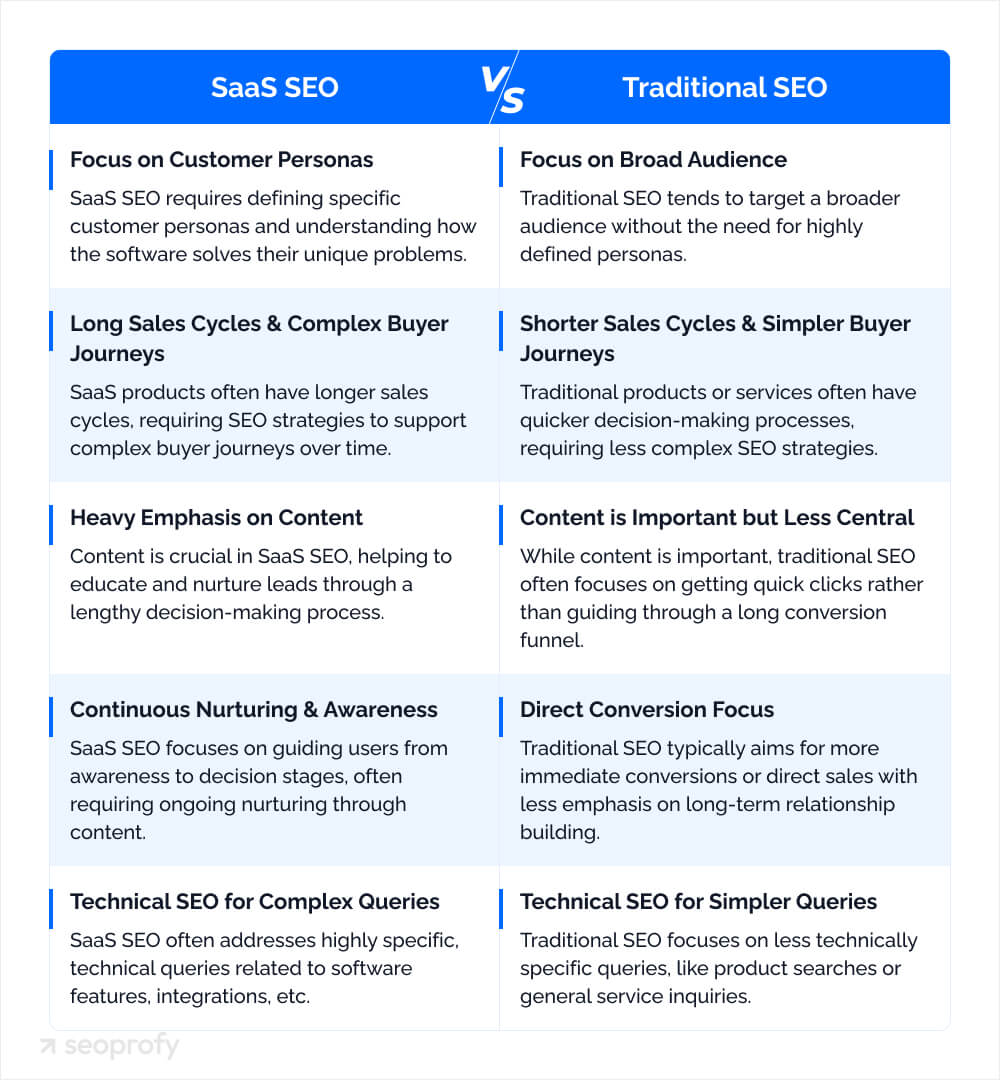
In SaaS SEO, a lot of attention goes into content strategy and buyer journey mapping because the sales cycle is fundamentally different. SaaS buyers take on average 3–6 months to convert, so your content needs to cover the entire funnel.
Another key difference is what counts as a conversion. Traditional SEO optimizes for transactions, but SaaS companies optimize for more sign-ups and demos.
Last but not least, the competition in SaaS is global and well-funded. You’re basically competing against companies with large content teams and high domain authority, so you need a differentiated content angle and keyword targeting.
Why Should SaaS Companies Invest in SEO for Their Websites?
SEO helps software websites appear in organic search results exactly when people look for a tool or feature they offer. And we’re not talking about Google alone. Now that more and more people do their research with AI tools, SEO tactics also keep your product visible there.
The thing is, AI search tools like Perplexity and ChatGPT search the web to build their responses. So when your pages are optimized and have strong authority, you’re more likely to get cited in those AI answers too. That said, here are a few benefits that SEO offers and why big SaaS brands keep investing in it:
Builds Long-Term Brand Authority
Consistent rankings for queries in your category mean prospects start seeing your name everywhere. This repeated visibility builds trust before they ever talk to sales or start a trial.
Shortens the Sales Cycle
SEO content that addresses objections and explains use cases helps prospects self-educate. They reach out already sold on the value and move through your pipeline faster.
Lower Customer Acquisition Costs
Once your pages are optimized and supported with trusted links, they keep attracting qualified traffic without repeat spending on paid ads. Moreover, data shows that SEO brings an ROI of around 702% and drives more than half of the total revenue in SaaS.
At our agency, we craft personalized, data-driven strategies to help you attract qualified leads, rank higher for important keywords, and grow your user base. Book your free consultation with us to see better SEO results and enjoy:
- Higher rankings
- Better online visibility
- More demo requests

Top 6 SaaS SEO Strategies For Business Growth
Product-led companies compete in a crowded space. So, to help you come out on top, here’s a step-by-step SaaS SEO guide you can follow.
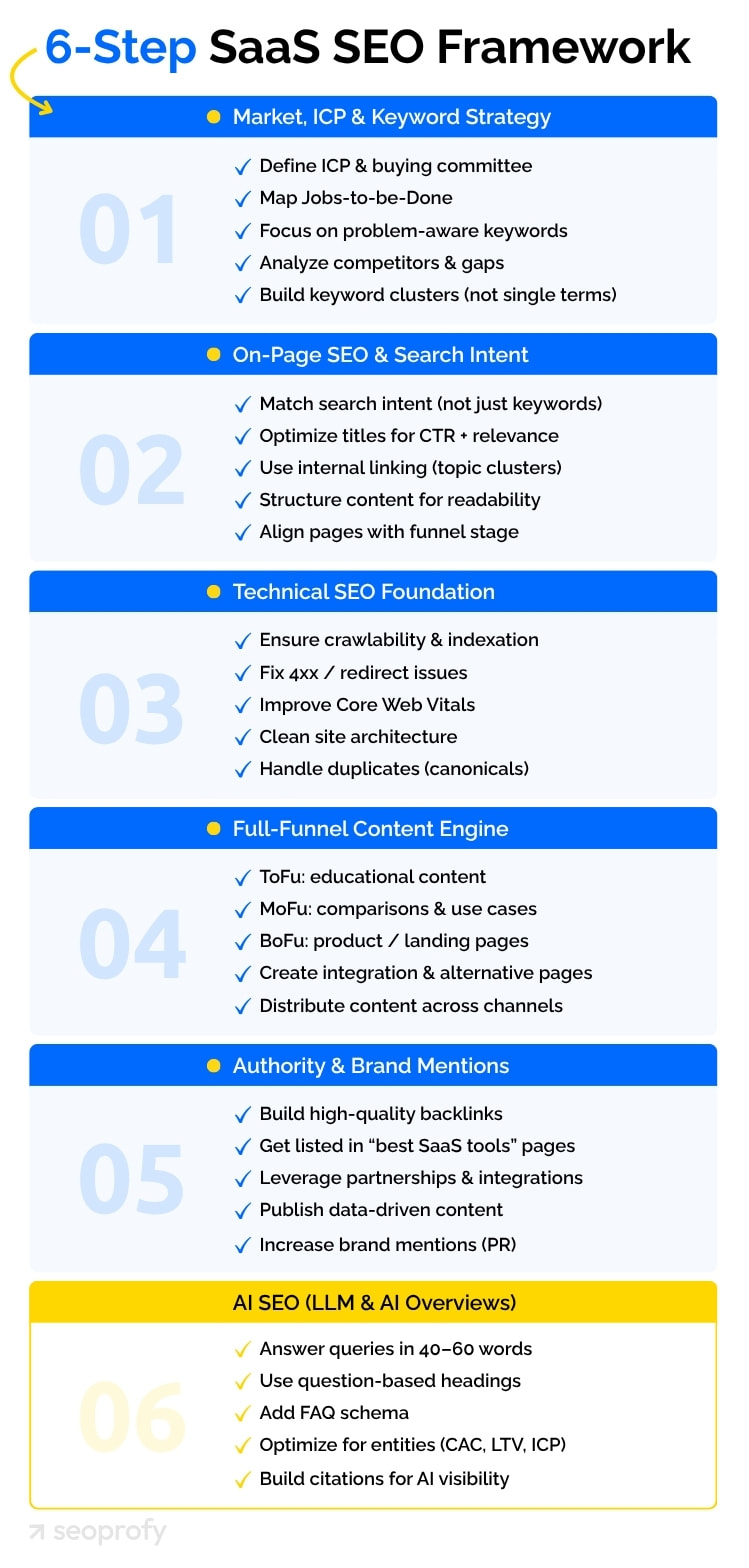
1. Keyword Research Strategies for SaaS Websites
The starting point of optimizing your website is keyword research for SaaS. This is when you analyze relevant terms and phrases people use to find products like yours and see where those searches fit within their decision process. It helps you understand what to write about and how to map your content to different intents. Here’s how you can approach it:
Define Your Target Audience
First and foremost, you need to get clear on who you’re targeting. Start with customer personas — fictional profiles of your users. These help you picture who you’re talking to. Include details like:
- Demographics: Age, location, job, income.
- Psychographics: Interests, hobbies, values.
- Behaviors: Online habits, search patterns, favorite platforms.
- Needs: What problems do they face? What goals are they chasing?
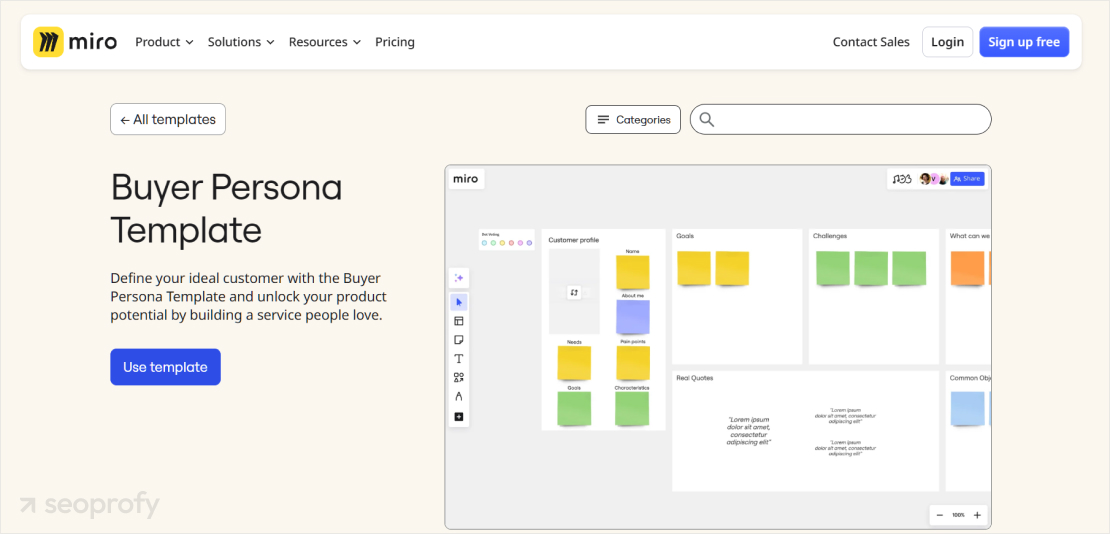
You can use free persona templates from tools like Miro to make this process faster.
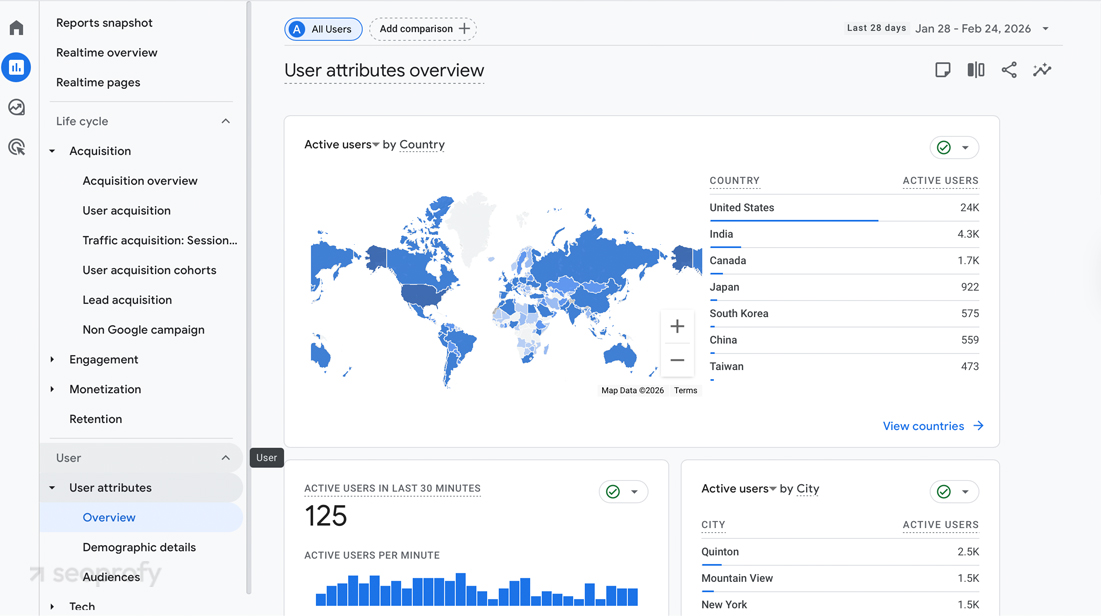
As for the data that can be beneficial at this step, check the existing audience you have in GA4. Here, you can see lots of demographic insights about your visitors.
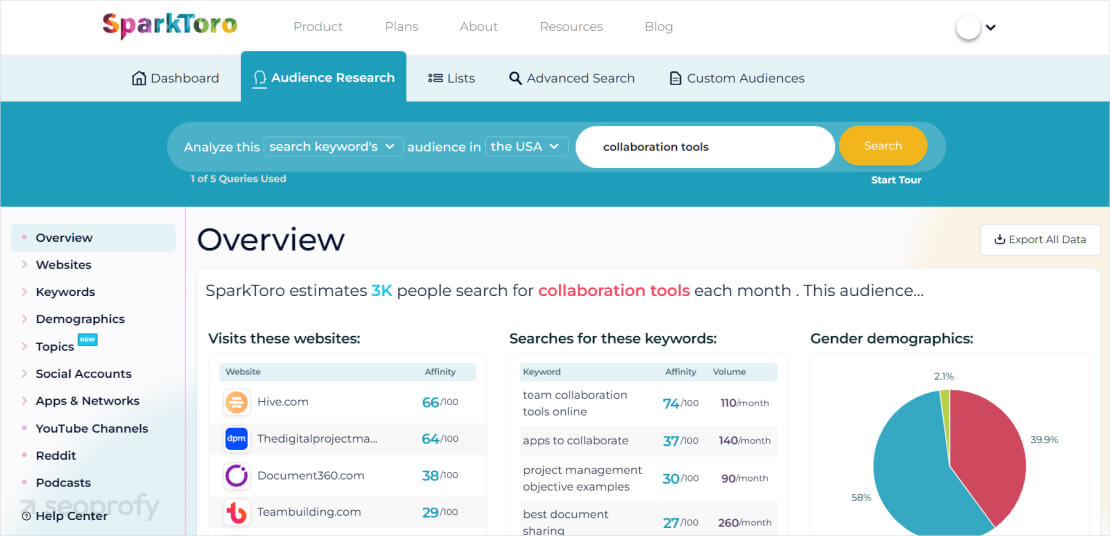
If you want to get even more details on your customers, you can use tools like Semrush’s One2Target (best if you already have their paid plan, as the tool is not free) or SparkToro (free for five searches per month).
SparkToro is great for B2B SaaS SEO because it shows where your audience spends time online — the websites they visit, social accounts they follow, podcasts they listen to, and much more.
When you define your audience well, everything else gets easier. You’ll be able to target better keywords and build pages that move them from curiosity to signup.
Start with Seed Keywords
Seed keywords are general terms that describe your product. Let’s take a project management tool as an example. You might start with a basic keyword like “project management.” To brainstorm more ideas for your main search terms, you can try to answer these questions:
- What is your SaaS business about?
- How would you like people to find you on Google?
- What features/functionality does your product have?
- What problem do you solve?
You can then use free tools like Google Keyword Planner or paid ones like Ahrefs’ Keyword Explorer to find similar terms and long-tail variations.
Spy on Competitors
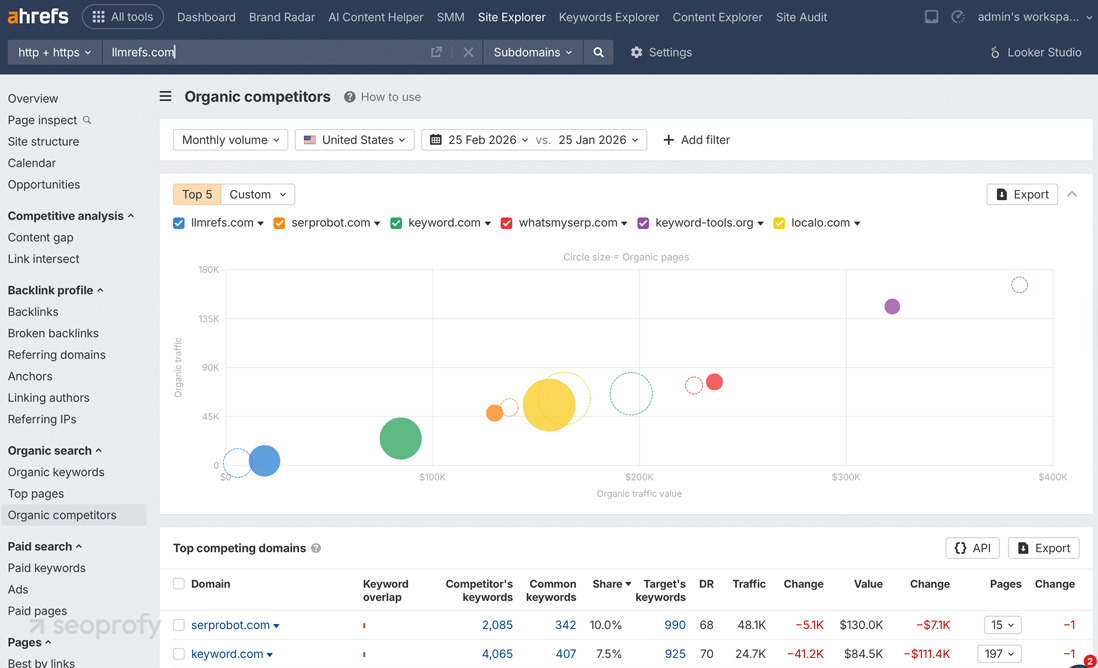
Quick competitive analysis can help you find relevant keywords that already work well for similar businesses. Simply go to their top-performing pages in Ahrefs’ Site Explorer and check if there are any potential keyword gaps in your strategy:
Group Keywords Around a Parent Topic
Keywords are usually part of broader topics. In the screenshot below, you can see how “project management software” is a parent topic for related keywords like “free project management software” and “construction project management tools”:
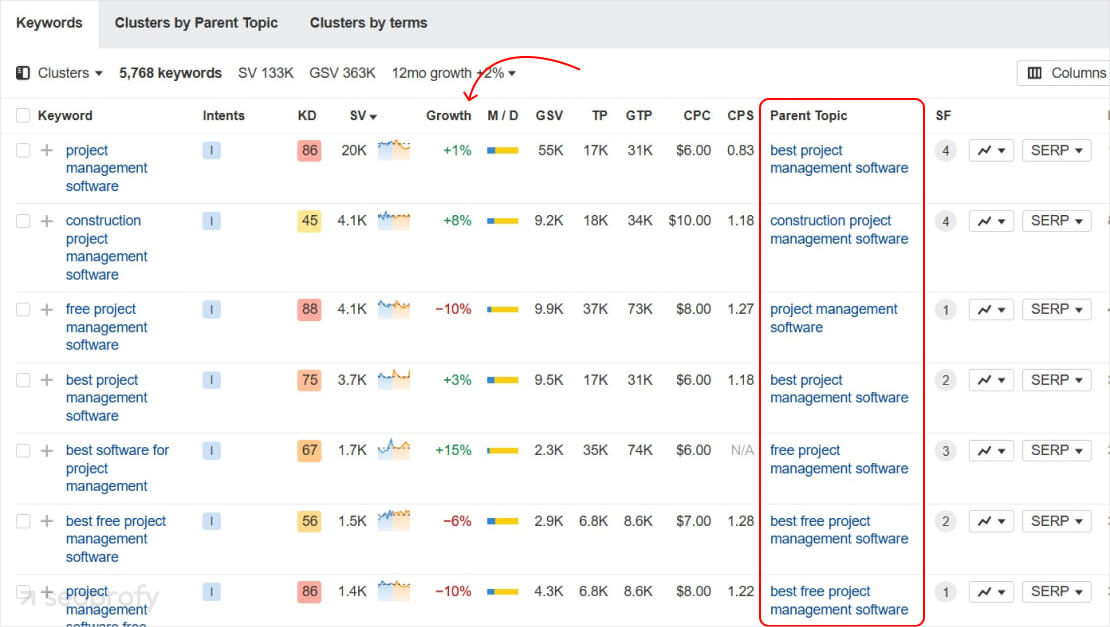
You can use this to your advantage and create content that’s optimized for multiple related queries, which helps you rank for the entire cluster. For example, a single blog post on “The Best Free Project Management Tools for Small Teams” could target several keywords at once.
Target Achievable Keywords
When selecting the keywords for your B2B SaaS SEO campaign, it’s a good idea to evaluate the following SEO metrics:
- Search volume: High-volume keywords bring more traffic, but they also have stronger competition. So it’s better to strike a balance between the two.
- Keyword difficulty (KD): The higher the number, the harder it’ll be to rank for it. Best approach? Focus on keywords with moderate difficulty that are achievable for your current domain authority.
- Commercial intent: Use CPC (Cost Per Click) data to determine which keywords are most likely to convert into leads or sales.
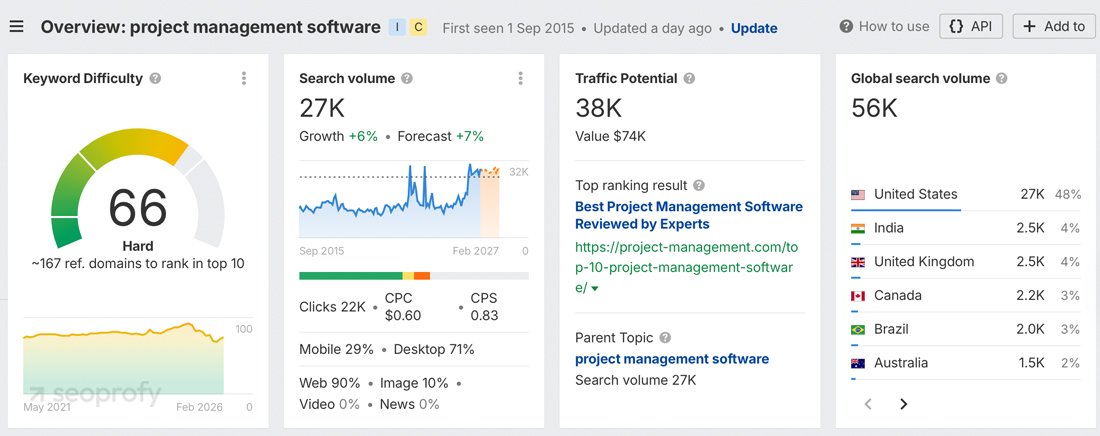
Not every keyword is worth chasing. Some are too competitive, while others might not bring in the right audience. For example, “project management software” has a KD of 66. Even though it has a decent search volume, ranking for it would be unrealistic for a new website:
Align Keywords with the Marketing Funnel
An effective SaaS SEO strategy needs to account for potential customers at all stages of their buying journey. So, your keyword and content strategy need to be on the same wavelength as where they’re at in that process. Let’s start at the beginning:
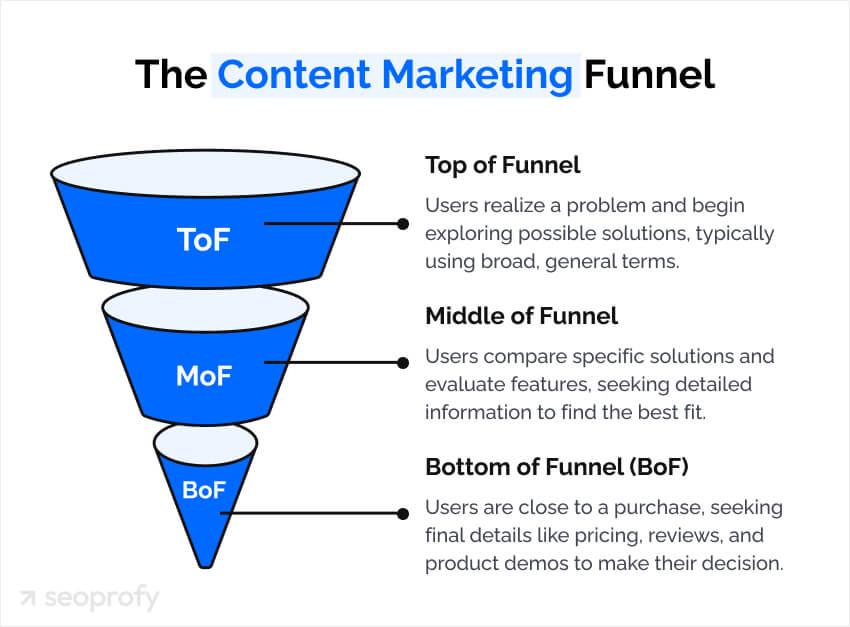
Top of Funnel (ToF) or Awareness Stage
When people first figure out they’ve got a problem, they start going off in search of possible solutions. This is when you need to think like your audience and figure out what they’d search for. For example, Notion targets these informational keywords:
- Content calendar template
- Project management for startups
- Note-taking app for students
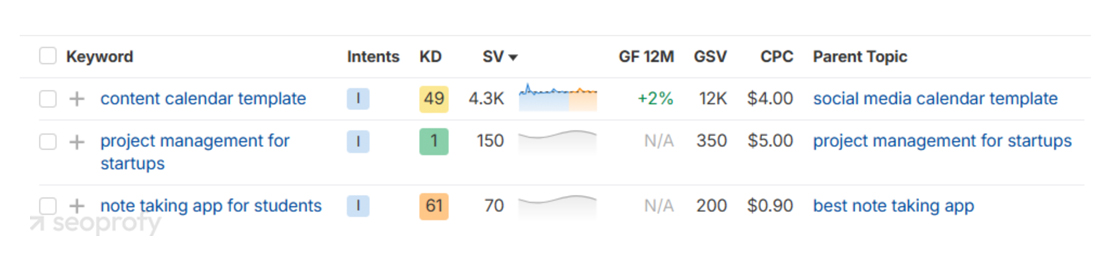
These are the kinds of things people look up when they’re exploring options to get organized, but don’t have a specific product in mind yet. At this stage, content like blog posts and free templates works best.
Middle of Funnel (MoF) or Consideration Stage
Now, your audience knows there are solutions out there. They’re actively comparing their options to find the best fit. At this stage, the keywords people use are more specific because they’ve already done some research. They’re looking for solutions or comparing options, for example:
- Notion vs. Trello
- Best app to create workflows
- Best-rated live chat tool for startup companies
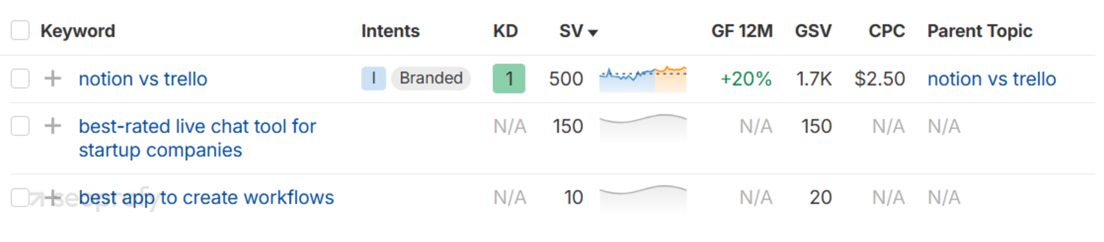
This is the stage where you need to show your USPs (unique selling points) and how your product positions against other options. Therefore, the content types used at this stage are comparison articles, case studies, feature breakdowns or listicles, and reviews.
Bottom of Funnel (B0F) or Decision Stage
This is where things get serious. Your potential customers researched their options, evaluated different tools, and are almost ready to pick the winner. All you need to do now is nudge them with content that shows, “you’re the one.”
Think about what questions someone might have before committing. They’ll want to know things like:
- How much does it cost?
- What do real users say about it?
- Can I see a demo or try it before I buy?
Again, Notion does a great job targeting this search intent. For example, they rank for search queries like:
- Notion pricing
- Notion demo
- Notion reviews
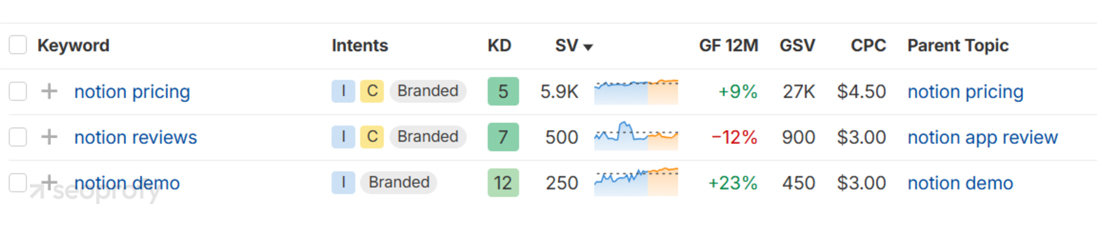
At this stage, your content should clear up any doubts and give people the confidence to choose your product. The types of content that work best for BoF keywords are feature and landing pages, case studies, and FAQs.
2. On-Page SEO Best Practices
The next step of your SaaS SEO strategy is on-site optimization. It deals with everything you can control on your website — writing great titles, optimizing your content, and placing internal links strategically to help search engines and visitors understand your pages and navigate your site. Here’s how you can do it effectively:
Add Your Main Keywords in Titles
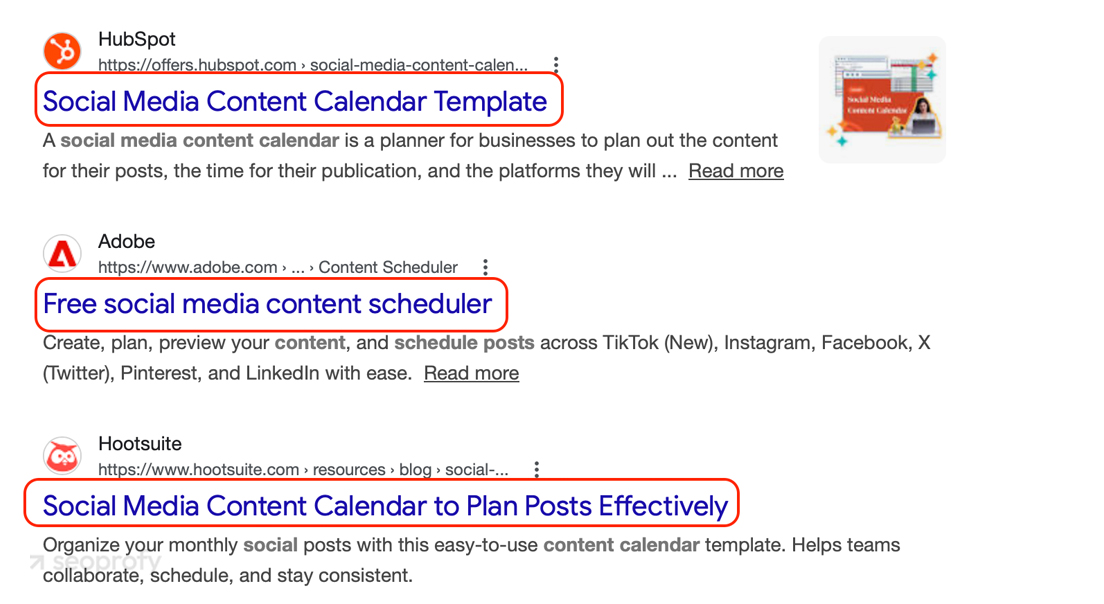
Title tags are one of the most essential parts of on-page SaaS SEO. They show search engines and users what your page is about and often determine whether your result gets the click.
To optimize your titles, keep them concise (under 60 characters) and include your primary keyword (ideally at the beginning), as seen in the screenshot below:
Write Engaging Meta Descriptions
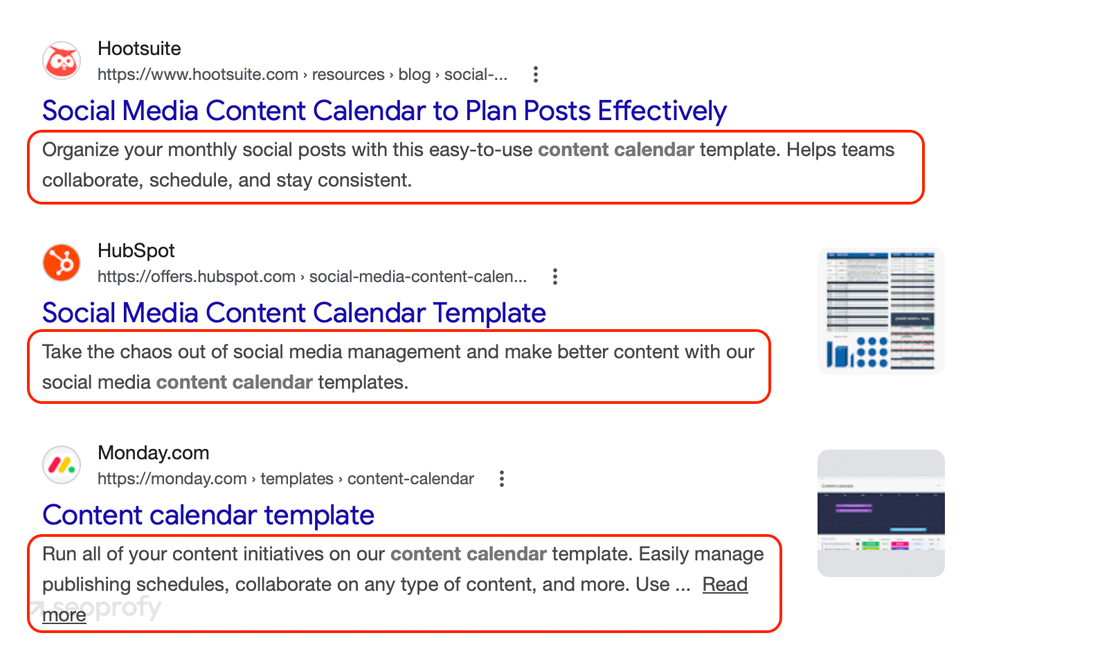
Meta description goes right under the title. Its main purpose is to give search engines and people a quick summary of your page content. You can think of it as your pitch to searchers: “Here’s why you should click this link.”
Similar to titles, you need to include your primary keyword in the description. You may also add some benefits of your product here or show users the value they’ll get if they visit your page, just like in the example below:
Use Descriptive URLs
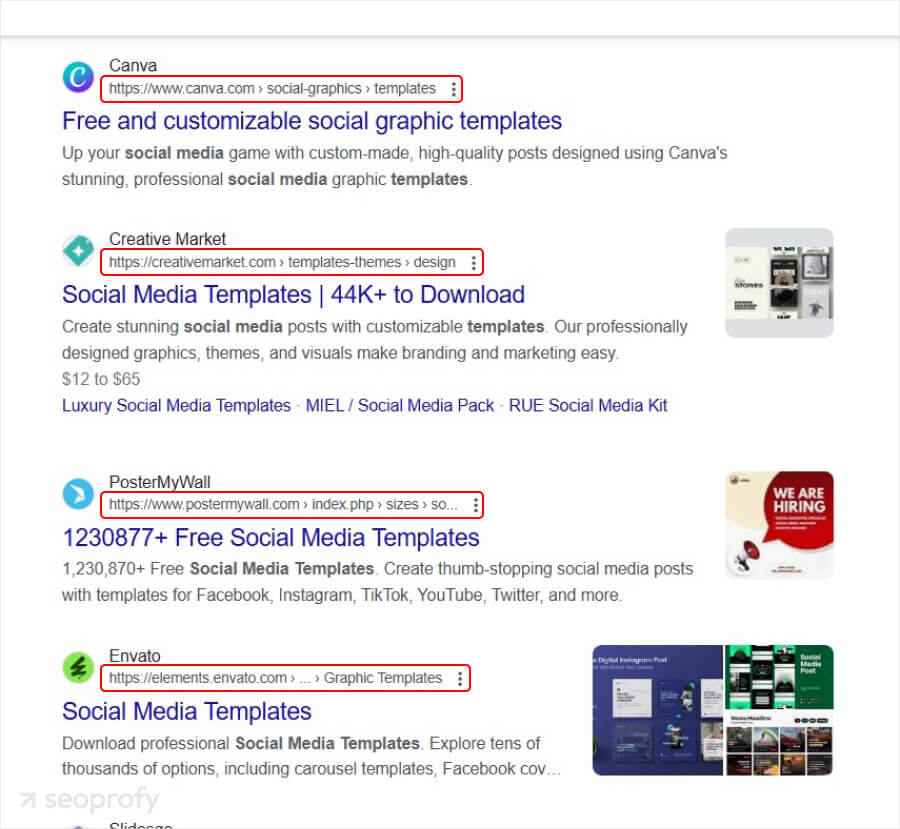
URLs are another important element for your SaaS SEO performance. A well-structured URL helps search engine bots understand your page’s context and enables visitors to find their way around your site.
Some CMS platforms, like WordPress or Wix, automatically generate URLs for your pages. Although convenient, these auto-generated links are not always SEO-friendly. So it’s better to take it into your own hands and create URLs that:
- Are clear and descriptive
- Include your target keyword
- Don’t contain irrelevant numbers or characters
Optimize Your Images
Images make your site look professional and actually help you rank. To get this right, use descriptive file names that include your keywords.
You should also add alt text. It’s basically a short description of the image that helps make your site more accessible and gives Google additional context.
Last but not least, reduce your image sizes to improve loading times and user experience. There are plenty of tools online that you can use to do it fast and efficiently.
Maintain a Simple Site Structure
Site structure is the way you organize and present content to visitors. Google bots rely on it to rank your content. It also helps users find what they’re looking for and improves UX. Here are a few SaaS SEO tips to keep in mind:
- Use a menu that leads directly to important pages like features, use cases, pricing, and support
- Make your pages follow a simple hierarchy and add breadcrumbs (especially if you have lots of pages)
- Add internal links to send link equity to high-priority pages and also help visitors better navigate your site.
3. Technical SEO for Saas Websites
Once the structure’s in place, SaaS technical SEO is where your attention should go next. If bots can’t crawl or index your site properly, all the great content you create will remain invisible. Let’s go through the most important technical aspects you need to get right to not let that happen.
Crawling and Indexing
Search engines use crawlers (bots, basically) to explore websites. These bots move through your site, finding pages and figuring out how everything connects. But just finding your pages isn’t enough – they also need to get indexed.
Indexing is when search engines save the pages they’ve found in their database. Once a page is indexed, it can show up in search engine results pages. If indexing doesn’t happen, your page stays invisible, even if the content is of high-quality. Here’s what usually stops pages from getting indexed:
- JavaScript-heavy pages: If your site uses JavaScript to load content, crawlers might not see it properly unless you use solutions like server-side rendering (SSR).
- Misconfigured robots.txt files: These files tell crawlers which pages they can or cannot access. If set incorrectly, important pages might be blocked.
- Noindex tags: These tags instruct bots not to index specific pages. Be careful not to accidentally add them to important content.
To check how well your site is being crawled and indexed, you can use the Crawl Stats report in Google Search Console. For this:
- Open Google Search Console.
- Navigate to Settings.
- Look for the crawl stats section.
- Click on Open Report.
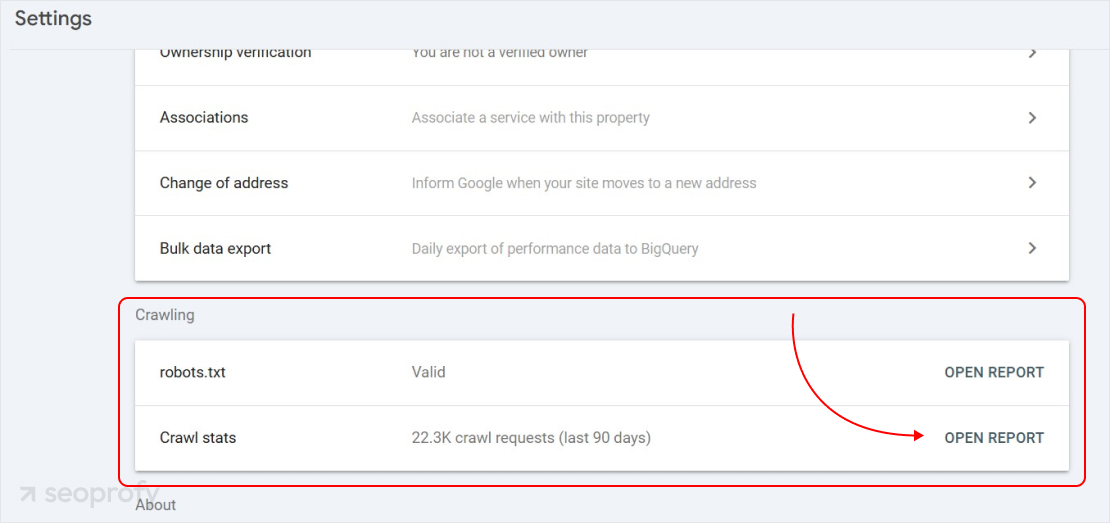
Once inside the report, look for the following:
- 3xx redirects: Redirect chains slow down your site and confuse search engines. For this reason, all your redirects should go straight to the final page rather than bouncing through A to B to C to D. Redirect loops are another issue where pages send visitors back and forth between each other. Fix these when you find them so crawlers can index your pages properly.
- 4xx errors (broken links): Look for status codes that start with “4”. These mean something’s wrong on the user’s end, like a page that doesn’t exist anymore (404 errors). Broken links often waste crawl budgets, so you need to either update them to point to the correct page or remove them if they’re no longer relevant.
Site Speed Optimization
Slow loading is the top reason people abandon websites, with 88.5% of users citing it as their main complaint. And it’s not just about losing visitors. Page speed affects your search rankings, too.
To see how fast your site loads, you can use PageSpeed Insights, a free tool from Google. All you need to do is paste a link to your website or a specific page, and after a few seconds, the tool will show you your performance on web and mobile.
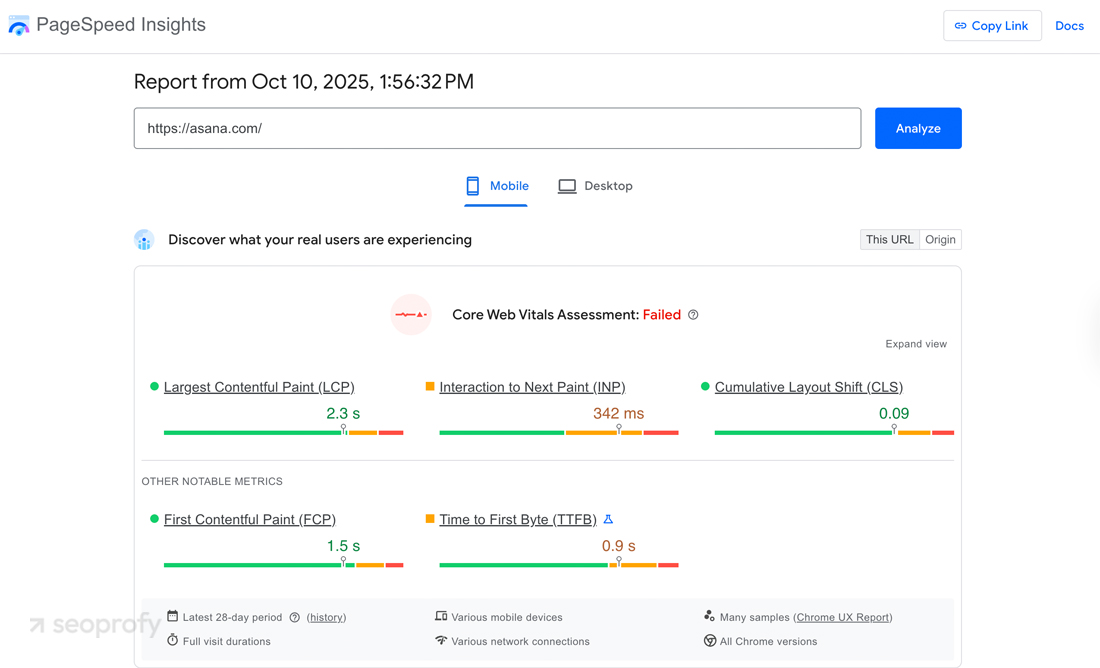
If you scroll down a bit, you’ll also find personalized suggestions on what to fix to improve your score:
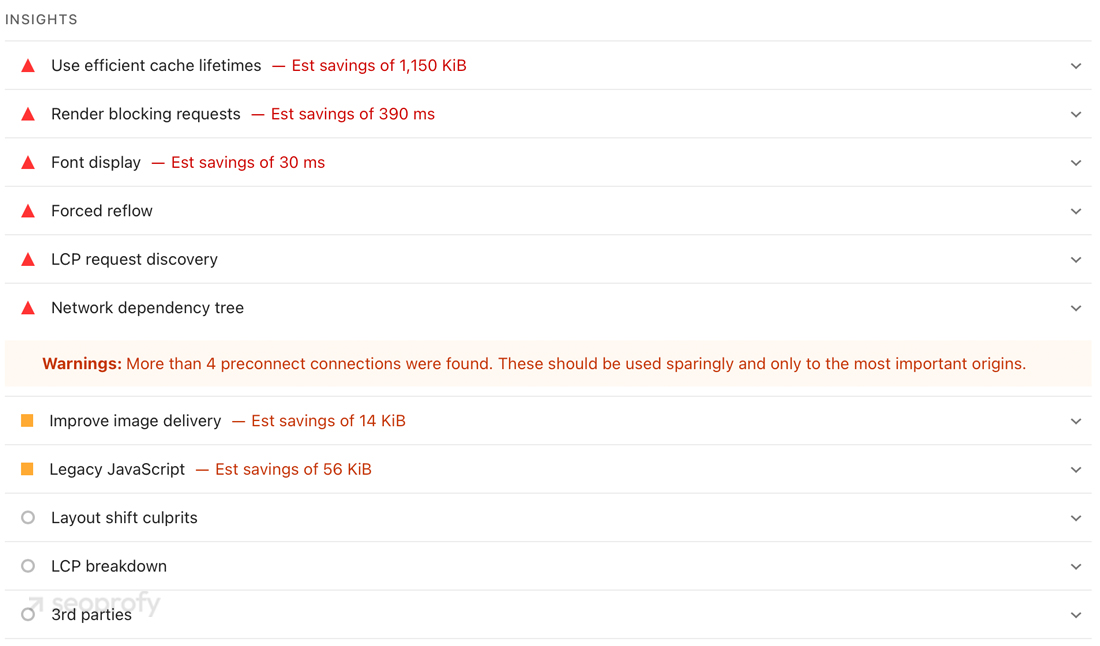
In addition to that, here are a few best practices you can try to squeeze a bit more speed out of your site:
- Minimize JavaScript and CSS files to reduce loading time
- Enable browser caching so repeat visitors experience faster load times
- Use a CDN to deliver content quickly across regions
Duplicate Content
In SEO for SaaS companies, duplicate content appears when the same or very similar content appears on more than one page of your site. This can confuse search engines and dilute your visibility, as they won’t know which page to show in search results.
To find and fix duplicate content, you need to first log into your GSC (Google Search Console) account and go to Pages under the indexing section. Then, look for issues related to duplicate content:
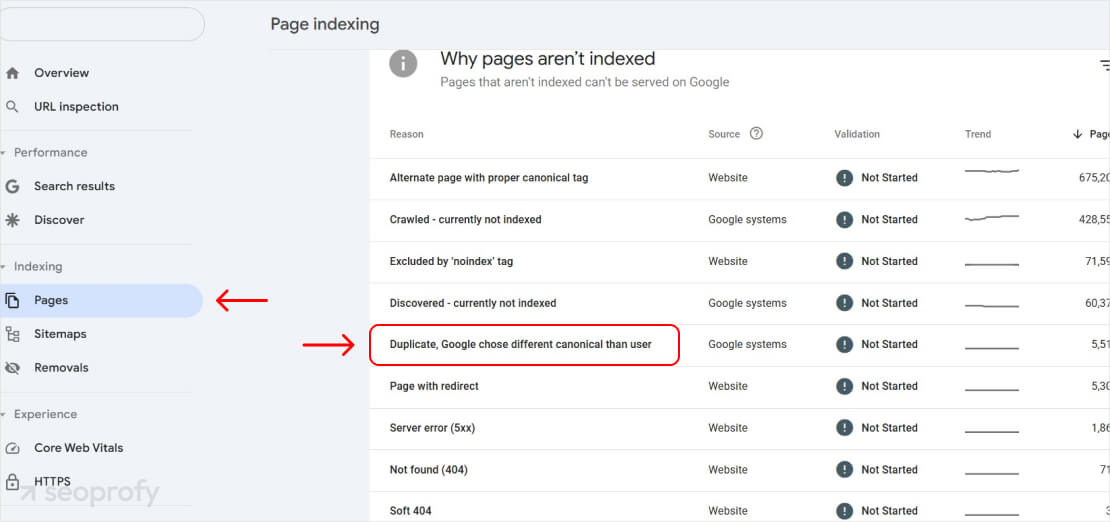
Once you have identified such pages, try to do the following:
- Add a canonical tag to the page you want Google to prioritize. It’s like saying, “This is the main page — ignore the others.”
- Create 301 redirects to send both users and Google bots to the correct page.
If your website uses subdomains, such as for blogs, support pages, or staging environments, consider whether these pages should appear in search results. Indexed subdomains can sometimes cause duplicate content issues. To manage this, you can apply noindex tags to pages on subdomains that aren’t meant for search engines or set up rules in your robots.txt file to block unnecessary indexing.
If this feels like a lot to handle, outsourcing SEO can help make sure everything is set up correctly. The next step? Creating high-quality content that turns visitors into leads.
4. SaaS Content Marketing
One of the main ingredients of a solid SEO strategy for SaaS is undeniably content. So why is it so important? The main reason is that the buyer’s journey in this market is more complex. While in ecommerce stores, for example, category and product pages do most of the heavy lifting, the situation is different for software businesses: they need to support a longer consideration process.
People who are looking for a software solution are not ready to buy the first time they land on your site. They’re researching. They want to learn what your software does, how it fits into their workflow, and why it’s better than the alternatives.
You also need to consider that they aren’t just evaluating the tool — they’re looking at the long-term value, customer support, and integrations that come with it. That’s why your content needs to:
- Explain how your product solves their problems
- Build trust through case studies and testimonials
- Position your brand as an authority in the niche
How to Create a SaaS Content Marketing Strategy?
Since the buyer’s journey in SaaS isn’t always a straight line, your SEO content strategy needs to be flexible enough to meet potential customers where they are. Here’s how you can do that:
Determine Your Goals
Setting clear goals helps you choose the right content types to achieve the results you’re aiming for. For product businesses, the following are usually the top priorities:
- Brand awareness: The primary goal of SEO for SaaS startups is to help people find you. If they don’t know you exist, they can’t buy from you. Blogs and videos are great ways to get the word out.
- Lead generation: After getting their attention, the next step is to turn them into leads. Here, you can try formats such as tutorials or webinars that require an email to access.
- Retention: SEO doesn’t stop once a user signs up. Keep your content fresh and helpful so people continue learning new ways to use your product. Updates and educational articles can drive ongoing engagement and prevent customers from looking elsewhere.
Decide on Content Formats
Different formats serve different goals in SaaS content writing, and below, we’ll share the ones that consistently perform well for software companies.
Blogging
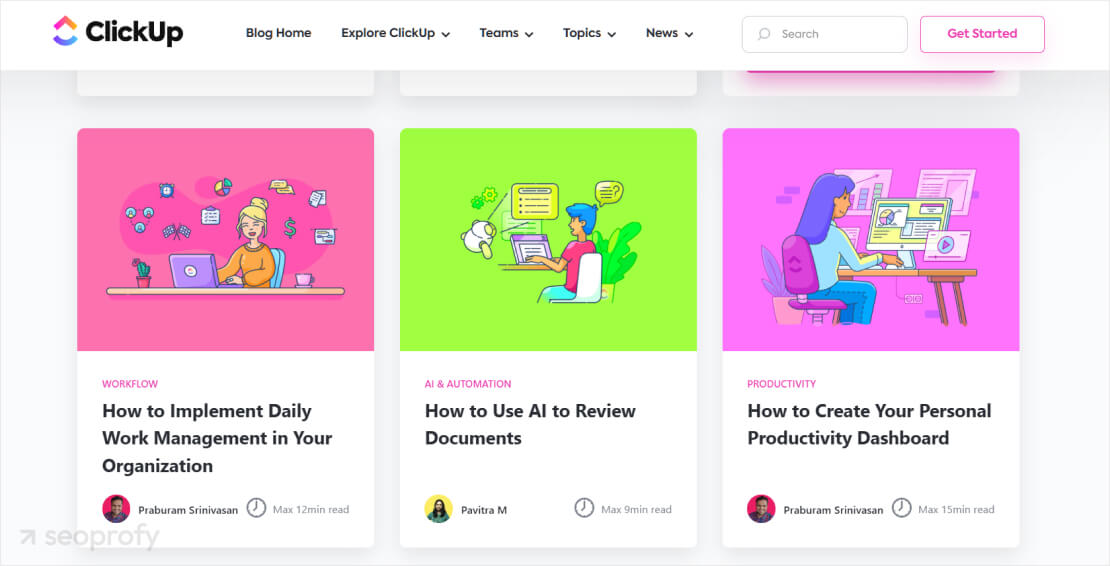
This is one of the most common formats in SaaS content marketing. It not only improves your SEO but also increases retention rates by 32%. For example, ClickUp’s blog is packed with productivity tips and detailed guides, all tailored to their target audience:
Be careful with AI content. There may be penalties from Google.
Ebooks and Webinars
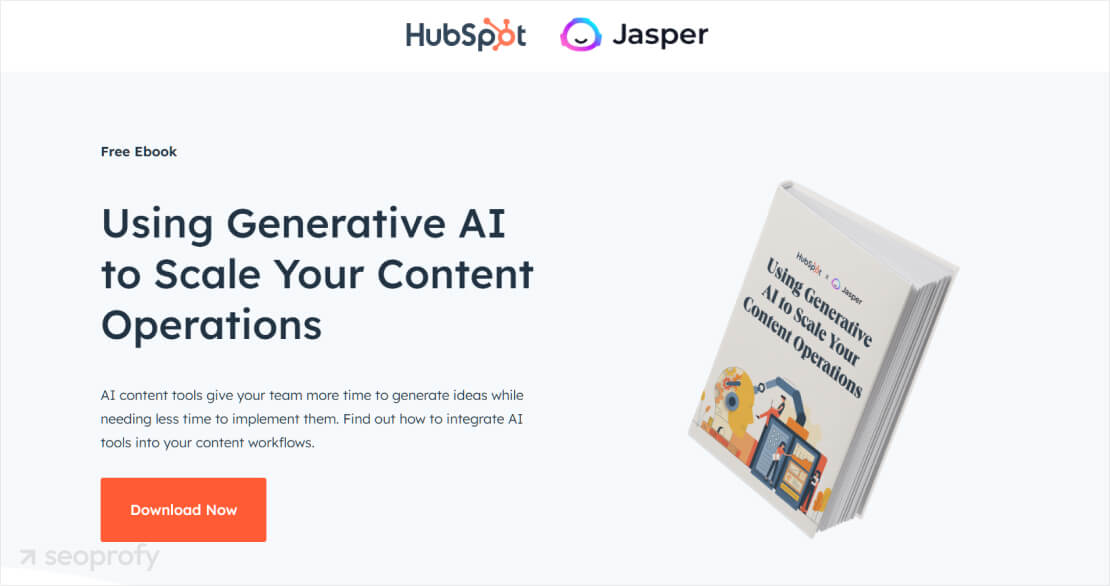
These work well for lead generation because they provide valuable information that your audience wants. In return for access, you can ask for their email address.
This way, they get the resources they need, and you get a way to stay in touch and nurture a connection with them. One of the well-known SaaS companies that often creates ebooks is HubSpot:
Case Studies
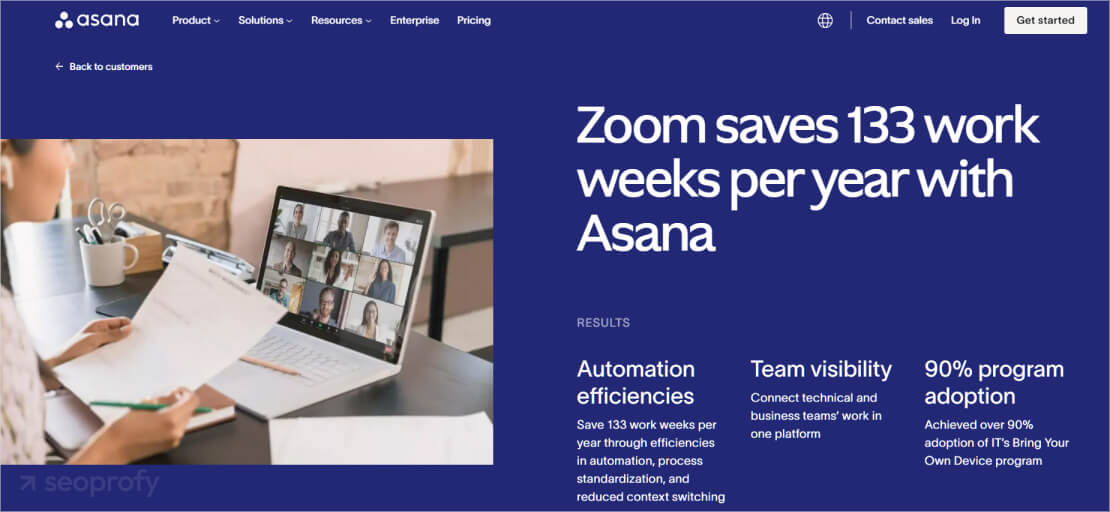
Another content type that can drive more subscriptions for product companies is case studies. These are great because they show how your software solves real-life problems and how other clients have already benefited from it.
Let’s see how Asana does it. In their case study with Zoom, they mention how using Asana saved the company 133 weeks per year. It’s a practical way to show potential customers what’s possible with their software:
Use Cases
An effective SaaS SEO content strategy often needs to cater to more than one audience, each of whom cares about a different aspect of your tool. Use case content gives you space to show how the product fits into their workflow and supports the outcomes they care about. Here’s an example of how Typeform does it:
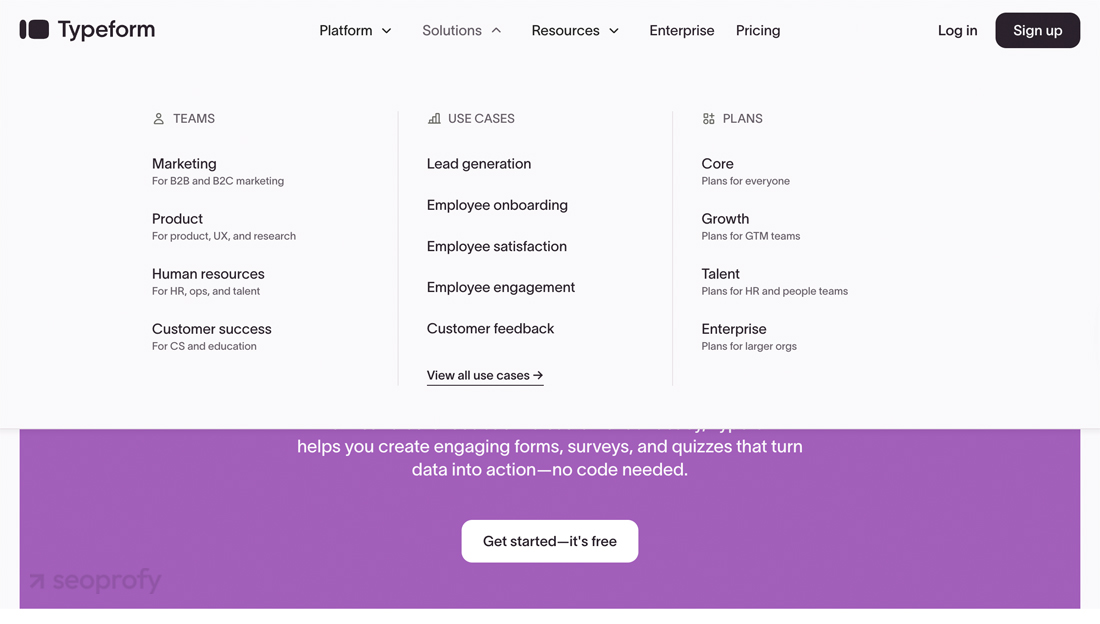
This format can also support SEO by targeting mid and bottom-funnel searches. People often look for tools that integrate with specific platforms or support a certain function, and these pages can capture that demand directly.
Podcasts and Expert Roundups
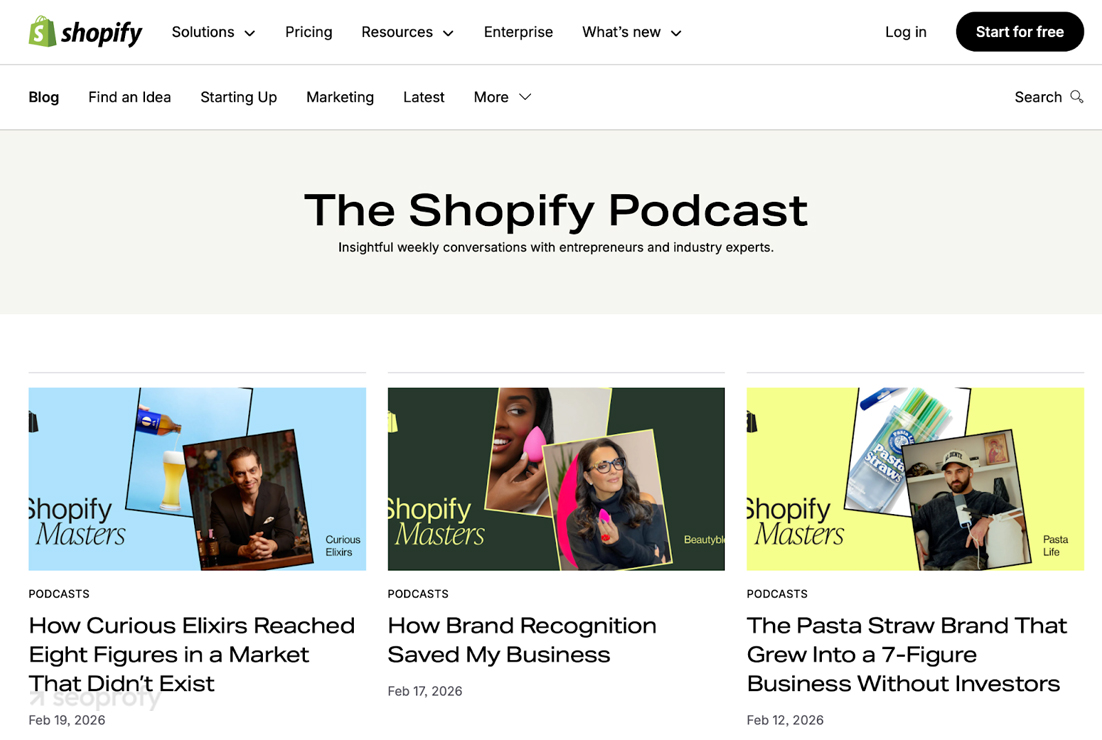
Finally, you can test the waters with formats like podcasts. It’s a great way to connect with your audience on a personal level and talk about your first-hand expertise.
For example, Shopify launched its own podcast called “Shopify Masters.” They use it to share interviews and success stories from entrepreneurs who’ve used Shopify to grow their businesses.
Create a Content Production System
You also need a way to track what you’re publishing. One of the ways you could do that is to design a monthly editorial calendar. Google Sheets works fine for this, or you can use Notion or build a content map. Just outline your topics, formats, keywords, and who you’re writing for. This keeps you consistent and stops you from covering the same ground twice.
Distribute Your Content
Publishing a blog and leaving it at that won’t get the results you want. In SaaS content marketing, distribution is just as important as creation. You need to reach as many potential clients as possible, and here are three main platforms where you can share it:
- Owned channels (your email list, website, or blog)
- Earned/shared channels (social media and third-party platforms)
- Paid channels (ads, sponsored content, or influencer marketing).
To help your content perform well, focus on platforms where your audience spends time. Use buyer personas and audience insights to find these and adapt your content to fit. This helps you maximize its impact and reach more of the people you’re trying to connect with.
5. Link Building for Saas
Link building for SaaS businesses means getting other authoritative websites to link to you. It still is an important aspect in SEO for SaaS companies because Google treats backlinks as one of the strongest signals of authority, and that hasn’t changed.
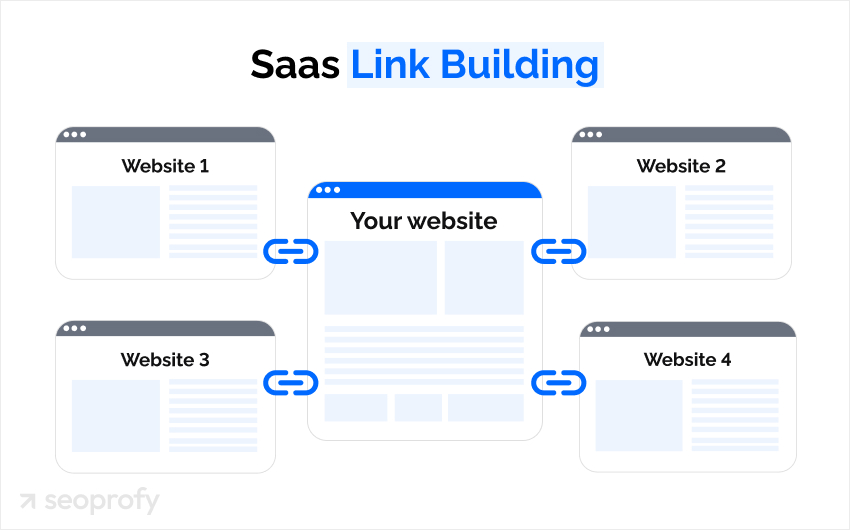
What’s new is that AI models also look at these mentions when deciding which brands to reference. The more your product appears across reputable sites, the higher the chance it will be recognized and cited by large language models, too.
The problem is, there’s high competition in the SaaS industry, and getting top rankings on Google is no easy task. For high-demand SEO keywords like “email marketing platform,” Ahrefs data shows you’d need backlinks from 932 referring domains just to break into the top 10. Sounds like a lot, right?
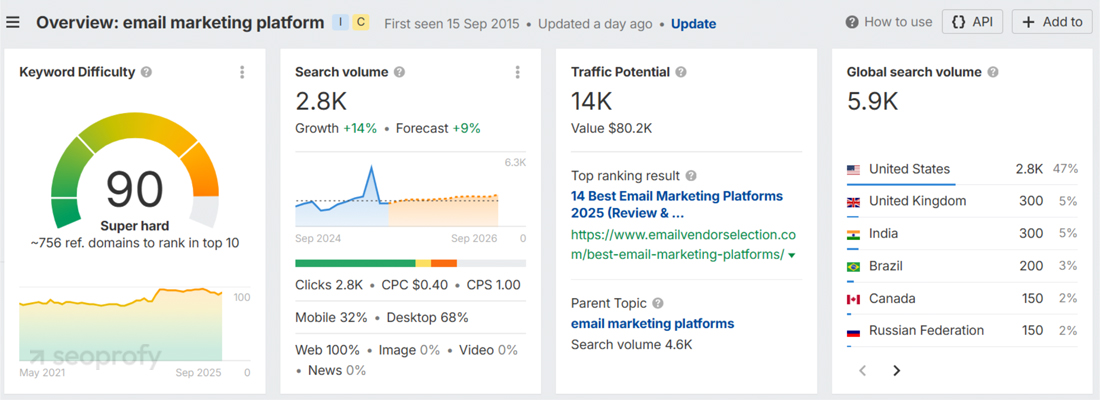
In more competitive areas, such as AI tools, the requirements are even steeper. Some of the websites in this industry have more than 5,000 referring domains.
So what does this mean for your SaaS business? You need to build a strong backlink profile to be able to rank well and build credibility in your space.
If ranking for terms like “email marketing platform” requires over 900 backlinks, then go for less competitive keywords that don’t need many backlinks to rank. Tools like Ahrefs can help you find these opportunities with the help of filters:
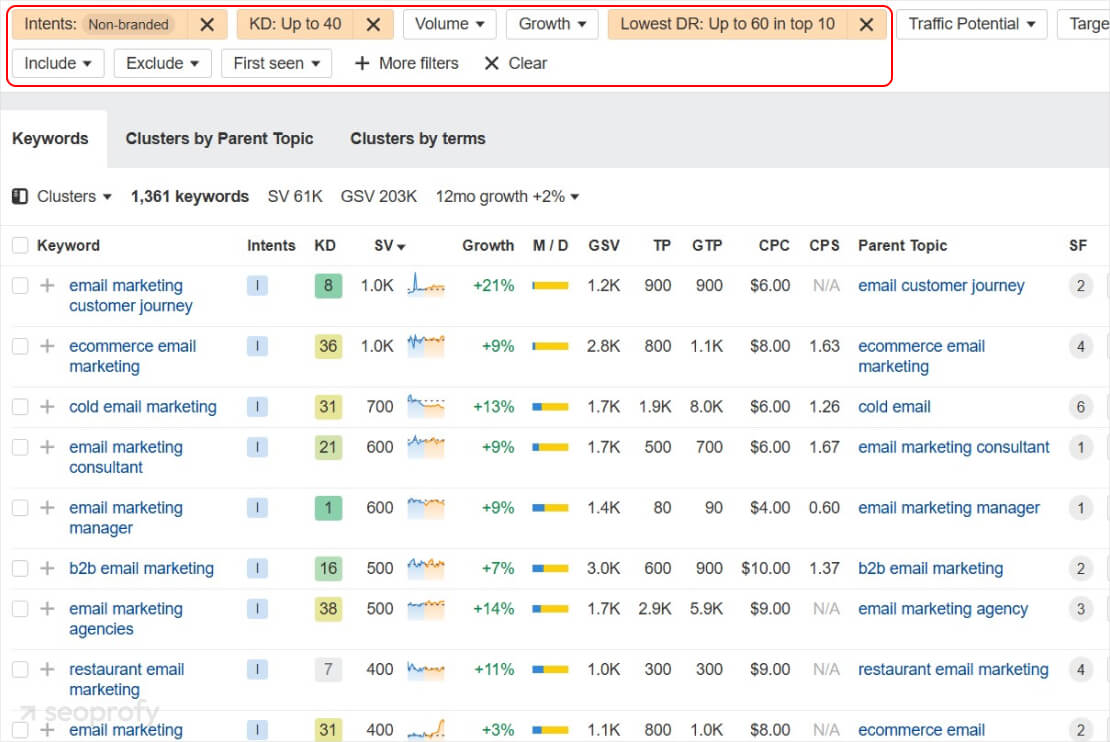
Additionally, you can try some of the proven ways to get more backlinks to your site, for example:
- Share unique data that others can use: Publish surveys, case studies, or industry benchmarks, as this type of content often gets cited in blogs and articles and drives more referral traffic. We also noticed that proprietary data often gets referenced in AI models.
- Write for trusted sites in your niche: Collaborate with other SaaS companies or blogs to write a guest post for them. You can also use platforms like HARO (Help a Reporter Out) to connect with journalists who may feature your product.
- Reclaim unlinked mentions: Many blogs and directories mention your software without linking to it. You can find these mentions with tools like Google Alerts or Ahrefs. A simple message that thanks them for including your product and asks for a link often works. It’s a low-effort tactic that works surprisingly well.
- Watch your competitors’ link profiles: Your competitors can point you to new link opportunities. Use Ahrefs’ Link Intersect feature to see which domains link to them but not you. Study what kind of content earned those mentions and pitch something more current or useful. Many of those sites already write about your industry, so they’re open to new references.
- Partner with brands and event organizers: Reach out to your integration partners and ask if they can list you on their resource or integration pages. For example, if you integrate with Slack, see if they can include you in their apps and tools directory. At the same time, look for industry-specific conferences or virtual events where you can sponsor and gain exposure through their backlinks.
Try to focus on less competitive keywords if your link profile is far from average.
Advanced SaaS SEO Tactics
In this section, we’ll look at more advanced tactics that we often use in our B2B SEO services:
Conversion Rate Optimization (CRO)
If you see that your website is only attracting traffic but no sales, this means you need to optimize your pages for a better conversion rate. How to do it? You can try out these best practices:
- Simplify forms and ask only for the main information you need (no one has the time to fill out long forms).
- Make your CTAs clear, action-oriented, and visible on the page.
- Test different page elements (headlines, CTAs, page layouts) to see what works best
- Incorporate relevant CTA sections within your webpage
- Add client testimonials or trust badges to build credibility and reduce hesitation
- Make sure your site works well on all devices, as mobile traffic often accounts for a large share of your audience.
At the same time, try using heatmaps or session recordings. They show how visitors move through your pages and where attention starts to fade. Tools like Heap or Amplitude can help you see which features attract conversions, while connecting this data with your CRM shows which CTA paths often lead to paid plans.
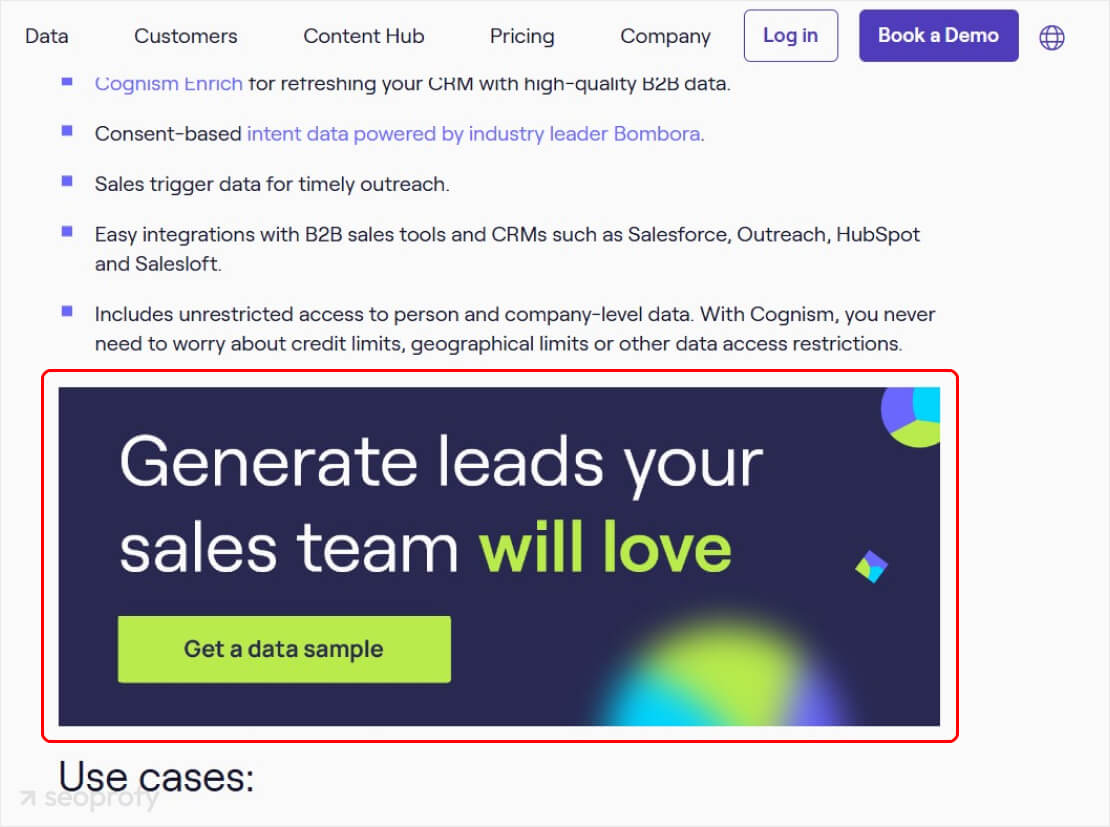
In the screenshot below, you can see how Cognism places its CTA section. It’s distinctive from the rest of the web page and is highly relevant to their potential customers.
Local SEO and International Expansion
To grow your SaaS business, it’s important to connect with people where they are. A combination of local and international SEO can help you achieve this. Start with local SEO to meet the needs and demands of your target region. Here’s what you can do:
- Create content for local audiences
- Optimize your Google Business Profile
- Use location-based keywords
- Build local backlinks
If you’re planning to expand into new markets, international SEO for SaaS websites can help you tap into audiences in different countries and languages. This is when you need to:
- Localize your content for a multilingual audience
- Add hreflang tags so search engines show the right language or region version of your site
- Set up geo-targeting in GSC to let Google know which countries or regions your site is targeting
- Create an international backlinking strategy and work with local influencers or websites to build trust in new countries
- Offer local currencies and preferred payment methods to remove barriers for international buyers.
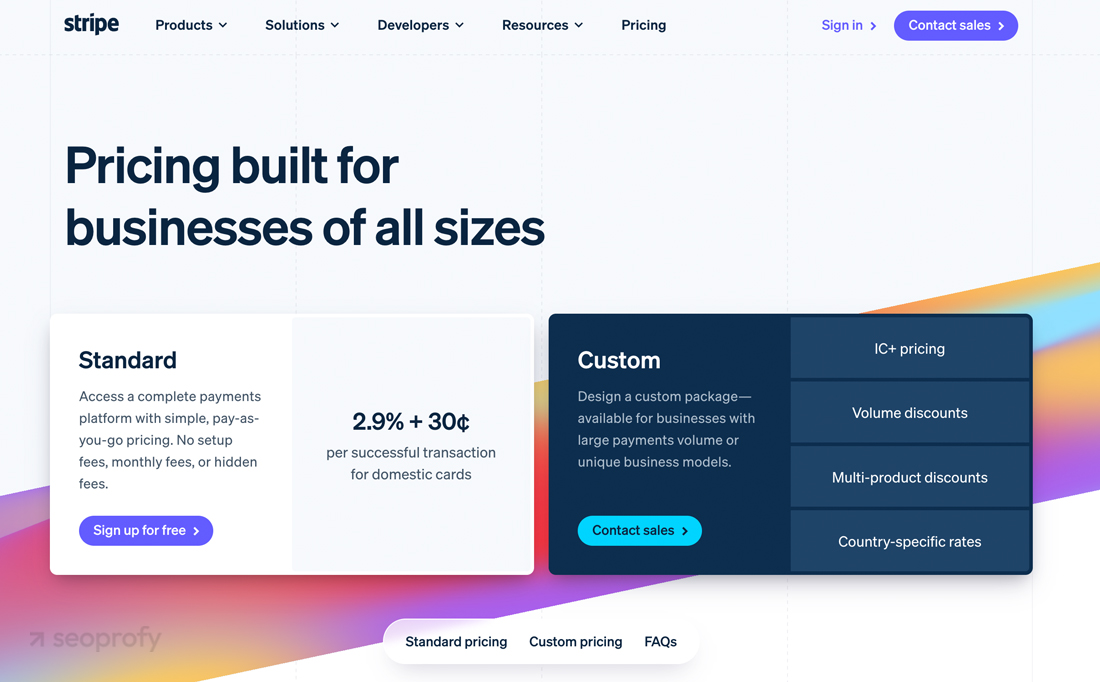
To show you how the localization part works in practice, let’s take a look at Stripe. The company operates in many countries and has a local version of its website for each region. Here’s their page for the U.S., where you can see English copy and dollar-based pricing:
Now compare it to their Spanish version below. Notice how they changed the currency and adapted the text to the local language and tone:
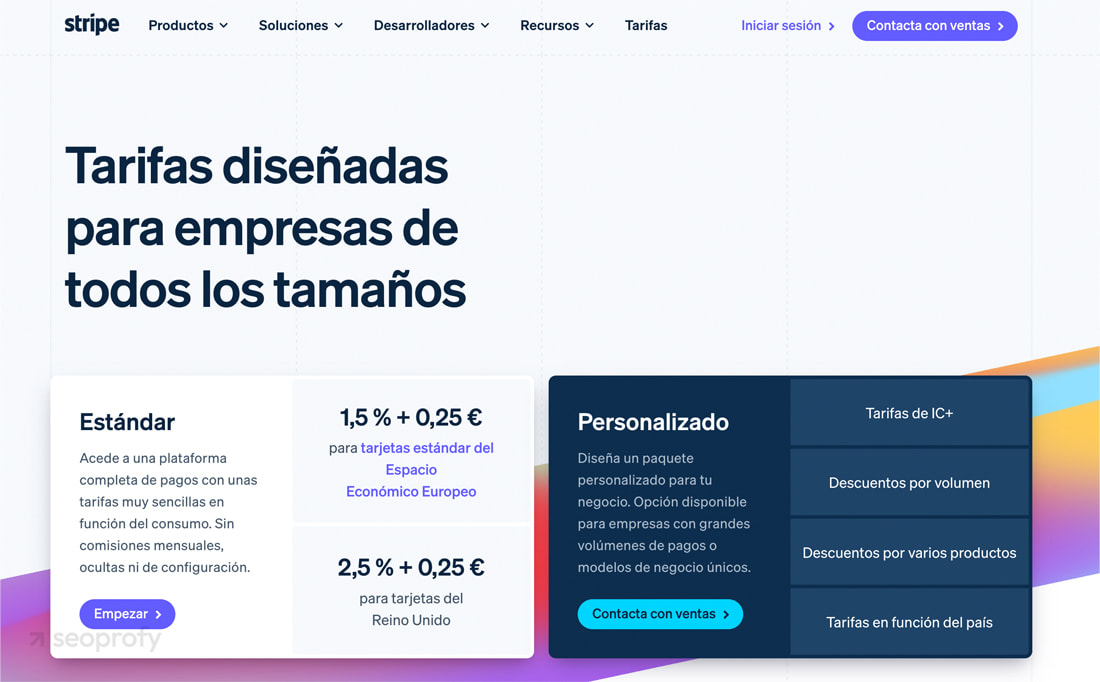
These adjustments make the experience feel native to every market and are a huge part of an international SEO campaign. Of course, not every SaaS business will need to go that far right away. For many, a bigger impact comes from improving what’s already on the site, which brings us to our next section.
Update Non-Performing Content
Updating content is a simple yet effective way to improve SEO for SaaS companies. Customers expect up-to-date information, whether it’s about your product or the solutions you provide. Google prioritizes fresh content, too, making it a win-win.
How to know which content to refresh? Simply open GSC and navigate to the Performance report. Once there, set your date range and look at the pages. Sort them by clicks or impressions to find those that are not performing well. Then, you can do the following:
- Fix outdated information and missing details
- Add new insights or updated statistics
- Update target keywords if needed
As a shortcut, you could also ask AI tools to check which pages need to be updated. From your WordPress account, export your title tags or a list of URLs and paste them into ChatGPT. Ask it to review which topics may feel outdated or losing traction. It’s a quick way to pinpoint pages that could use a refresh.
And it’s worth mentioning that updated content helps not only with Google. AI tools value fresh information too and often reference newer pages when generating answers. So, when your content is current, it’s more likely to surface there as well.
AI SEO for SaaS: How to Optimize for AI Overviews and LLM Search
We’ve already covered one of the top tactics that works well for AI search: fresh content. Now, let’s look at other strategies you can use to optimize your site for more AI overviews and LLM mentions.
Before we go into the “how”, it’s worth looking at the numbers to see why this is actually becoming a priority. Previsible analyzed LLM-driven traffic across 19 GA4 properties and saw sessions rise from 17,076 to 107,100 year over year — that is a 527% increase.
At the same time, the quality of this traffic tends to be much better, too. Ahrefs shared that their AI search visitors convert at a 23x higher rate than traditional ones.
What this tells us is that SaaS companies need to pay special attention to optimizing for all search surfaces to capture those leads. And below, we’ll share some of our tried-and-tested tactics you can leverage in your AI SEO strategy to do exactly that.
Put More Emphasis on the Intro of Your Pages
A recent study by Kevin Indig from Growth Memo found that 44.2% of citations came from the first 30% of a document. They tracked more than 18,000 verified ChatGPT citations, and the drop-off after that point was steep.
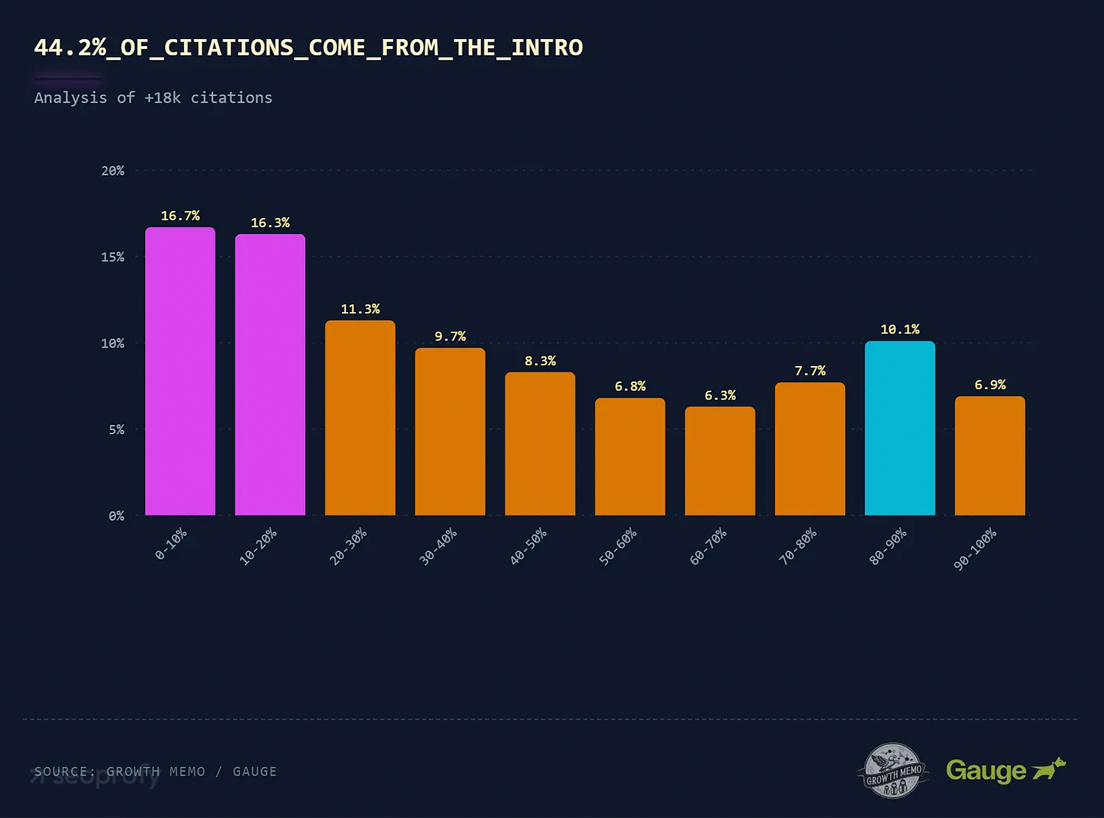
As we can see in the screenshot, content closer to the bottom of the page was cited far less often. To capitalize on this “top-heavy” preference of LLMs, here’s what you can do:
- The 40–60 word rule: Answer the main question of your article directly in the first paragraph.
- Front-load the value: Move your most important definitions and product features to the top of the page.
Use an Entity-First Approach
Google and other LLMs no longer just look at keywords. They now map relationships between concepts, and this is where entities come in.
An entity is basically any concept or topic you want to be associated with. If you run a PLG tool, for example, you want AI systems to connect your brand to concepts like product-led growth, free trial conversion, user activation, and expansion revenue. The keyword “PLG software” is just one small piece of that picture.
The broader and more consistent those associations are — across your site, backlinks, and mentions around the web — the more confidently an LLM will bring up your brand when a person asks about those topics. Here’s how to do that:
- Identify your core concepts: Find the specific topics that sit at the intersection of your product and your buyer’s problems.
- Bridge the gap: Create content that thoroughly covers those concepts and explicitly links your features to them.
Structure with H2/H3 Questions and FAQ Schema
AI models are essentially answer engines. Formatting your headers as questions (e.g., “How does [Brand] integrate with Slack?”) makes it incredibly easy for AI to identify your content as the relevant answer. To take it a step further, you can:
- Use FAQ Schema: This provides a “machine-readable” version of your Q&A. In 2026, schema is less about the visual “dropdowns” on Google and more about giving LLMs a structured path to follow.
- Add direct answers: Under each H2 question, provide a concise, 50-word summary before diving into the details.
Build a “Citation Moat” Through Brand Mentions
AI models often do a “fan out” across the web before generating an answer, and what they find determines what they recommend. If your product shows up in multiple relevant places, the AI treats that as social proof. It sees your brand as a credible, well-known option in the space.
And the data from Ahrefs backs this up. Brands that have the most web mentions receive up to 10x more citations in AI Overviews compared to the next closest quartile. And here’s how you can earn more of such mentions:
- Invest in digital PR: Try to land spots on “Best [Category] Tools” lists on reputable third-party sites.
- Do not overlook Reddit: Encourage your users to talk about your product in relevant communities, and where appropriate, have your team participate in those discussions too.
If You Haven’t Yet, Start with YouTube
Research from BrightEdge shows that YouTube is cited 200x more than any other video platform by AI engines. Ryan Law from Ahrefs also recently shared that YouTube is currently the dominant source for AI Overviews.
The good news is you don’t need a massive production budget. AI models are looking for the information in the video, not the cinematography. Here is how you can do it:
- Record talking head videos or Loom recordings: It’s a great way to show your product in action and share simple tutorials.
- Focus on the transcript: AI “reads” your video through its transcript, so make sure you are clearly stating the questions and answers you want to be cited for.
|
Category |
Action |
Why It Matters |
| Content | Publish original data, benchmarks, and case studies | Unique data is more likely to be referenced and cited |
| Mentions | Earn mentions in reputable SaaS media, review sites, and roundups | Third-party coverage builds trust signals |
| Internal Links | Link blog posts to product, use-case, and comparison pages | Shows search engines which pages matter most |
| Credibility | Add author bios, expert attribution, and sources where it fits | Strengthens expertise and trust |
SEO Challenges for SaaS Companies
Just like other businesses, software-as-a-service websites have to deal with certain complexities when it comes to SEO. So what are they exactly? Let’s have a look:
- High competition: Many brands are fighting for high-intent terms in the SaaS market. To compete, you need a well-planned strategy that targets long-tail keywords and niche search terms.
- Ever-changing product features: Software products don’t stay in one place; there are always new features, integrations, and updates. If your website and content don’t reflect these changes, potential customers might get confused or miss out on the benefits.
- Technical SEO complexity: SaaS websites often have a lot going on with product details, blogs, FAQs, pricing pages, and support sections. This can complicate crawling and lead to missed ranking opportunities.
- Long sales cycles: Buyers in the SaaS space do a lot of research to pick the right tool. For this reason, your content SEO strategy should act as a guide for your prospects, giving them all the data and comparisons they need to feel confident about your solution.
- International SEO considerations: If your company serves global customers, optimization for international audiences adds another layer of complexity. You’d need to deal with different search behaviors and localize your content for each country.
Measuring SEO Success
All the effort you put into your SaaS SEO strategy only makes sense if you’re tracking SEO results. We recommend monitoring the following metrics:
Keyword Rankings
Keyword rankings show how visible your SaaS website is in search engine results. To track your positions, you can use free reports in GSC or paid tools like Ahrefs or Semrush. These tools help you see how your rankings are improving and which queries perform the best.
Organic Traffic
Organic traffic tells you how many visitors are coming to your site through search engines like Google. Again, you can find data on this in Ahrefs or in GA4. These tools show you how many visitors you get and which pages attract them. If you notice sudden drops or slow growth, it’s a sign to revisit your content or technical SEO.
Conversions
Traffic and rankings are great, but what matters is the actions your visitors take once they land on your site. Are they requesting free trials and demos, or maybe purchasing directly?
In GA4, you can set up Events to track these actions and mark them as Conversions. For example, you can create an event to track every time someone signs up for a free trial. This helps you see how well your B2B SaaS SEO efforts are turning visitors into potential customers.
Pay attention to your conversion rate — the percentage of visitors who take action. If traffic is high but conversions are low, it might mean your landing pages need to be rewritten, or your CTAs aren’t clear enough.
LLM Mentions
Finally, as more people now turn to AI models for research, it’s worth your while to track how often your SaaS product gets mentioned in these tools. Ahrefs lets you do that through their Brand Radar feature, which shows how many times your website was referenced in ChatGPT, Perplexity, Gemini, and Copilot.
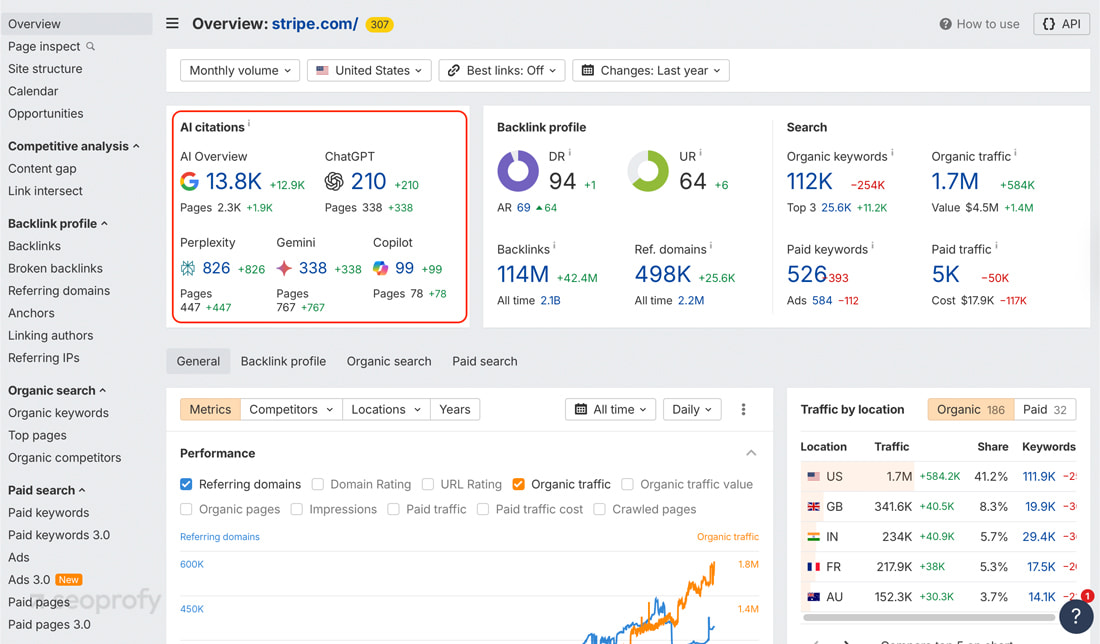
If your product rarely appears or isn’t cited at all, it may be a good time to perform an AI SEO audit. It will help you understand how AI models read your website and what can be improved to increase your visibility there.
Best SEO Tools for SaaS
To make tracking and improving all the mentioned metrics easier, here are some of the best SEO tools you can use:
- Google Analytics 4: See changes in website traffic and user behavior. Track specific actions like signups and downloads to measure engagement.
- Google Search Console: Stay on top of your website’s search performance with data on clicks, impressions, and keyword rankings. Identify and fix crawl or indexing issues that could hurt your visibility.
- Ahrefs: Find keywords with the best potential, track rankings, explore content ideas, analyze your competition, and monitor mentions in LLMs.
- LinkChecker.pro: Check your backlinks and keep track of changes over time. You can also identify any harmful links with this tool.
- Surfer: Optimize your content to rank higher on Google. The tool is not free, but it works great for speeding up the creation of optimized copy.
Common SaaS SEO Mistakes to Avoid
Very often, one or another mistake is made in SEO strategies for SaaS. Here are some of them to watch out for:
- Skipping target audience research: If you don’t know who your customers are and what their pain points and motivations might be, then your content and SEO campaign won’t be effective.
- Neglecting on-page optimization: Elements like titles, meta descriptions, headers, and URLs are small but mighty. Ignoring them can make it harder for people to find your site.
- Mismatched content: Optimizing for keywords that don’t align with users’ intent can lead to lower rankings and higher bounce rates.
- Going too broad: Trying to rank for overly broad and competitive terms can spread your efforts too thin. It’s far better to hone in on specific topics first.
Build Your Winning SaaS SEO Strategy Today
Even though SEO requires lots of time and resources, the payoff is often worth it in the long run. Especially now, when SEO also lays the foundation for how well your brand appears in AI models.
That said, if you prefer to skip the trial and error, why not partner with a professional SEO agency? Here, at SeoProfy, our team has helped numerous software companies increase organic traffic and sales, and we can do the same for you.
We’ll review your site and create a custom SEO strategy to help you attract more leads and paying customers from both traditional and AI search engines. Reach out to us today to learn more.

Khrystyna Dzhumaryk is a content writer at SeoProfy with four years of experience in SEO and content strategy. At the company’s main blog, she writes in-depth articles and guides to help businesses improve their online visibility through proven tactics. Her work brings together hands-on SEO experience with ongoing research into algorithm updates, search trends, and the growing impact of AI on content and optimization.