


Marketing for personal injury lawyers means covering every touchpoint where clients might look for help. SEO brings organic visibility, ads capture intent faster, and useful content answers questions before someone even calls. Social media, referrals, and client reviews keep your name active in the right circles, while local outreach adds the personal layer that digital efforts sometimes miss.


The details of every personal injury strategy differ, but the foundation rarely does. In this article, we focus on the core factors that define performance and show how aligning them early prevents wasted effort later.
- Success in personal injury lawyer marketing comes from balance: SEO builds lasting visibility, PPC captures immediate intent, and content connects both by answering client questions early in the journey.
- Data must guide every step. From audience research and budget planning to tracking CPL, CAC, and ROI, the firms that grow fastest are those that adjust strategy based on real performance, not assumptions.
- Local authority now defines competitiveness. A fully optimized GBP, consistent citations, strong, satisfied client reviews, and locally relevant backlinks separate visible firms from invisible ones.
Build a Winning Personal Injury Marketing Strategy
Before launching campaigns or ads, most firms rush the crucial phase — strategic preparation. For personal injury lawyers, this step means understanding who you want to reach, what you want to achieve, and how much you can invest to get there. Let’s look at how to set it up right from the start.
Define Your Target Audience
Every personal injury lawyer’s marketing strategy starts with understanding who needs your help and how they find you. Personal injury audiences differ by motivation, injury type, and decision stage, so the data must guide you, not assumptions.
- Review your CRM, case outcomes, and intake forms to identify the profiles that bring the best results.
- Use Google Search Console + Semrush/Ahrefs to analyze what phrases potential clients use when describing their situation or searching for legal help.
- Check Meta and Google Ads insights to confirm demographics, location, and income level.
- Map segments by case type and urgency, such as vehicle accidents, workplace injuries, or medical malpractice.
- Record these patterns in a shared document for consistent targeting in marketing for personal injury law firms.
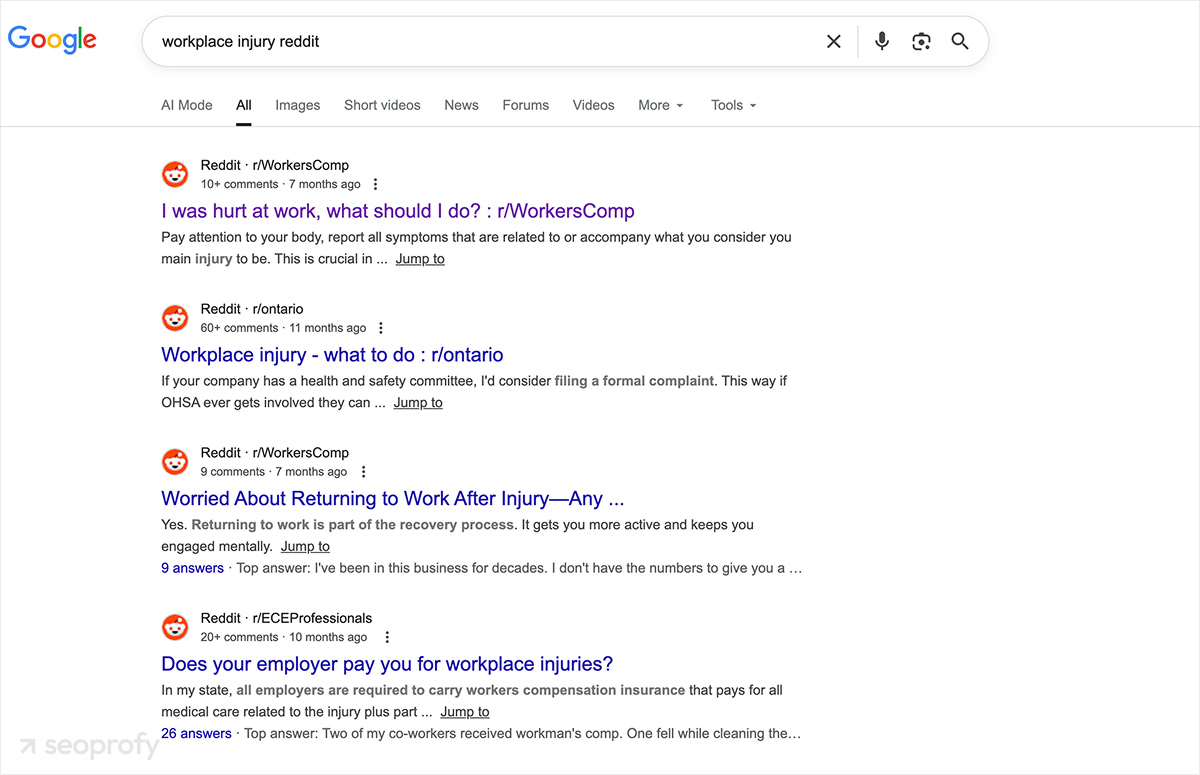
Combine your data with public search insights, such as Also Asked or Reddit discussions. These sources reveal how real users describe pain points in words, helping you write copy that feels way more natural.
Set Clear Goals and KPIs
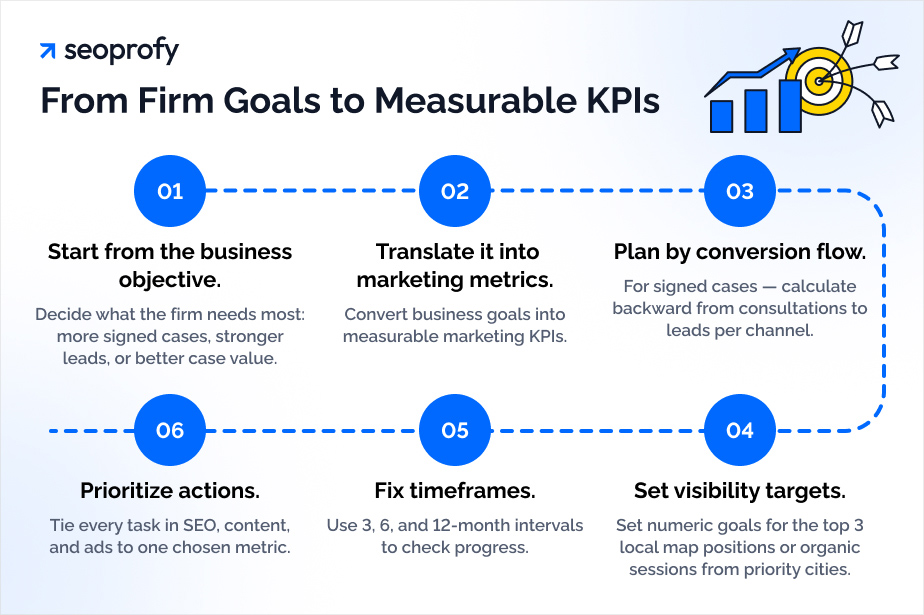
Once you have defined your audience, the next step in growing your law firm is to decide where your personal injury lawyer marketing strategy should move. For this, you need to set goals and clear metrics for each.
Plan Your Personal Injury Lawyer Marketing Budget
The final setup step is planning your marketing budget. And here, smart distribution often matters more than the total amount you spend.
Start from your monthly marketing capacity. Calculate the amount you can reinvest from each signed case. A working model for personal injury firms is 8–12% of monthly revenue.
Here is how you can roughly allocate spending across channels according to your main objectives:
|
Goal |
SEO |
PPC |
Content |
Reputation & PR |
| Build visibility | 50% | 15% | 25% | 10% |
| Generate fast leads | 25% | 55% | 10% | 10% |
| Strengthen authority | 40% | 20% | 25% | 15% |
Adjust based on the case cycle. Longer cases need stronger organic and content investment. Shorter, high-turnover cases justify a larger paid personal injury lawyer ad share for consistent volume.
Always reserve 10% of your total spend for testing new channels or creatives. Controlled experiments often uncover the most cost-effective lead sources.
Create and Optimize Your Law Firm Website for Conversions
Every personal injury firm needs a website — the real question is how to make it perform. We’ll explore that next.
Design a Fast, Mobile-Friendly Website
Performance isn’t just technical — it directly affects revenue. Portent’s 2023 study shows conversion rates peak when pages load within 0–2 seconds, and Cloudflare data confirms that fast sites can convert ≈3× better than those loading in 5 seconds. Combined with Google’s current Core Web Vitals (LCP ≤ 2.5s, INP < 200ms), speed is now a primary conversion lever — not just a UX nicety.

Here’s your checklist for making your website fast:
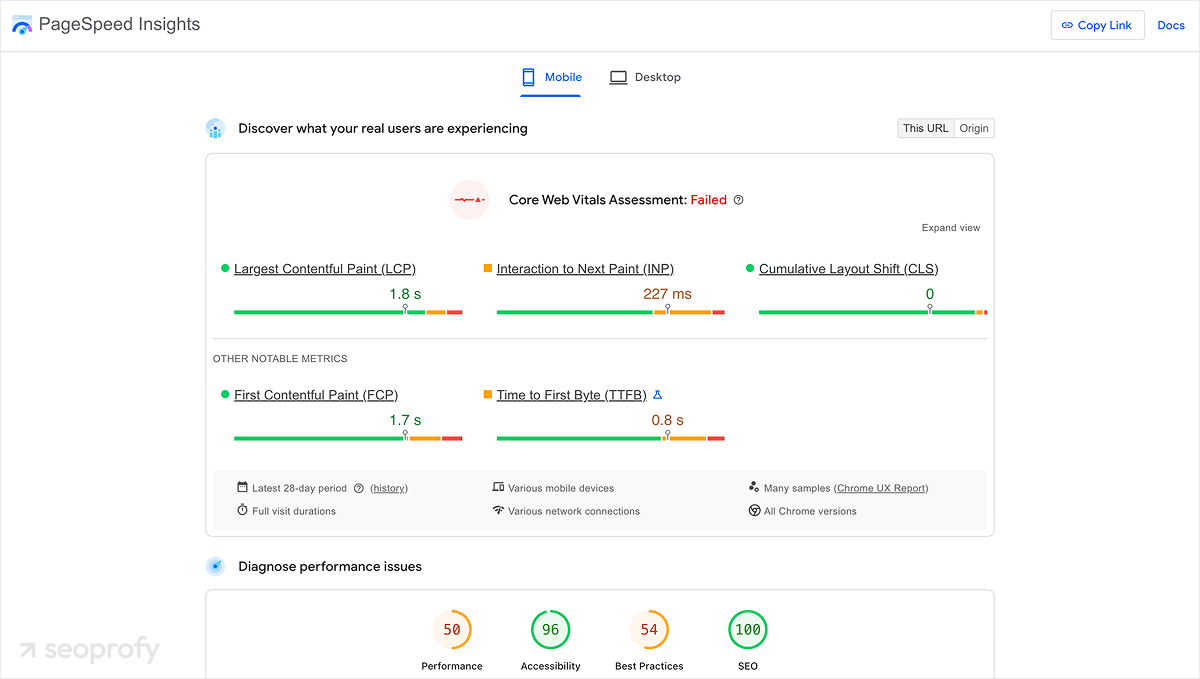
- Test performance in PageSpeed Insights: Target LCP under 2.5 seconds, INP under 200 milliseconds, and CLS under 0.1.
- Reduce weight: Serve images as WebP or AVIF, lazy load below the fold, inline critical CSS, defer nonessential scripts, and move assets to a CDN.
- Make it mobile-friendly: Use a responsive grid, readable 16px text or larger, tap targets 44px, short forms, and click to call in the header. Validate in Chrome DevTools and BrowserStack.
Set up automated alerts in Search Console and GA4 for sudden drops in Core Web Vitals. It helps catch speed or layout issues before rankings or conversion rates start to fall.
Simplify Navigation and User Experience
When your site loads fast and users finally land on it, bounce can still happen if navigation feels confusing or cluttered. The structure should guide visitors naturally, not make them think.
- Keep the main menu short, no more than five to seven items
- Use clear labels like “Practice Areas” or “Contact,” not clever wording
- Add internal links in context so users can move deeper without going back to the menu
- On mobile, use sticky buttons for calls or consultations.
Test how easily someone new can reach key pages in three clicks or less. If they can, your navigation works.
Also ensure the site meets WCAG 2.2 accessibility standards: strong contrast ratios, visible focus states, clear form labels, keyboard navigation, and screen-reader-compatible headings. Accessibility is not only UX best practice — law firms can face ADA-related complaints if a website is hard to use for disabled users.
Here’s a solid example: the site is simple and easy to use, the menu is clear, the dropdown lists the main practice areas, and the rest are available through a “View all +” option. The information is complete, and CTA buttons are right where users expect them.

Develop Dedicated Service Pages for Each Case Type
Each case type should have a dedicated service page, allowing you to target specific keywords and match search intent precisely.

One effective approach is to follow a consistent structure for every service page: start with a short intro that defines the case type, add a section on how your firm helps, include an FAQ answering real client questions, and finish with a clear call to action. Local examples, verdicts, or statistics along the way all add trust.
Add Strong Calls-to-Action and Lead Forms
Every key page should guide visitors toward one clear action. After all, the main goal is conversion!
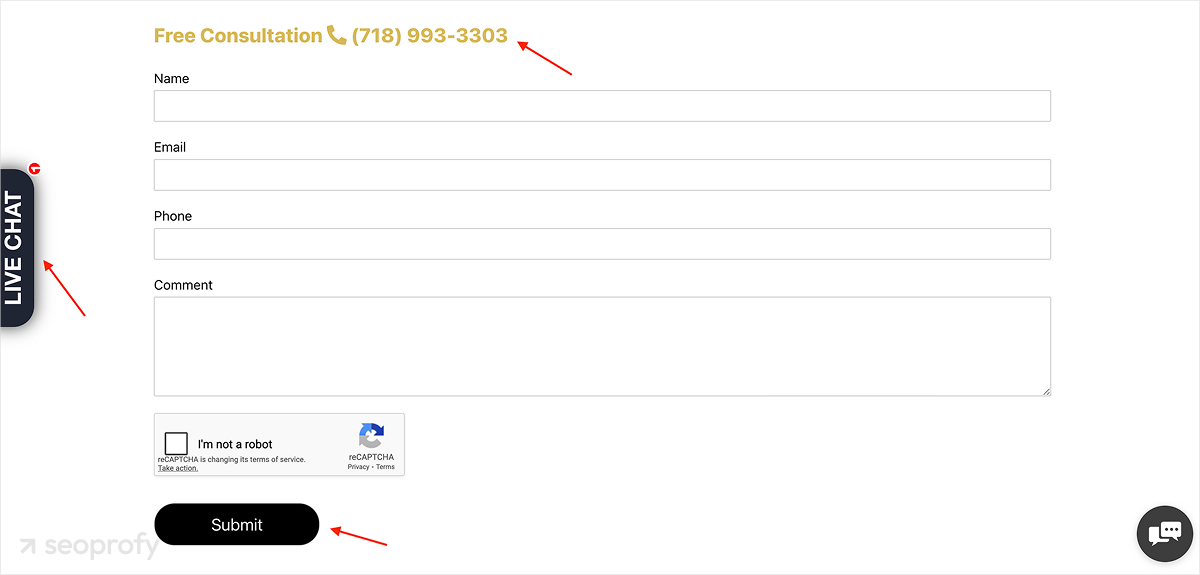
Place CTAs where intent peaks: after proof points, FAQs, or service details. Keep the message direct: “Book a free consultation” or “Speak with an attorney today.”
Use short forms that ask only what you truly need (name, contact, and case type). Test placement through heatmaps and GA4 events to see which sections convert best.
Implement SEO to Drive Long-Term Growth
Search Engine Optimization (SEO) pushes your website higher in search results so potential clients can find your firm through SERPs. It’s a system of connected elements:
- Technical SEO: Site speed, indexing, mobile readiness
- On-page optimization: Keywords, headings, internal linking, structured data
- Content: Useful, case-specific pages that answer client questions
- Local SEO: Google Business Profile, citations, and reviews
- Backlinks: Authority signals from reputable legal and local sites.
When each part works together, your site stays visible, brings steady leads, and keeps growing without paid digital advertising. Let’s take a look at what matters most in SEO for personal injury lawyers.
Research Local and Practice-Specific Keywords
The first thing you need to do is understand which searches you want to target, meaning how potential clients actually look for your services. Here’s a plan:
- Start with your data: The strongest queries for your personal injury lawyer marketing campaign are already in Google Search Console. Look for city and practice phrases that get impressions, and mark which ones lead to consultations.
- Expand the set: Use Semrush, Ahrefs, and Google Keyword Planner. Add “near me” variants, city and neighborhood names, and intent words like “free consultation” or “no win, no fee.”

- Evaluate competition: Focus on keywords with clear intent and moderate difficulty. Broad phrases build visibility long-term, but long tails may bring faster leads. A good strategy combines both.
- Read the SERP: Check which firms rank, what page types they use, and how they apply keywords in titles and structure. Save People Also Ask and related searches (+check AlsoAsked for more FAQ-ready insights).
- 2026 note: With Google’s AI Overviews showing direct answers on the SERP, optimize for zero-click visibility — short Q&A blocks, FAQ schema, E-E-A-T signals, and concise topical summaries help your firm appear in AI-generated result cards. This keeps your brand present even when users don’t click.
- Document and group: Keep a sheet with target and secondary queries, city, and planned URL. Group by case type and location to decide which pages to create first.
Optimize On-Page Elements and Metadata
When you already have the list of target keywords, it’s time to create pages and content for them. But beyond writing strong copy, each page needs to send the right on-page signals to search engines. There are a few things to focus on:
|
Element |
How to use |
Why it matters |
| Titles and meta descriptions | Include the main keyword once, and add city/case type. Keep titles under 60 characters and meta descriptions around 150. | Improves relevance and attracts clicks from the right audience. |
| Headings (H1–H3) | Use one H1 per page with a natural keyword variation. Structure H2 and H3 sections around related subtopics. | Guides readers, clarifies topic hierarchy for search engines, and supports topical coverage. |
| Internal linking | Connect related pages using descriptive anchors. Add links from blog posts to service pages and monitor crawl paths in Screaming Frog. | Strengthens authority flow and improves long-tail visibility. |
| Content structure | Introduce the topic in the first 100 words. Use short paragraphs, lists, visuals, and schema markup where relevant. | Enhances readability, signals freshness, and boosts engagement. |
Improve Technical SEO and Core Web Vitals
You can write hundreds of well-structured pages, but what’s the point if users bounce before even seeing them because your site takes forever to load? Or think about someone ready to contact your firm but unable to submit a form from their phone because the mobile version barely works.
In SEO for lawyers, the technical aspect is the foundation. Everything else in your strategy builds on top of it once this part is stable.
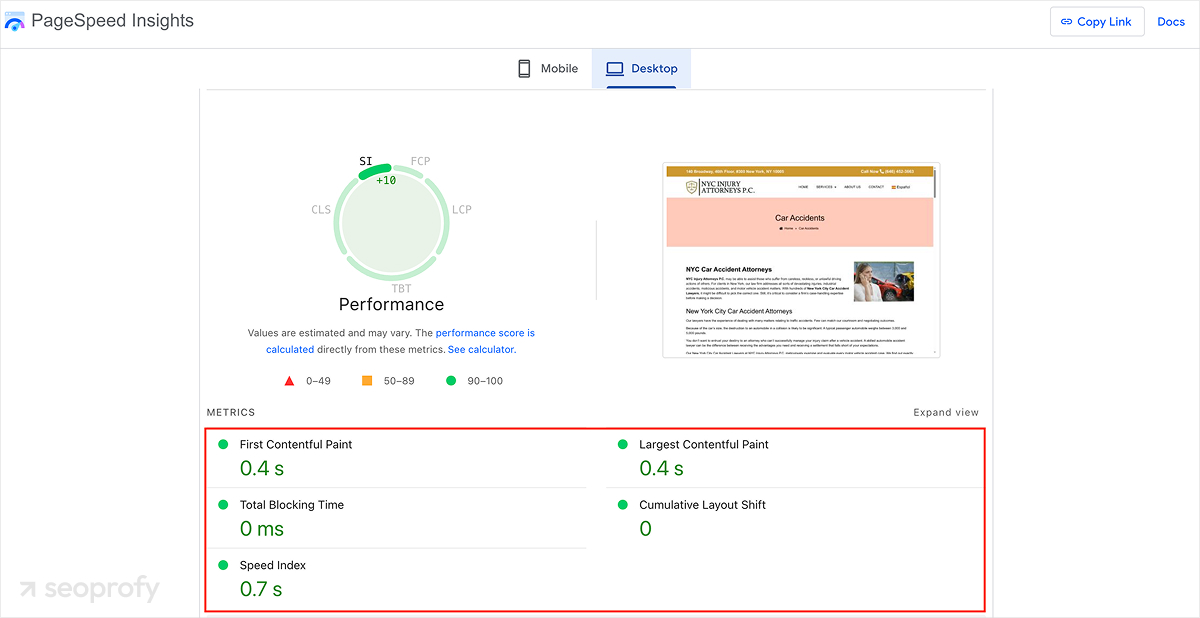
- Site speed: Check performance in PageSpeed Insights, Lighthouse, or GTmetrix. Aim for green Core Web Vitals. Compress images, preload key assets, and move heavy scripts to load later. The chance of a user leaving grows by 32% when a page takes 3 seconds to load instead of 1, so even small speed gains matter.
- Indexing: Use Google Search Console to see which pages are indexed and fix those marked as Crawled not indexed. Check robots.txt and the XML sitemap to be sure Google can reach every important page.
- Mobile friendliness: More than 60% of all Google searches happen on mobile devices today, so a poor mobile experience means losing most of your audience. Test your site in Mobile Friendly Test and Chrome DevTools. Make sure text is readable without zooming, buttons are easy to tap, and forms work smoothly.
- Security (HTTPS): Always run your site on HTTPS with a valid SSL certificate. Check for mixed content and set 301 redirects from HTTP to HTTPS.
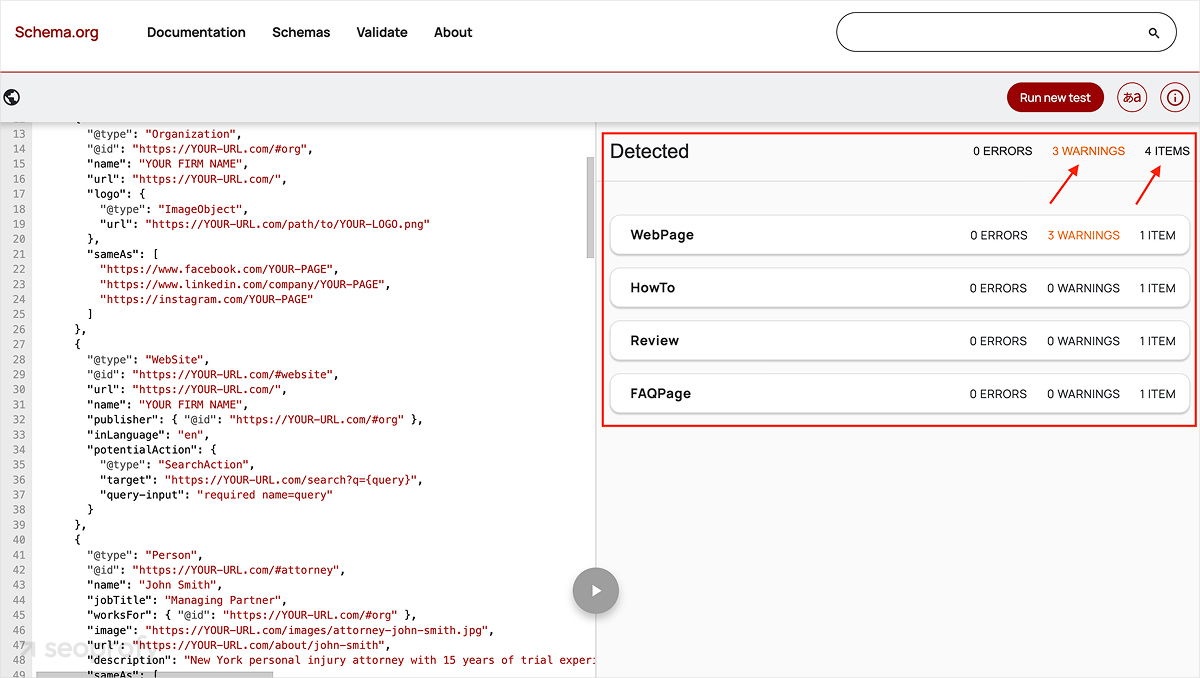
- Structured data: Add schema for Organization, Service, FAQ, and Review. Validate it in the Schema Markup Validator. Schema helps Google read your content correctly and show rich snippets (and now also AI-generated results).
Earn High-Quality Backlinks
Backlinks have always been one of the top 3 ranking factors. If you want strong positions, you need strong links. But like in Star Wars, there will always be someone whispering to join the “dark side” with black-hat methods (the one offering overnight success and next-day Google penalties). So, choose your side wisely:
|
What works |
What to avoid |
| Guest posts on trusted websites that bring not only link equity but also real referral traffic | Buying links in bulk or from low-quality networks that reuse the same domains |
| Partnerships and sponsorships with relevant legal or local organizations | Link exchanges or “we’ll link to you if you link to us” deals at scale |
| Digital PR and case studies that get picked up by local media or industry blogs | Press releases on unvetted aggregators without editorial review can harm domain authority. |
| Mentions in directories and bar associations that verify listings manually | Automated submissions to hundreds of directories or blog comments |
| Content worth referencing, like legal guides, calculators, or data studies | Private Blog Networks, hidden links, or any paid placements disguised as “editorial” |
To make the contrast clear, we’ve compared the backlink data from two personal injury practice sections. Here’s what stood out:
The link profile of company #1 from Virginia Beach is trimmed down to UGC and nofollow. Out of 501 groups of links, only 37 are dofollow (about 7%). Most placements are off topic: random blog comments, low-quality posts, and unreadable text.


There are almost no contextual placements inside relevant pages and no mentions in local media. So, most of their target queries have lost positions.

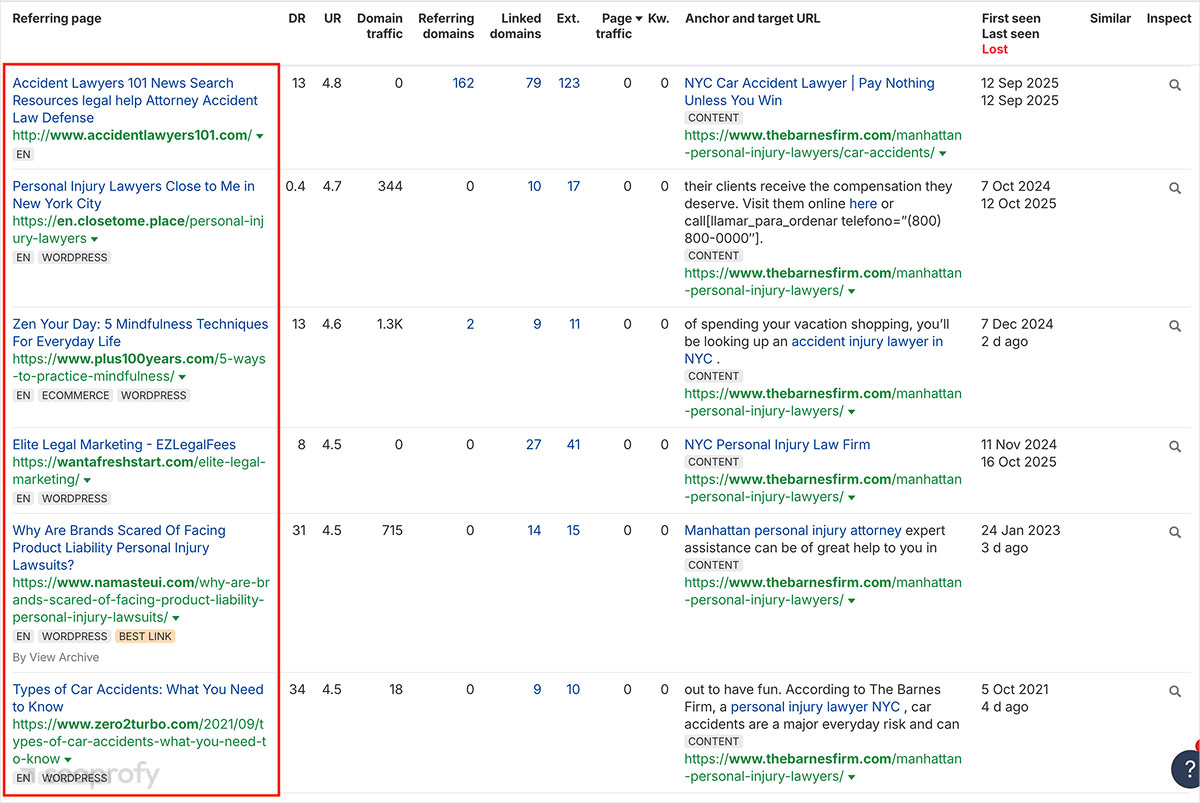
Now let’s look at website #2, doing successful marketing for personal injury law firms. Out of 75 link groups, 56 are dofollow (about 75%). Most are placed within relevant content on trusted industry sites. As a result, they rank at the top for queries like “personal injury attorneys NYC,” where backlinks clearly make a difference.
More about white hat link building strategies for lawyers is covered in our separate article. Read it for detailed examples of methods that actually work.
SeoProfy uses deep data to find what truly moves your rankings and conversions. The results we bring are visible, measurable, and repeatable.
- Steady organic traffic increase
- More qualified leads
- Stronger brand trust

Boost Your Local Search Visibility
So, local SEO for lawyers is a big part of any strong injury lawyer advertising strategy. The goal is simple: help Google understand where you work, who you help, and why you’re the best choice in that area. Below are a few ways to make that happen.
Claim and Optimize Your Google Business Profile
Google Business Profile (GBP) is basically your firm’s digital storefront in local search and Maps. It helps potential personal injury clients find you, read reviews, and contact you directly.
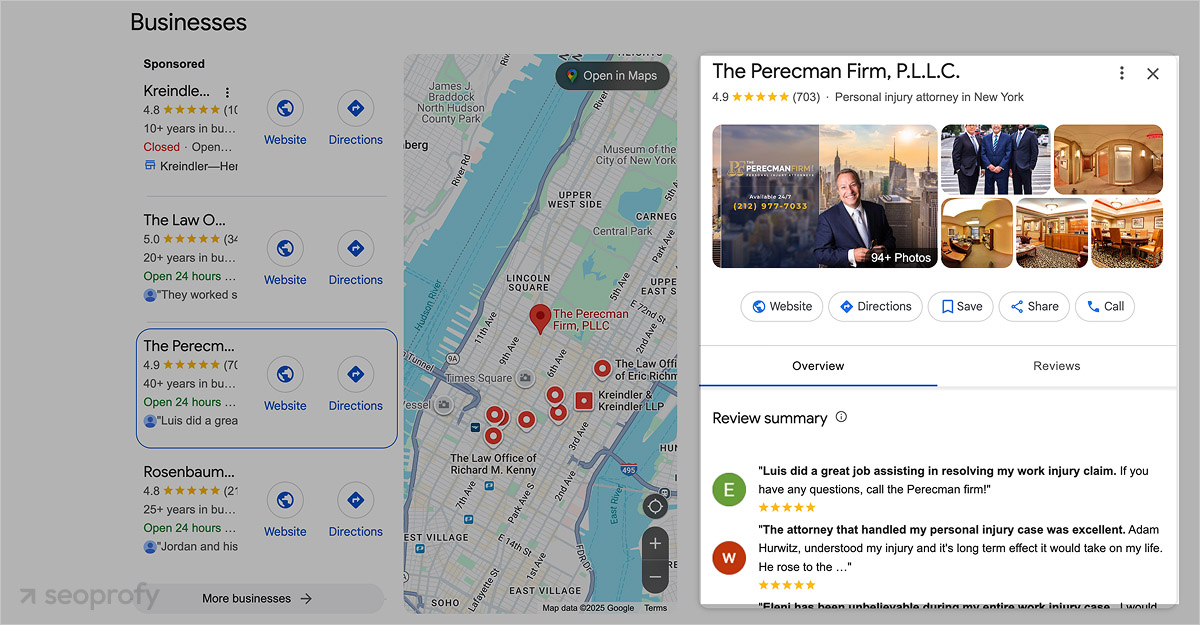
Here’s how to set it up right:
- Google Business Profile claims: Go to google.com/business and verify ownership (it’s free).
- Complete all details: Add firm name, address, phone, website, and categories.
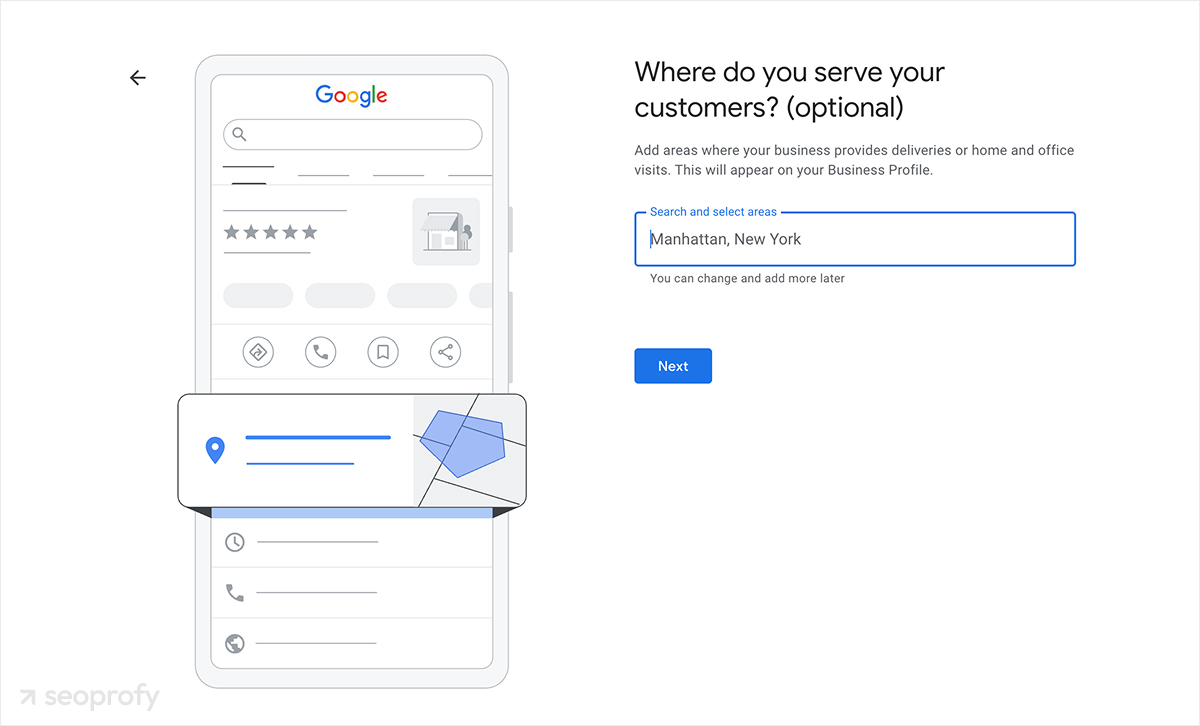
- Add photos: Upload your office, team, and logo to build trust.
- List services: Include personal injury types you handle and link to key pages.
- Set business hours: Just keep them accurate and update them for holidays.
Request, Manage, and Respond to Client Reviews
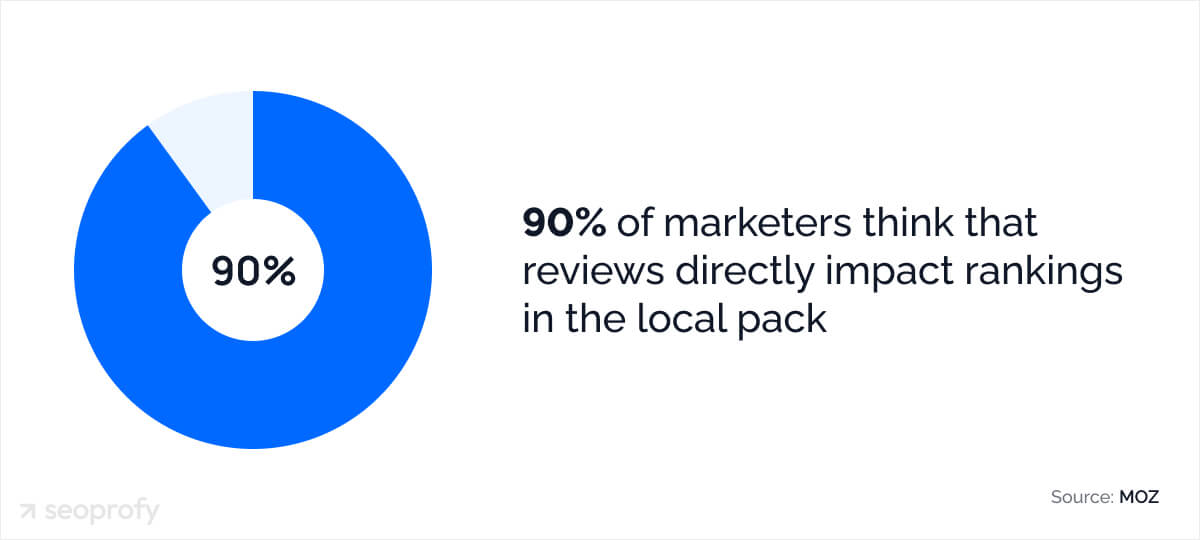
About 90% of marketers say reviews directly affect local pack rankings, and 98% of users read them at least occasionally before choosing a local business. To please both Google and potential clients, you need to encourage and manage reviews actively.
In personal injury lawyer marketing, the most effective way to get feedback is to reach out right after a successful case. Send a quick email or message with a direct link to your GBP. The easier and faster the process, the higher the response rate.
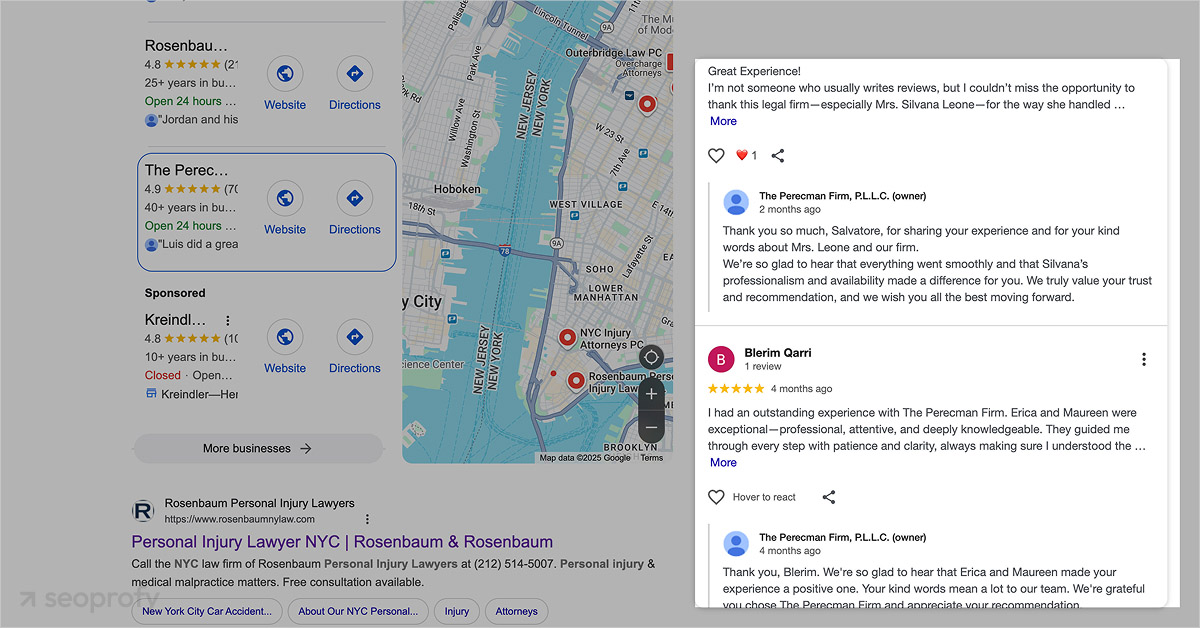
Almost 90% of users say they’re more likely to trust a business that replies to every client testimonial, positive or negative. Track and respond through your Google Business Profile or tools like BrightLocal. The main trend today is personalization, so each reply should sound unique and reflect your firm’s tone, not a copy-pasted template. Here’s a good example:
Get Listed in Legal Directories and Local Listings
Legal directories still matter for local visibility and trust. They are citations that confirm your firm’s name, address, and phone number across the web.
First of all, check where your competitors rank and which directories actually appear in the top ten for queries like “personal injury attorney + city/near me.” Those are worth your time because they already rank and can send real traffic.
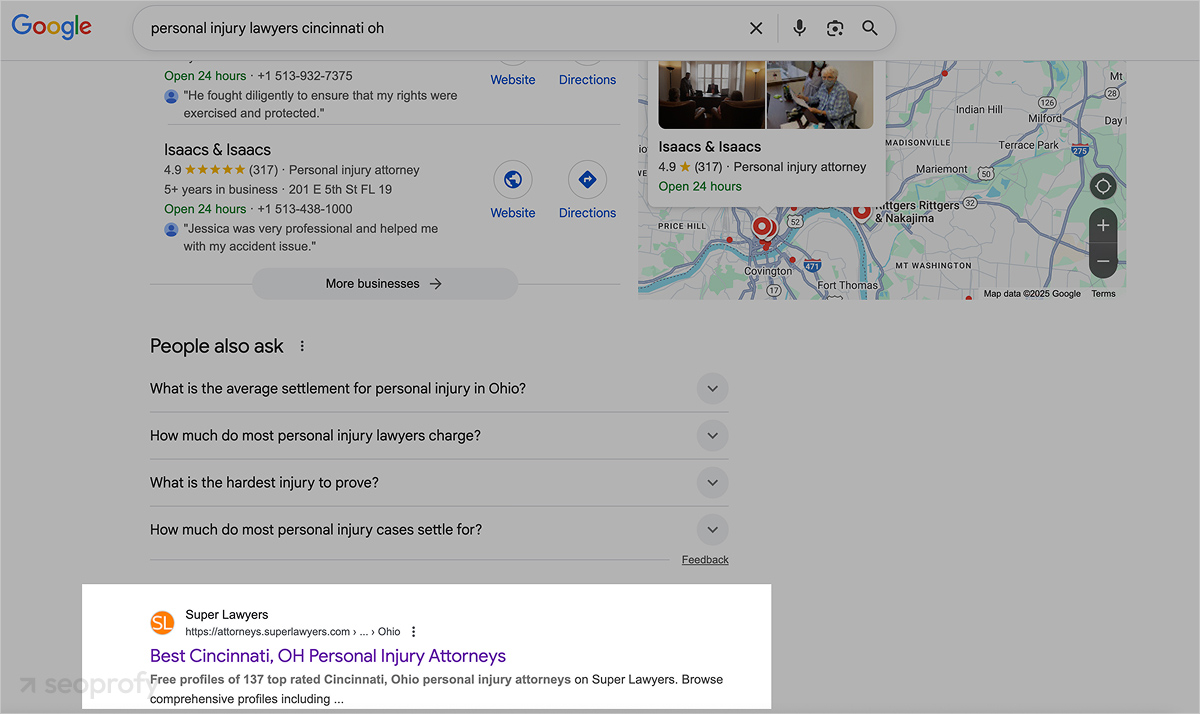
For successful personal injury lawyer marketing, stick to strong ones like Avvo, Justia, and FindLaw, but don’t ignore regional Bar Association listings or local media catalogs that vet submissions manually. These often carry even more weight for local intent.
After running many law firm SEO audits, we often notice two common mistakes that are actually easy to fix:
- When filling out profiles, copy your NAP directly from the footer of your website; use the same wording everywhere.
- Add links to your key service pages instead of just the homepage.
Create Content That Builds Trust and Authority
You’ve probably seen a hundred claims online that “content is the foundation of every effective marketing strategy.” Sure, but not all content is created equal.

Some posts just fill space; others actually bring clients. In this part, we’ll talk about blogging for lawyers as a real base for SEO.
Publish Helpful Blog Posts and FAQs
When people face an injury or dispute, they rarely search for a lawyer first. They start with questions like what to do after an accident, how insurance payouts work, or how long a claim takes. That’s where your content can meet them at the top of the funnel.
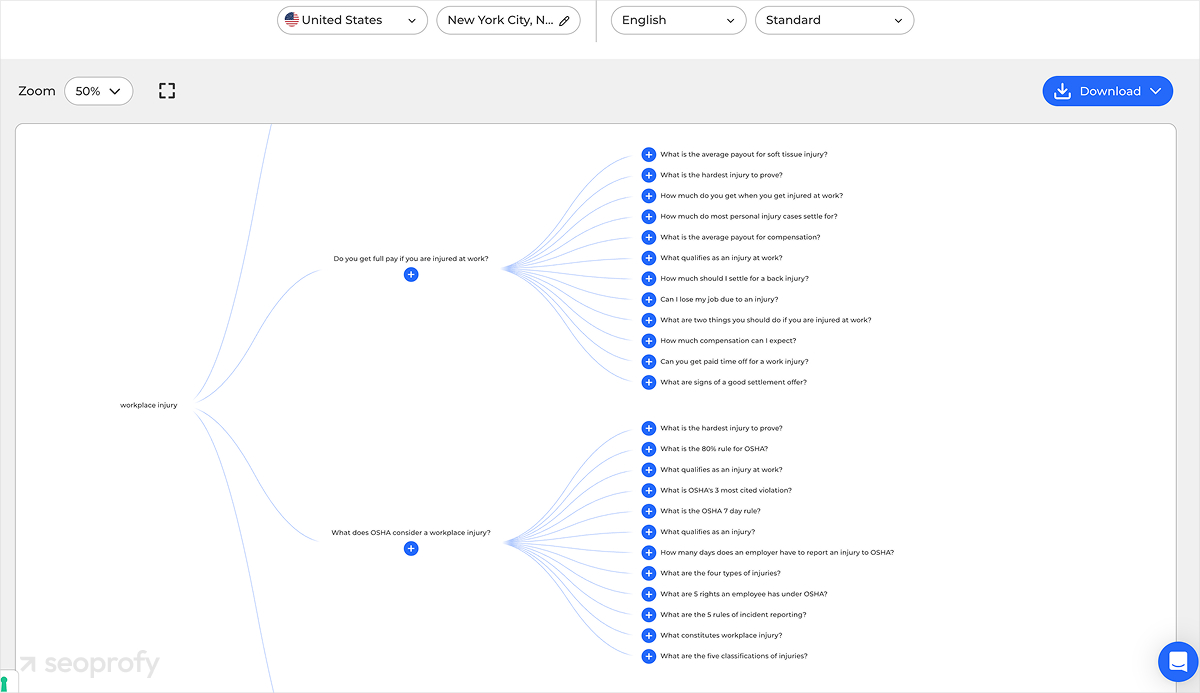
Remember, in the sections on keyword research and target audience pain points, we talked about tools like AlsoAsked that help uncover what your potential clients actually ask online. Legal content writing is exactly where that research comes in handy.
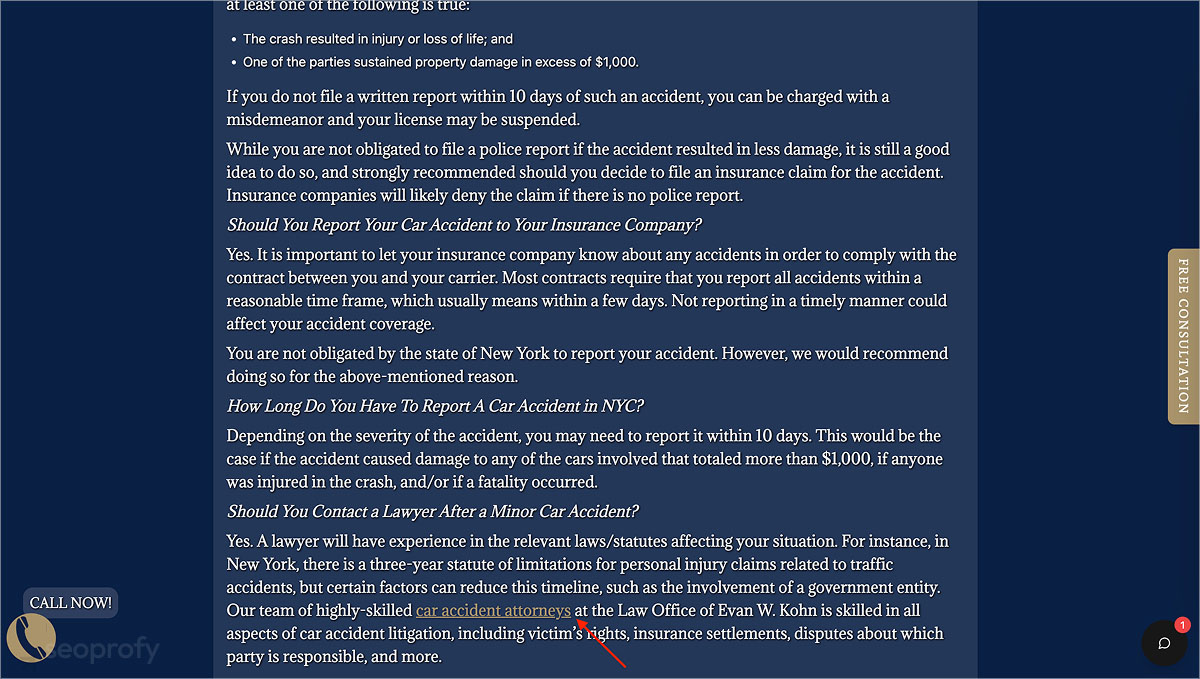
Write around those early intent topics and link them naturally to your core service pages. Use the insights from your keyword mapping to fill gaps competitors haven’t covered. When you do this consistently, you create a clear path that guides users from curiosity to consultation without forcing the sale.
If you decide to outsource your optimization to a reliable law firm SEO company, make sure they create quality, non-generic content, ideally written in-house.
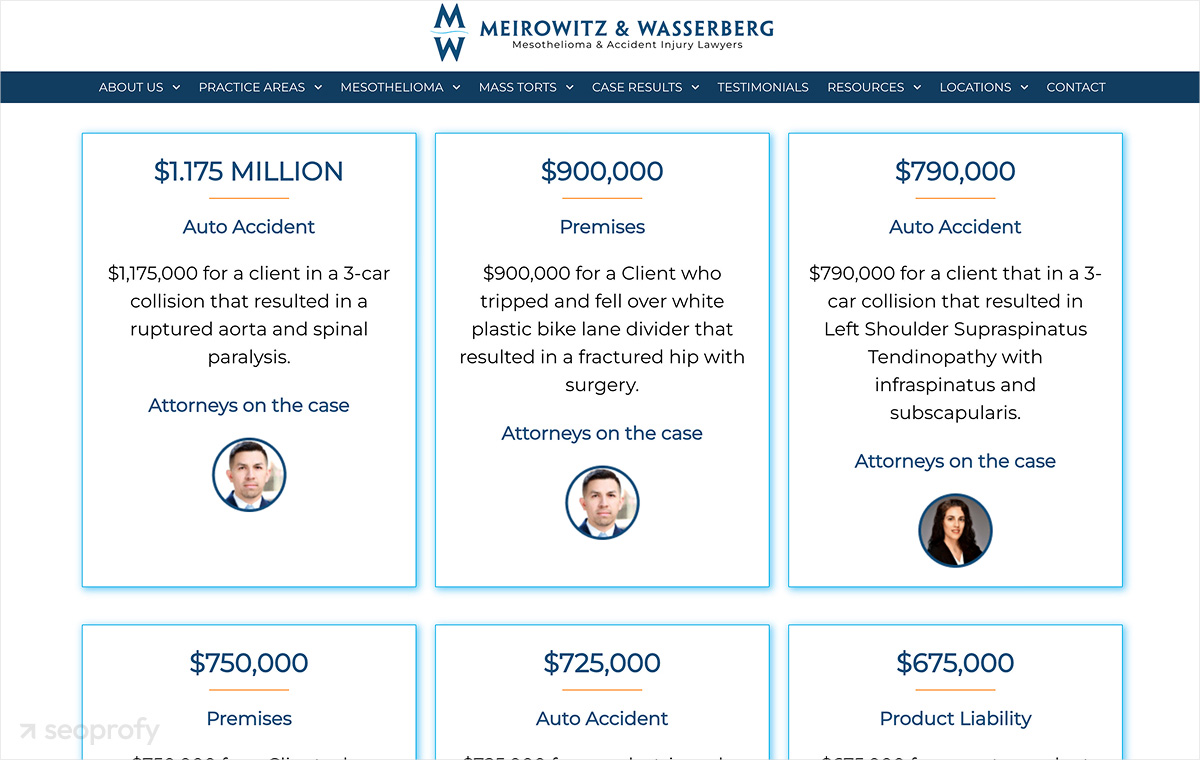
Highlight Client Success Stories and Case Studies
In personal injury lawyer marketing, case studies work better than any sales pitch because they prove results in a language clients understand. How should you structure them?
Describe the problem, what strategy you used, and how it helped satisfy the client’s personal injury claim. Add before and after numbers (when possible). When numbers meet narrative, clients see both proof and personality, and that’s what earns trust.
From an SEO side, case studies also strengthen topical authority and help your pages rank for long tail queries that mirror real client situations.
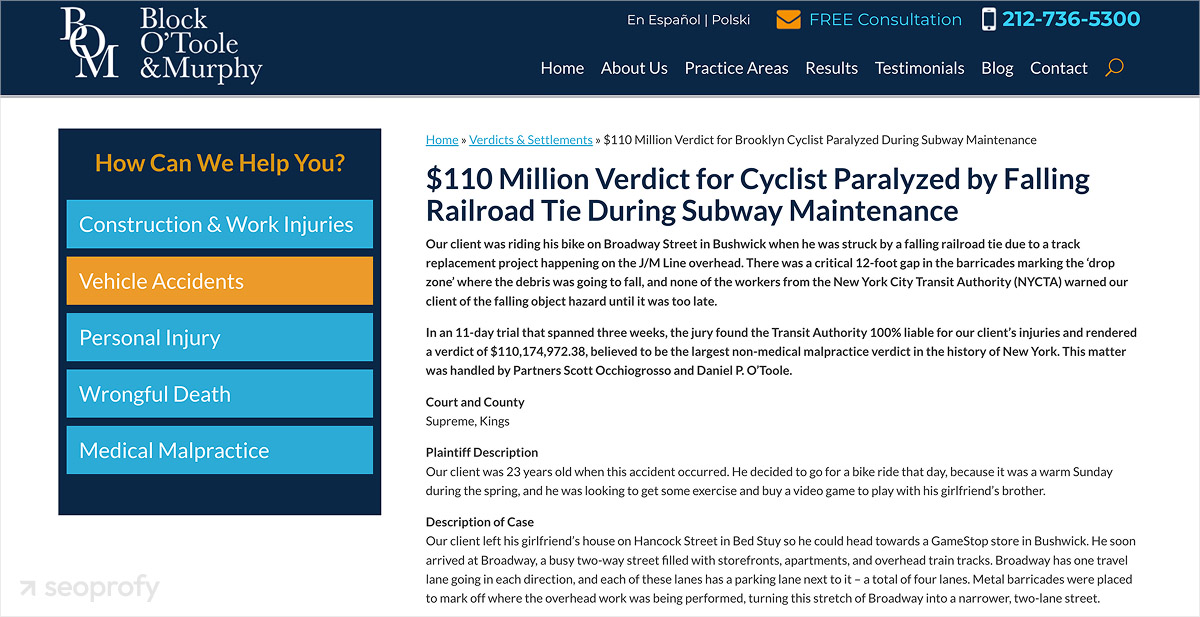
In personal injury attorney marketing, there’s a clear trend toward very short case summaries. Since we provide professional SEO services and work with similar cases regularly, it’s worth noting that while that short format may look neat for potential clients, it limits your ability to capture long-tail queries and strengthen overall topical authority.
Use Videos, Visuals, and Infographics to Engage Readers
In many industries, visual formats like videos and infographics perform great, yet for some reason, they’re still rare among law firms. That’s a missed opportunity.
Videos and short explainers make complex legal topics easy to grasp. Visuals also keep users on your page longer, which Google loves.
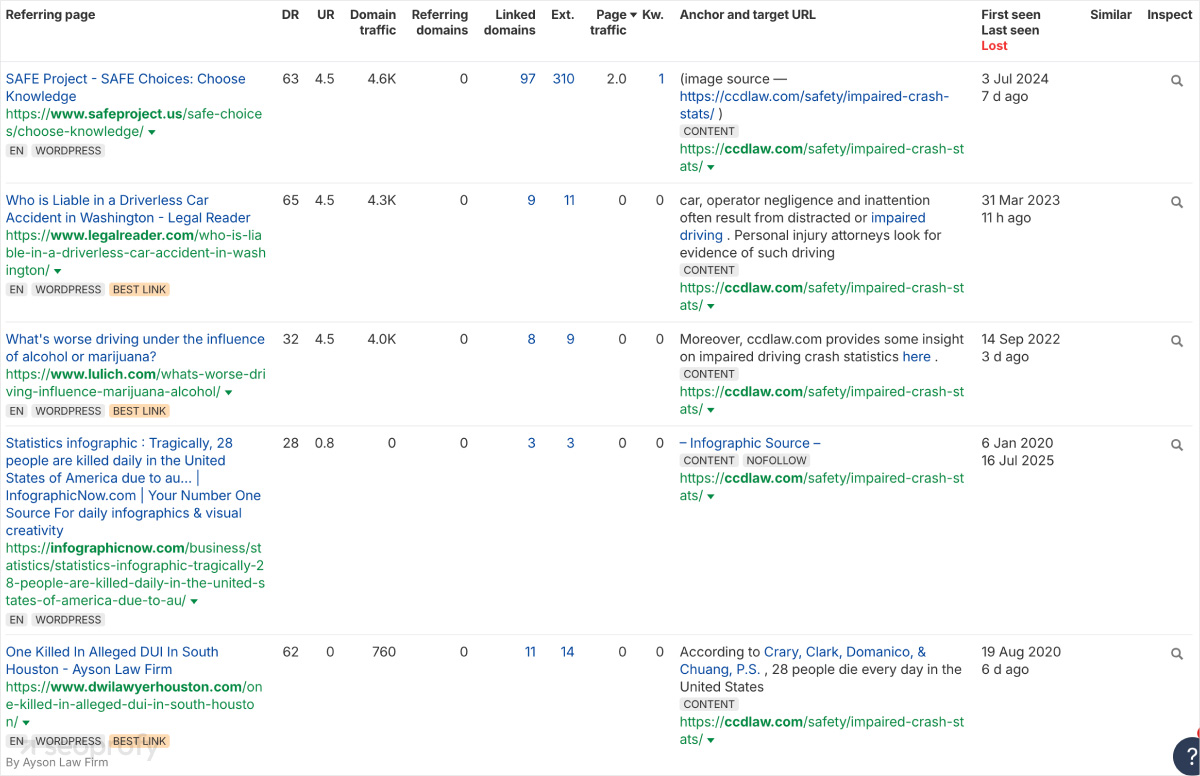
And the best part, besides user engagement, is that good visuals can bring you valuable niche backlinks. Infographics with solid case data or local accident stats often get cited by media, bloggers, or community sites that reference your research. For example, the Impaired Driving Car Crash Statistics in the United States infographic earned CCDLaw several contextual backlinks.
Use Paid Personal Injury Advertising to Capture High-Intent Leads
We often mention that for personal injury law firm marketing, SEO generally delivers higher conversion rates and ROI. Still, paid search has its place, especially when:
- Your firm is just starting out, and SEO needs time to gain traction, but leads are needed now to keep business moving.
- You want to test new keywords, offers, or messaging and collect data before scaling it into long-term law firm SEO.
- You’re targeting time-sensitive cases (car accidents or workplace injuries) and need quick visibility.
So, PPC for lawyers is an important part of a complete marketing efforts mix. Next, let’s focus on how to set it up the right way.
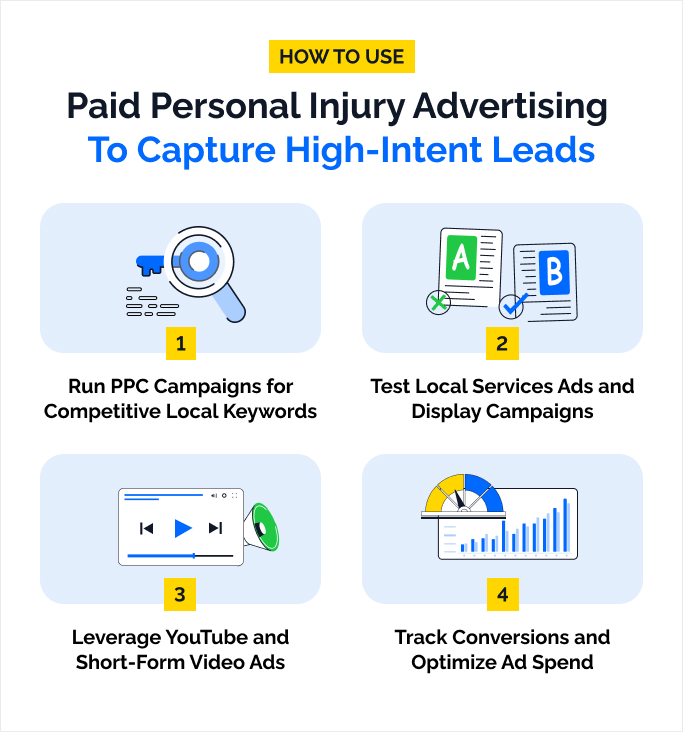
Run PPC Campaigns for Competitive Local Keywords
Start with Google Ads. Create a search campaign and use the maximize conversions strategy. Focus on keywords that show hiring intent, such as “near me,” “hire,” “best,” or city names. Check CPC and competition in Keyword Planner/Semrush.
Keep one main keyword per ad group so the message matches the search. Add your city, service type, and offer in the ad copy. Include call extensions, sitelinks, and location info to improve conversions.
Test Local Services Ads and Display Campaigns
Two ad formats are worth testing. First, Local Services Ads appear above all other results. Set them up through the Google LSA dashboard, verify your law firm, and upload your license. LSAs usually bring higher-quality leads because you pay for verified calls instead of clicks.
Second, display campaigns that keep your brand visible to people who have already visited your site. Launch them in Google Ads, choose local targeting, and run remarketing. After a few weeks, compare the cost per lead and lead quality between the two formats.
Leverage YouTube and Short-Form Video Ads
YouTube advertising for personal injury lawyers is perfect for brand recognition and creating demand before someone searches. Make 20- to 30-second clips that answer real client questions, like what to do after an accident or when to contact a lawyer. You may want to share what contributes to your law firm’s visibility and success in injury lawyer advertising, for example, short recaps or reports about sponsoring local events.
Set them up in Google Ads, target by city and interest, add captions, and link directly to your consultation page. Video clicks are usually cheaper than search, and they build brand recall that converts later through SEO and paid personal injury lawyer advertising.
Track Conversions and Optimize Ad Spend
Connect Google Ads with GA4 and track conversions for calls, forms, and booked consultations. Use call-tracking tools like CallRail — with client consent and data privacy compliance — to see which ads generate real consultations.
We would recommend checking reports at least weekly and pausing any campaign with a high cost per lead. Review results by basically everything possible: device, location, and hour of the day. Most times. Reinvest in what works.
One of the biggest conversion levers in PI is response time. Respond to new leads within ~60 seconds. PI firms that reply fastest regularly convert 3×+ more signed cases vs those that wait even 5–10 minutes. (Google LSA call metrics show the same pattern in high-intent verticals.)
Leverage Social Media to Grow Your Brand
No injury lawyer advertising strategy in 2026 is complete without social media marketing. For some audiences, it has become one of the main discovery channels for services and brands. While not everyone believes in generational marketing, in practice, it helps segment audiences clearly:
- Generation Z and Millennials: 51% use social media as their primary channel to research brands or services, followed by search engines at 48%.
- Generation X and Baby Boomers: 57% prefer search engines, 41% rely on consumer reviews, and 39% use social media.
So, if some law firm owners still think social media isn’t a serious or professional marketing channel, the data proves otherwise. Here’s how to integrate it into your personal injury lawyer marketing strategy:
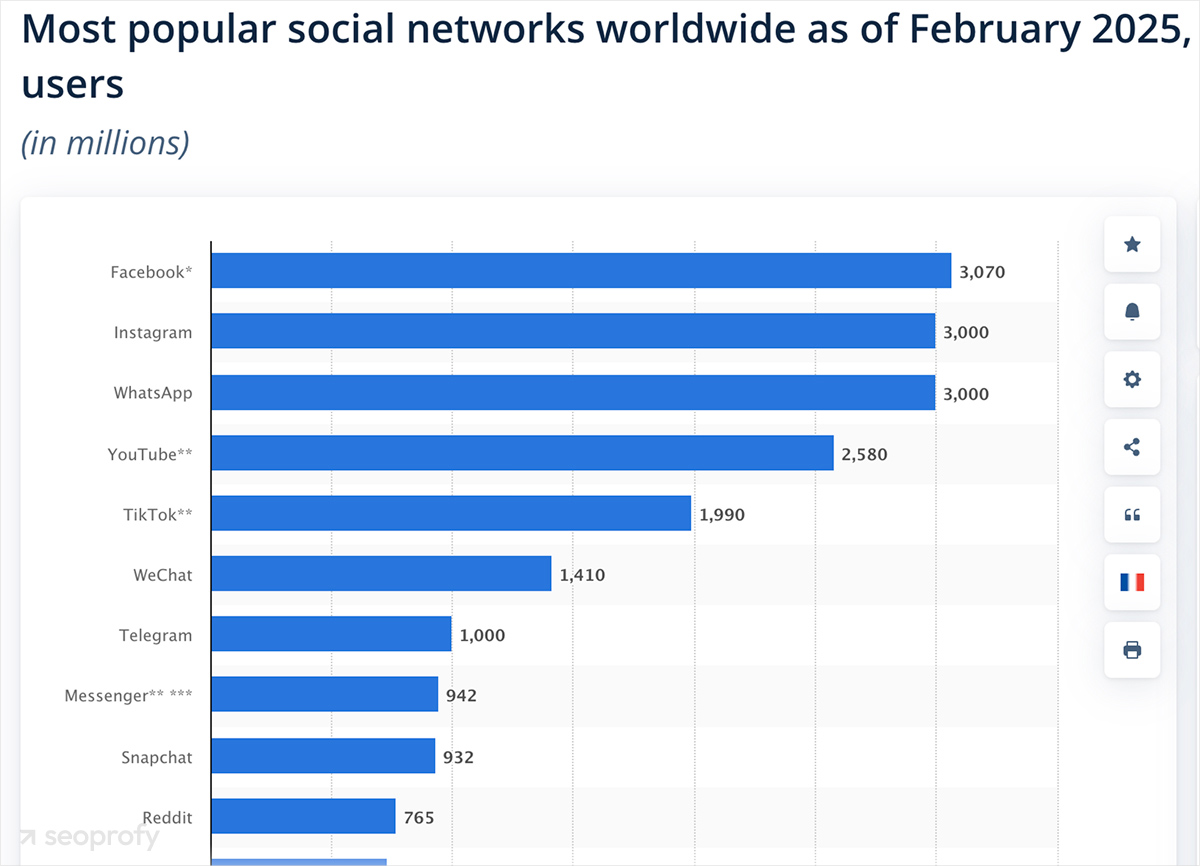
Here are the most popular social platforms worldwide:
- Facebook: 3.07B users
- Instagram: 3.0B users
- TikTok: 1.99B users
- LinkedIn: around 1B users.
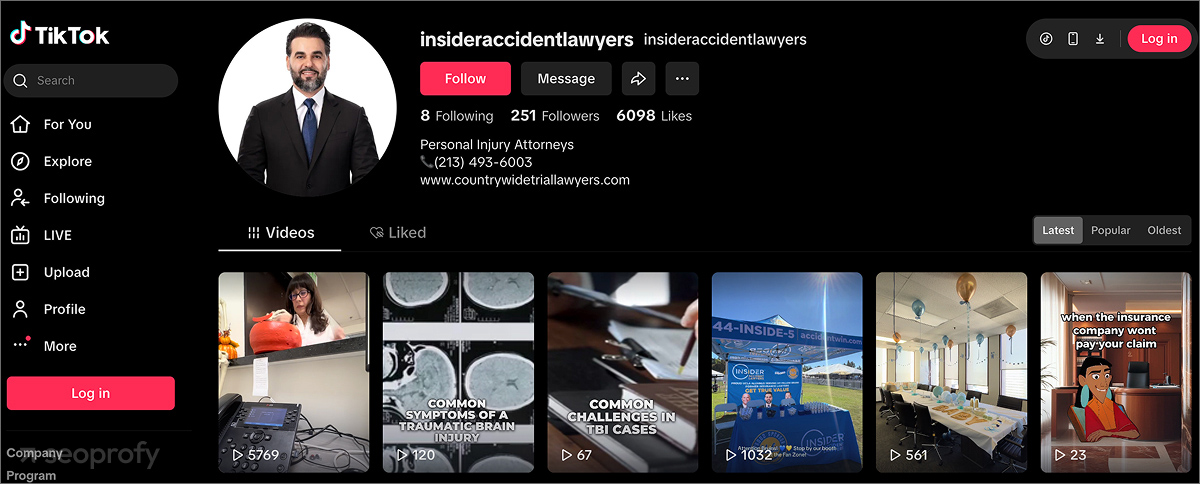
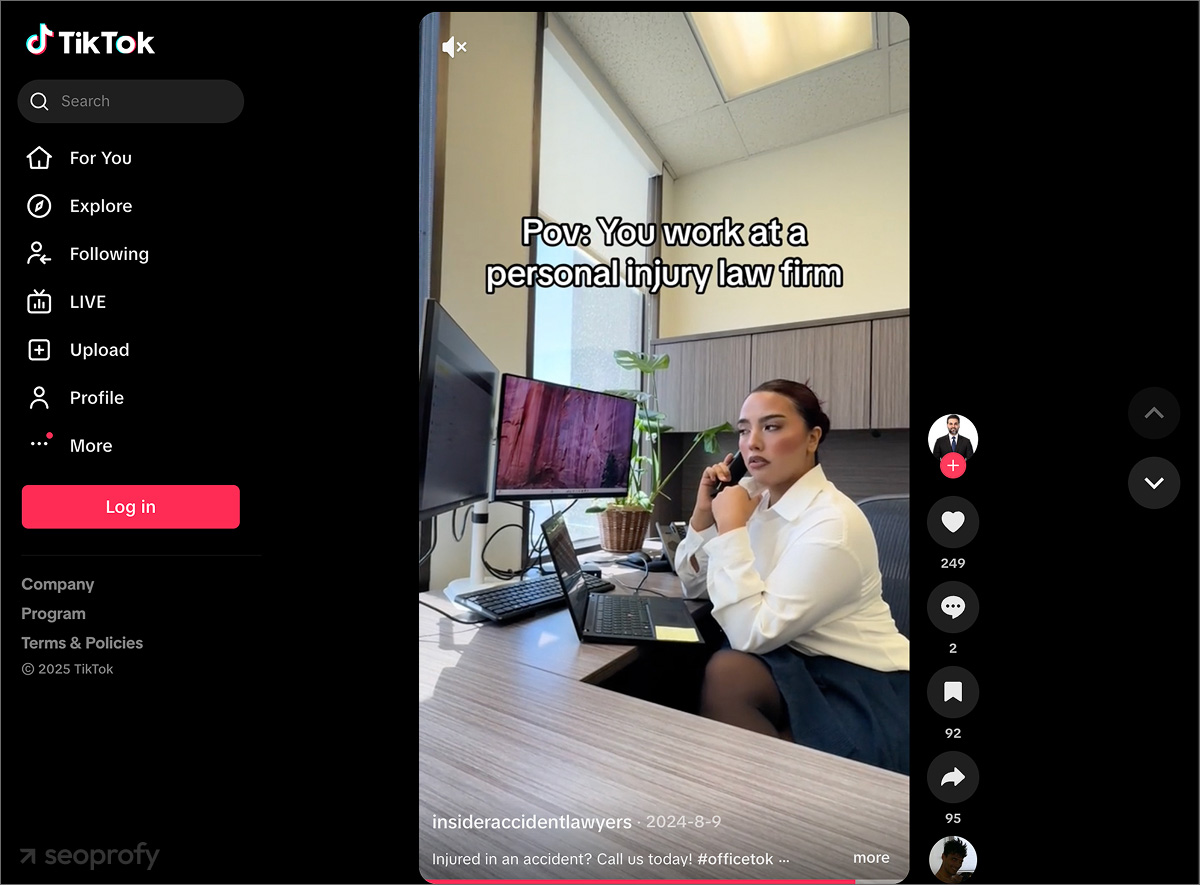
Lawyers usually focus on Facebook, LinkedIn, and Instagram, but TikTok is no longer just for dance clips. Many attorneys build strong personal brands, thereby explaining laws in simple, relatable ways. Here’s an example:
How to integrate and track:
- Choose 1–2 platforms that fit your audience and stick to a consistent posting rhythm.
- Repurpose case updates, FAQs, and blog insights into short posts or videos.
- Track engagement, clicks, and leads through Meta Business Suite, LinkedIn Analytics, or TikTok Insights.
Track and Measure Your Marketing Performance
As a data-driven agency, our main advice for personal injury lawyer marketing is logical — track everything you can and adjust your strategy based on what the data tells you. Here’s where you need to keep your hand on the pulse.
Analyze Traffic, Leads, and Conversions
|
Metric |
What it shows |
How to track |
| Organic traffic | How well your SEO attracts visitors | Google Analytics, Google Search Console |
| Leads | How many prospective clients contact you | CRM, form submissions, and call tracking tools |
| Conversion rate | The percentage of users who become leads | GA4, landing page analytics |
| Bounce rate | Whether visitors find your pages useful | Google Analytics, Hotjar |
| Top channels | Which sources drive the most qualified traffic | GA4, Looker Studio dashboards |
There’s a full article where we go over 38 of the best law firm marketing tools in detail; it’s worth checking out if you plan to use them.
Calculate CPL, CAC, and ROI to Evaluate Results
- Cost per Lead (CPL): Shows how much you spend to get one lead. Measure by dividing total ad spend by the number of leads. Optimize by improving targeting and landing page quality.
- Customer Acquisition Cost (CAC): Reflects the total marketing and sales cost per signed client. Calculate by dividing the total spent by the new clients acquired. Reduce it by automating follow-ups and improving lead qualification.
- Return on Investment (ROI): Demonstrates how profitable personal injury marketing for lawyers is. Subtract spend from total revenue generated, divide by spend, and multiply by 100. Keep testing new channels and shift budget to those with higher ROI.
Follow Injury Lawyer Advertising Ethics and Compliance
Ensure all ads follow state bar guidelines: display the firm name/location, include ‘past results do not guarantee’ disclaimers, and get written consent before publishing testimonials.
That means including your firm name and location in personal injury lawyer ads, using disclaimers when showing past results, and getting client consent before publishing testimonials. Every state has its own rules, so double-check with your local bar association before launching campaigns or running personal injury PPC.
Digital marketing for personal injury lawyers isn’t simple, but you don’t have to handle it alone. Our team at SeoProfy has helped dozens of personal injury lawyers climb search rankings, generate consistent leads, and build real authority online. If you’re ready to push your site closer to the top and start bringing in more clients, our expert SEO company is here to make that happen.

As a Content writer at SeoProfy, Hanna Zhytnik creates SEO content grounded in research, data, and ongoing hypothesis testing. With more than 5 years of experience across B2B, SaaS, and ecommerce, she brings both breadth of knowledge and a sharp focus on modern search. Her strength lies in turning complex experiments into clear explanations, bridging the gap between deep SEO practice and accessible content.