


Voice search started as a small add-on feature that Google introduced in the early 2010s. It handled simple commands, worked in a very limited way, and never aimed to be a real method of searching for information. That early stage eventually set the foundation for the voice search statistics we track today and proved that voice could become its own channel.


Today, voice search is used at a massive scale. So, we’ve built this dataset of voice search trends and facts so you can see where the market actually stands and figure out whether investing in voice optimization makes sense for your business. And does it? Let’s find out.
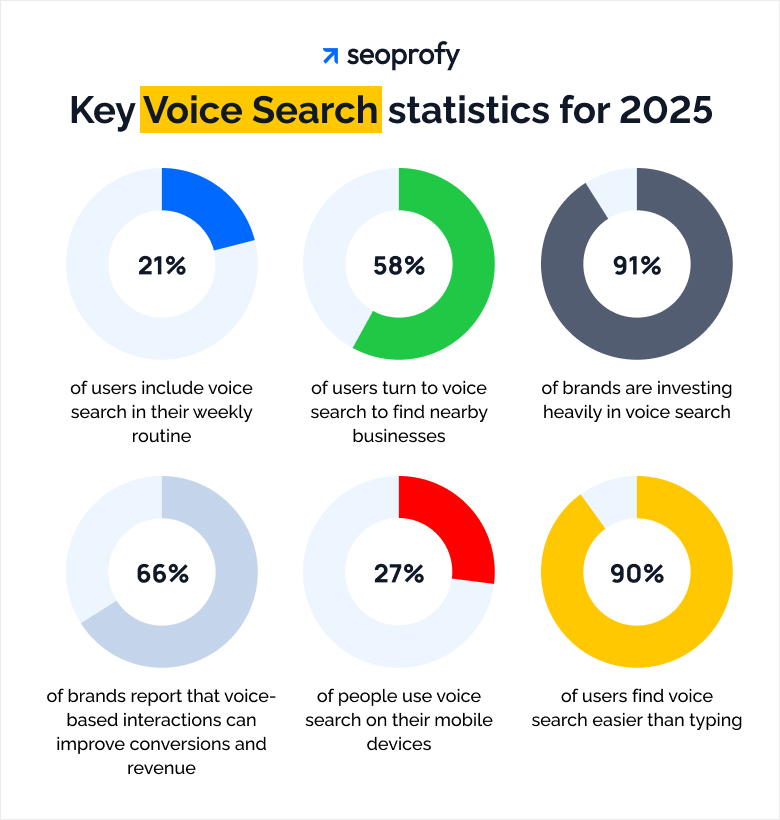
- Roughly 21% of users include voice search in their weekly routine.
- More than 58% of users turn to voice search to find nearby businesses.
- Around 91% of brands are investing heavily in voice search, and 66% report that voice-based interactions can improve conversions and revenue.
- Around 27% of people use voice search on their mobile devices.
- Nearly 90% of users find voice search easier than typing.
General Voice Search Statistics
To start, let’s take a broad look at where things stand and get a sense of voice search growth in recent years. It matters if we want to understand how big the audience is and how many queries people actually run through this channel.
- In 2024, the number of active voice assistants passed 8.4 billion, which is already higher than the entire global population. (Statista)
- More than half of all smartphone users interact with AI voice assistants on a daily basis. (Keywordseverywhere)
- More than a billion voice searches take place each month, and the volume keeps rising as people become more comfortable using this channel. (Yaguara)
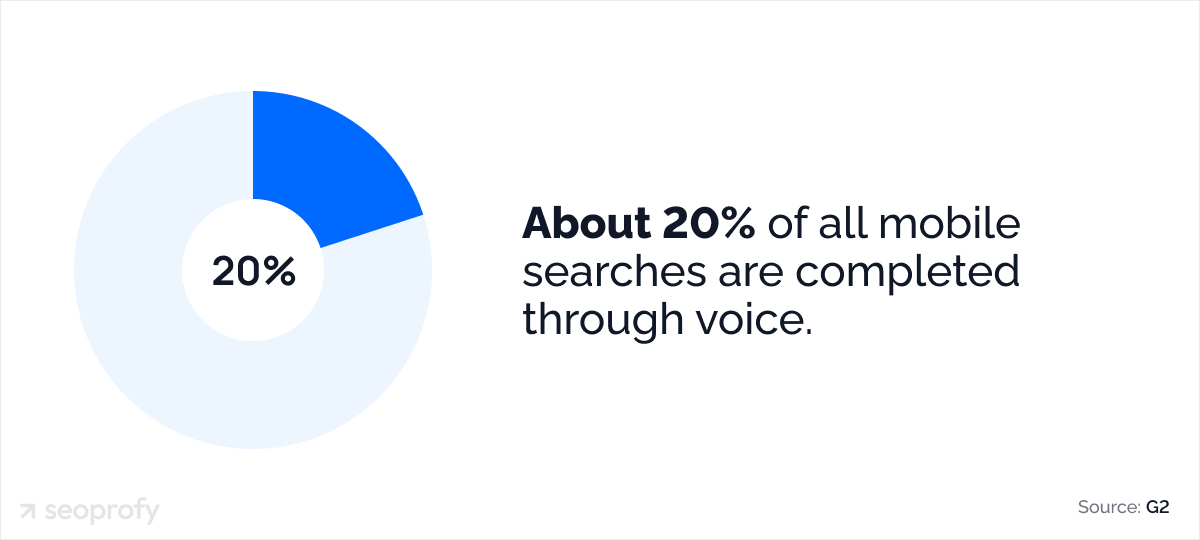
- About 20% of all mobile searches are completed through voice. (G2)
Voice Search Usage Statistics
So how do people actually use voice search? The patterns become pretty clear once you look at the numbers below.
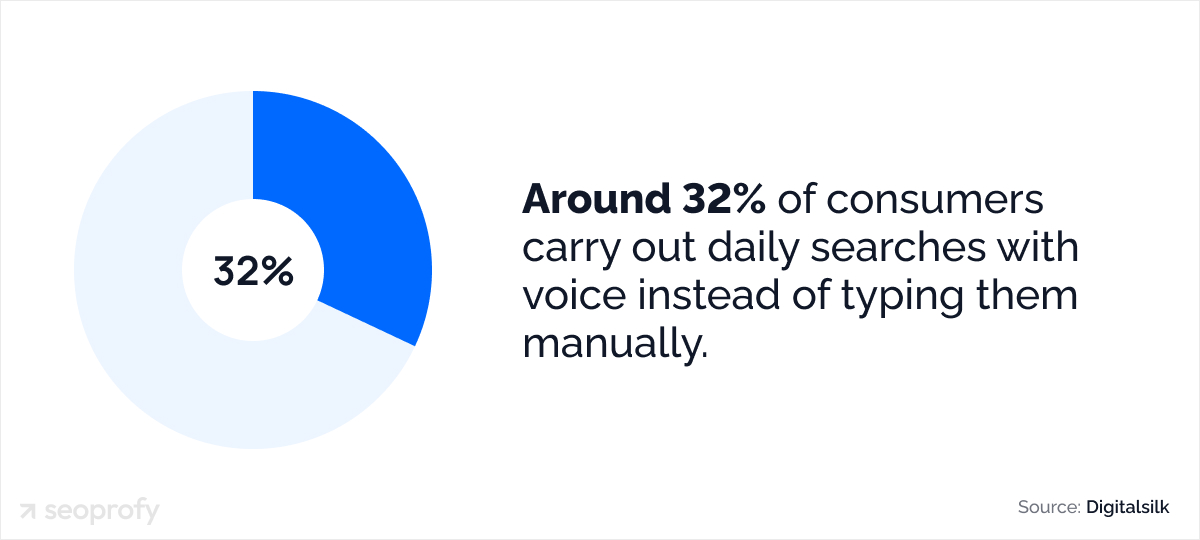
- Around 32% of consumers carry out daily searches with voice instead of typing them manually. (Digitalsilk)
- Over 4 billion devices now operate using AI-driven voice assistants. (SeoProfy)
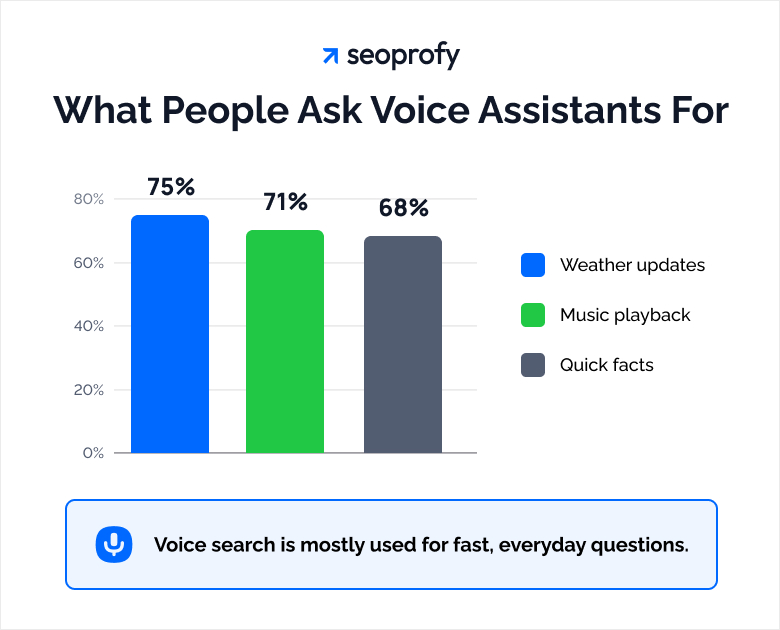
- Around 75% of people in the United States use voice assistants to get weather updates. Listening to music through voice commands is common for 71% of users. Searching for quick facts is a habit for 68% of Americans. (Keywordseverywhere)
- About 76% of all voice searches include a “near me” component or another local intent, and this share is expected to grow as people use voice search more often to find businesses close to them. (DemandSage)
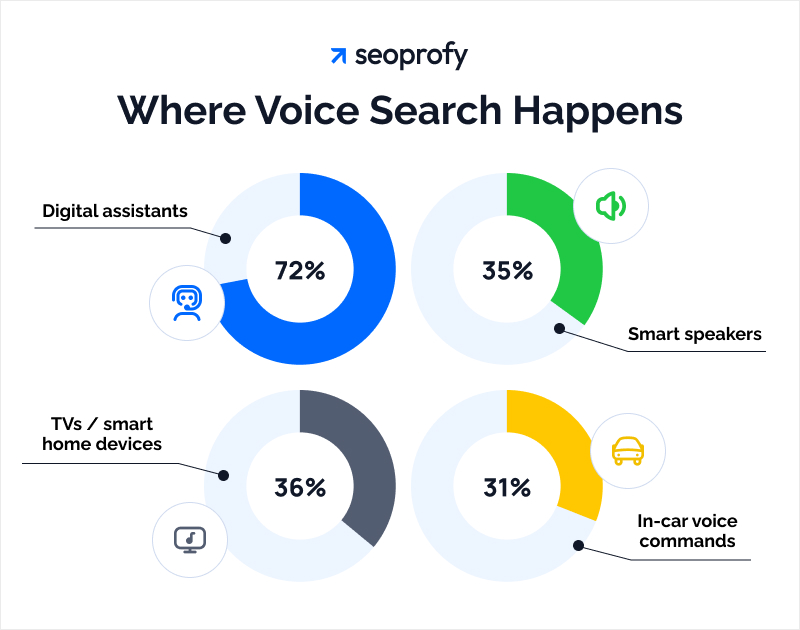
- Consumers use voice features across multiple devices, including 72% who search through digital assistants, 35% who use smart speakers, 36% who interact with TVs or other smart home devices, and 31% who rely on voice commands in their vehicles. (Yaguara)
Voice Search for Business
Businesses are actively investing in voice search optimization, and many are already seeing strong returns. Here are the key points you should be aware of:
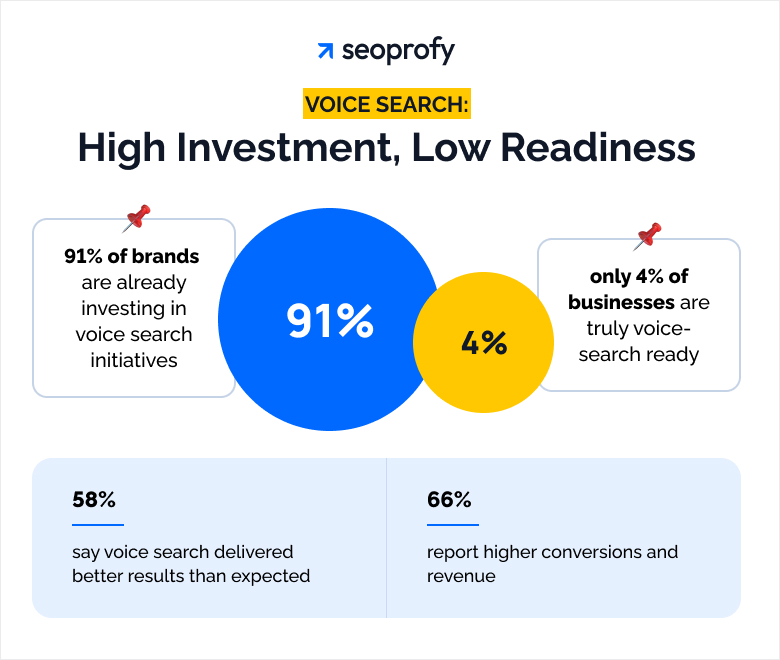
- 91% of brands are already putting significant budgets into voice search initiatives. At the same time, 66% of companies say voice-driven interactions can raise conversions and help generate more revenue. (Algolia)
- The stats report that only 4% of businesses are truly voice-search ready, based on an analysis of nearly 75,000 companies. (SearchEngineLand)
- Revenue from calls initiated through voice search can exceed the results of web leads by a factor of 10 to 15. (BIA)
- 71% of brands expect voice search to deliver a better user experience overall. (Algolia)
- Among the companies that invested in voice search, 58% say the results turned out better than they expected. These same businesses also report that using voice technology helped reduce customer service expenses by roughly 20%. (Algolia)
Accuracy of Voice Search
Developers and voice techs are working actively to improve speech recognition accuracy, since it directly influences user experience and even impacts how much people trust the system. Here’s what current technology can already deliver and how precise modern voice responses have become:
- Voice assistants handle spoken requests with an average accuracy rate of roughly 93.7%. (DemandSage)
- ASR systems make more mistakes on Indian, Australian, and British accents than on standard American English. Accent adaptation reduces recognition errors and leads to a statistically proven drop in WER. (IU International University of Applied Sciences)
- ASR accuracy is much lower for adults aged 60–81 compared with users in the 28–36 group. Error rates rise when speech is less clear, when timbre shifts, and when the pace is slower. (ACM)
- Modern systems like Whisper and AssemblyAI show average match-error rates of about 0.054–0.063 on accented speech. (Cornell University)
- Average accuracy levels: around 3.5% WER for clean speech, about 12% in noisy conditions, and roughly 15% for strong accents. (VoiceToNotes)
Voice Search Devices
Google voice search stats aren’t complete without looking at how usage spreads across different devices. This matters because each device category leads users to search in its own way, which directly affects how and where brands should optimize.
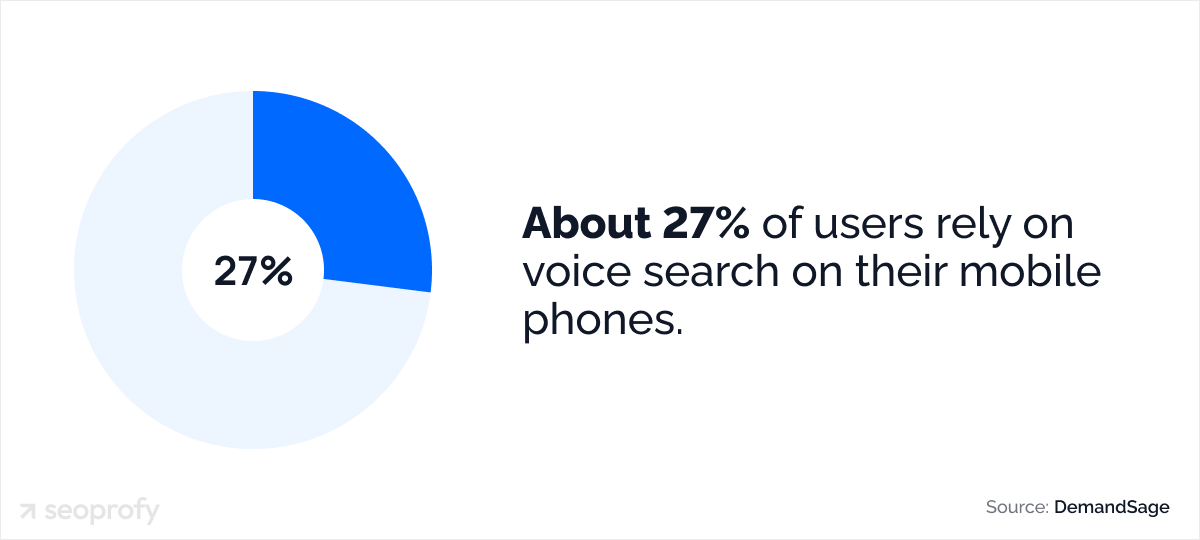
- About 27% of users rely on voice search on their mobile phones. (DemandSage)
- By contrast, desktop and laptop voice search is used far less often, with only 28% of users turning to it when looking for businesses. (Yaguara)
- In the United States, as of March 2024, smart speaker ownership is split roughly as follows: Amazon Echo holds 65%, Google Home 24%, and Apple HomePod 18%. (RAB)
- About 58% of smart-speaker households own two or more devices. (SiriusXM)
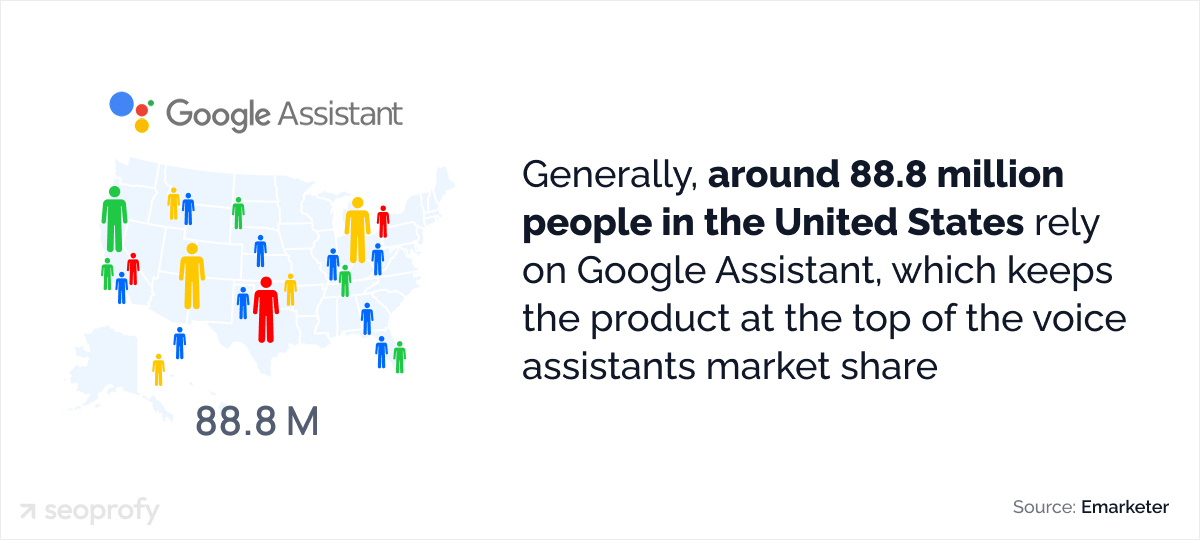
- Generally, around 88.8 million people in the United States rely on Google Assistant, which keeps the product at the top of the voice assistants market share. (Emarketer)
- Siri is used by about 86.5 million people in the United States. (DemandSage)
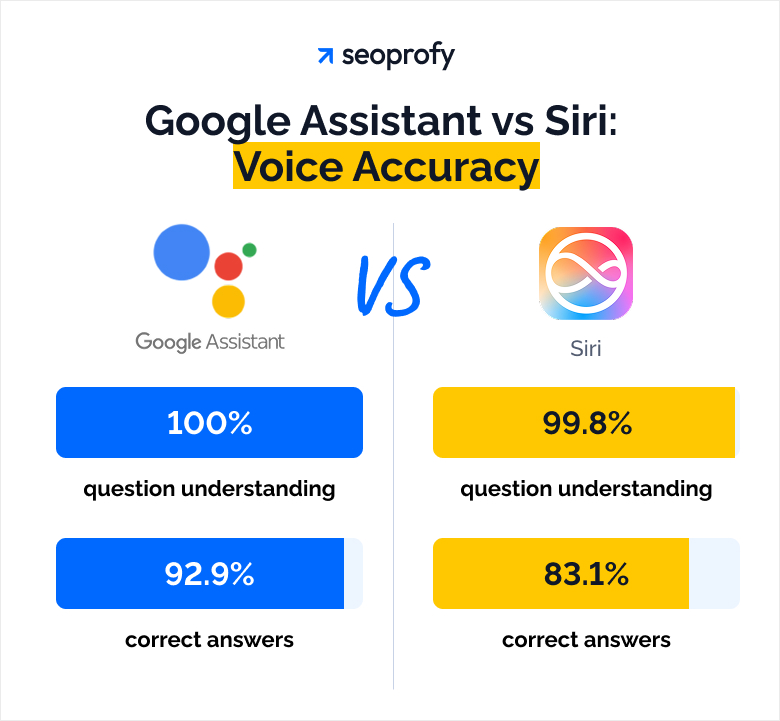
- Google Assistant shows 100% question understanding with a correct-answer rate of about 92.9%. (DemandSage)
- Siri registers 99.8% question understanding and delivers correct answers at roughly 83.1%. (DemandSage)
- In 2025, Google is phasing out Google Assistant and shifting to Gemini, which will take over as the company’s main voice engine. (Google)
- OpenAI and Vapi have introduced real-time APIs that can process voice input with latency under 300 ms. (Vapi)
The Popularity of Voice Search
How much and why is voice search popular? People lean on it because it saves them time in ways typing never could.
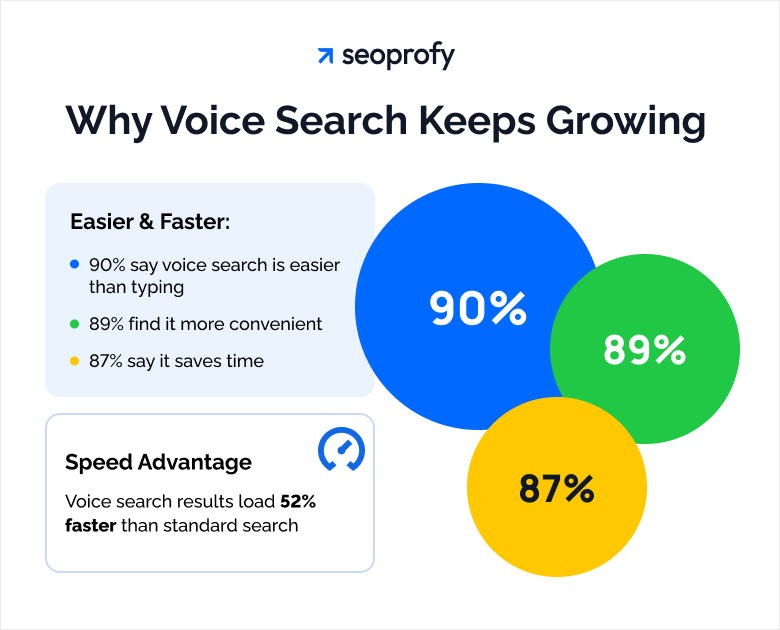
- Around 90% of users say voice search feels easier than typing. Another 89% consider it more convenient, and 87% think it saves time. (KeywordsEverywhere)
- Voice search results load roughly 52% faster than standard search results. (SeoProfy)
- Among men globally, about 31% interact with voice assistants every week. Among women, the weekly usage level is around 28%. (WeAreSocial Digital 2025 Report)
- Use of voice assistants to find information moves between 19 and 21% with small rises and dips across the past two years. (WeAreSocial Digital 2025 Report)
- Voice assistants are used most actively by people aged 25–44 with weekly levels above 32%. (WeAreSocial Digital 2025 Report)
- Weekly voice assistant adoption in the 45–64 segment drops noticeably, with usage sitting in the mid-20% range. (WeAreSocial Digital 2025 Report)
- Among voice search users aged 65 plus, interaction is the lowest, with only 17–19% using voice assistants. (WeAreSocial Digital 2025 Report)
- Among adults aged 25 to 64, 61% expect their use of voice-enabled devices to grow. A similar pattern appears in the 18 to 24 group, where 57% say they plan to rely on voice technology more in the future. (Invoca)
SEO And Voice Search Statistics
Google voice search statistics are an important and genuinely useful part of this dataset. Since most voice responses are pulled directly from organic results, SEO remains the main path for brands to appear in these answers.
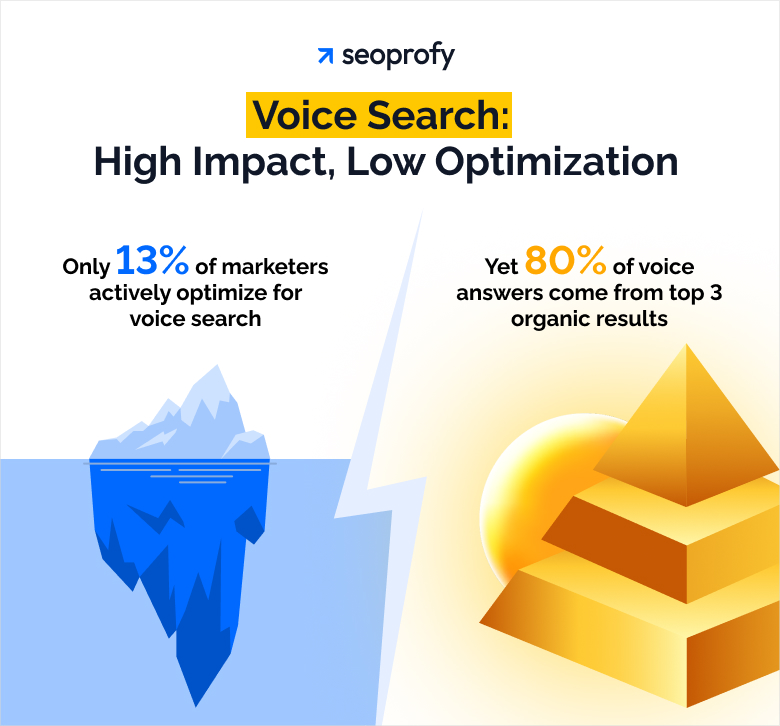
- Only 13% of marketers report that they actively optimize for voice search. (HubSpot)
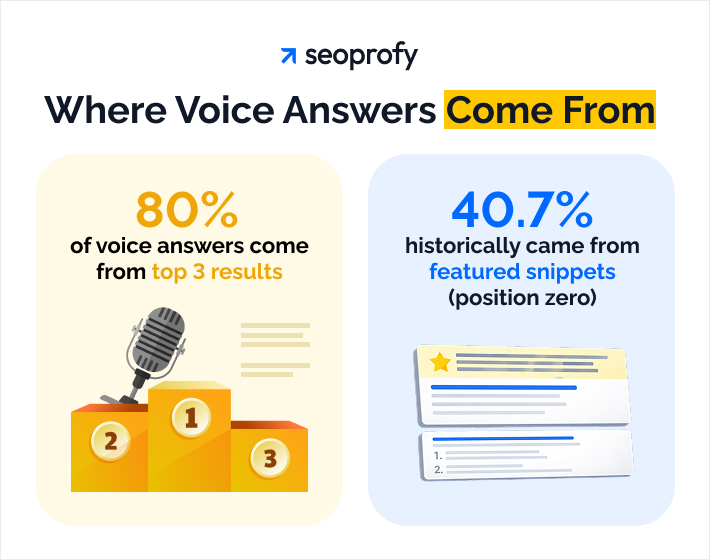
- Historical studies (e.g., Backlinko’s 2018 analysis of 10,000 queries) found that around 40.7% of voice answers came from featured snippets (position zero). No newer large-scale public studies have been released since then. (Backlinko)
- Close to 20% of all voice searches are triggered by a small set of roughly 25 high-frequency keywords, most of which include question terms like “how” and “what” or descriptors such as “best” and “easy.” (KeywordsEverywhere)
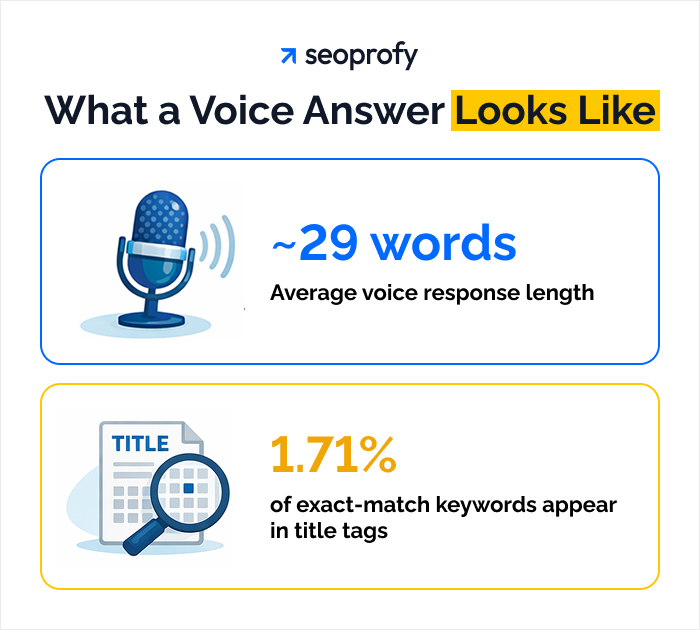
- Only about 1.71% of the exact-match keywords appear in the title tag of voice search answers, and the typical voice response is around 29 words long. (DigitalSilk)
- Google completed its full switch to mobile-first indexing in 2024. Since most voice queries come from mobile devices, any content that appears in voice answers is evaluated based on the mobile version of the site. (Google)
- Any content that can appear in a voice search answer must meet CWV requirements. Google doesn’t separate voice and non-voice ranking. (Google)
- Around 80% of voice search answers are pulled from the top three search results. (KeywordsEverywhere)
Voice Search Statistics for Local Search
Local search is one of the strongest areas in voice usage, since a huge share of spoken queries centers on nearby places and immediate needs. It’s the channel where voice assistants show their real value, and the numbers make that impossible to ignore.
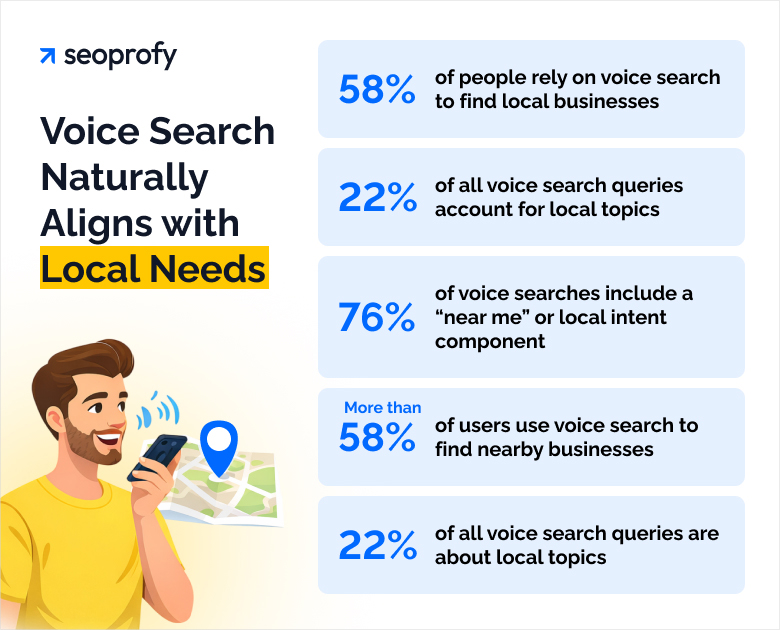
- According to Synup voice search optimization statistics, over 58% of people rely on voice search to find local businesses. (Synup)
- 76% use smart speaker devices for local searches each week, and 46% look up local businesses by voice every day. (BrightLocal)
- “Near me” queries show strong search volumes on Google, which means local companies can increase sales by strengthening their local search engine optimization. (KeywordsEverywhere)
- Local topics account for about 22% of all voice search queries. (G2)
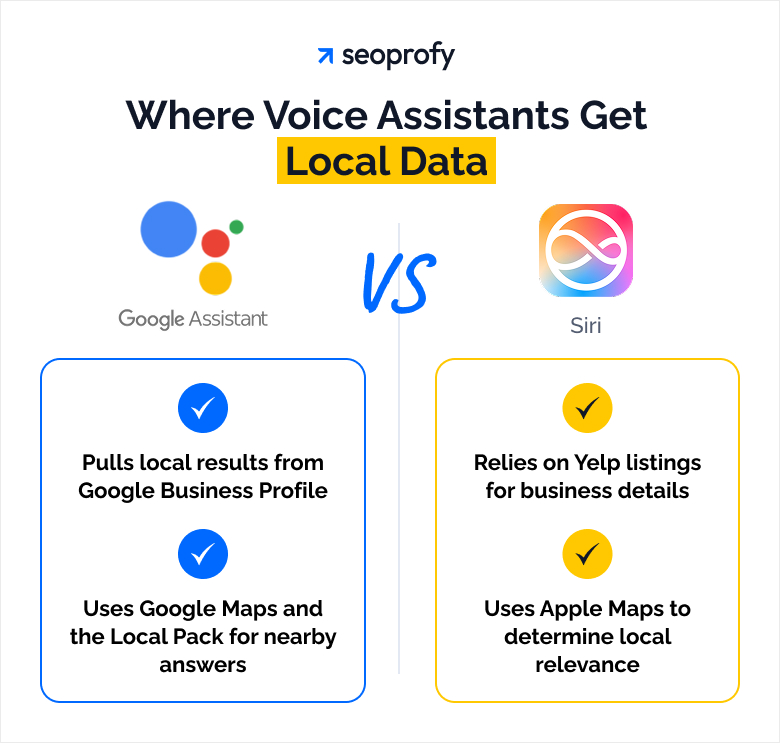
- Google Assistant uses Google Business data and the Local Pack for its local answers, whereas Siri forms its results from Yelp and Apple Maps. (KeywordsEverywhere)
Voice Search Statistics for Industries
Voice interaction isn’t limited to a single niche. People use it across dozens of industries, from everyday essentials to high-intent decisions. The data below shows just how wide that spread really is.
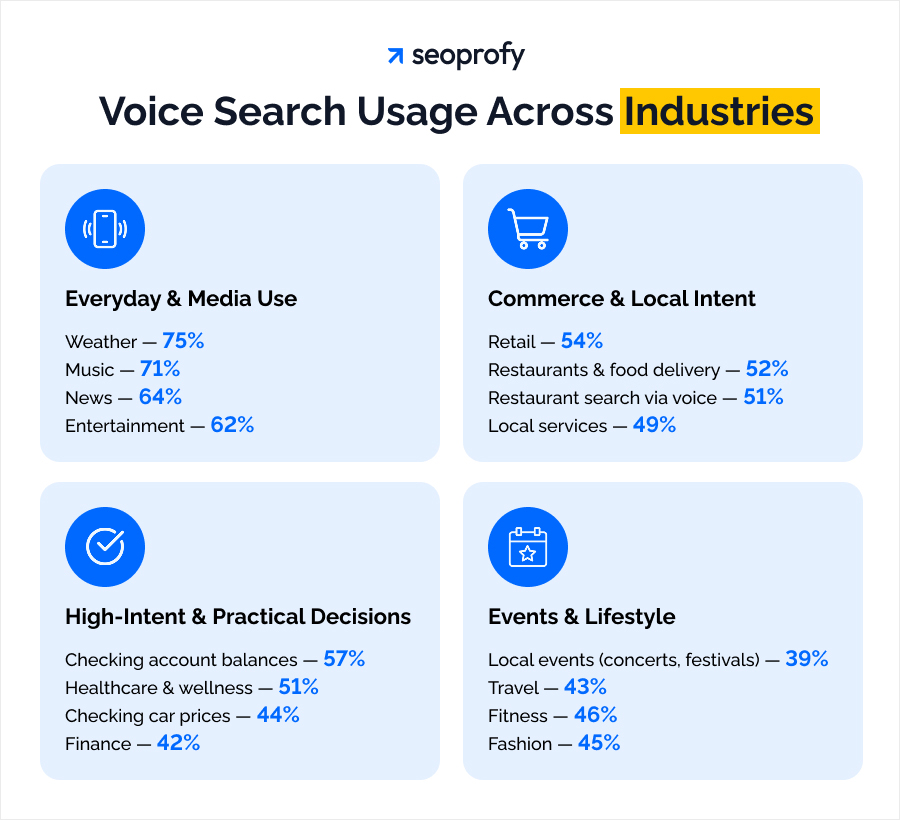
- In the United States, people use voice search across a wide range of sectors including weather at 75%, music at 71%, news at 64%, entertainment at 62%, retail at 54%, food delivery and restaurants at 52%, healthcare and wellness at 51%, consumer packaged food at 49%, local services also at 49%, reservations at 47%, fitness at 46%, fashion at 45%, travel at 43%, finance at 42% and other categories at 42%. (DemandSage)
- Around 39% of voice assistant users look up information about local events such as concerts and festivals, making voice search a great channel for event promotion. (Synup)
- About 41% of voice assistant users have asked for help finding a nearby dealership or service center, and 44% have used voice search to check car prices. (G2)
- About 35% of banking customers use voice assistants for inquiries and transactions, and 57% of users have used them to check their account balances. (Synup)
- 51% of consumers look up restaurant information through voice search. (BrightLocal)
Voice Search Adoption Statistics
Voice search adoption keeps climbing as new user groups lean into the technology. Growth is strongest among younger audiences and households that already rely on digital tools every day.
- Younger consumers, families with kids, and households earning over 100k are driving the growth of voice search technology. (PwC)
- 30 to 33% of internet users aged 16 plus use voice assistants weekly worldwide. (WeAreSocial Digital 2025 Report)
- In China, 40.8% of the population turns to voice assistants weekly, which is the highest share globally. UAE follows with 35.8%, Mexico with 35%, India with 33.6% and Brazil with 31.8%. (WeAreSocial Digital 2025 Report)
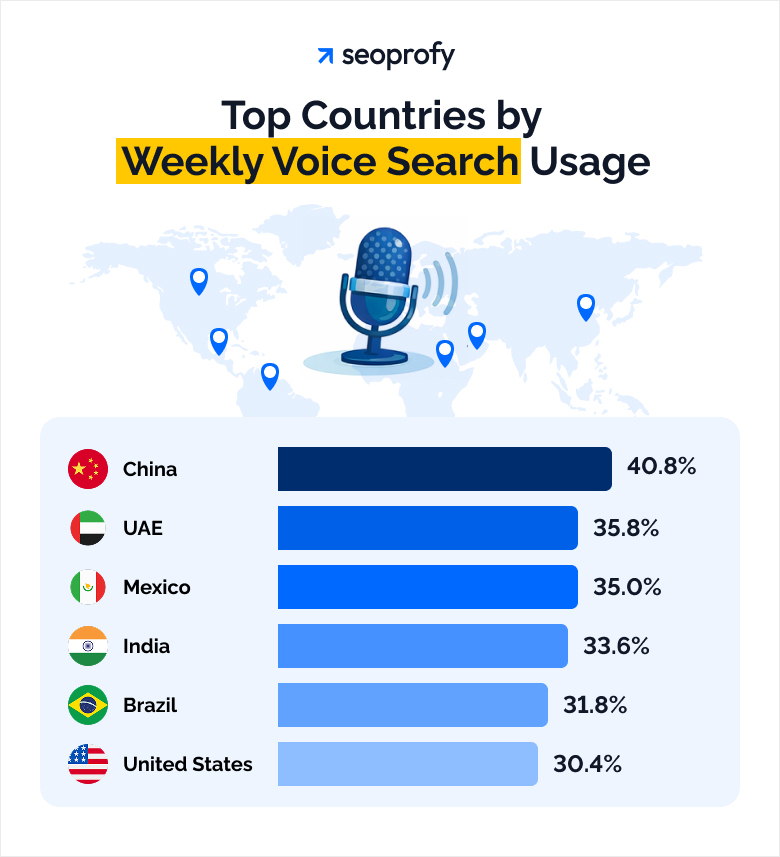
- In the United States, voice assistance weekly usage sits at 30.4% placing the country in sixth position worldwide. (WeAreSocial Digital 2025 Report)
Purchasing Using Voice Search
Voice slips into the shopping flow almost without people noticing. Consumers use it to check prices, restock essentials, and grab quick answers that speed up buying decisions.
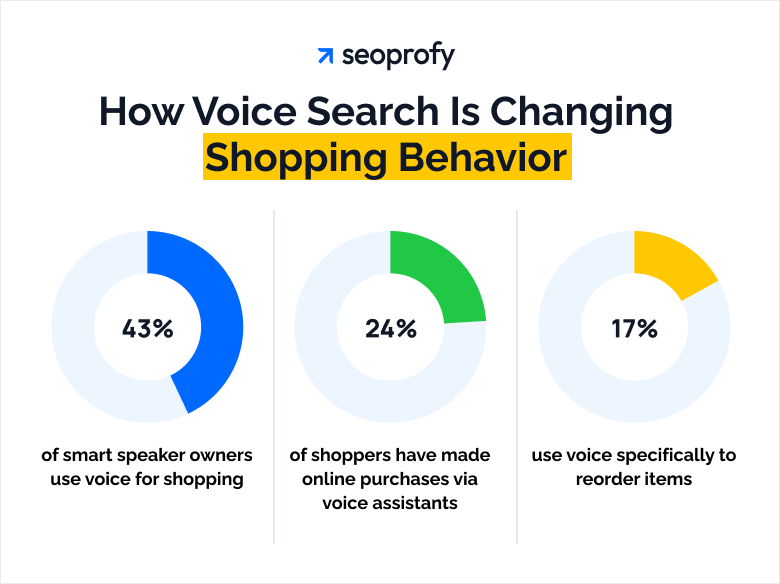
- Up to 43% of people who own smart speakers use them for shopping, and this behavior appears across all age groups. (NarVar)
- The global voice commerce market was valued at 42.75 billion dollars in 2023 and is expected to reach 186.28 billion by 2030, which reflects a CAGR of about 24.6% from 2024 to 2030. (Grand View Research)
- About 24% of all shoppers have turned to digital voice assistants for online purchases. (G2)
- According to Narvar’s voice commerce statistics, around 17% of consumers use voice to reorder items. (NarVar)
- Over 54% of retail searches in the US come from voice, compared with about 40% in both the UK and Germany. (DemandSage)
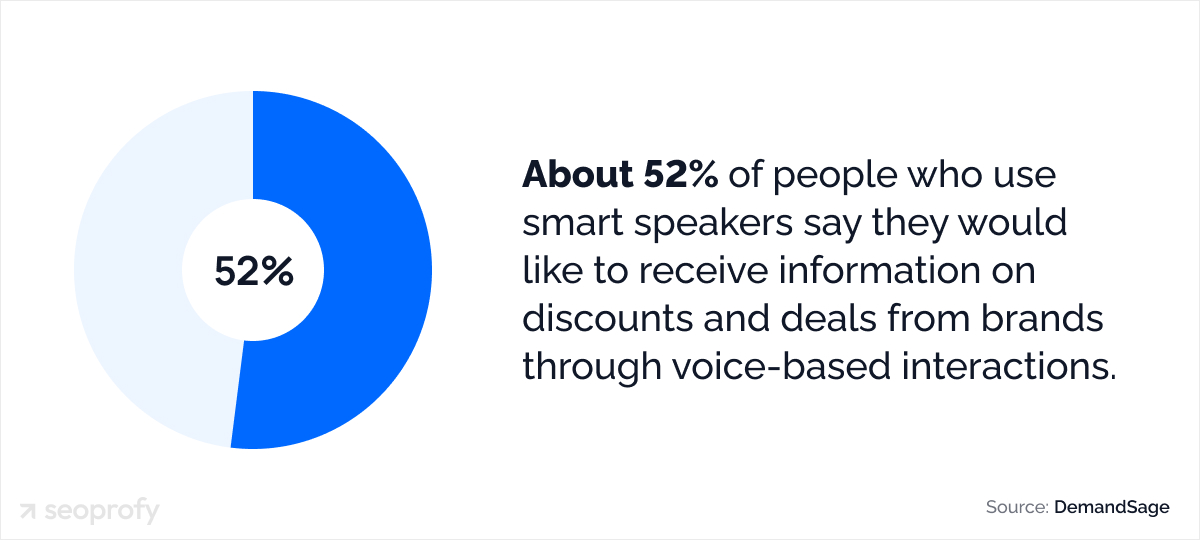
- About 52% of people who use smart speakers say they would like to receive information on discounts and deals from brands through voice-based interactions. (DemandSage)
Smart Speaker Statistics
Smart speakers handle everything from routine questions to full purchase decisions, and the scale of that usage shows exactly how far this category has pushed the voice ecosystem.
- In the United States, around 38.8 million people, or 13.6% of the population, use smart speakers for shopping activities. (DemandSage)
- Back in 2018, about 28% of U.S. households owned a smart speaker, and projections suggested that this share could reach roughly 75% by 2025. (KeywordsEverywhere)
- Smart speaker users make about 11 types of requests each week. (G2)
- About 8.9 million consumers bought health and beauty products through smart speakers, and another 8.8 million purchased electronics online using voice. (DemandSage)
Voice Search and Consumer Behaviors Stats
And one last piece that matters is how people feel when using voice search. Just as important is what they do next.
- Google’s voice recognition hits about 95% accuracy, which helps users feel confident relying on it. (G2)
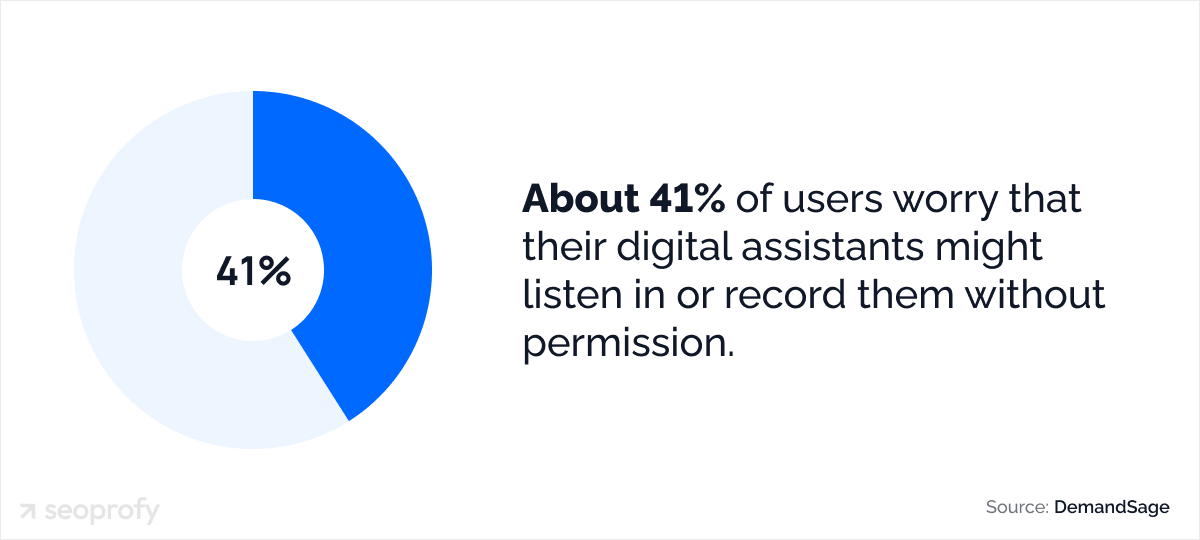
- About 41% of users worry that their digital assistants might listen in or record them without permission. (DemandSage)
- About 28% of consumers end up calling the business they just searched for by voice. (Invoca)
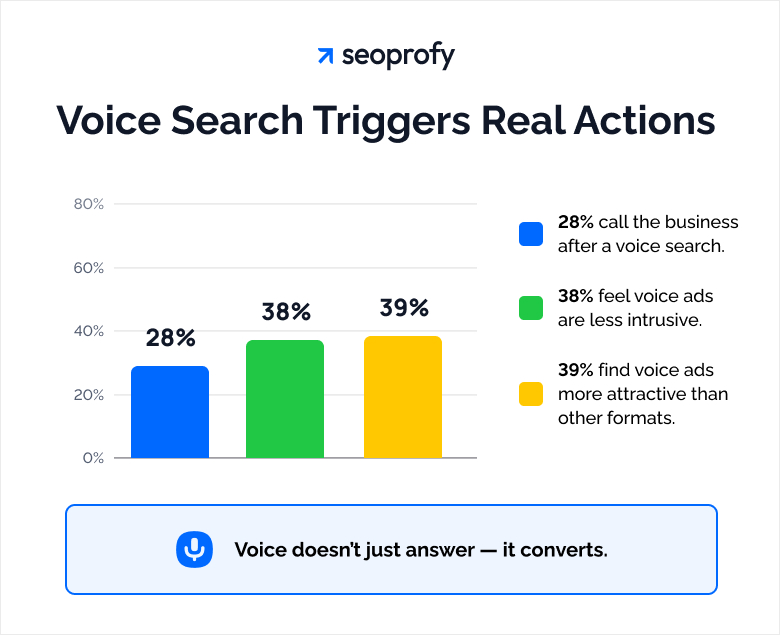
- About 38% of users feel that voice ads don’t interrupt them as much as traditional formats, and 39% say these ads are more attractive than other types of advertising. (DemandSage)
Final Thoughts: Preparing for the Voice-Driven Web
Voice search is a large and fast-moving space with real traffic behind it. As our stats showed, brands that optimize for this channel can win stronger conversions and better returns.
Our team at SeoProfy can help make that happen. We have the resources and expertise to ensure your business becomes the answer voice assistants choose to deliver. Would you like to explore the opportunities for your brand? Reach out to us!

As a Content writer at SeoProfy, Hanna Zhytnik creates SEO content grounded in research, data, and ongoing hypothesis testing. With more than 5 years of experience across B2B, SaaS, and ecommerce, she brings both breadth of knowledge and a sharp focus on modern search. Her strength lies in turning complex experiments into clear explanations, bridging the gap between deep SEO practice and accessible content.