


The ROI of SEO continues to outperform most marketing channels in 2026. Unlike paid ads that stop delivering once the budget runs out, SEO compounds over time — lowering acquisition costs and driving steady, high-intent traffic from Google Search and other organic discovery channels.


Businesses that invest in long-term SEO strategies report average returns of up to 700%, and SEO leads close at 14.6%, compared to just 1.7% for outbound marketing. Organic search also remains one of the largest revenue drivers for most industries.
Below, you’ll find the latest SEO ROI statistics and benchmarks to help you understand what realistic returns look like today.
- SEO leads close at 14.6%, compared to just 1.7% for outbound marketing.
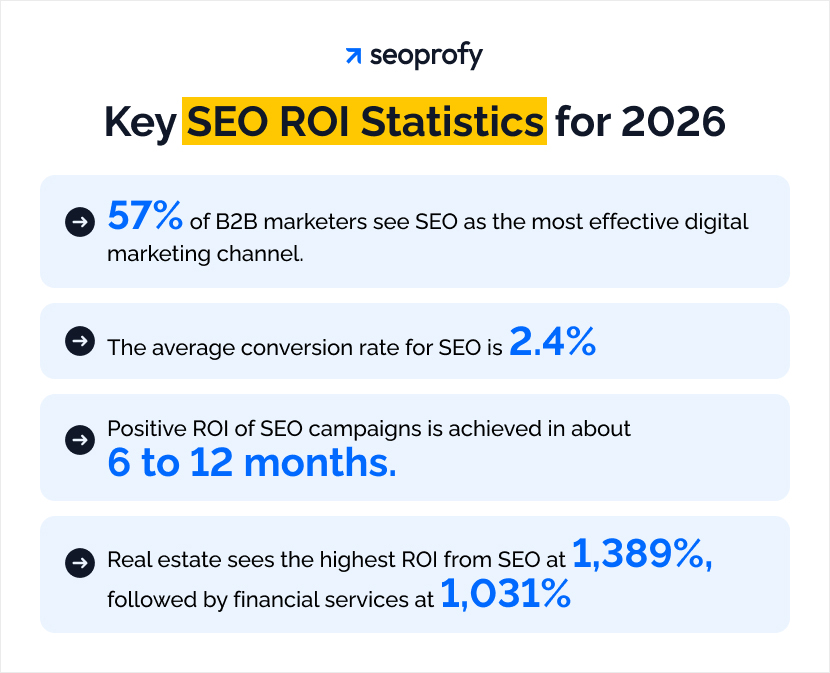
- 49% of marketers identify organic search as the top ROI-driving digital channel.
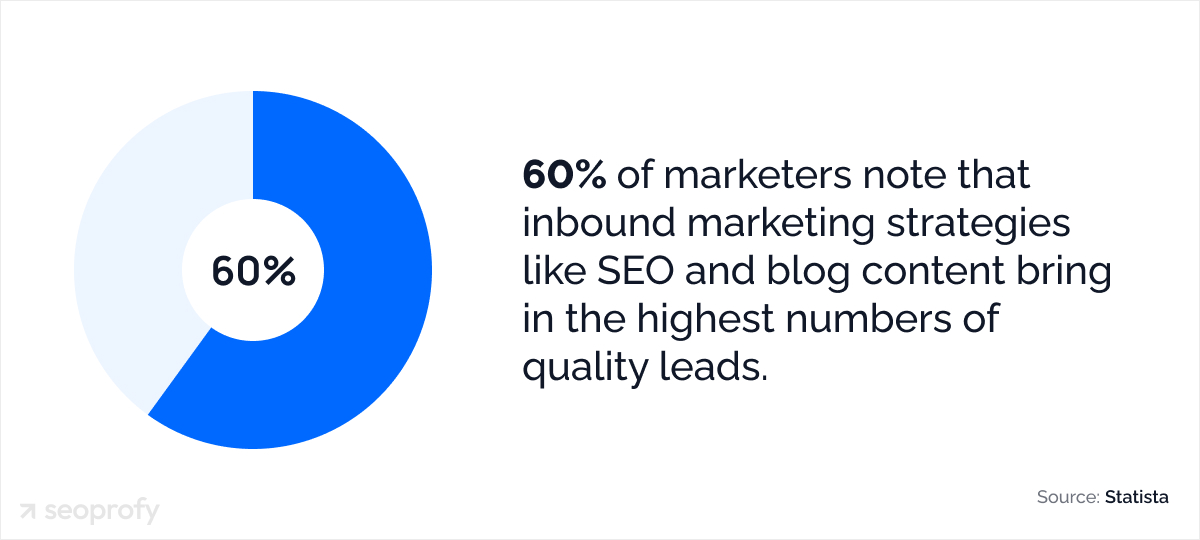
- 60% of marketers say inbound strategies like SEO generate the highest-quality leads.
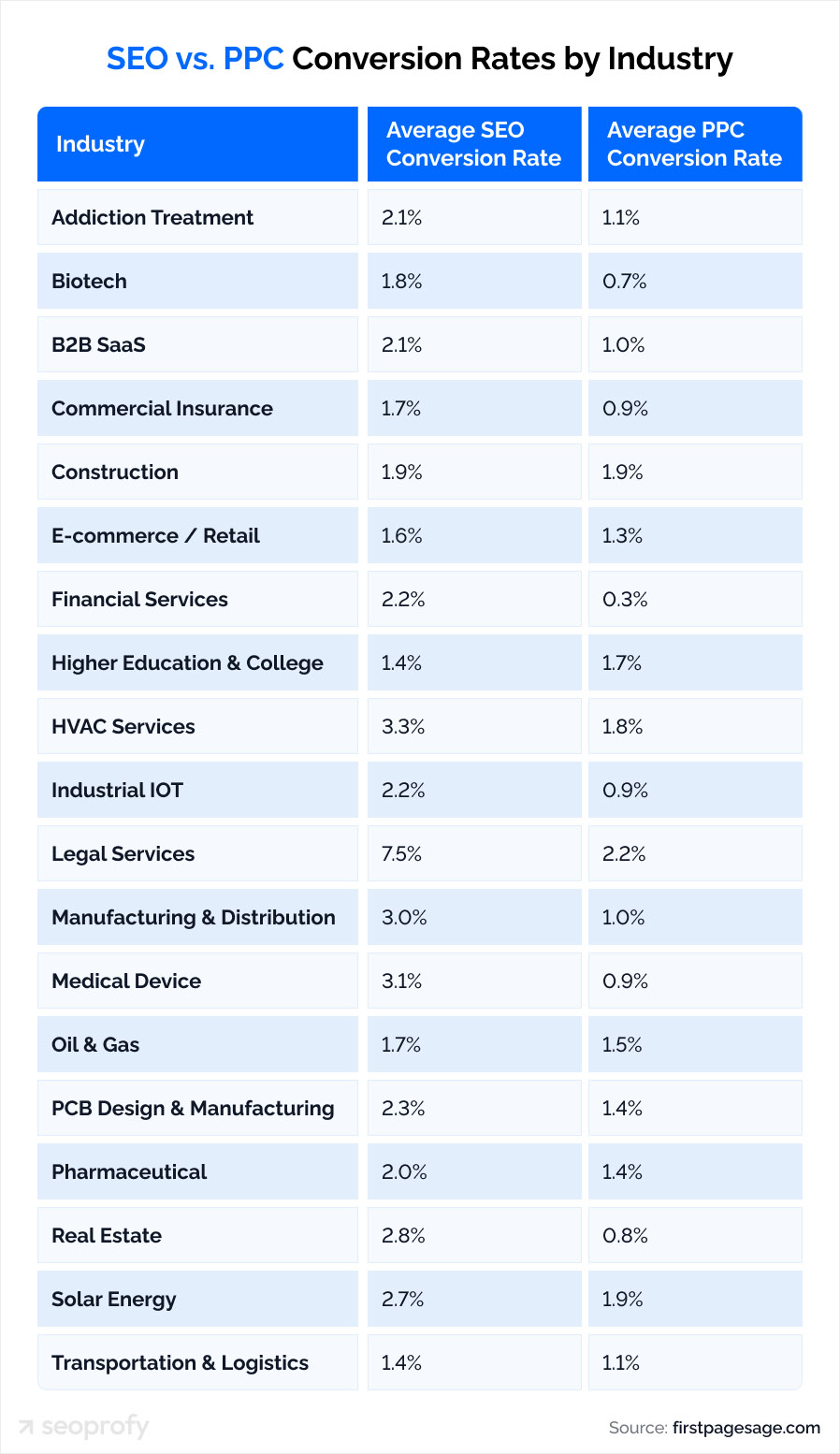
- Average SEO conversion rate: ~2.4%, with industries like legal reaching up to 7%+.
- Most SEO campaigns begin generating positive returns within 6–12 months.
The Importance of SEO ROI
Measuring SEO performance and the ROI of organic search lets you quantify exactly how efficiently your campaigns translate into business results — not just traffic. Recent industry data shows that a well-executed SEO campaign can yield a median ROI of ~748%, meaning roughly $7.48 back for every $1 spent, with some sectors (e.g., medical devices or education) reporting ROI over 900–1,100% in 2025 alone.
Across industries, SEO produces measurable revenue and is often the top ROI-driving channel for B2B companies; organic search generates 44.6% of all revenue attributed to digital channels and remains more effective than paid search for long-term growth.
SaaS companies specifically reported an average 702% ROI on SEO, with a break-even period as short as seven months — proving that even high-growth tech businesses see strong, trackable returns.
Measuring SEO performance and the ROI of organic search lets you quantify exactly how efficiently your campaigns translate into business results — not just traffic. With proper tracking in Google Analytics and CRM systems, businesses can connect organic visibility directly to revenue, assisted conversions, and customer lifetime value.
SEO ROI Statistics by Industry
SEO ROI varies significantly across industries because each market has its own customer lifetime value and sales cycle length. Sectors such as financial services, SaaS, legal, and healthcare often report higher ROI — frequently ranging between 500% and 1,000% over time. These industries benefit from high client value and longer customer relationships, meaning that even modest increases in organic visibility can generate substantial revenue impact.
Below is a benchmark table summarizing reported SEO ROI by industry based on recent industry studies and agency research.
|
Industry |
Average SEO ROI |
Break-Even Timeline |
| B2B SaaS | ~702% | ~7 months |
| Financial Services | ~1,031% | 12–18 months |
| Medical Device | ~1,183% | 12–24 months |
| Higher Education | ~994% | 12–24 months |
| Biotech | ~788% | 12–24 months |
| Legal Services | ~526% | 9–12 months |
| E-commerce | ~317% | 12 months+ |
| Cross-Industry Median | ~748% | 6–12 months |
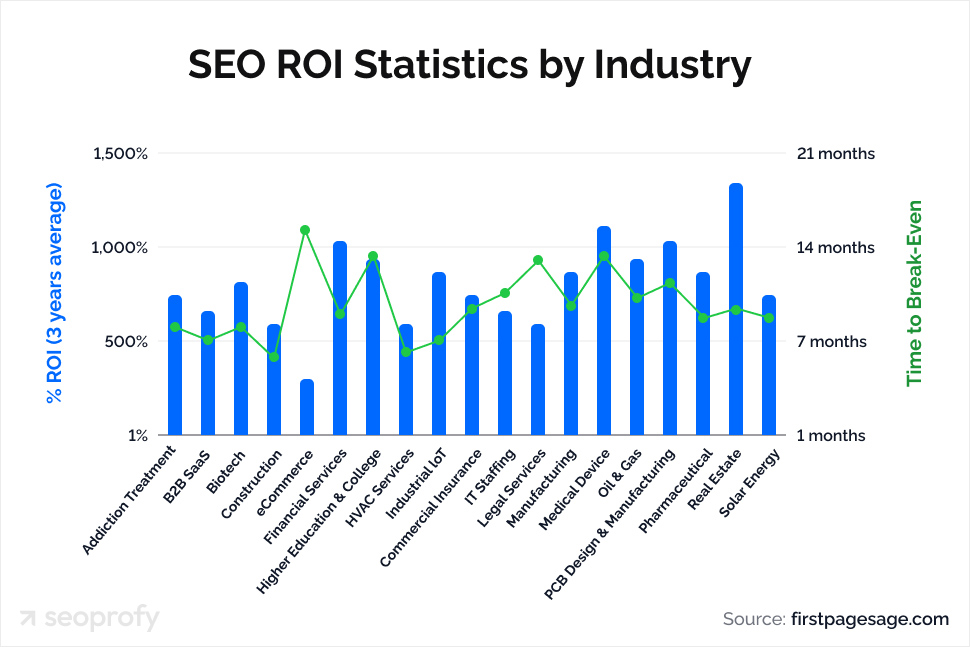
High-ticket industries such as finance, medical, and SaaS tend to generate the highest SEO ROI because each converted customer represents significant lifetime value.
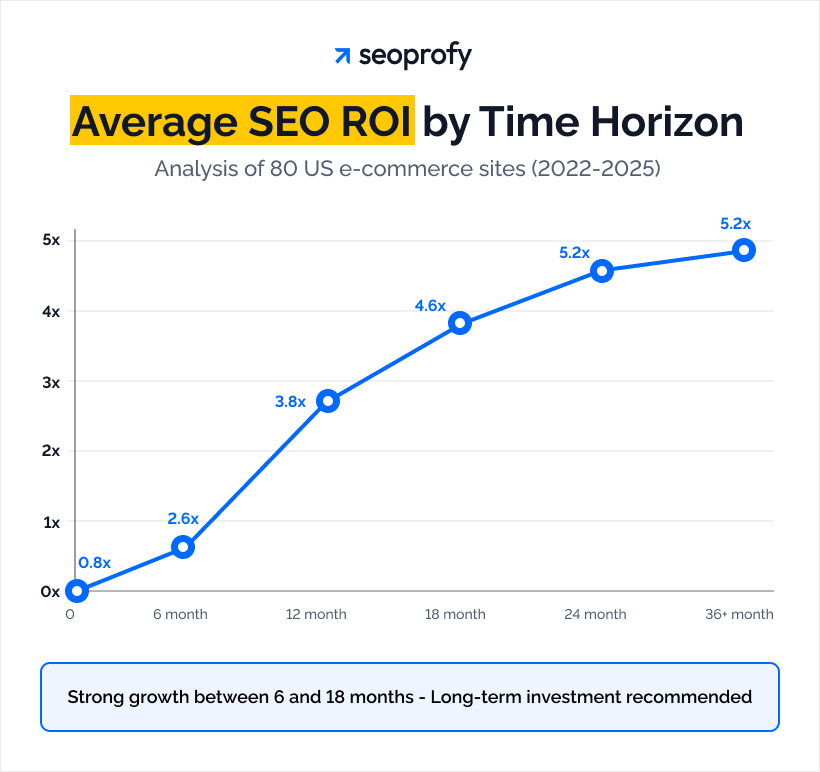
E-commerce businesses usually see more moderate returns in the early months, but ROI compounds substantially after the first year as rankings strengthen and organic traffic scales.
Across most industries, meaningful returns typically begin to appear after six to twelve months, once authority builds, content matures, and search visibility stabilizes.
SEO ROI Statistics by Service Type
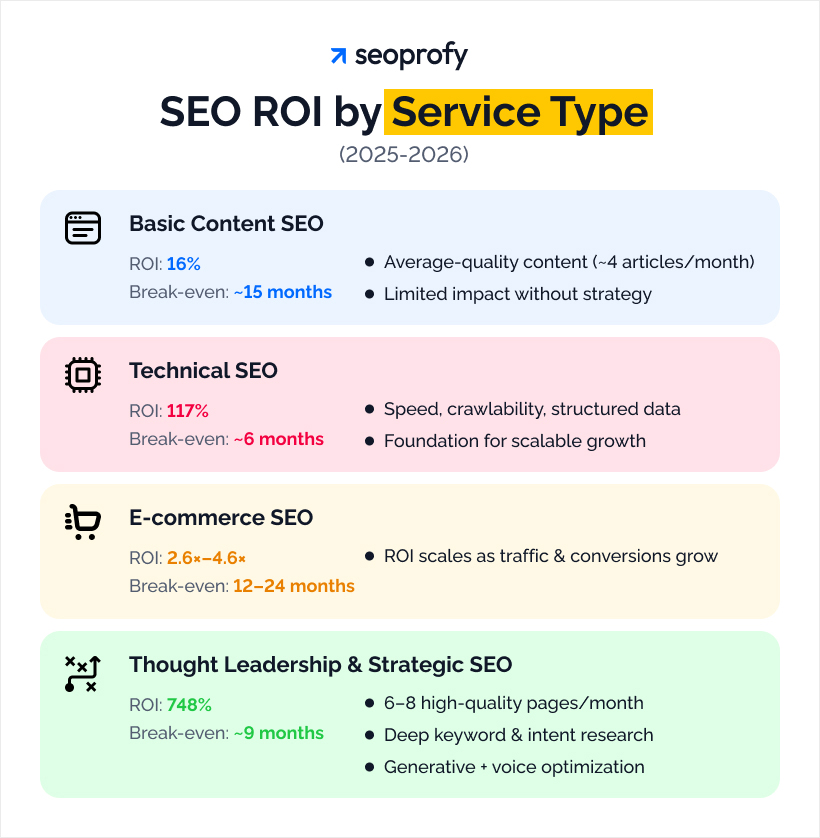
Not all SEO services generate the same return — effectiveness varies significantly depending on strategy focus, depth of work, and quality of execution. Recent benchmark data from FirstPageSage’s industry reports gives clear insight into how different service types perform in 2025–2026:
Thought Leadership & Strategic SEO
A thought leadership SEO campaign — involving deep keyword research, audience intent analysis, authoritative content creation (~6–8 pages/month), and generative optimization — delivers some of the strongest ROI, with about 748% ROI and an average 9-month break-even period. Strategic authority-building consistently outperforms isolated tactics because it positions brands as trusted sources in competitive markets.
Technical SEO
A well-executed technical SEO campaign — including site speed improvements, crawlability fixes, structured data implementation, mobile optimization, and metadata updates — yields reliable early returns, with a typical ROI around 117% within about 6 months. While lower than content-heavy strategies, technical optimization lays the foundation for scalable organic growth and improved performance in both traditional and local search environments.
Basic Content Marketing SEO
Basic content campaigns that produce average-quality blog posts or pages (e.g., ~4 articles per month) generate modest returns, withan ROI around 16% and a longer break-even period (≈15 months). This reflects the limited impact of generic content without strategic planning or optimization aligned to user intent.
E-commerce SEO
E-commerce SEO shows progressively increasing ROI over time — with benchmarks indicating that after 12–24 months, average ROI can reach 2.6×–4.6× the initial investment, as organic traffic and conversions scale.
Overall SEO Campaign Returns
Thought leadership-oriented SEO — involving deep keyword research, audience intent analysis, high-quality content creation (~6–8 pages/month), generative optimization, and voice search optimization — delivers some of the strongest ROI, with about 748% ROI and an average 9-month break-even period. As search behavior shifts toward conversational queries, optimizing for spoken and AI-driven searches strengthens long-term organic performance.
PPC vs SEO ROI Statistics
When businesses want to increase sales, they usually take one of two routes — SEO or PPC. Sometimes, they do both to see better results. So, which one has a higher return on investment?
- Across a range of studies, organic search visits tend to convert higher on average than paid channels. In some benchmarks, SEO conversion rates (e.g., ~14.6%) surpass traditional PPC conversion averages (e.g., ~10%), reflecting stronger intent from organic visitors. (Adcore & industry studies)
- SEO delivers an 8x return compared to PPC’s 4x, according to poll data from NP Digital. (LinkedIn)
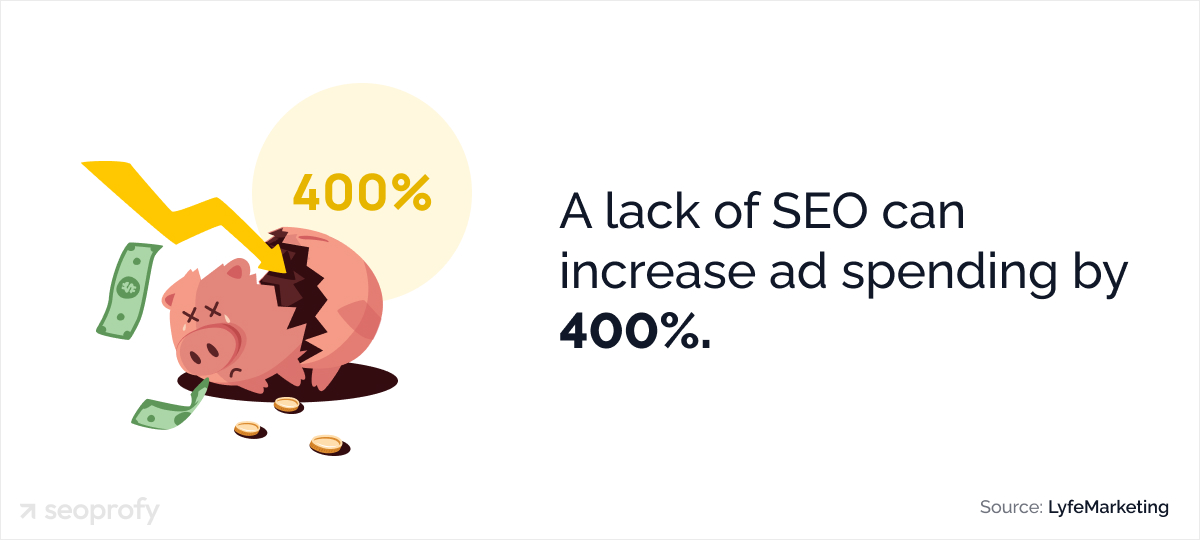
- A lack of SEO can increase ad spending by 400%. (LyfeMarketing)
- PPC often delivers faster, more predictable short-term ROI — with many campaigns generating roughly 200% return on spend ($2 for every $1 invested) when well-optimized. This makes PPC effective for promotions, new product launches, and short-term demand capture. (Adcore)
- Organic visitors typically engage more deeply — spending more time on site and often showing higher trust and brand affinity — which contributes to stronger cumulative ROI over time compared with one-off paid visits. (Shapes & Pages analysis, 2025)
- SEO tends to convert better than PPC in many industries. A benchmark comparison shows that SEO conversion rates are often multiple times higher than PPC in categories like financial services and legal. For example, SEO converts 7.3× more than PPC in financial services and 3.4× more in legal services. (FirstPageSage SEO vs PPC conversion comparison)
- New CAC benchmarks show that organic SEO delivers significantly more leads per dollar than PPC. Organic channels (SEO) cost about $31 per lead, while PPC costs about $181 per lead — meaning SEO can generate about 5.8× more leads per dollar spent. (HubSpot)
- SEO builds sustainable organic visibility that continues delivering traffic without incremental spend, while PPC requires continuous budget to maintain visibility. Hallam’s 2026 ROI review confirms that although PPC delivers immediate conversions, SEO remains the strongest long-term ROI channel because organic.
Databox survey respondents say that SEO works better than ads because it helps generate leads organically through high-quality content. Business owners who optimize their sites and create content that offers value to potential clients can consistently attract qualified leads through their websites over time.
The Conversion Rate of SEO Campaigns
FirstPageSage analyzed their internal data and found that the average conversion rate for SEO is 2.4%. As with other SEO performance indicators, this percentage also varies by industry. For example, B2B SaaS companies have a rate of 2.1 percent, while for local businesses like HVAC, this number is 3.3%. When it comes to legal services, this industry has the highest conversion rate of 7.5%.
Comparing SEO to Other Marketing Channels
A Search Engine Land poll found that 49% of respondents see organic search as the top ROI-driving digital channel. This shows that nearly half of marketers rely on SEO to generate more revenue compared to options like paid search, social media, or email marketing. Let’s take a look at the SEO ROI statistics behind this:
60% of marketers note that inbound marketing strategies like SEO and blog content bring in the highest numbers of quality leads. (Statista)
Broad channel benchmarks show that organic search traffic accounts for a majority of total visits and leads, often outperforming other channels like social media and outbound marketing in ROI for sustained campaigns. Around half of surveyed marketers say SEO delivers the best ROI of any channel. (SEOWorks organic search ROI stats)
The Timeframe of SEO ROI
SEO takes time, and more often than not, the first results show up not faster than in 3-6 months. The exact timeline also depends on your industry, location, budget, and goals. But when done right, a well-planned SEO strategy can bring in consistent traffic and a flow of leads that turn into business growth.
- Positive ROI of SEO campaigns is achieved in about 6 to 12 months. (FirstPageSage)
- The peak results of an SEO campaign are usually seen in the second or third year. (FirstPageSage)
How to Calculate SEO ROI?
So, we looked at the stats on how search engine optimization drives sales and profit for businesses, and now you can go ahead and calculate the returns of your own SEO efforts. This will help you understand if the time and money you’re putting into optimization is actually paying off—or if it’s time to change your strategy.
If you’re a marketer or an SEO agency, it’s not always easy to estimate the results of your work. Luckily, there are a few SEO ROI calculators that can help you. For example, you can use the one offered by UpGrowth or use the following formula:
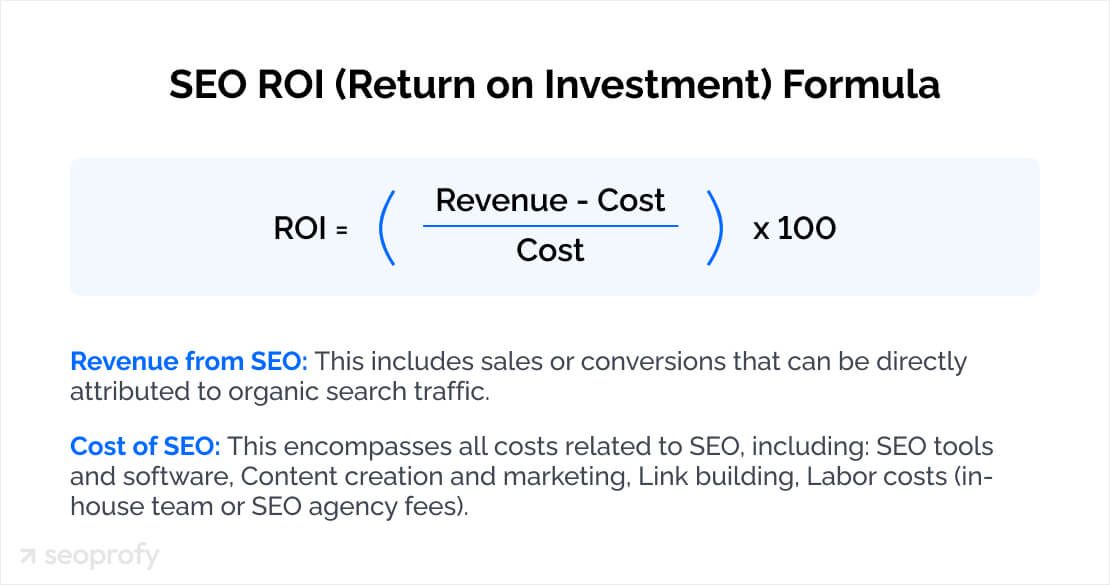
We also have a more in-depth guide on how to measure the ROI of SEO, where you can find a detailed explanation of what to pay attention to when calculating the SEO ROI metrics.
Final Thoughts
Search functions have experienced a transformation, together with the changing methods businesses use to evaluate their return. The evaluation of SEO performance in 2026 will depend on more than website rankings and visitor statistics. The evaluation will determine SEO effectiveness through its capacity to increase revenue while decreasing customer acquisition expenses.
The actual meaning of this situation is:
- AI technology creates new paths for people to see information. The battle for first place now requires brands to establish their presence in AI-generated content and to be recognized as credible sources. The two elements of authority and credibility will determine the financial result of their investment.
- Businesses will prioritize their revenue streams above all incoming website visitors. Organizations will analyze their organic search performance based on its impact on creating sales leads, making successful sales, and generating revenue from existing customers.
- Business operations become more effective when they achieve better results. AI tools for research and content generation create cost savings, which enable businesses to achieve better financial results from their search engine optimization spending.
At the end of the day, SEO is worth it because it builds a sustainable growth engine. It takes time and strategy — but when measured properly, it becomes one of the most reliable long-term drivers of revenue.

Julia Lubianytska is a Copywriting Team Lead at SeoProfy with over 7 years of experience in copywriting and editing. She works closely with copywriting teams, helping writers craft clear and thoughtful content for SaaS products, IT services, and businesses in the legal and medical fields. Julia enjoys turning complex topics into easy-to-understand, trustworthy content, focusing on structure, clarity, and consistency to ensure the content is genuinely helpful for real people, not just search engines.