
Local SEO for eCommerce is a set of strategies to improve your site’s visibility in local search results, driving more customers. As a rule, this process is based on Google Business Profile (GBP) optimization, local keyword use, link building, the creation of geo-targeted content, and a comprehensive work with customer reviews.


Moreover, the optimization requires a personalized approach to promoting a particular eCommerce business, as it must consider the specificities of its audience and region. Our ultimate guide will help you explore the most efficient strategies, so you can understand how they work and how to implement them in your individual case.
- Local SEO improves your rankings in a certain region.
- People are 70% more likely to visit a store with a completed GBP.
- 36% of prospective buyers read reviews to guide their purchase decisions.
How Local SEO Works for eCommerce
Local search engine optimization helps search engines understand when an online business is the best match for customers in a specific area. In the context of local SEO for eCommerce, the goal is to clearly signal to Google who your online store serves, where your customers are located, and why your brand should appear in regional or “near me” search results.
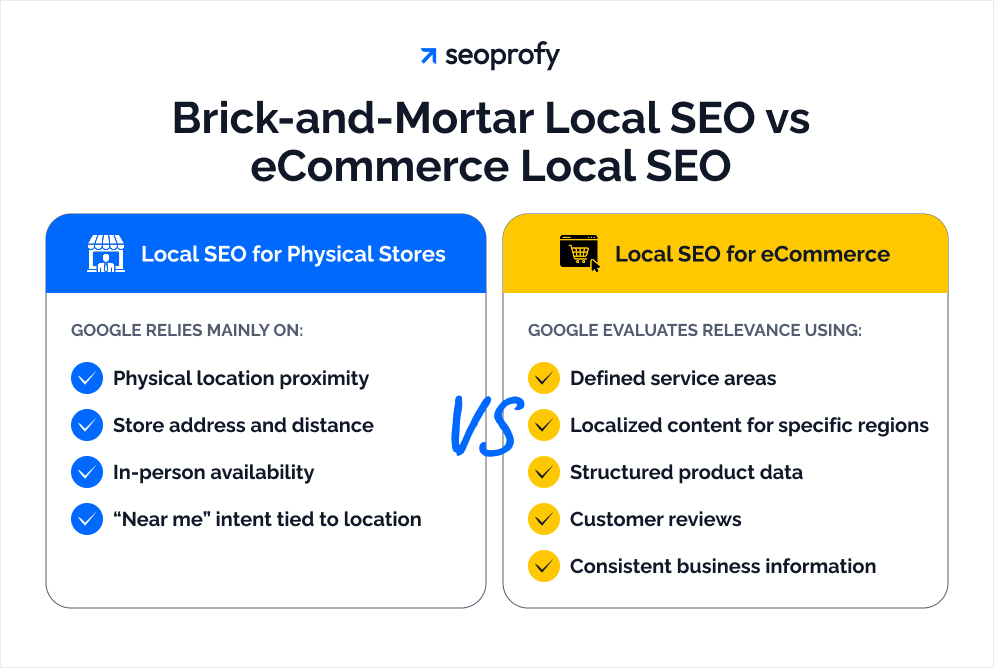
When ranking results, Google evaluates intent: it determines whether a user is looking for a product available near their location and which businesses can fulfill that need. With brick-and-mortar stores, this intent is often tied directly to physical proximity.
For online stores, however, local SEO works differently. Because you may not operate a traditional storefront, search engines rely more heavily on service areas, localized content, structured product data, customer reviews, and consistent business information to assess your relevance to a region. By strengthening these signals, local SEO helps eCommerce websites appear not only in organic results but also in Google’s local packs and Maps.
Why Do You Need Local SEO for eCommerce Sites?
Reaching the top positions in search results in the specific area will help your company in numerous ways. Here, we’ve listed the benefits of local SEO for eCommerce businesses, you’ll reap after optimizing your web pages and content:
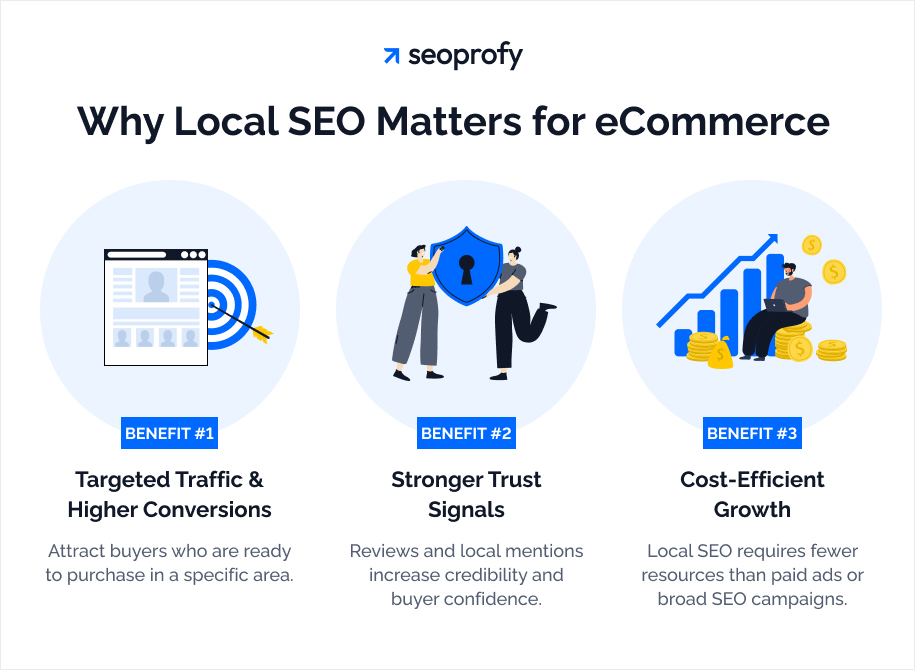
- Targeted traffic and boosted conversions: Implementing best local SEO practices can help you attract qualified leads and reach clients eager to make purchases.
- Enhanced trust: Positive customer reviews and mentions in local directories make your business more credible to prospective buyers.
- Cost-efficiency: Unlike paid ads or broad-based SEO techniques, local search engine optimization often requires fewer resources.
Nevertheless, even the simplest SEO techniques require hands-on experience and relevant knowledge. Otherwise, you risk making many mistakes that lead to inefficient resource management. Thus, we strongly recommend hiring a professional SEO company if you aren’t sure you can handle your local digital marketing campaign on your own.
How To Do Local SEO for eCommerce Websites
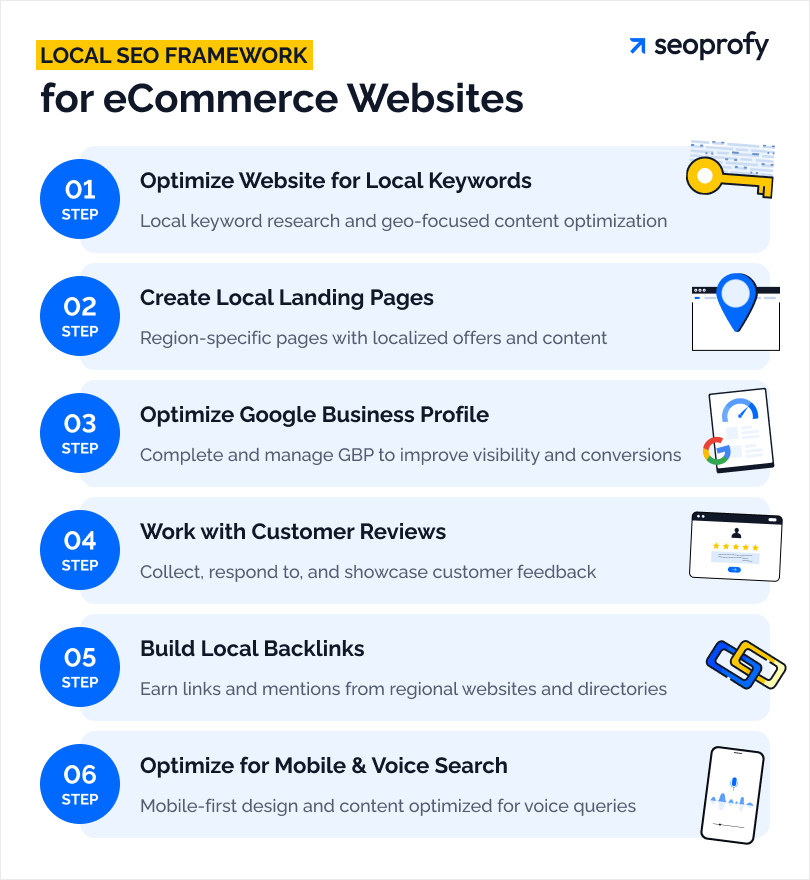
Our eCommerce local SEO guide includes the most efficient solutions for both brick-and-mortar and online-only businesses. After implementing these techniques, you’ll only need to keep an eye on your website performance and GBP to keep them ranking high in local search results.
Optimize Website for Local Keywords
You must use niche-related search terms in your content so that search engines can understand the context of your web pages and show them to interested users. However, when it comes to ranking high in local search results, you should also identify local keywords and add them to the blog posts and product descriptions. Usually, SEO for e Commerce focuses on terms specific to a particular region, combined with words related to your industry.
The smartest way to perform local keyword research is to use specialized tools, such as Google Keyword Planner, Ahrefs, KeywordsFX, or Semrush. The capabilities of the mentioned software can help you research geo-targeted terms (e.g., “best shoe shop Atlanta”).
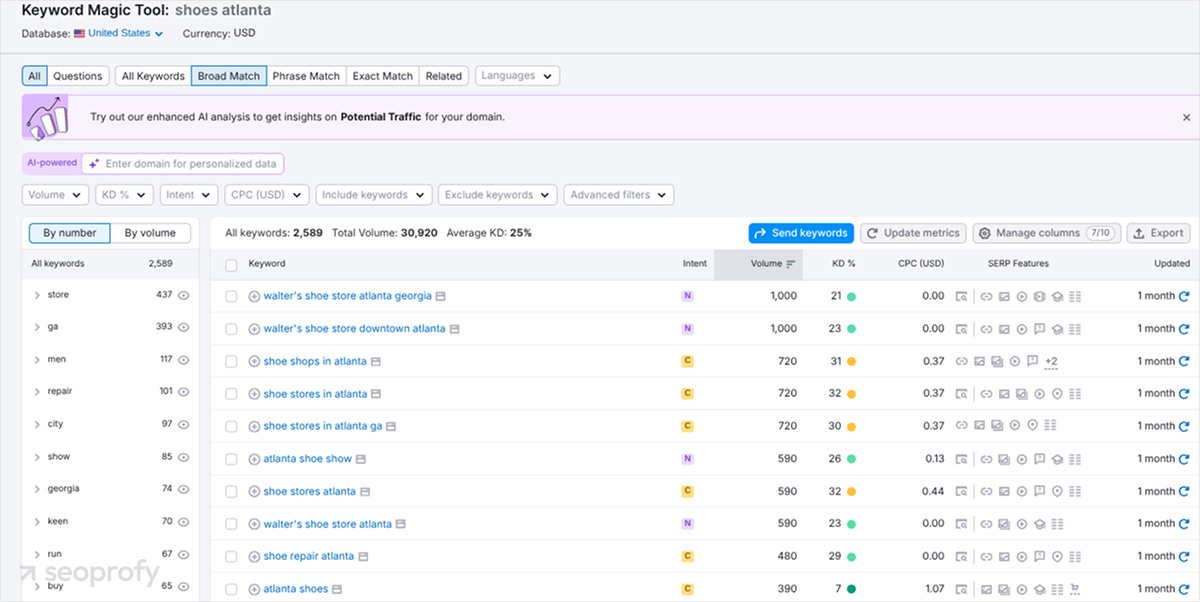
Take the received data to prepare a list of keywords for further use in your content strategy. Naturally incorporate them on your product pages, blog posts, and metadata. This is one of the most effective local SEO strategies to make your web pages more relevant to your target audience.
Create Local Landing Pages
Creating region-specific pages is an effective way to attract customers from a particular area. At the same time, crafting landings for each place where your business operates must follow several requirements:
- Aside from geo-related keywords, include region-specific offers and testimonials from locals.
- Provide localized details, such as content specific to a particular region, profiles of your local team members, and descriptions of your shops in each neighborhood.
- Add information on different delivery services, including the options popular in the target area.
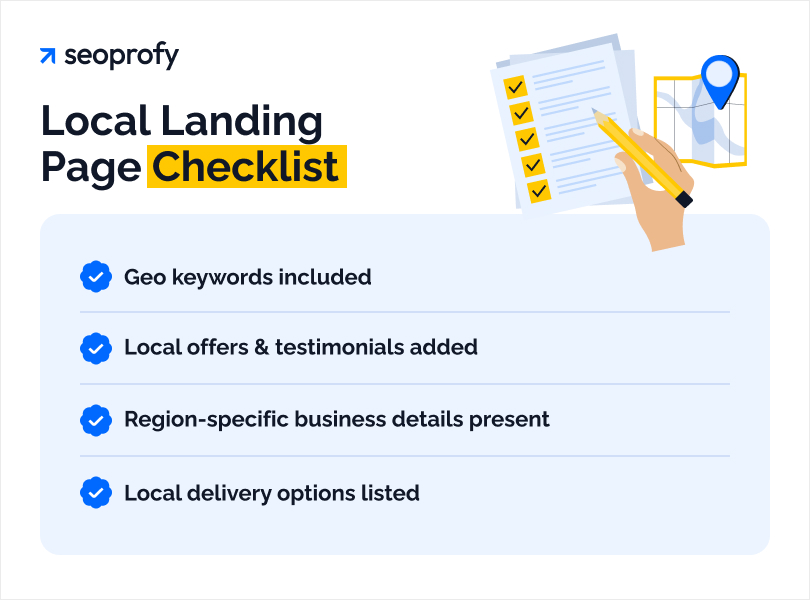
Whether you need to implement a local SEO for a small business or for a chain of regional stores, it’s a good idea to create a separate page for each city. Thus, you’ll improve your visibility, attract more local customers, and increase the brand’s awareness in those regions.
Optimize Google Business Profile
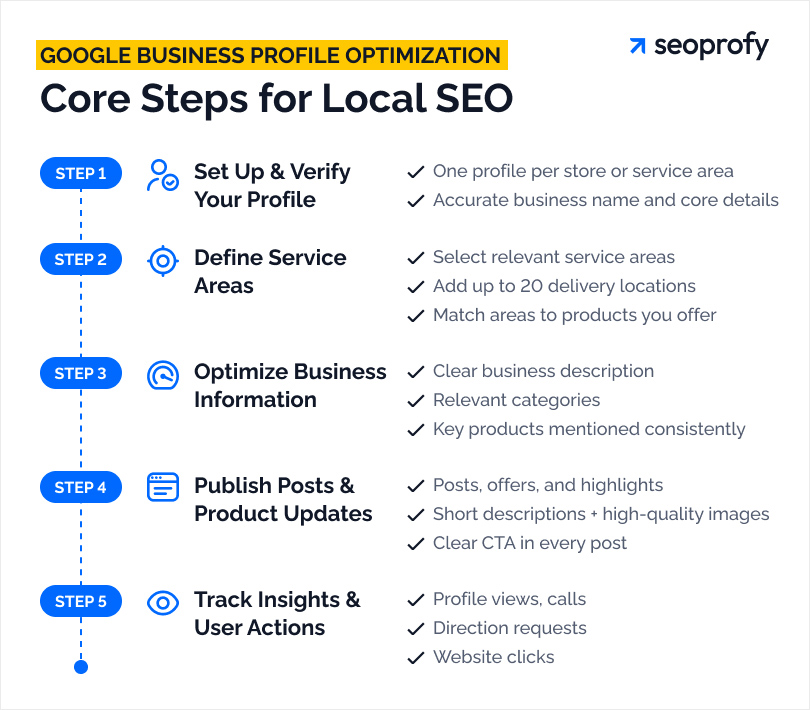
When working on the improvement of local SEO for eCommerce business, consider the optimization of your GBP. It’s among the core factors algorithms consider when ranking your site.
Further, GBP has a direct influence not only on your local search rankings but also on conversions. According to Google, people are 70% more likely to visit your store if it has a completed profile.
Even if your business operates only online, it can benefit from Google Business Profile. It’ll help you create a virtual service area, connecting you with the customers from the target region. It’s another chance to provide prospective clients with the information about your business, share photos, and collect valuable reviews. As a rule, GBP optimization involves several steps, each of which is described in detail below.
Setting Up and Optimizing
You should create a GBP for each shop or, if you already have them, you should ensure they provide up-to-date information about your business name and other crucial details. Here are the factors to primarily pay attention to:
- Select relevant service areas: Set service areas that align with your products to ensure your GBP is shown to the right audience.
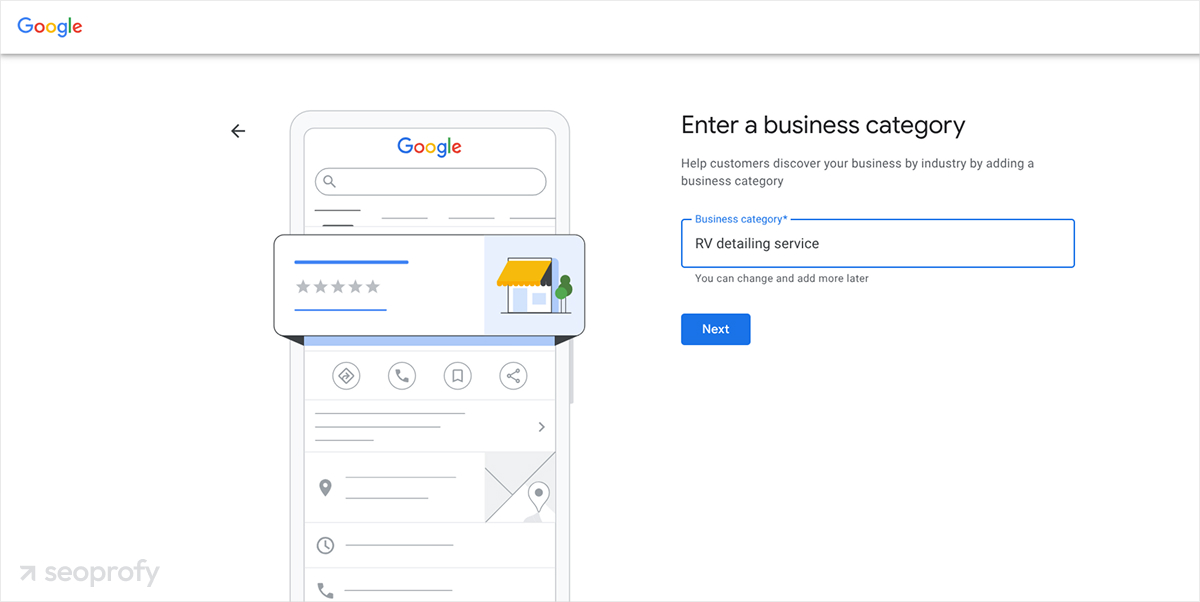
- Add or update business descriptions and categories: Provide clear, detailed information about your shop in every available field. Remember to stay consistent in how you describe your business across all platforms.
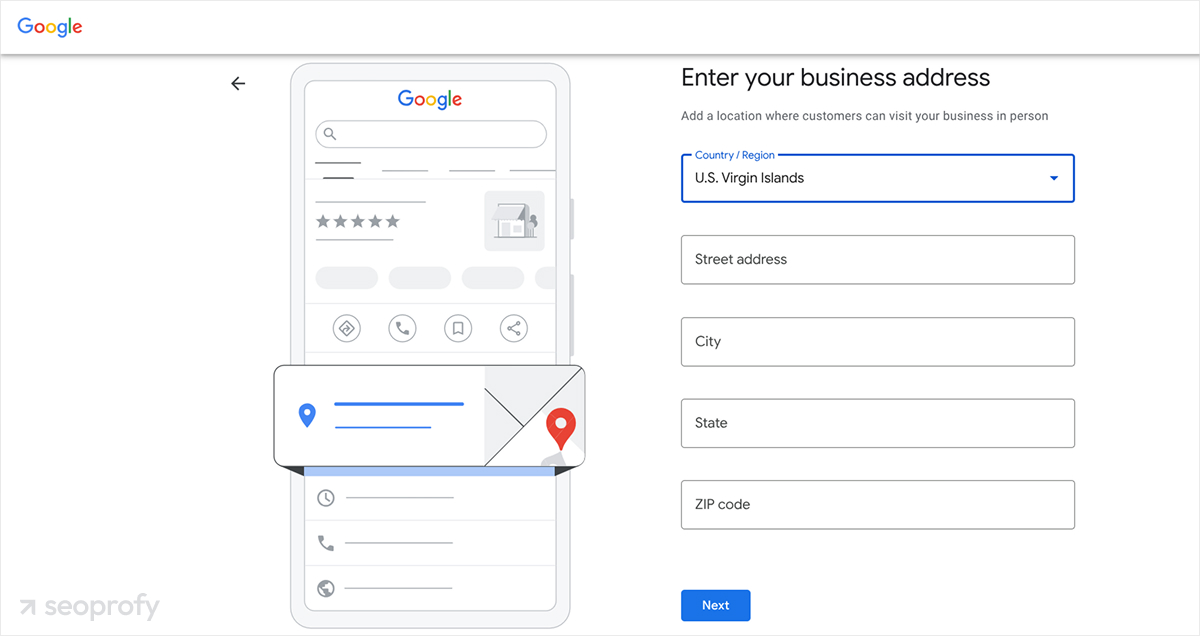
- Mention your key products: The more accurately you define what you offer, the stronger the chance that Google will match your profile to relevant local searches.
Adding Service Areas for Delivery
Whether you run an online retail or local store, you’ll need to provide information about your business address. Also, don’t forget to add service locations by taking these simple steps:
- Go to your GBP and select “Edit”.
- Open the Location tab and click “Edit” near the “Service area”.
- Choose one of the suggested service areas or enter new ones.
- Click “Save”. Consider that you can add up to 20 service areas to one GBP.
Publishing Posts, Offers, and Product Highlights
Local businesses can interact with their customers through the “Posts” section on Google Business Profile. Select the type of content you want to create, add details, and click “Publish”. And here we have several rules to make your publications more attractive:
- Keep descriptions concise and engaging
- Upload only high-resolution images
- Always add CTA to encourage further interaction with your brand
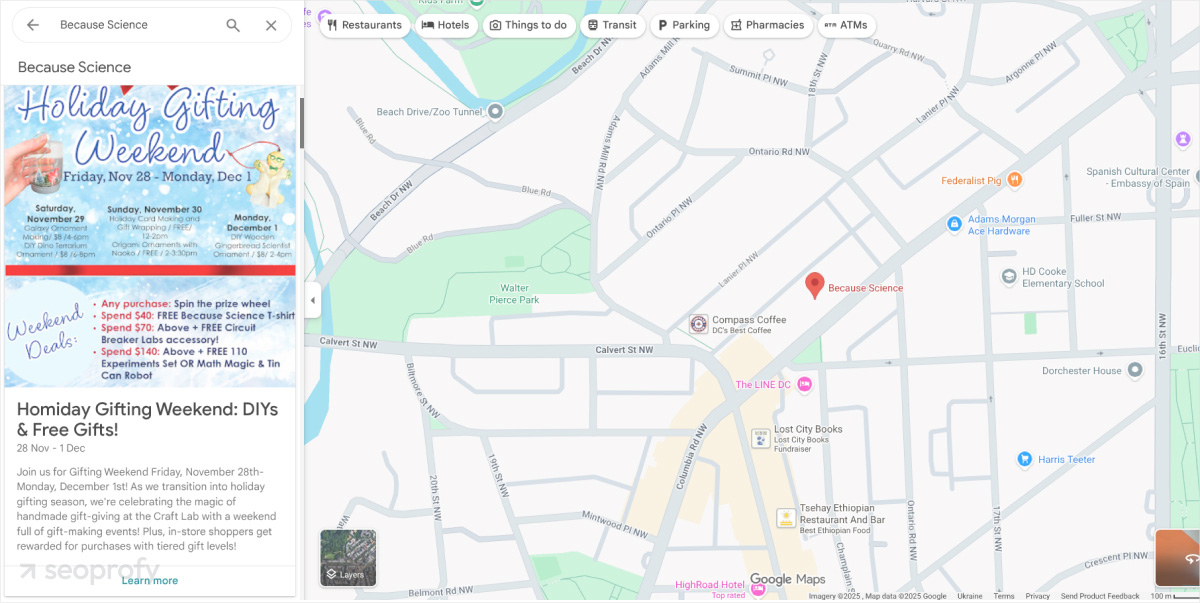
These publications offer an ideal way to engage your audience. For instance, check how Because Science uses them to announce sales in Washington:
Tracking Insights and User Actions
Google Business Profile may become an additional source of information about your clients and their behavior. Using it, you can download reports to overview valuable metrics, such as:
- Profile views
- Calls
- Direction requests
- Website clicks
Work with Customer Reviews
Proper review management is essential for eCommerce local SEO, as your customer feedback provides social proof to algorithms. Additionally, Google also considers review volume, business rating, and your responses when deciding whether to rank you in local search.
Reviews are also crucial to your prospective customers, as 36% read them to guide their purchase decisions. Moreover, many people often treat others’ feedback as personal recommendations.
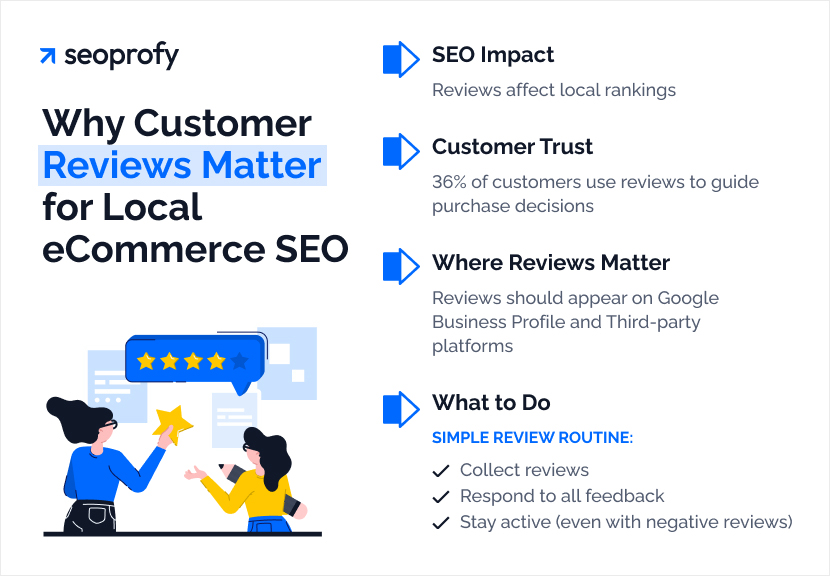
Considering this, it’s essential to properly collect, respond to, and showcase reviews not only on your GBP but also on third-party platforms. Ask for your clients’ feedback using multiple methods, including surveys, site widgets, and requests to leave reviews. Plus, don’t leave any comment without your response. Even negative reviews, or especially negative ones, should be answered properly. Thus, you’ll show both algorithms and real people, you take care of your customers, and you keep your business active.
Build Local Backlinks for eCommerce
Earning backlinks from popular regional websites can improve your rankings, boost your website’s credibility, and drive more clients to your store. You can gain these valuable links through sponsoring local events, participating in interviews, and partnering with other businesses in your region. Additionally, you should understand the difference between the two terms:
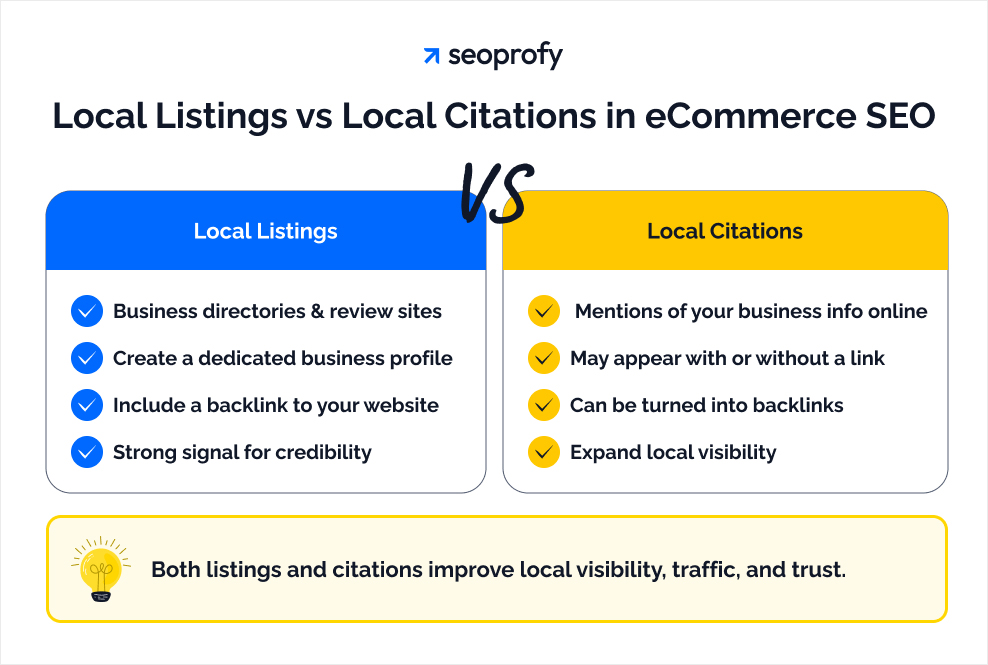
- Local listings: These are the mentions of your shop’s information on business directories and review sites. These platforms create a special profile for the shop with a link leading to its official website.
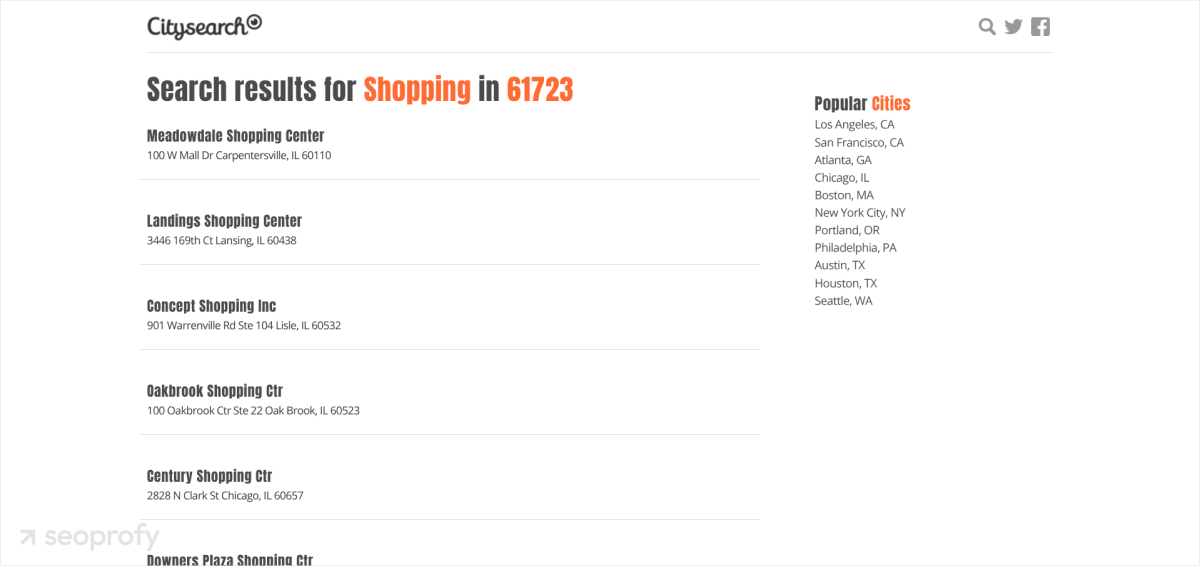
- Local citations: This is also an online mention of your business’s information, but it may appear as a local listing or a simple reference without a link to your site. It’s always a good idea to contact the author of the content and ask them to provide a backlink.

When working on local SEO for eCommerce, focus on both business listings and citations, as they positively impact your online visibility, organic local traffic, and credibility.
Optimize for Mobile and Voice Search
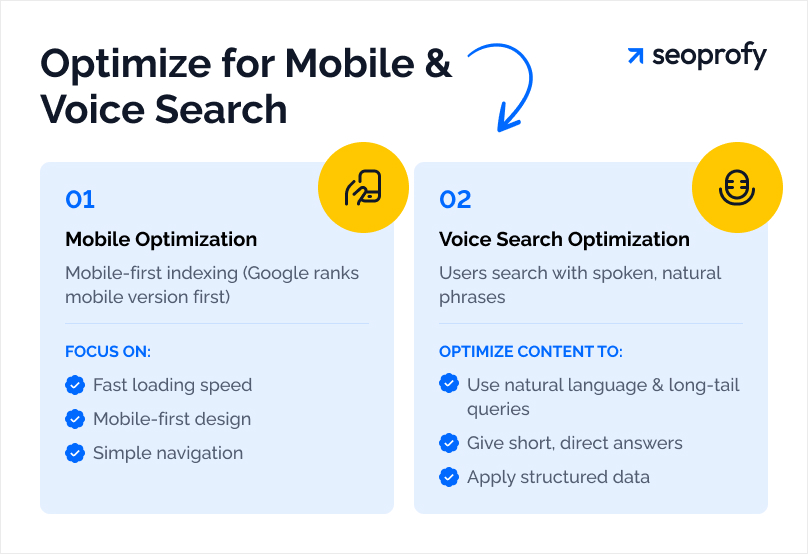
Mobile optimization is among the most effective SEO services for boosting your business. Since July 2024, Google has implemented mobile-first indexing, which means its algorithms primarily consider the mobile version of a site for ranking.
Additionally, nearly 84% of local searches come from mobile devices. And if you don’t want your prospective clients to leave, your eCommerce local SEO efforts should also focus on mobile-first design, fast site speed, and straightforward navigation.
Plus, ensure that your content is optimized for voice queries. Nowadays, many people use mobile assistants to find information (e.g., “find a nearby shoe shop”). So, if you want your pages to appear in a voice search, you should:
- Use of natural language and long-tail keywords.
- Provide direct and concise answers to the questions.
- Maintain structured data on your product pages and blog posts.
Reach the top with custom local SEO for eCommerce solutions! With our unique strategies and in-house software, you’ll swiftly achieve your business goals:
- Higher positions on Google Maps and local search
- More conversions
- Increased sales

Measure and Track Your Local SEO Results
Local SEO for eCommerce requires regular monitoring; also, each project needs an individual approach. Only by tracking your progress can you identify what works and what requires improvement. Although there are many metrics to monitor, the most important of them are:
- GBP actions
- Local pack rankings
- Customer reviews
- Citations and backlinks
- Conversions
You can use free tracking tools, including the Google Business Profile dashboard and Google Search Console. Further, to dive deeper into the analysis of your local SEO strategy’s efficiency, you’ll need advanced software such as Ahrefs and Semrush.
Consider that your competitors also have access to these platforms, so if you want to get a real advantage, you need custom monitoring tools. Luckily, our local SEO company offers advanced proprietary software to our clients. Using its capabilities, we’ll ensure the success of your digital marketing campaign and the swift achievement of your business goals.
Final Thoughts: Winning Local Searches as an eCommerce Brand
Gaining local search traffic is challenging, and even professionals may need over six months to achieve their first measurable results. Optimizing a website, adjusting GBP, and improving the backlink profile are among the most challenging SEO tasks. Moreover, without proper knowledge, you may make many mistakes that will cost you time, money, or even your reputation.
However, with the help of our local SEO for eCommerce solutions, you can be sure that your online shop goes the right way to the top of the search results. Our team will develop a custom strategy tailored to your specific industry, region, and target audience. Afterwards, we’ll skyrocket your conversions and local visibility.

Andrew Shum is the Head of SEO at SeoProfy with 10+ years of experience in SEO and digital marketing. He has been part of the company for over 6 years and has led the SEO department for the past 3.5 years, managing a team of 15+ specialists. He works with competitive and international multi-language projects across eCommerce, SaaS, and enterprise niches, focusing on practical SEO strategies that deliver measurable results.