

On-page SEO refers to improving content, internal structure, and on-page technical elements so that pages are understandable, useful, and accessible to both users and search engines. Off-site SEO operates beyond your website, earning trust through links, brand visibility, and third-party signals. One builds the base, the other proves credibility, and both are needed for a complete SEO strategy.


This article dwells on how on-page SEO and off-page SEO interact in practice, not just in theory. It shows what should be built inside a site before external signals matter, what off-page efforts can and cannot fix, and how both are used together to support a website that attracts users and converts demand.
- On-page SEO focuses on making your site relevant, off-site SEO builds trust outside it, and technical SEO makes both possible.
- On-page and technical work should come first; otherwise, off-page signals have nothing solid to support.
- Strong content + clean structure + credible links/mentions outperform stuffing, spam links, and other “cheap” tactics. They’re also more likely to be surfaced or cited in AI/LLM, too.
What Are Key Differences Between On-site SEO and Off-site SEO?
Search engine optimization is built on three core pillars: on-page SEO, off-page SEO, and technical SEO. Each one operates on a different layer of a website and solves a different type of problem. They are not interchangeable, and they do not deliver value in the same way.
On-page SEO and off-page SEO are often grouped together, but they do very different jobs. On-site SEO controls how a page communicates its topic, intent, and usefulness. Off-site SEO influences how strongly that page competes against similar pages through external validation signals.
| SEO Pillar | Primary Role | What It Covers |
| On-Page SEO | Defines relevance and usability | Content quality, keyword usage, page structure, headings, internal linking, URL structure, image optimization, and UX signals |
| Off-site SEO | Builds authority and trust | Backlinks, brand mentions, digital PR, citations, social signals, and third-party references |
| Technical SEO | Enables performance and access | Crawlability, indexation, site speed, Core Web Vitals, mobile optimization, site architecture, redirects, canonicalization, and structured data |
What Is On-page SEO?
On-page SEO is the process of structuring individual pages so search engines can correctly interpret what they are about and users can easily use them. This requires clear signals inside the page itself, including:
- Consistent topic focus and structure
- Content that answers real queries
- Internal links that explain page relationships
- Performance and layout that support usability
How to Do On-page SEO
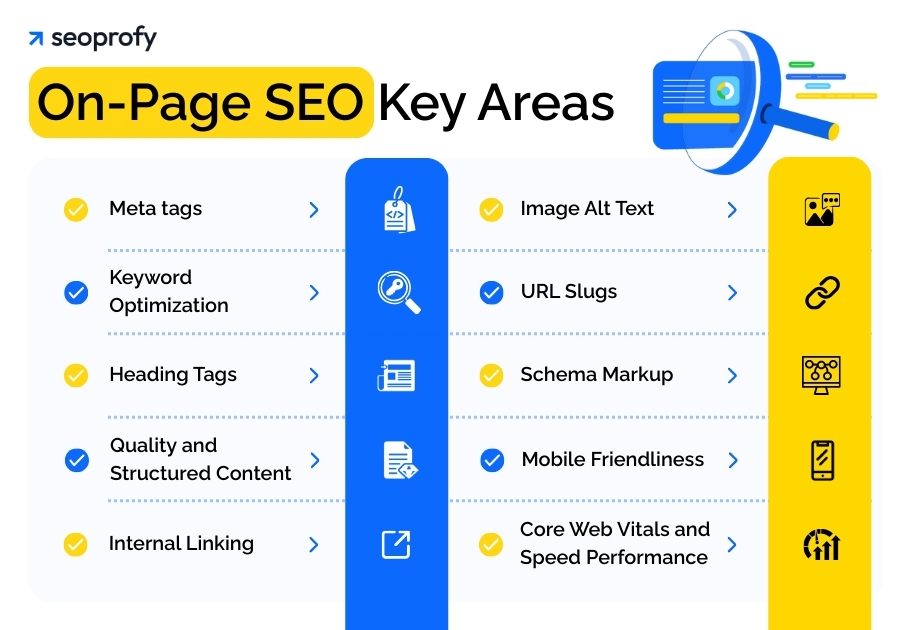
When we compare on-page SEO vs. off-page SEO, it becomes clear that the former focuses on optimizing the pages you control directly. The next question is how to approach this in practice. Below, we break down the key areas step by step.
Meta tags
Meta tags are short pieces of information that describe a web page to search engines. They help algorithms understand what the page is about and influence how it appears in search results.
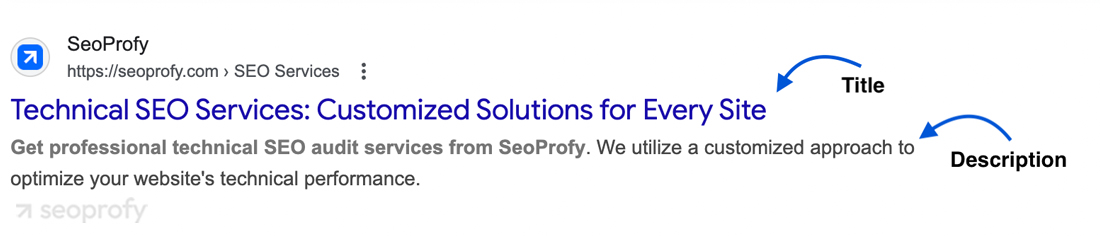
Meta tags are usually edited in a CMS, page settings, or SEO plugins, depending on how the site is built. There are only a few rules to keep in mind:
- Clearly describe what the web page is about
- Include the main keyword naturally
- Stay within recommended lengths (title tags ~50–60 characters, meta descriptions ~150–160 characters)
Google may rewrite the meta description if it finds it unclear or unhelpful. The last reliable data, published in 2020, showed that meta descriptions were rewritten in 62.78% of cases, and based on hands-on experience, that number likely hasn’t changed much since.
Meta tags may influence how often a page is selected or summarized in AI Overviews when multiple sources compete for visibility.
Keyword Optimization
Keyword optimization is the process of aligning a page with the queries and topics users search for, so search engines and LLMs understand its relevance. To do this, run in-depth keyword research using tools like Ahrefs and Semrush, along with competitor analysis, to identify which queries are realistic targets to improve search engine rankings.
After you’ve chosen the right keywords, сreate content that matches the query intent. Generally, your service pages support commercial queries and blog content targets informational searches from users earlier in the buying journey. While keyword placement strategies vary, most teams follow a few core rules:
- Use the primary keyword in the page title and support it with related terms in headings
- Distribute keywords naturally across the content
- Keep keyword density reasonable (commonly under ~3%). Keyword stuffing has been ineffective for many years, and also hurts readability and user experience
Heading Tags
Heading tags are HTML elements (H1–H6) that structure the text on a page. They show search engines and users what the main topic is and how different sections relate to each other.
- H1 is the main heading of the page. This is the primary topic you want the page to rank for. For example, if you’re in the legal niche, your main heading could be: Personal Injury Lawyer in Los Angeles.
- H2 headings split the main topic into supporting sections. For the heading above, H2s could look like: Types of Personal Injury Cases We Handle or How the Personal Injury Claims Process Works.
- H3 headings are used when you need to break an H2 section down further. For example, under Types of Personal Injury Cases We Handle, an H3 could be:
Car Accident Injury Claims.
Heading tags help search engines and AI systems understand content hierarchy and context, and how pages are interpreted in both traditional results and AI summaries.
Quality and Structured Content
To help Google understand what a page is about and to give users what they’re actually searching for, a copy needs to be both high quality and clearly structured. Such content is also more likely to be selected, summarized, or cited in an AI-driven search. We’ve already covered headings and keyword placement, but a few other points matter just as much.
First, the copy has to answer the query directly. A reader should immediately see that the page matches their intent and delivers the information, service, or explanation they came for.
Second, content should demonstrate real expertise and credibility. This is especially critical in YMYL niches, where E-E-A-T plays a central role in how pages are evaluated.
AI-generated content can still rank, especially when reviewed and edited by a human. That said, it often lacks depth and original insight, and over time, it’s likely to underperform compared to genuinely useful, well-written copy.
Finally, content needs maintenance. Core service pages should be reviewed every 6–12 months. Evergreen blogs benefit from light updates once or twice a year, while time-sensitive pages should be refreshed as soon as information changes, like this one:

Internal Linking
Internal linking is the practice of connecting pages within the same website using hyperlinks. This is one of the main ways in which search engines and AI systems discover pages and understand how they fit into the site structure. Internal references also pass authority and help stronger pages support other important pages.
Well-structured intrasite linking usually includes:
- Links between topically related pages (for example, a Running Shoes category page linking to a blog post about How to Choose Running Shoes for Long-Distance Training),
- Descriptive anchor text (“personal injury claims” instead of “click here”),
- More links pointing to priority pages (key services, core content),
- Natural placement within a copy (links that make sense in context, not forced).
Image Alt Text
Image alt text is an HTML attribute that describes the content of an image. It helps search engines understand what the image represents and improves accessibility for users who rely on screen readers. Here’s a good example:
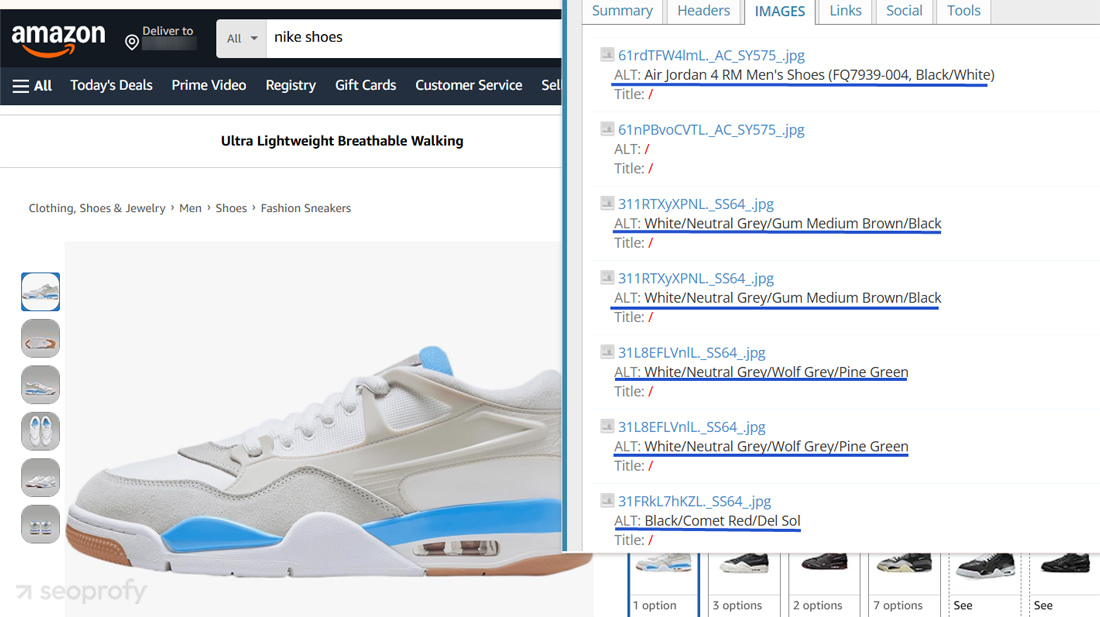
To write effective alt text:
- Describe what is actually shown in the image
- Keep it clear and concise
- Include a relevant keyword only if it fits naturally
- Avoid stuffing keywords or using generic phrases
URL Slugs
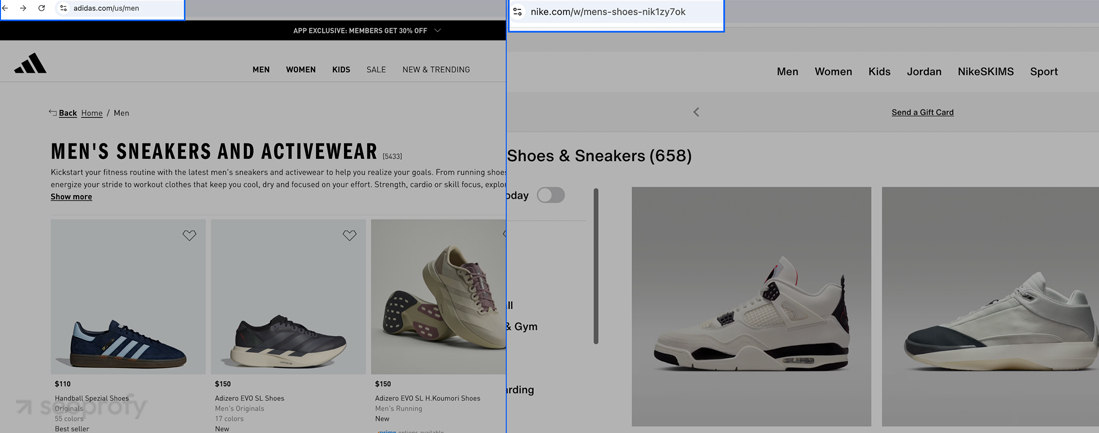
URL slugs are a part of the page’s address that define how the page is labeled in search and in the site structure. Search engines and AI systems read the slug as an additional signal to confirm page topic and relevance, especially when multiple pages cover similar themes.
| Good URL slug | Bad URL slug |
| Clear, readable words that reflect the page topic | Random or unclear string of characters |
| Includes the main keyword naturally | Keyword-heavy or stuffed with variations |
| Short and easy to scan | Long, cluttered, and hard to read |
| Consistent with the site structure | Includes dates, IDs, or unnecessary parameters |
Schema Markup
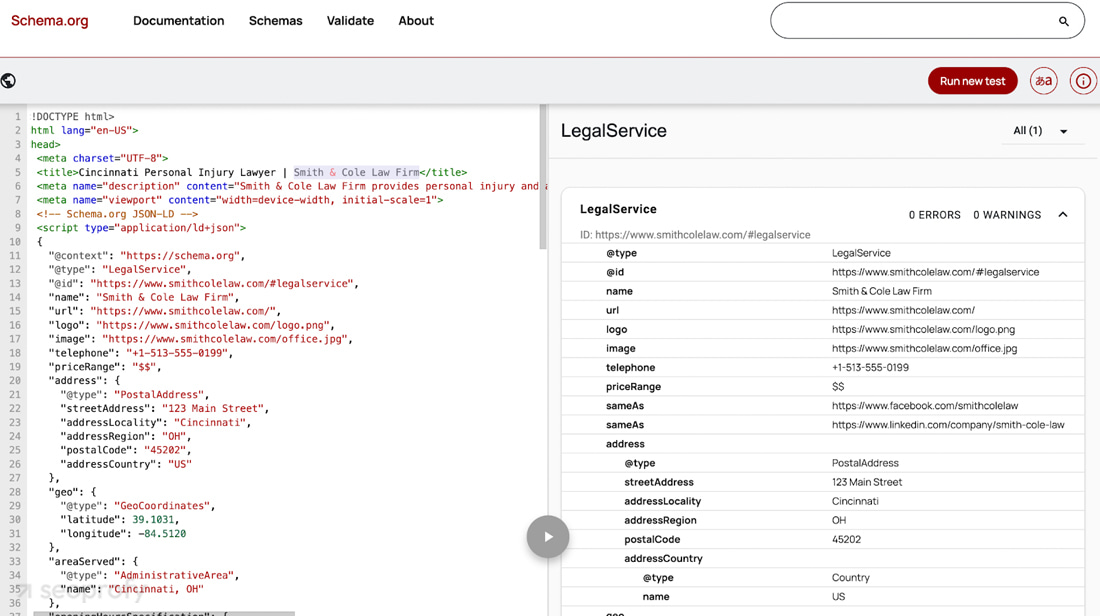
Schema markup is structured data added to a page’s HTML that explicitly tells search engines and LLMs what the content represents. Thus, search systems receive clear, machine-readable context about products, organizations, articles, FAQs, reviews, and other page elements.
You can check schema implementation using a schema markup validator. The process is simple, and results typically look like this:
- Valid schema detected
- Warnings (non-critical issues)
- Errors that prevent the schema from being read
Mobile Friendliness
Mobile friendliness matters if you want to meet real SEO goals and be visible in search. Google switched to mobile-first indexing (meaning it uses the mobile version of your site for crawling, indexing, and ranking) as the default behavior for all websites by September 2020, and this became fully enforced by July 5, 2024.
Mobile devices now account for over 62% of global web traffic. That means most people interact with your site on a phone first.
To make sure users can find you and interact comfortably, mobile optimization includes:
- Designing pages that adapt to different screen sizes
- Ensuring text and buttons are easy to read and tap
- Keeping content and functionality consistent between mobile and desktop
- Improving load times on mobile networks
Core Web Vitals and Speed Performance
Core Web Vitals are a set of user-focused performance metrics that Google uses to assess how real visitors experience your site. They measure how fast pages load, how responsive they feel, and how stable the visual layout is as it loads. They all can be checked using Google’s free Page Speed Insights tool.
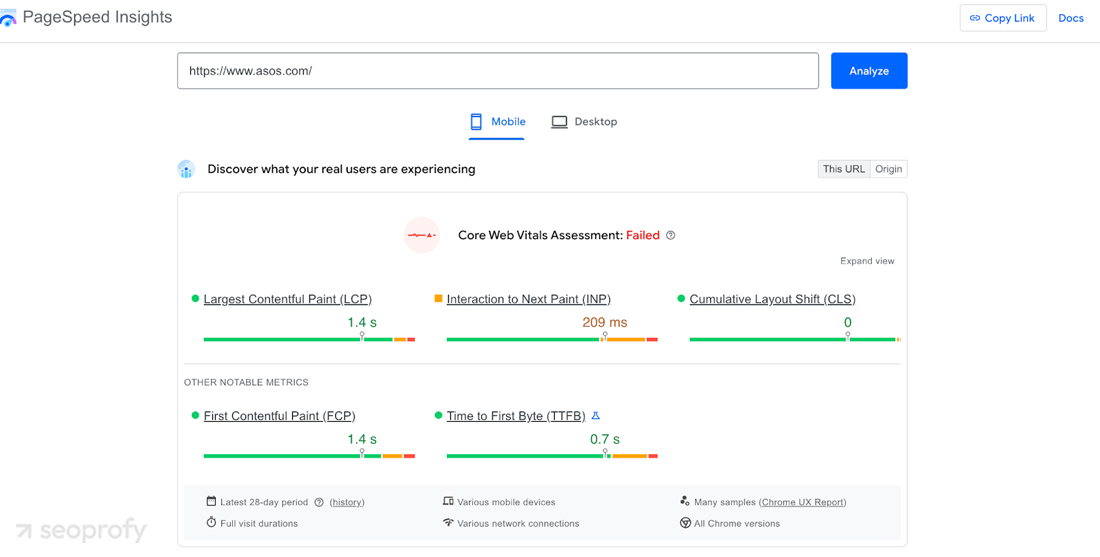
The three main Core Web Vitals are:
- Largest Contentful Paint (LCP): How quickly the main content appears. The target is 2.5s or less.
- Interaction to Next Paint (INP): How responsive the page feels to user actions. Aim for 200 ms or less.
- Cumulative Layout Shift (CLS): How much page elements jump around during load. The target is ≤ 0.1.
SeoProfy connects on-page, off-page, and technical SEO into one system. That balance creates strong ranking pages, a solid technical base, and lasting search authority.
- Pages built to rank and convert
- Technical foundation search engines rely on
- Authority that strengthens overall visibility
What Is Off-page SEO?
Off-page SEO focuses on signals that come from outside your website and indicate how authoritative it is. For Google, these signals show whether other sites trust, mention, or reference your content, helping determine credibility beyond what your pages say about themselves.
How to Do Off-page SEO?
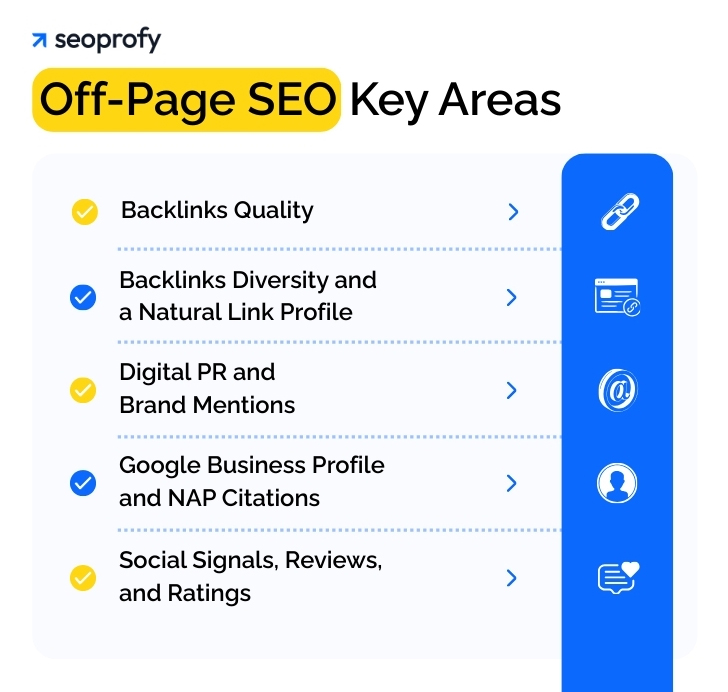
The main difference between on-page vs. off-page SEO is that the latter takes place outside your website, which makes it harder to control and influence directly. Still, a strong SEO strategy always includes practical ways to earn and manage off-page signals rather than leaving them to chance.
Backlinks Quality
Backlinks are one of the 3 strongest ranking factors and are created when other sites link to yours. They also act as external credibility signals for AI search systems.
However, what matters most is not the number of references, but their quality. One relevant link from a respected website can pass more link juice, ranking weight, and referral traffic than dozens of spammy forum or PBN links that your off-page SEO services team later has to disavow.
Because of that, it makes sense to focus on clean link building strategies, such as:
- Editorial links earned through strong content
- Digital PR and media coverage
- Industry partnerships and legitimate citations
- Guest contributions on reputable, relevant websites
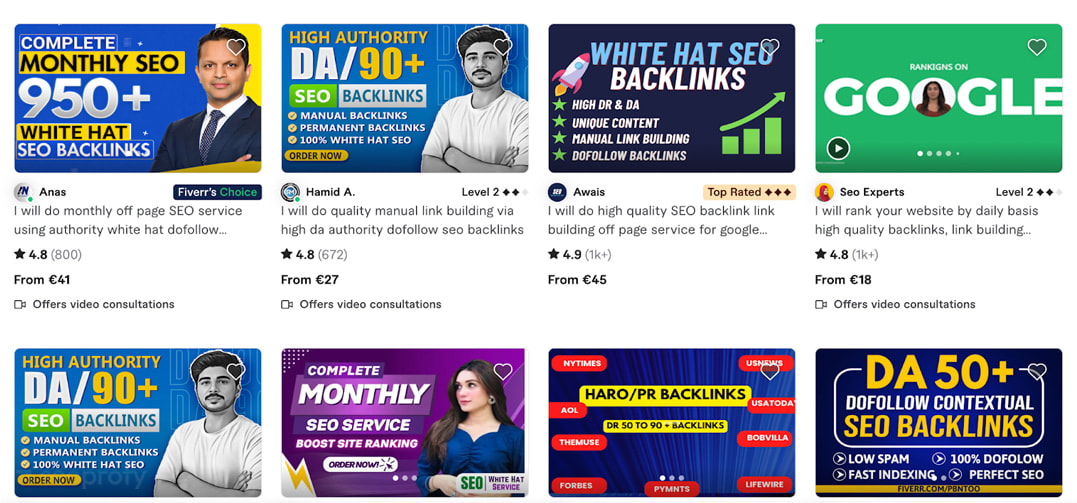
Cheap bulk links from platforms like Fiverr may look tempting price-wise, but they usually create more problems than value and cost far more to clean up later.
Backlinks Diversity and a Natural Link Profile
Backlink diversity means links come from different types of reputable websites, not the same pattern repeated over and over. For example, a natural profile includes links from blogs, media sites, niche publications, partners, directories, and forums, rather than 50 links all coming from similar guest posts or the same network.
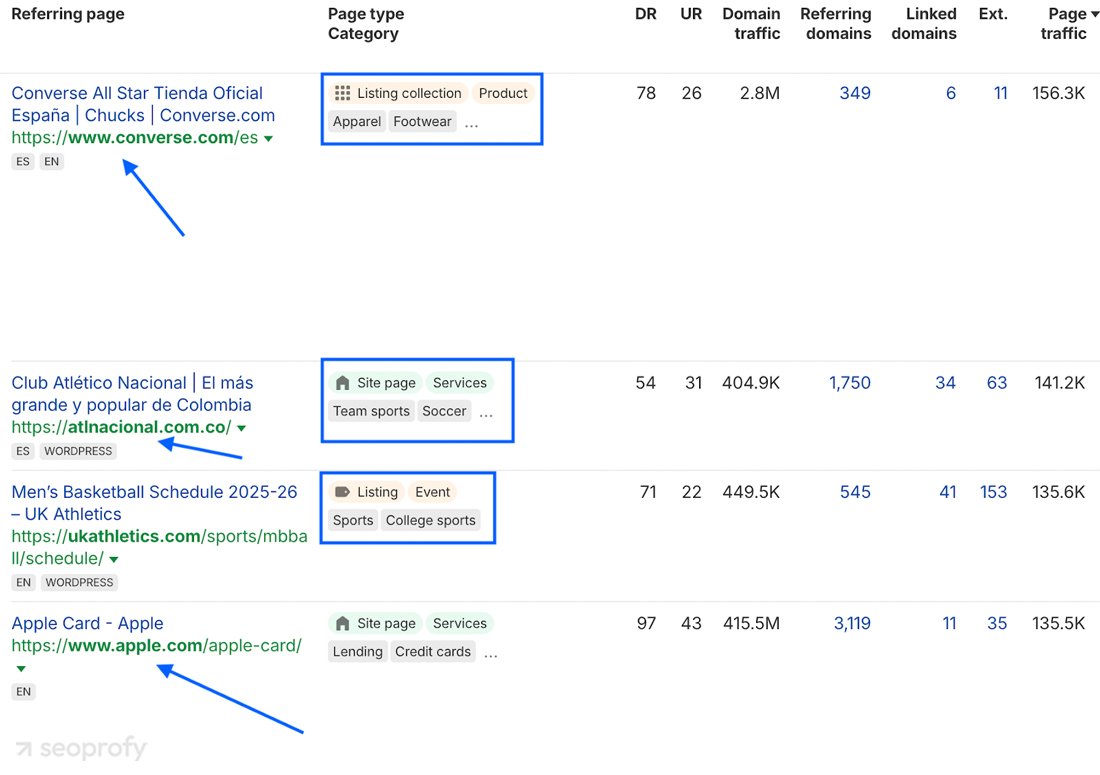
A natural link profile also looks balanced in how links appear: different domains, different anchor texts, different link types, and gradual growth over time. This variety helps Google see high-quality backlinks as earned references, not manufactured signals created to manipulate search rankings and AI overviews.
Digital PR and Brand Mentions
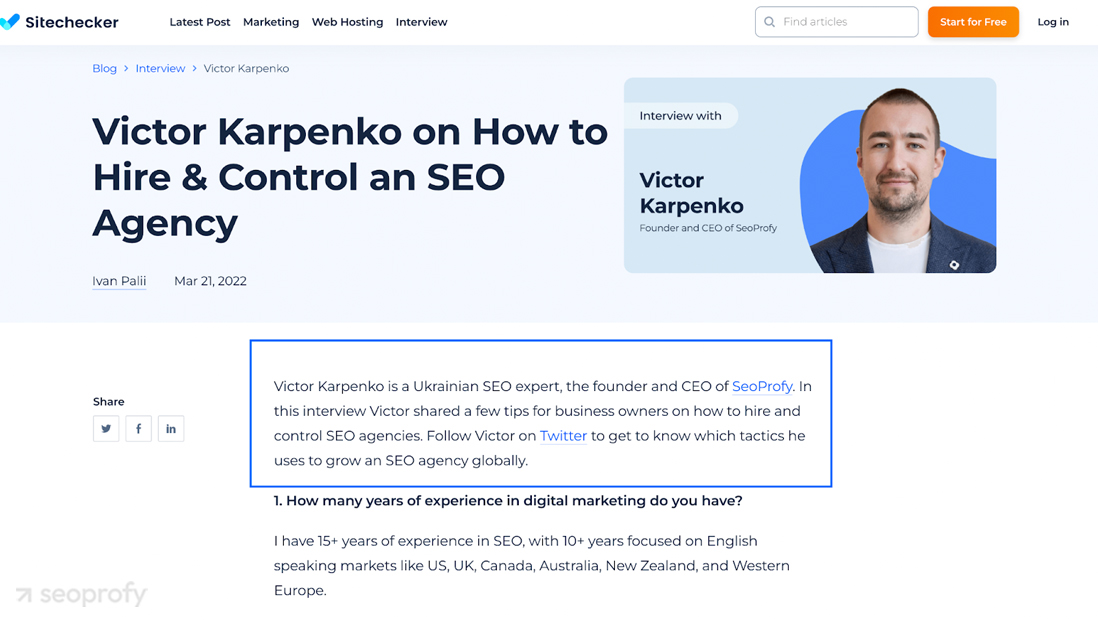
Digital PR and brand mentions focus on getting your brand referenced by credible websites, media outlets, and industry sources. These mentions help Google and LLMs understand that your brand exists beyond your own site and is recognized by third-party sources. Even when mentions don’t include links, they still contribute to brand authority and support SEO by reinforcing trust and relevance.
Common Digital PR methods include:
- Media outreach and press coverage
- Expert quotes and commentary in industry publications
- Data-driven studies and reports that others reference
- Partnerships and co-marketing mentions
Google Business Profile and NAP Citations
GBP is the main way Google understands who your business is and where it actually operates. This is the profile that connects your business name, location, categories, services, photos, reviews, and real user interactions into one clear local signal.
NAP citations work alongside it. These are mentions of your Business Name, Address, and Phone number on directories like Yelp, maps, and industry platforms.
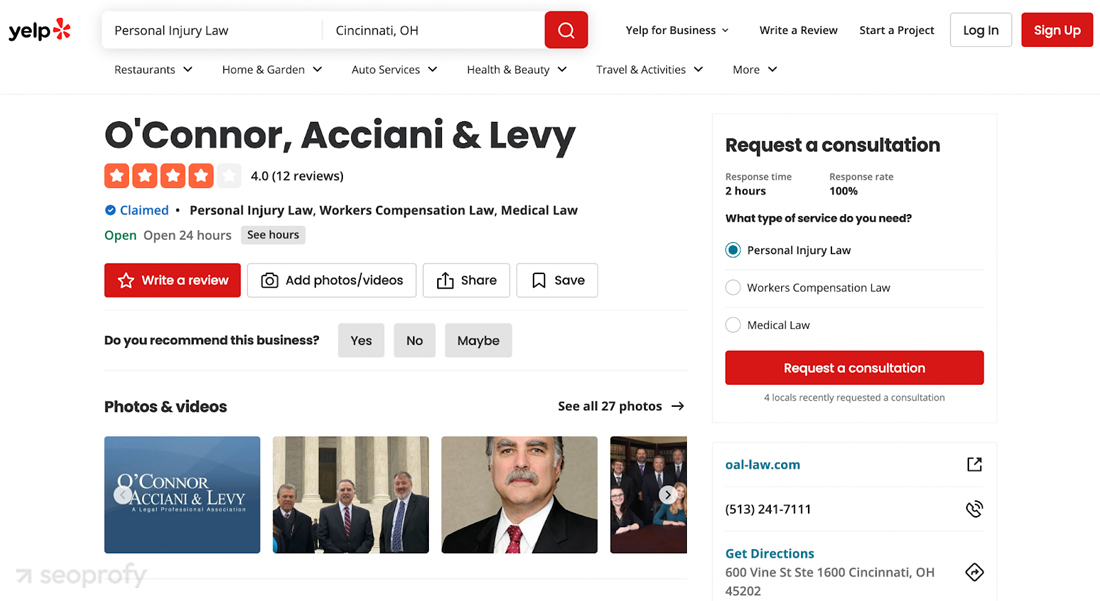
When this information consistently matches what’s listed in your Google Business Profile, it helps Google trust your business details and show it in local results and Maps when users search nearby.
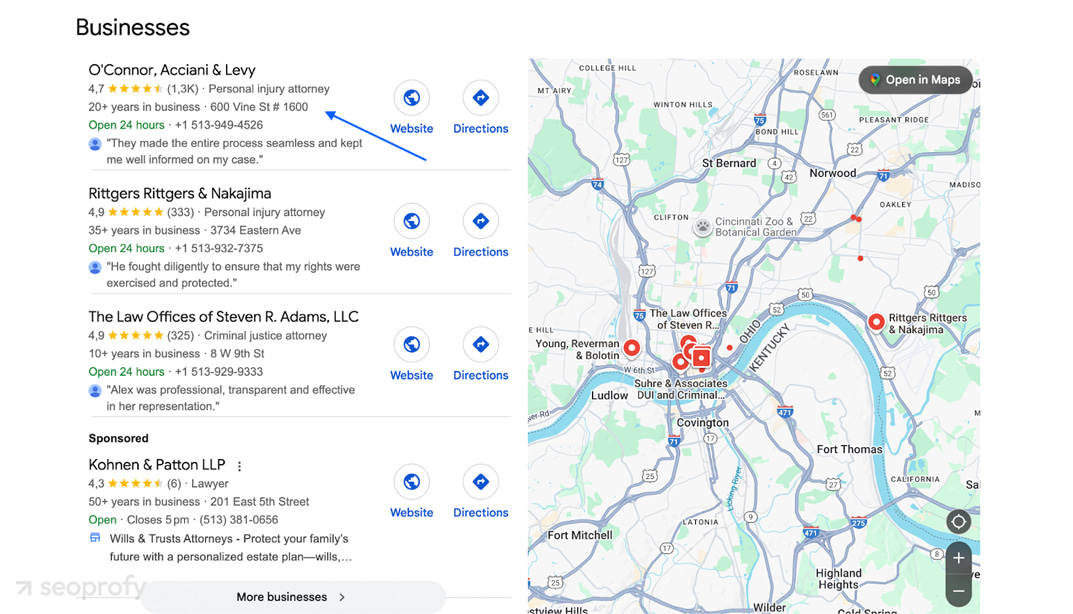
On top of that, these profiles and citations also feed into AI local search systems and help LLMs correctly identify, validate, and recommend real-world businesses in location-based queries.
Social Signals, Reviews, and Ratings
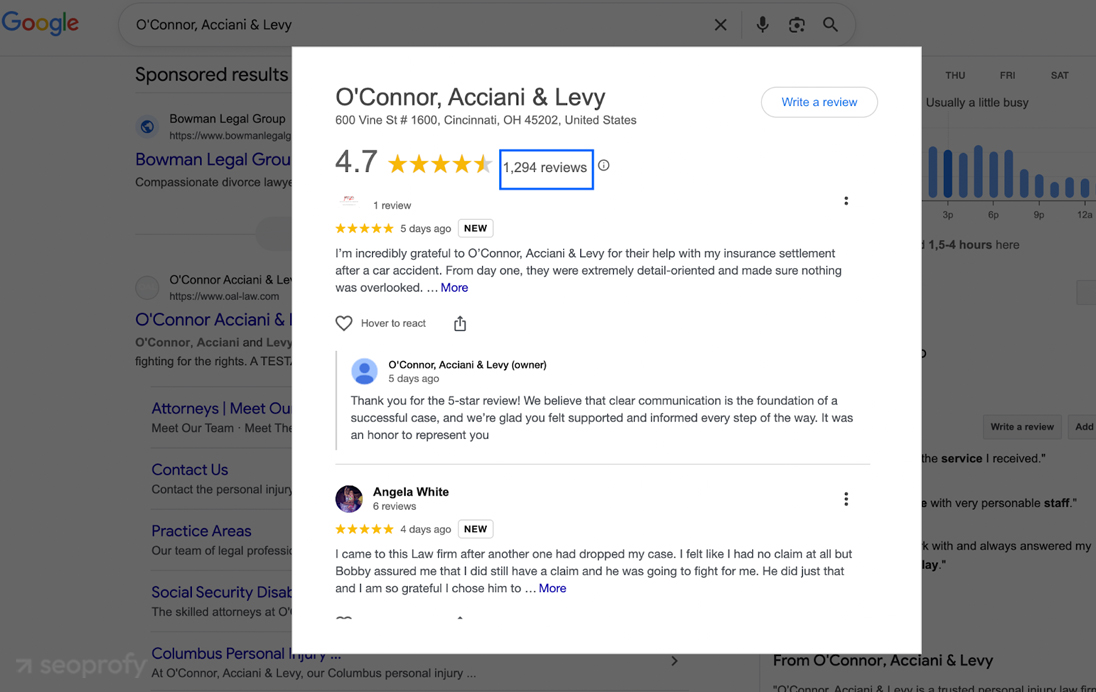
Social activity, reviews, and ratings help support visibility across long-tail searches and branded queries, which supports cost-effective SEO. Active profiles, real engagement, and fresh reviews show that users interact with your brand beyond organic search. This reinforces trust signals and helps long-tail queries surface your business where intent is already high.
Influencer collaborations can further amplify these signals. They generate branded mentions, social engagement, and secondary links from trusted creators’ audiences.
How Long Does It Take to See Results from On-page vs. Off-page SEO?
| SEO focus | When changes usually show | What affects the timeline |
| On-page SEO | 2-4 weeks | Content relevance, page structure, internal links, and keyword placement and relevance |
| Off-site SEO | First impact in 4-6 months+ | Link quality, brand mentions, PR activity, and link velocity |
| Technical SEO | Right after implementation and up to two weeks | Indexing fixes, crawlability, performance, and mobile issues |
Main Tools for On-page and Off-page SEO
SEO decisions rely on data. To collect and interpret that data, comprehensive SEO tools are required. Below are the main ones commonly used to track on-page and off-page performance.
| Tool | What it’s mainly used for |
| Google Search Console (GSC) | Indexing status, search queries, impressions, clicks, and technical issues |
| Screaming Frog | Site crawling, technical errors, metadata, and internal linking |
| Keyword Planner (Google Ads) | Keyword demand, search volume, and query patterns |
| Ahrefs | Backlinks, link quality, competitor analysis, and keyword gaps |
| Semrush | Keyword tracking, site audits, and competitor visibility |
| Surfer | Content optimization based on search engine result page (SERP) data |
| SiteChecker | Ongoing site health monitoring and alerts |
How to Do On-page and Off-page SEO in the AI Era
Website’s visibility in AI platforms and LLM answers builds on the same on-page and off-page signals discussed above, with clarity, structure, authority, and external validation determining how content is retrieved, interpreted, and cited.
From an LLM SEO perspective, on-page SEO provides the structured, unambiguous foundation, while off-site SEO reinforces credibility through independent references. Together, they shape how sites surface across both traditional search and AI-driven answer systems.
To track and adjust this visibility, teams increasingly rely on AI SEO tools that monitor entity coverage and how content surfaces across AI chatbots.
Start Getting Benefits from On-page and Off-page SEO Tactics
Whether you’re doing SEO for startups or trying to fix an existing site that isn’t delivering traffic and/or sales, the starting point is the same: clearly map what happens on the website, what happens outside it, and what needs to work technically underneath. When these layers are aligned, search engine optimization becomes predictable.
If you don’t want to handle this internally, our team provides on-page SEO services, off-site authority building, and technical optimization as one connected system. We focus on structure, clarity, and long-term visibility rather than isolated tactics. If you want to discuss your site, goals, or current setup, we’re happy to take a look and talk it through.

As a Content writer at SeoProfy, Hanna Zhytnik creates SEO content grounded in research, data, and ongoing hypothesis testing. With more than 5 years of experience across B2B, SaaS, and ecommerce, she brings both breadth of knowledge and a sharp focus on modern search. Her strength lies in turning complex experiments into clear explanations, bridging the gap between deep SEO practice and accessible content.