


Linkable assets are valuable content pieces created to potentially earn backlinks and link equity. They serve as reference points within a niche, which leads other websites to cite them in their own content.


That matters because inbound links still sit near the top of the ranking equation. Yet most pages never earn a single backlink. Not one. That’s a massive missed opportunity. So, in this guide, we’ll explain:
- The most effective formats of linkable assets (with real examples)
- How to create them, even if you’re working with limited resources
- And how to get them in front of the right people so they earn links
Let’s get into it!
- Most pages on the web never get a single link, but assets that offer original data and practical tools become a natural resource that websites are happy to reference.
- Linkable assets don’t just help with backlinks. They can improve rankings, draw in more organic traffic, and even make your brand show up more often in AI tools.
- Linkable assets work long term. As you update and keep them relevant, they continue to bring in new referring domains and traffic without starting from scratch each time.
What Are Linkable Assets?
Linkable assets are high-quality content pieces that you create to earn backlinks from other domains in your niche. Search Engine Journal defines them this way, and you’ll see similar language across established SEO sites. They give authors a reliable page to cite when they need data or a practical resource to send their audience to.
In SEO terms, a linkable asset is usually an informational page that sits toward the top or middle of the funnel. It’s built to earn referring domains and then support your key commercial pages through internal links. Because one strong asset can attract links for years, it is also one of the most cost-effective SEO tactics you can add to your plan.
So what makes a successful linkable asset? Let’s take a look at the most important factors below:
- Originality: The page brings something new to the table. That could be new research, or a study that feels more useful than what is already in the SERPs.
- Data: It includes numbers that others can quote. For example: industry benchmarks, survey results, performance data, or curated statistics. Data gives writers something concrete to reference.
- Usefulness: The asset helps people do a certain job faster. Possible formats here would be templates or worksheets that save time for the person linking to you and for their readers.
- Credibility: The source looks trustworthy. The page cites its own sources and sits on a domain that looks established in the niche.
- Design quality: The content is easy to scan and reuse. Good structure, charts, tables, and simple layouts make it more likely that someone will grab a stat and link to a section.
- Shareability: The topic is relevant beyond your own site. People can see themselves sending it to clients or linking to it from blog posts and resource pages.
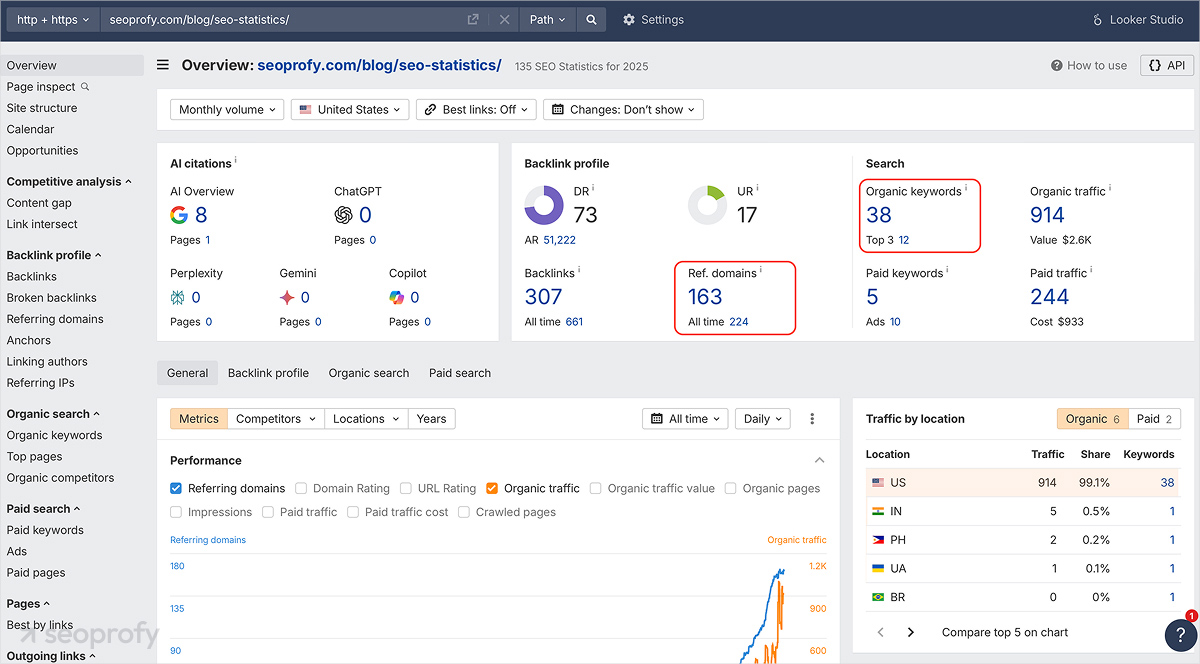
For a concrete example, take our SEO statistics page. It brings together a large set of SEO stats in one place, grouped by topic, so writers do not have to collect numbers from ten different sources.
In Ahrefs, you can see that this single URL has earned more than 307 backlinks from 163 referring domains and ranks for 38 keywords, which is exactly what you want to see from linkable assets.
But a successful linkable content like this isn’t only beneficial for your link building strategy. It also strengthens other SEO signals and helps:
- Improve search engine rankings for your key pages
- Grow organic traffic to the asset and to the pages it links to
- Increase the overall authority of your domain through internal linking
- Lower the cost per acquired link compared to promoting standard blog posts or service pages
Types of Linkable Assets (with Examples)
Below, we’ll review the types of effective linkable assets that most often earn high-quality links and show how they work in practice.
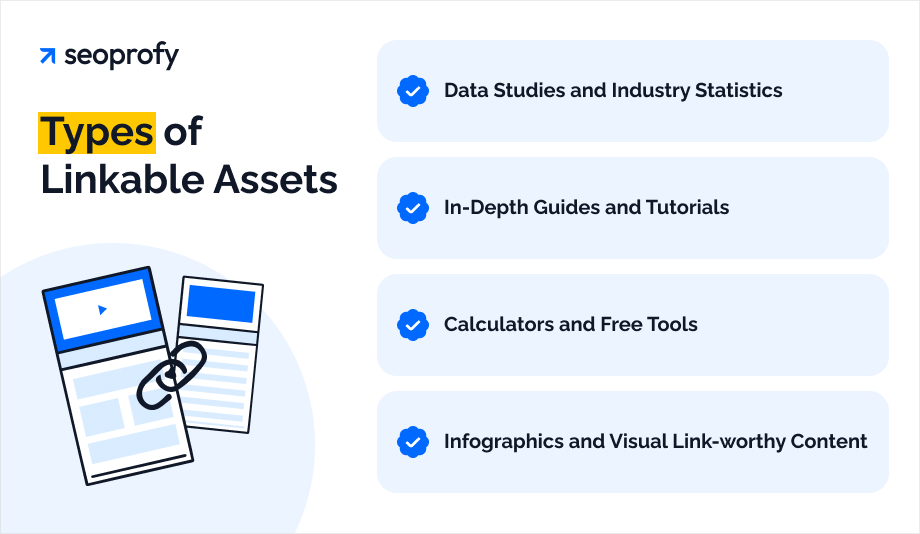
Data Studies and Industry Statistics
If there is one thing content teams love to link to, it is data. You can approach this in two ways:
- Run your own research or experiments
- Aggregate the best numbers from trusted sources into one place
Both formats can be powerful linkable assets, as long as you make the page the easiest place to find and reference those numbers.
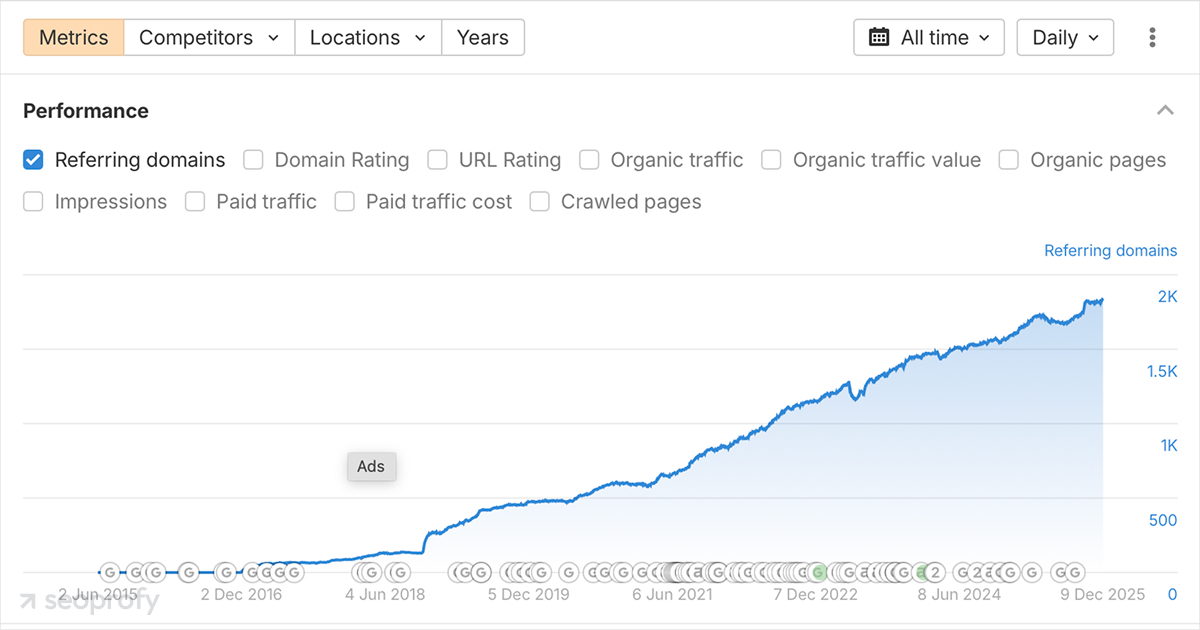
We have seen this ourselves. Earlier, we talked about our SEO statistics page and how it helped us earn new backlinks. Our team took the same idea and applied it to more specific topics, like legal marketing stats, SEO ROI stats, and so on.
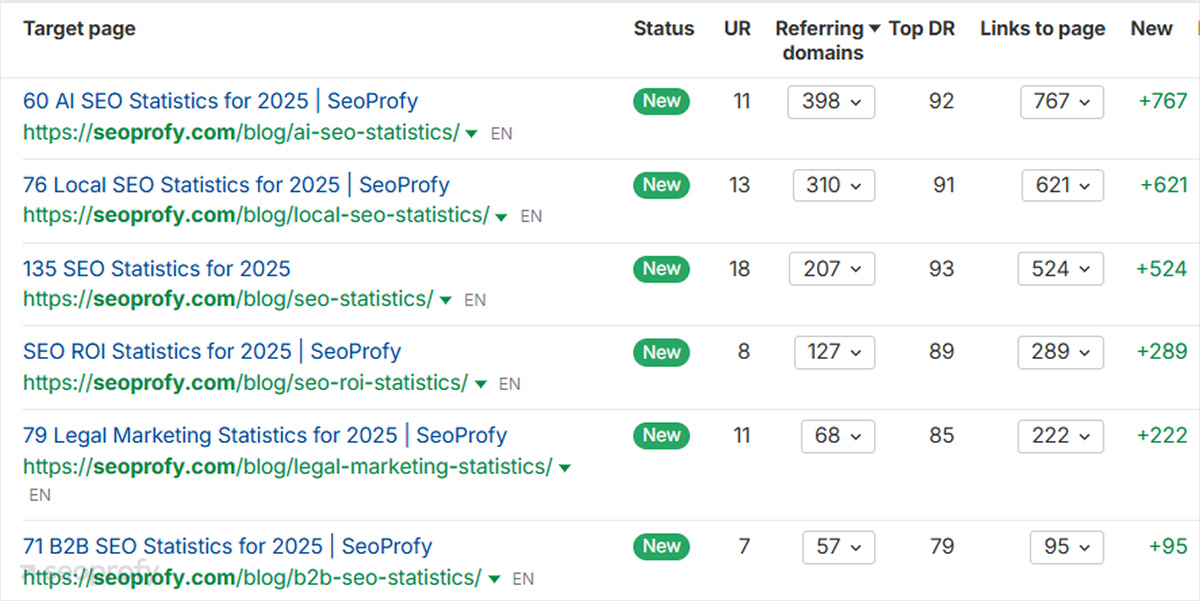
On one of such pages, we collected data on AI SEO. In the screen below, you can see how the number of referring domains grew as more people referenced that page.
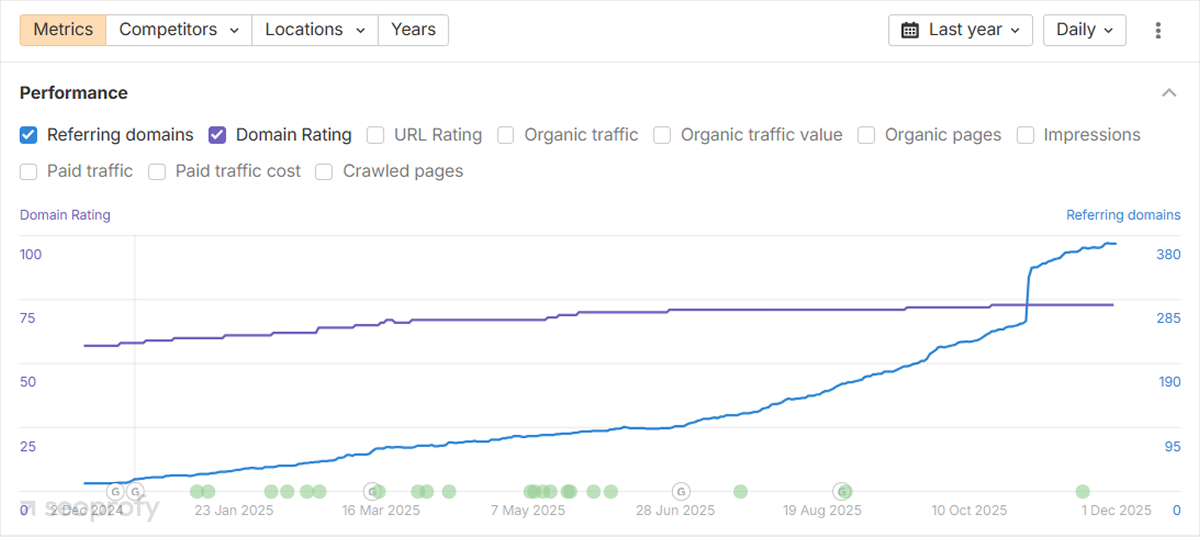
It’s a great example of how a well-built statistics page can fuel a link building campaign. Here’s what makes them so linkable:
- They give writers an easy citation for their arguments
- They save time for teams who prepare reports and presentations
- They stay useful for a long time if you keep them updated
To build linkable assets around statistics and studies, here’s a simple process that works well:
- Start with one topic that’s highly relevant to your niche
- Collect numbers from your own data, client data, surveys, or public reports
- Group related numbers into sections so people can scan quickly
You can run this process in-house with your own team, or outsource link building to specialists who do this every day.
We’ve helped dozens of brands create content that earns links and drives consistent traffic. Our SEO and backlink crew takes care of it all, so you can get:
- Fewer assets, more links — because each one is built to be link-worthy
- Authority driven by citations, not volume
- Trust earned through usefulness, not promotion

In-Depth Guides and Tutorials
Another type of content that works really well when you need to create effective linkable content assets is in-depth guides. You basically take a core topic in your niche and make it the “go-to” resource that other sites reference. These guides work well when:
- The topic has a consistent search demand
- People need step-by-step instructions or a full framework
- Existing content in the SERPs is out of date or fragmented
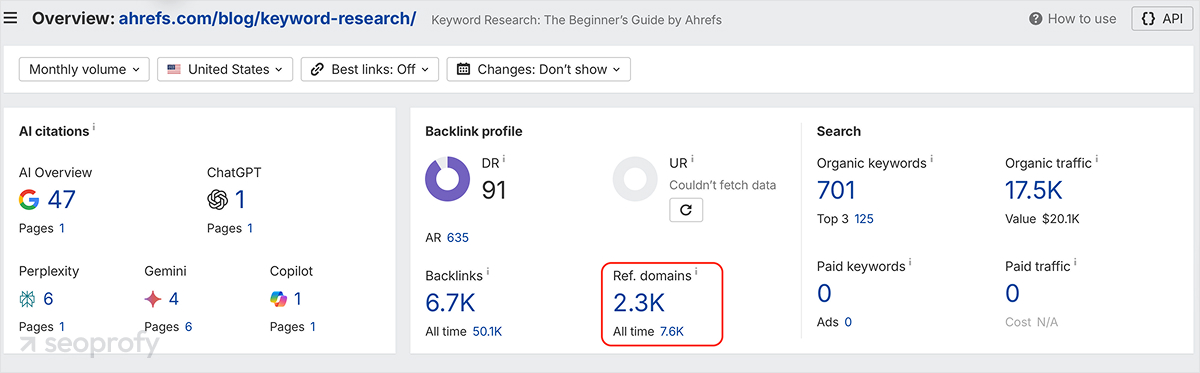
A great example of a guide that attracts hundreds of mentions is Ahrefs’ How to Do Keyword Research for SEO. This guide explains keyword research from start to finish and is updated regularly. According to their own data, it has attracted more than 6,700 backlinks from 2,300 referring domains.
For your own in-depth guides, you can do the following to make life easier for readers (and more attractive for linkers):
- Focus each guide on one main topic or job to be done
- Match the structure to how people search (subtopics, FAQs, “how to” steps)
- Add diagrams and annotated screenshots for better understanding
- Include a short “summary for busy readers” that they can quickly scan and quote
- Keep the guide updated and add a note when you refresh it, so people feel safe linking to it
Next up, we will look at other content types that add more interactivity.
Calculators and Free Tools
Online tools and calculators can also be surprisingly good for attracting links. Take this gratuity calculator on the ClearTax website, for example.
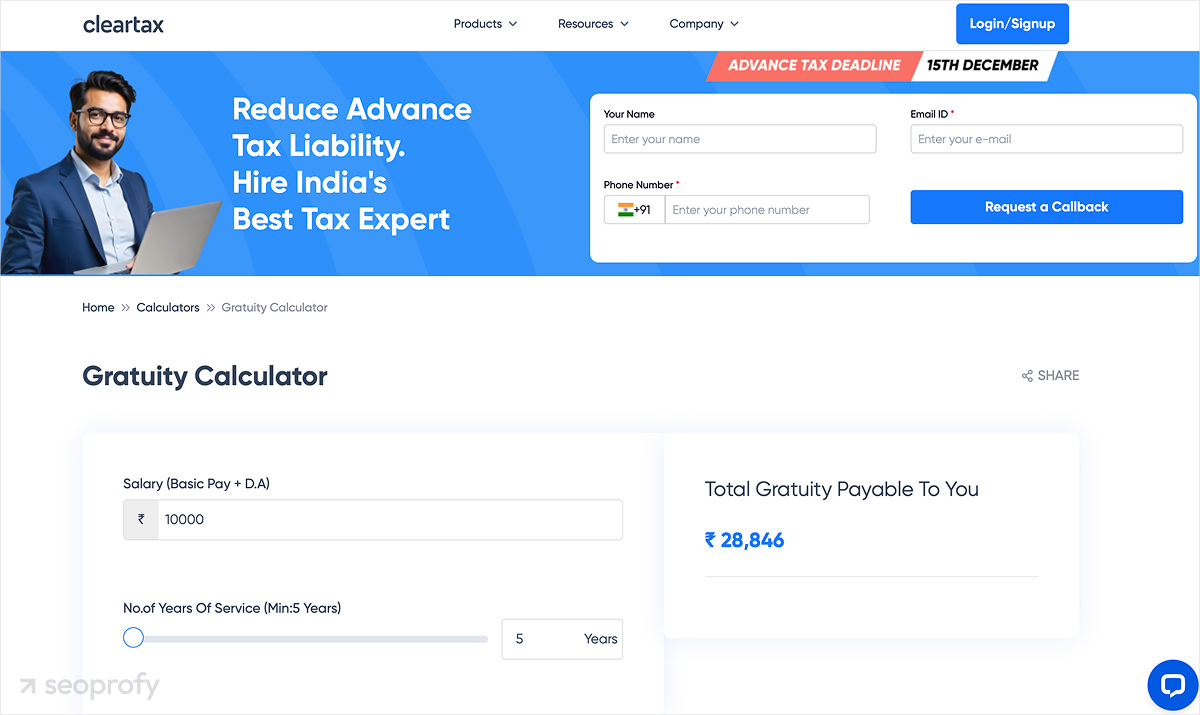
Ahrefs’ data shows that this page has earned them more than 253 referring domains. And if you ask us, for a single page in the financial niche, that is a serious amount of link equity.
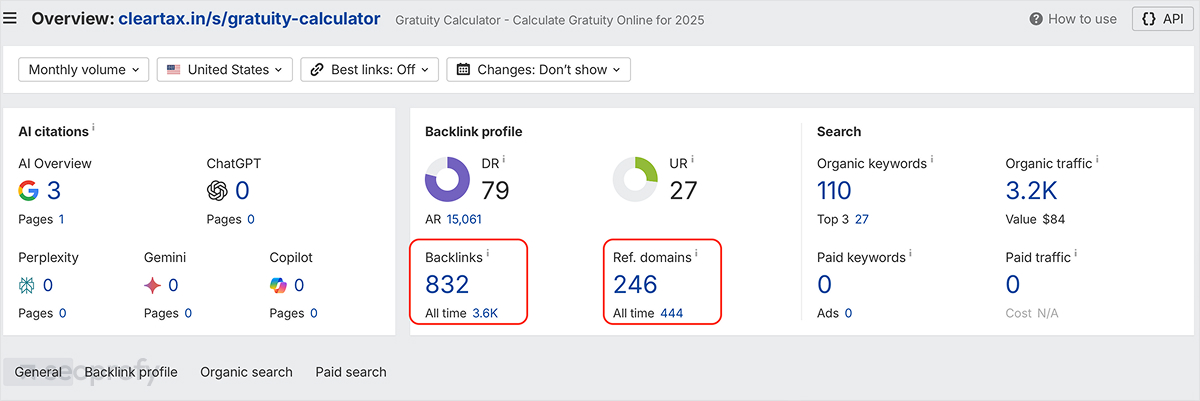
Another great example in the healthcare niche is Delta Dental’s cost estimator. Their tool shows patients the approximate price they would pay for different dental procedures. And, as the data shows, it has gained more than 1,600 external links.
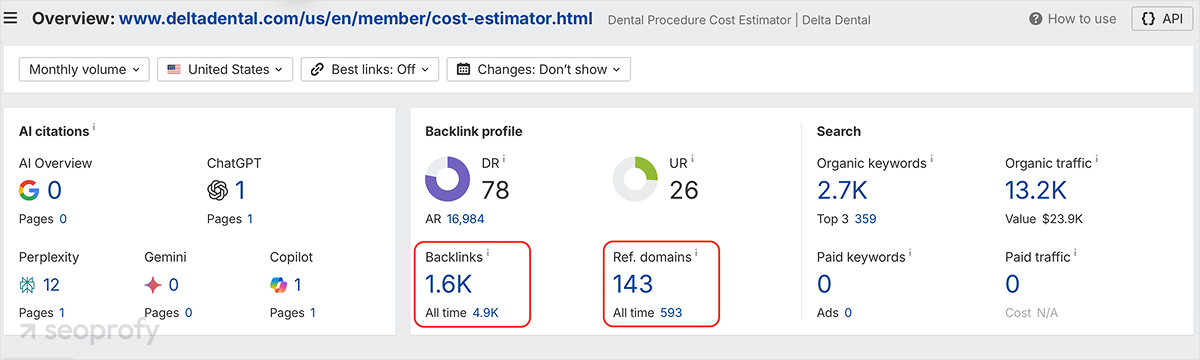
So why does a simple calculator like this work well for link building?
- It saves time. Writers do not have to explain the formula or show every step. They can just say “use this calculator” and link out.
- It reduces risk. For legal and financial topics, people prefer to send readers to a tool that applies the rules correctly.
- It improves their own content. An article that ends with a working calculator feels more useful than one that stops at theory.
There is a catch, though. Such interactive tools are harder to ship than a standard blog post. You either need help from a developer and designer, or you need to be comfortable using no-code builders like Bubble or similar web app tools.
If you do decide to build a tool or calculator for good linkable assets, keep it practical for your target audience:
- Solve one narrow problem very well
- Keep the interface simple and labels easy to understand
- Add a short “how this is calculated” note under the result that people can quote
You do not need a huge product to earn links. A small tool that answers a question your audience types into Google every day can outperform many long blog posts in terms of backlinks.
Infographics and Visual Link-worthy Content
Our last linkable asset type is infographics. And let’s be honest, we all love them. They make big ideas easier to understand and are simple to share with a link or a screenshot. It turns out they are also one of the best ways to attract backlinks naturally.
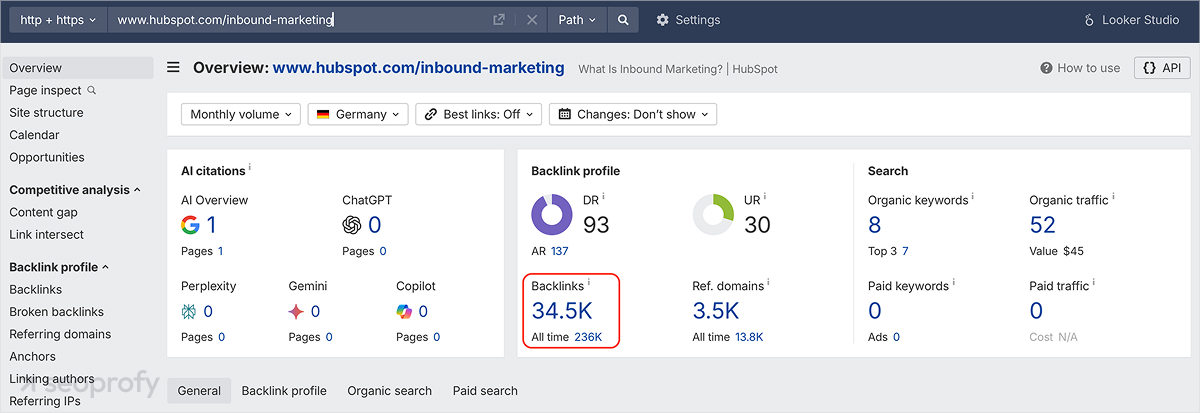
A good example here is HubSpot’s inbound marketing page. On that page, they show the inbound “flywheel” as a simple visual that explains how to attract, engage, and delight work together.
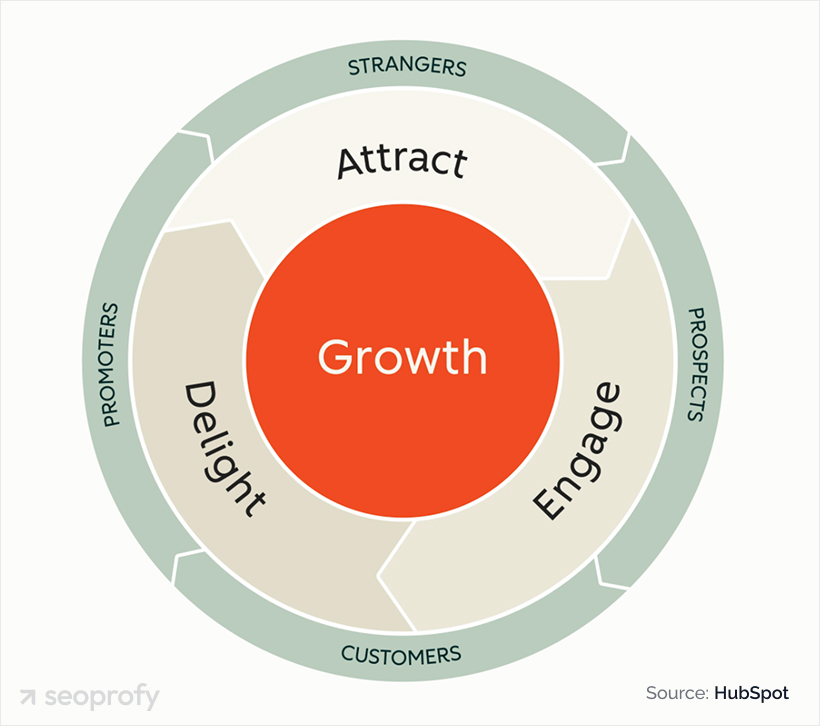
What’s impressive is that this single URL has earned over 34,000 backlinks, according to Ahrefs’ data.
To create similar visual linkable assets of your own, here are a few guidelines to help you:
- Start with a topic where a visual layout helps (processes, comparisons, frameworks, pairings)
- Use a layout that is easy to read on desktop and mobile
- Host the visual on a dedicated page with a short explanation underneath
You can pull candidates for visuals straight from your existing content. Anywhere you find yourself explaining a process in steps is an opportunity to create a graphic that other sites will be happy to embed and link to.
How to Create Linkable Assets
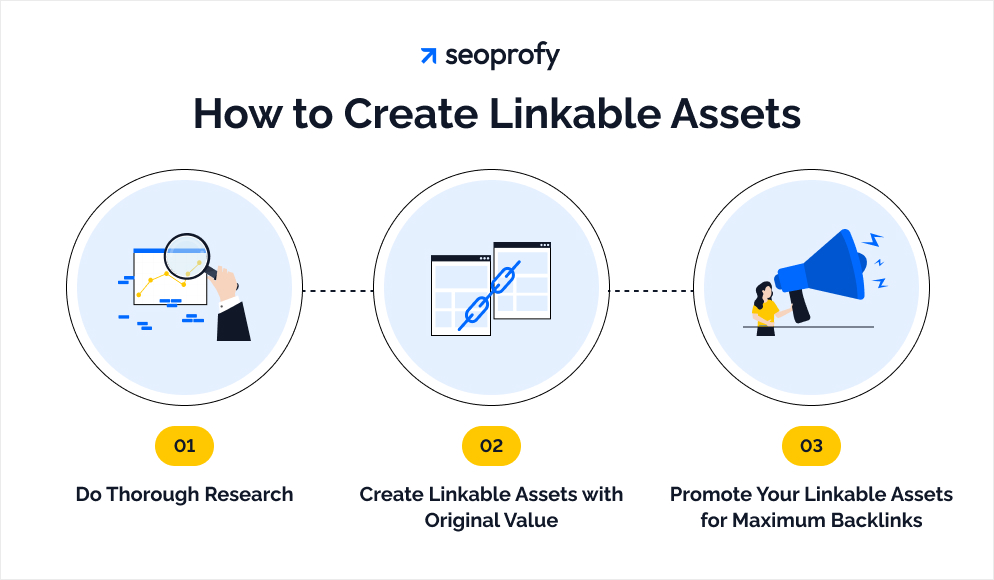
By now, you have seen what kinds of pages tend to attract valuable backlinks: guides, tools, statistics hubs, calculators, visuals, and so on. The next step is to understand how to create a great linkable asset that fits your niche and supports your SEO strategy. Let’s start with the foundation.
1. Do Thorough Research
Before creating linkable content, you want to know what people in your niche care about and what publishers and other websites already like to link to.
You can get both answers from a mix of SERP data, backlink tools, and social listening. As a starting point, choose a core topic and look at the first page of Google for that query and related ones. Make notes on:
- The formats that dominate (guides, tools, stats pages, calculators, glossaries)
- The angles that show up often
- Any pages with obvious “hook” elements like data, frameworks, or visuals
Then move to the backlink tools offered by Ahrefs or Semrush. Drop in the top URLs and check:
- Which pages in your space earn the most referring domains
- What types of assets those are (guides, calculators, statistics, research, etc.)
- Anchor text and context of the links (how people reference them)
This gives you a quick understanding of what the “linkerati” in your niche already like to cite.
Finally, add a layer of social and audience insight. And for this, you can use social listening tools or native search on X/LinkedIn/Reddit to see what people complain about or ask again and again.
When you combine these inputs, you end up with ideas that are both search and audience-backed. You know people search for them, and you can see how they tie into your broader SEO goals.
2. Create Linkable Assets with Original Value
Research gives you the topic and the angle, but high-quality backlinks come from the value you add on top of that. A simple way to do that is to run your draft through a “link-worthiness” checklist. This could be:
- A data point they cannot find elsewhere
- A way of structuring information that saves them time
- A unique insight or valuable resource that explains complex data
Take Ahrefs’ Guide on Long Tail Keywords as an example. They do not just define the term. They show actual queries and back it up with their own data and screenshots from the tool. No wonder this guide has gotten more than 1,800 referring domains over time.
On top of originality, E-E-A-T signals matter a lot. When someone decides whether to link to you, they quickly scan the page for cues like:
- Who wrote this, and do they seem to know the topic?
- Are there sources and dates under the key stats or claims?
That is why details such as an author line with role and “last updated” date matter. To keep it practical, you can run each new asset through this content quality filter:
- Does this page say or show something that’s hard to find elsewhere?
- Can a busy editor grab one or two stats, quotes, or visuals?
- Would you feel comfortable citing this page in your own content?
- Is it obvious who created it, when it was updated, and where the data came from?
If you can answer “yes” to those questions, you are much closer to creating high-quality linkable content that feels worth linking to.
3. Promote Your Linkable Assets for Maximum Backlinks
After you are happy with the asset itself, the next job is to show it to the people who write and curate content in your space. We are talking about bloggers, journalists, in-house content teams, community managers, and niche creators. Let’s look at each below.
Outreach to Bloggers, Journalists, and Resource Pages
Outreach link building still works, but only if your pitch feels relevant and helpful. You can start with prospect discovery in tools like Ahrefs or Semrush to find web pages that already talk about your topic. Look for:
- Articles that mention the problem your asset solves
- Existing statistics roundups, but with outdated or thin data
- Resource pages that list tools or guides in your niche
As you’re looking through these pages, don’t just choose the ones with a good domain authority score. Prioritize the best fits and focus on relevant websites that make sense for your brand and audience. Once you shortlist a few sources, send them a personalized email that explains how your asset helps their readers.
You can track this in a simple sheet with columns for page URL, contact, date, and outcome. It does not have to be complicated, but seeing the pipeline in one place will keep you from sending the same pitch twice or losing track of promising conversations.
Community-Based Promotion (Reddit, Quora, LinkedIn, and More)
Communities are where people talk through their problems long before they search for a definitive guide. If your asset answers those problems well, it deserves to be part of those threads. Here, the mindset is different from outreach. You can:
- Watch for repeated questions on Reddit, Quora, Facebook groups, and LinkedIn comments that your asset answers in depth, and leave a helpful comment with a link to it
- Slice one or two key stats from your asset and share them as native posts on social media platforms like LinkedIn or X, with a mention to the full study
Community promotion often feels slower than cold outreach, but it compounds in the long run. People start to remember your name and start linking to you without you asking.
Partnerships with Niche Influencers
Some people in your space have already done the hard work of building a loyal audience. You can partner with those voices and position your linkable assets as something that makes them look good in front of their followers. For example:
- Offer influencers early access to a new study or statistics page
- Send it to a handful of creators or newsletter authors before you publish
- Ask if they want to pull one or two exclusive charts or insights for their audience
- Invite a niche expert to add commentary to your data, then feature them in the asset
- Host a short webinar or live session around your study or benchmarks
Partnerships work well because everyone wins. Influencers or partners get something useful to share with their audience, and you get new qualified visibility, more links, and often long-term relationships that support future assets, too.
Common Mistakes When Creating Linkable Assets
Before we wrap up, it is worth flagging a few mistakes that quietly kill link potential, even when the topic is good. Here are some of them:
- Treating a linkable asset like a regular blog post: A lot of “linkable assets” end up being short, surface-level articles with no original angle. They repeat what is already on the first page of Google and add nothing new. Writers may skim them, but there is no reason to link.
- Skipping visuals and structure: Many teams pour effort into the text and sometimes forget about the visuals. But for linkable assets, they matter a lot. Infographics and even simple screenshots make it easier for others to reuse your work and reference you as the source.
- Weak or unreliable data: Nothing puts authors and editors off linking like bad data. When stats have no source and no method behind them, they hesitate. The same goes for studies based on tiny samples dressed up as industry benchmarks.
- Publishing once and never promoting: Another common issue is treating publishing as the finish line. The asset goes live, maybe gets one share on social media, and then disappears into the archive. The thing is, links very rarely appear out of nowhere.
If you avoid these traps and follow the process we outlined above — research, original value, and promotion — you give every asset a much better chance to work as a long-term link source.
Get More Organic Backlinks With Linkable Assets
We have covered a lot here: what linkable assets are, which formats tend to work, how to make them worth citing, how to promote them, and what mistakes to avoid. A good way to start is small and deliberate.
You can choose one asset type that fits your business, build it to a standard you would happily link to yourself, ship it, and then spend time getting it in front of the right sites and communities. Over time, assets like that keep earning backlinks and referral visits while you work on other parts of your marketing.
If all of this sounds like a lot to manage alongside running the business, you do not have to do it alone. At SeoProfy, our link building services cover the whole process: research, competitor and backlink analysis, asset creation, outreach, and ongoing monitoring with our own internal tools. To see what that could look like for your site, you can schedule a free call with our SEO team, and we’ll map out a plan together.

Khrystyna Dzhumaryk is a content writer at SeoProfy with four years of experience in SEO and content strategy. At the company’s main blog, she writes in-depth articles and guides to help businesses improve their online visibility through proven tactics. Her work brings together hands-on SEO experience with ongoing research into algorithm updates, search trends, and the growing impact of AI on content and optimization.